
Is DLyte Pro500 The Future Of Precision Metal Surface Finishing In CNC Machining
DLyte PRO500: Precise Metal Surface Finishing for Mass Production
Precision surface finishing has evolved from an artisanal craft into a digitally controlled science. The DLyte Pro500 stands out as a benchmark system in this transformation, offering dry electropolishing that achieves consistent microfinish across complex geometries. For high-volume CNC machining environments, it delivers measurable improvements in dimensional accuracy, fatigue strength, and corrosion resistance while reducing manual labor and environmental impact. Its integration with CAD/CAM platforms like SOLIDWORKS bridges the gap between design intent and finished performance, making it a critical tool for next-generation manufacturing.
Advancements in Precision Metal Surface Finishing Technologies
The evolution of finishing technology reflects the broader industrial shift toward automation and data-driven precision. Traditional polishing and grinding methods are giving way to electrochemical systems capable of nanometer-level control.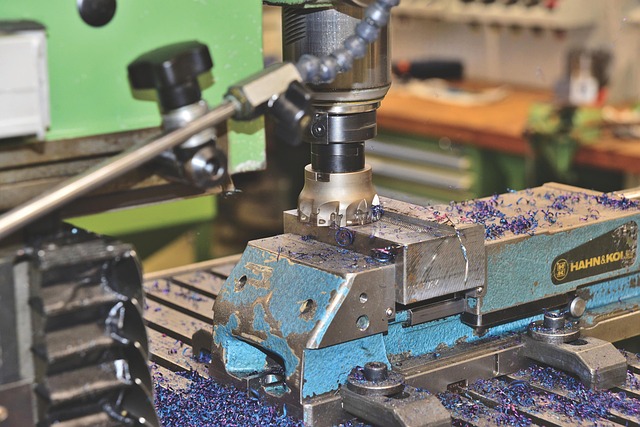
Evolution of Surface Finishing in CNC Machining
Historically, surface finishing relied on mechanical abrasion—grinding wheels, buffing compounds, and manual polishing—to refine parts after machining. While effective for simple geometries, these methods struggle with consistency on intricate components or internal cavities. Electropolishing improved uniformity by using chemical dissolution, yet it introduced challenges such as uneven current distribution and handling hazardous liquids. As tolerances tighten in aerospace and medical sectors, the need for repeatable automated solutions has grown sharply.
The Role of Automation and Digitalization in Modern Finishing Processes
Automation now defines the new standard of surface finishing. Robotic systems with multi-axis control can manipulate parts through complex motion sequences while maintaining constant pressure or electrical potential. Digital controllers record every parameter—voltage, time, electrolyte condition—creating traceable process data vital for certification-driven industries. Industry 4.0 principles further enhance this by connecting finishing cells to enterprise networks where AI algorithms predict wear patterns or adjust parameters on the fly. This convergence of robotics and analytics transforms finishing from an art into a predictable science.
Understanding the DLyte Pro500 System
The DLyte Pro500 represents a leap forward in dry electropolishing technology tailored for mass production environments requiring both precision and throughput.
Core Technology Behind DLyte Pro500
At its core lies DryLyte technology—a hybrid process combining electrochemical dissolution with gentle mechanical action within a dry electrolyte medium composed of solid polymer beads infused with ions. During processing, these beads act as both carriers of electric charge and mild abrasives, enabling uniform metal removal without liquid chemicals. Unlike conventional wet electropolishing that demands acid baths and complex waste management, DryLyte operates cleanly with minimal residue generation. Compared with abrasive polishing, it maintains geometric fidelity since material removal is electrochemically governed rather than force-driven.
Technical Specifications Relevant to CNC Machining Applications
The DLyte Pro500 accommodates parts up to medium size categories common in orthopedic implants or turbine blades. It supports materials such as stainless steel, titanium alloys, cobalt-chrome, nickel-based superalloys, and aluminum variants frequently used in CNC machining industries. Key process parameters include voltage regulation within millivolt precision ranges, controlled bead composition defining ion mobility, and programmable cycle times suited to roughness targets below Ra 0.02 µm. Integration with robotic loading systems or modular post-processing cells allows seamless incorporation into existing CNC production lines without extensive reconfiguration.
Performance Analysis: Surface Quality and Dimensional Accuracy
Precision finishing directly affects product performance metrics like sealing capability or fatigue resistance. The DLyte Pro500’s results demonstrate its superiority over conventional techniques.
Achieving High Precision Surface Finishes
Typical roughness values achieved reach below Ra 0.01–0.04 µm depending on alloy type—levels previously attainable only through multi-step polishing sequences. Because material removal occurs uniformly across all exposed surfaces, even hidden internal channels exhibit identical gloss levels. Importantly, this process preserves dimensional tolerances since there is no mechanical distortion or localized heat buildup that could warp delicate structures.
Impact on Component Integrity and Mechanical Properties
Electrochemical action gently removes micro-burrs and stress concentrators left by cutting tools while relieving residual tensile stresses at the surface layer. This enhances fatigue life significantly; aerospace fasteners treated by similar processes have shown endurance increases exceeding 30%. Moreover, smoother passive oxide films formed during DryLyte treatment improve corrosion resistance critical for surgical instruments or marine-grade components.
Integration of DLyte Pro500 into CNC Machining Workflows
Incorporating the DLyte Pro500 within CNC operations transforms post-processing efficiency from reactive correction to proactive quality assurance.
Workflow Optimization from Machining to Finishing
A well-designed workflow links machining centers directly to automated finishing cells via robotic conveyors or AGVs (Automated Guided Vehicles). Once machining completes, part data transfer triggers predefined finishing recipes stored within the system’s controller. This eliminates manual handling variability while enabling batch-level consistency analysis through embedded sensors tracking current density distribution during each cycle.
Compatibility with CAD/CAM Systems like SOLIDWORKS for Design Validation
SOLIDWORKS integration allows engineers to simulate how different geometries respond to electrochemical smoothing before physical production begins. By linking CAD models with empirical datasets from previous runs, designers can predict achievable roughness values or identify zones prone to uneven current flow. Through digital twin modeling, feedback loops refine both design geometry and finishing parameters simultaneously—shortening validation cycles while improving first-pass yield rates.
Economic and Environmental Considerations in Adopting DLyte Pro500
Beyond technical benefits, economic sustainability drives adoption decisions across competitive manufacturing sectors seeking long-term operational stability.
Cost Efficiency Through Process Consolidation and Automation
Replacing multi-stage manual polishing lines with one automated cell drastically cuts floor space usage and operator hours per component. Consumable costs drop since dry electrolytes last thousands of cycles before replacement compared to frequent slurry changes required by wet systems. Reduced rework from consistent finishes lowers inspection overheads; many users report cost-per-part reductions exceeding 40% after full deployment across production batches.
Sustainability Benefits of Dry Electrolyte Technology
DryLyte technology eliminates liquid waste streams entirely—a major step toward compliance with ISO 14001 environmental management standards governing hazardous material disposal. Energy consumption also decreases because there is no need for fluid agitation or temperature regulation typical of wet baths. These improvements align closely with global trends favoring green manufacturing practices under tightening EU REACH regulations promoting safer chemical handling.
Future Outlook: The Role of DLyte Pro500 in Next-generation Manufacturing Systems
As additive manufacturing expands and component complexity grows, precise surface conditioning will become even more essential for functional reliability.
Trends Driving Adoption in Advanced Manufacturing Sectors
The surge in metal 3D printing has created demand for post-processing capable of smoothing lattice structures without altering their shape—a challenge ideally addressed by dry electropolishing’s non-contact nature. Smart factories integrating AI-based monitoring can use sensor data from the DLyte Pro500 to predict wear rates or automatically adjust voltage profiles mid-cycle for optimal outcomes across varying part geometries.
Potential Research Directions and Technological Enhancements
Future developments may include adaptive control algorithms that learn optimal parameter sets based on live feedback from current density maps or optical finish sensors embedded inside processing chambers. Expanding compatibility toward new alloys such as Inconel composites or conductive ceramics could open applications across energy storage devices or precision optics manufacturing sectors where surface purity defines performance margins.
FAQ
Q1: What distinguishes the DLyte Pro500 from traditional electropolishing?
A: It uses a dry electrolyte medium composed of solid beads instead of liquid acids, enabling safer operation with uniform metal removal across complex shapes.
Q2: Can it handle large aerospace components?
A: The system supports medium-sized parts typical in aerospace hardware but can be scaled through modular configurations for larger assemblies if required.
Q3: How does it connect with SOLIDWORKS?
A: Engineers can import geometry directly into simulation tools to correlate predicted finish quality with actual machine parameters before production starts.
Q4: Does dry electropolishing affect dimensional tolerances?
A: No significant dimensional change occurs because removal is electrochemical rather than mechanical; tolerances remain within original CNC specifications.
Q5: Is maintenance demanding compared to wet systems?
A: Maintenance is simpler since there are no corrosive fluids; periodic bead replacement and chamber cleaning suffice for continuous operation efficiency.