

What Are CNC Axis Types And How Do They Define Machine Precision
What Are CNC Axis Types and Why Do They Matter in Modern Manufacturing?
CNC axis types show how a machine tool shifts and works with the workpiece. In today’s manufacturing, these axes decide the detail of parts you can make. They also affect how quickly you can finish the job. Take a 3-axis milling machine, for example. Or think about a 5-axis machining center. Each setup changes the way you get precision, options, and pace in your work. I remember working on a simple bracket once. With just three axes, it was straightforward. But for curved parts, you really feel the limit.
Classification of CNC Axes by Movement and Function
CNC machines get sorted by the number of axes that guide motion. This usually goes from three to five or even more. Each axis gives one way to move—X, Y, Z handle straight paths. A, B, C deal with turns. The extra axes mean more ways for the tool and workpiece to shift. This sorting helps in making detailed shapes. For instance, a 3-axis machine works well for flat or boxy items. A 5-axis setup lets you cut on many sides at once. In my experience from shop floors, that makes a big difference for odd-shaped molds.
Relationship Between Axis Configuration and Machining Capabilities
The link between axis setup and what you can machine is clear. Systems with many axes let moves happen on several sides together. So, tricky outlines get cut without pausing to shift the part. When you add axes, you reach hidden spots and smooth shapes that need many steps otherwise. This saves time. It also boosts accuracy. Fewer hand tweaks mean less chance for mistakes to build up. Picture machining a gear with undercuts. On a basic machine, you’d stop and flip it twice. With more axes, it’s one go.
Impact of Axis Types on Manufacturing Flexibility
Extra axes bring more room to adjust in production. With turns added, machines handle milling, drilling, and edging in a single hold. You don’t take the part out of its clamp. This cuts wait time between steps. It keeps sizes exact. Fields like airplane building and health tools count on this. Their pieces need wild shapes with tiny errors allowed. I’ve seen a medical implant job where one setup saved a whole day. It’s not magic, just smart motion.
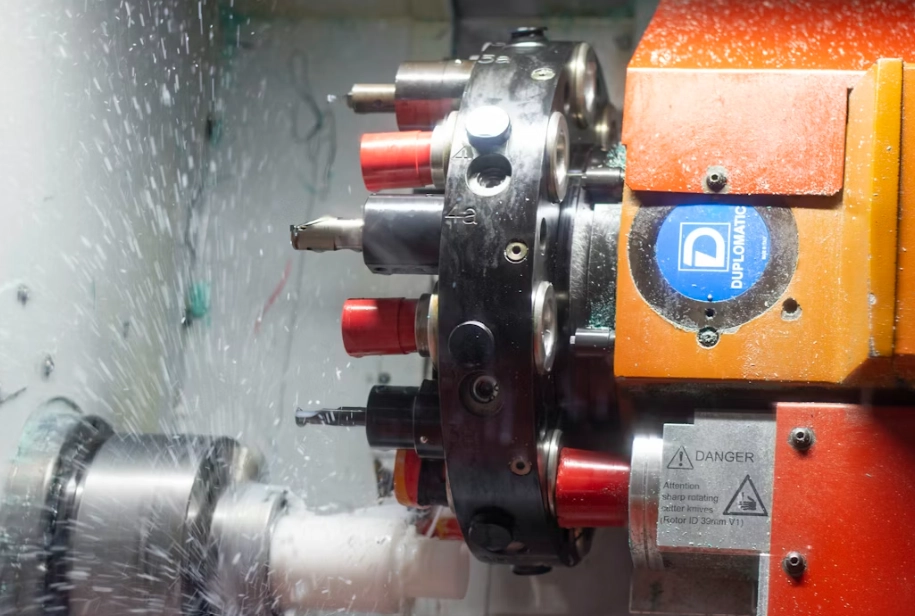
How Do Linear and Rotary Axes Define Motion Control in CNC Systems?
Motion control in CNC setups rests on two basic moves: straight and turning. These pair up to form even tool routes. That sets the standard for exact cutting now.
Characteristics of Linear Axes (X, Y, Z)
Straight axes build the main frame for any CNC machine’s moves. They push tools or workpieces in direct lines using X, Y, Z spots—side to side for X, front to back for Y, and up down for Z. Smooth screws with straight rails give spot-on spots at fast paces. Most cutting and spinning jobs lean on these three for turning stock into set forms. In a busy shop, these axes handle 80% of daily runs, like basic plates or holes.
Role of Rotary Axes (A, B, C) in Complex Machining
Turning axes bring spin around the straight ones. A spins on X, B on Y, and C on Z. These let you hit the workpiece from varied angles without hand resets. In real work, this smooths shifts for bent faces or slanted openings. Turning also betters the shine on cuts by keeping tool angles steady. Think of carving a propeller. Without rotation, you’d clamp and unclamp forever. With it, the surface comes out clean, almost like hand-polished.
Integration of Linear and Rotary Motion for Multi-Axis Control
Straight and turning moves blend under matched control plans. This makes many-axis cutting real. The guide figures out joint shifts so straight and spin happen at the same time. It’s key for free shapes like fan blades or bone fixes. Here, a tiny angle shift can ruin how it works. From what I’ve seen in turbine shops, this sync cuts scrap by half. Not bad for some code and motors.
Why Does Axis Count Influence Machine Precision and Performance?
The number of axes shapes how exact your machine acts. It also sets how well it tackles tough jobs.
Correlation Between Axis Number and Positional Accuracy
More axes in a CNC mean keeping spots exact gets tougher. This comes from tangled links between parts that move. Each axis needs fine tuning with tools like encoders or laser checks. That keeps shifts in line. Strength matters too. A little bend in a many-axis rig can mess up tiny measures. In practice, shops check this daily. One flex in a long arm, and your part’s off by 0.01 mm—enough to scrap a batch of engine parts.
Effect of Axis Synchronization on Surface Quality
How well axes match during cuts rules the finish on pieces. Bad timing leads to shakes or lines you can see. New fast guides use quick fix plans to mend slips right away. This gives even surfaces at quicker speeds. It’s vital for forms or lens bits. I once fixed a chatter issue on a mold. Sync tweaks turned rough spots into mirror shine. Simple, but it saved rework costs.
Influence on Tool Path Optimization and Cycle Time Reduction
Extra axes cut breaks in work. No need to stop and reset. Better tool routes trim run times while holding sizes tight. Say a 5-axis does in one pass what a 3-axis needs three setups for. That shaves hours off each group. In auto plants, this means more cars out the door. Not to mention less wear on clamps from constant swapping.
What Are the Key Differences Between 3-Axis, 4-Axis, and 5-Axis Machines?
Each CNC type brings its own skills based on how many ways it controls.
Functional Capabilities of 3-Axis CNC Machines
A usual 3-axis CNC works just on X, Y, and Z lines. It’s great for simple cuts like grooves or holes on flat spots. But it fights deep pockets or wild curves unless you hand-turn the part between runs. Good for starters, though. Many small shops stick with these for brackets or panels. Reliable, if not fancy.
Added Flexibility Offered by 4-Axis Systems
A fourth axis adds spin, often on X as A-axis. This lets you cut many sides without letting go of the part. Handy for round items like shafts or fans where steady turn eases edge work. It steps up from basic without huge cost. I’ve used one for pipe fittings—twice as fast as three-axis tries.
Advanced Versatility of 5-Axis Machining Centers
Five-axis mixes three straight moves with two turns, like A and B or A and C. It reaches almost all sides in one hold. Plane parts like turbine shells or bone tools need this for mixed bends you can’t touch any other way. In aero work, it’s a must. One setup for a full blade? Game-changer, especially when deadlines loom.
How Do Control Systems Affect Axis Precision in CNC Machines?
Control setups turn code into real moves. Their smarts decide how true each axis holds under push.
Role of Servo Motors and Encoders in Position Feedback
Servo motors power each axis to match the plan. Encoders watch spot changes live for tight-loop checks. Fine sensors boost repeat moves in all paths. So, small slips get fixed fast in runs. These keep things humming, even on overnight shifts.
Influence of CNC Controllers on Motion Coordination
CNC guides read G-code into matched shifts over many axes at once. Strong chips cut delays from order to action. Built-in fixes handle gaps or heat swells that hit accuracy in long jobs. It’s like a brain keeping limbs in sync. Without it, multi-axis turns chaotic.
Importance of Calibration and Compensation Techniques
Before jobs start, laser checks line up all axis ties for true right angles over full ranges. Fault maps then fix any left-over bends in the work space. This holds steady precision in steady use, like in factory heat. Regular checks keep it sharp, avoiding surprises mid-batch.
What Role Does Machine Design Play in Axis Stability and Accuracy?
Machine build gives the solid base for every axis shift in cut cycles.
Structural Rigidity of Machine Frames
Frames from cast iron or mix polymers soak up shakes well in quick cuts. They hold shape under big weights. Firm bases stop bends that twist tool lines when spin push spikes in a cut. Good damp stuff cuts echoes too. This boosts steady work over long stretches. It’s key in auto form shops or plane part ends. Here, repeat holds the score over thousands of runs in tough spots. These follow world rules for strength, life, and safe work in factories everywhere now. One time, a weak frame caused vibes that warped a die. Switched to cast, and issues vanished. Solid choice.
FAQ
Q1: What does each CNC axis represent?
A: Each axis shows one path or spin where the tool or workpiece goes—X,Y,Z are straight while A,B,C turn around them.
Q2: Why is a 5-axis machine preferred for aerospace parts?
A: Because it lets moves on five paths at once for exact edges needed in fan blades or frame bits with bent curves.
Q3: How do servo motors improve accuracy?
A: Servo motors give live checks via encoders so each planned shift hits the real spot just right, even at quick speeds.
Q4: What maintenance keeps multi-axis systems accurate?
A: Steady rechecks with laser tools and now-and-then fault maps hold lines among axes against wear as time goes.
Q5: Can adding more axes reduce production time?
A: Yes; many-axis setups cut reset steps so full cuts happen in one hold. This trims total run time a lot per group of parts.