
What Is a Standard Machining Surface Finish and Why It Matters in Precision Engineering
What Defines a Standard Machining Surface Finish?
In precision manufacturing, surface finish is more than just a visual feature—it’s a measurable property that directly influences performance, assembly, and durability. When you specify a standard machining surface finish, you’re defining the microscopic texture left behind by cutting tools or abrasives. This texture affects how components slide, seal, or wear during operation.
Definition and Measurement Principles
A standard machining surface finish describes the controlled roughness of a machined part, expressed through parameters such as Ra (average roughness) or Rz (mean peak-to-valley height). These values represent the deviation of surface peaks and valleys from an ideal mean line. Measurement typically uses stylus profilometers or optical instruments that scan the surface to generate a profile trace.
International standards like ISO 1302 and ASME B46.1 define acceptable finish ranges for different functional requirements. For instance, an Ra of 0.8 µm may be required for sealing surfaces, while 6.3 µm might suffice for general mechanical fits. The goal is consistency—ensuring every machined piece meets its intended tolerance and application.
The Relationship Between Surface Finish and Manufacturing Processes
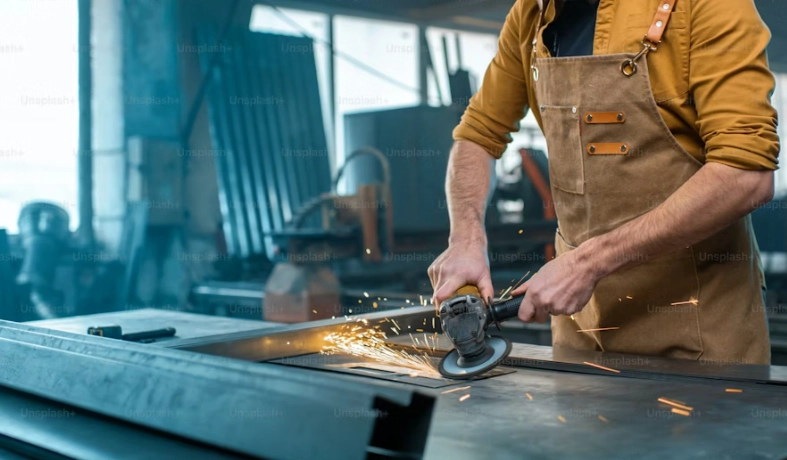
Every machining process leaves its own signature on the material. Turning tends to produce spiral tool marks; milling leaves overlapping scallops; grinding creates fine parallel lines; EDM generates micro-pitted textures due to spark erosion.
Tool geometry, feed rate, cutting speed, and lubrication all influence these patterns. A sharper tool with proper coolant can produce smoother finishes by minimizing built-up edges and heat distortion. Process control—adjusting speeds or feeds based on real-time feedback—helps maintain uniformity across batches.
The Role of Surface Finish in Dimensional Accuracy
Surface irregularities can slightly alter effective dimensions, especially when tolerances are tight. For example, a rougher surface may reduce clearance in sliding fits or distort measurement readings during inspection. By achieving precise finishes, you reduce uncertainty in metrology results and improve repeatability across production runs. In high-precision assemblies like aerospace bearings or medical implants, this level of control is not optional—it’s essential.
Why Does Surface Finish Matter in Precision Engineering?
The importance of surface finish extends far beyond aesthetics. It determines how parts interact under load, how long they last, and even how they look after years of service.
Impact on Functional Performance
A smoother surface minimizes friction between moving parts, reducing wear and extending service life. In hydraulic systems or compressors, proper finishes enhance sealing capability by preventing micro-leakage paths along rough surfaces. Moreover, controlled roughness helps distribute stress evenly across contact zones, improving fatigue resistance in cyclic loading conditions.
Influence on Aesthetic and Visual Quality
While function dominates engineering design, appearance still matters—especially for visible components like housings or surgical tools. Uniform finishes give products a professional look that reflects manufacturing quality. Depending on design intent, you might prefer matte textures to reduce glare or mirror-like surfaces for optical reflection control. A consistent texture also supports paint or coating adhesion by providing predictable micro-anchoring points.
Contribution to Component Longevity and Reliability
Surface defects such as scratches or pits can act as crack initiation sites under repeated stress cycles. By refining the finish through polishing or superfinishing, you minimize these weak points and extend component lifespan. Additionally, smoother surfaces resist corrosion better because they trap fewer contaminants or moisture pockets—a small detail that makes a big difference in harsh environments like marine engines or chemical pumps.
How Are Standard Machining Surface Finishes Classified?
Classification helps engineers communicate texture requirements clearly on technical drawings so machinists know exactly what to achieve.
Common Roughness Parameters and Their Meaning
Ra remains the most widely used parameter—it averages absolute deviations from the mean line over a sampling length. Rz measures the average height between five highest peaks and five deepest valleys within that length, offering insight into macro-scale irregularities that Ra alone might miss. Other parameters such as Rt (total height), Rq (root mean square roughness), and Sa (areal average) provide additional dimensional context for complex surfaces.
Industry Standards Governing Surface Finish Classification
ISO 1302 defines graphical symbols used to indicate required textures directly on engineering drawings worldwide. ASME B46.1 specifies measurement methods commonly applied in North American industries, ensuring comparability between labs and manufacturers. Meanwhile, JIS B0601 serves as Japan’s equivalent standard widely adopted across Asian manufacturing sectors.
Typical Finish Grades for Common Machining Operations
Rough machining typically yields 6.3–25 µm Ra—adequate for non-critical surfaces before further finishing steps. Semi-finishing processes reach around 1.6–3.2 µm Ra suitable for general fits or assembly interfaces. Fine finishing techniques like honing or lapping achieve 0.1–0.8 µm Ra used on bearing races or sealing faces where smoothness is crucial.
How Is a Standard Machining Surface Finish Achieved?
Achieving consistent surface quality requires both precise process control during machining and post-processing refinement afterward.
Process Control Strategies in Machining Operations
Monitoring tool condition prevents degradation that increases roughness over time. Coolant choice also matters—it stabilizes temperature at the cutting zone while flushing away chips that could mar the surface. Modern CNC systems often use adaptive controls to adjust feed rates automatically when sensors detect vibration or load changes to maintain target finish values.
Post-Machining Treatments Enhancing Surface Quality
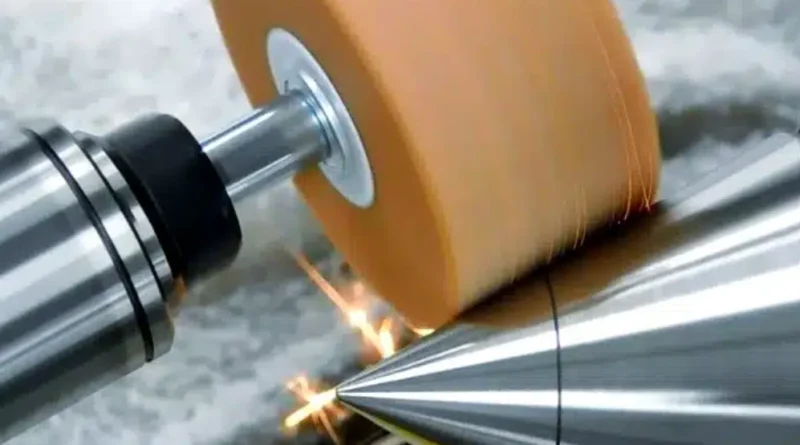
When machining alone cannot meet ultra-smooth requirements, secondary treatments come into play. Polishing removes microscopic tool marks using abrasives suspended in fluid media; lapping employs two mating surfaces with fine abrasives for extremely flat finishes; superfinishing uses oscillating stones under light pressure to achieve near-mirror results below 0.05 µm Ra. Shot peening adds compressive stresses beneficial for fatigue strength without compromising smoothness if properly controlled.
The Role of Metrology in Process Validation
After finishing operations, measurement validates compliance with specified parameters. Stylus profilometry remains common due to its accuracy in quantifying roughness profiles directly from contact traces. For delicate components where contact could cause damage—like optical lenses—non-contact methods such as interferometry are preferred because they capture 3D topography safely at nanometer resolution levels.
What Factors Influence the Consistency of a Machined Surface Finish?
Even with advanced machines, external factors can subtly shift results between batches if not managed carefully.
Material Properties and Metallurgical Characteristics
Material hardness dictates how easily it cuts; softer metals smear under tools creating torn textures while harder alloys produce crisp edges but risk chatter marks if feeds are too aggressive. Grain structure also plays a role—anisotropic materials show directional patterns depending on cutting orientation relative to grain flow.
Tool Geometry and Wear Behavior
The sharper the cutting edge, the cleaner the cut—and conversely as wear progresses roughness rises quickly due to built-up material at the tip altering geometry mid-process. Using coated carbide tools helps extend life by reducing frictional heat which otherwise affects both tool integrity and final texture uniformity.
Environmental Conditions During Machining
Temperature swings can expand both tool and workpiece slightly affecting dimension stability during fine finishing stages where tolerances are microns wide. Likewise vibration from nearby equipment introduces chatter marks visible even after polishing attempts; isolating machines on damped mounts reduces this risk significantly.
How Does Surface Finish Affect Assembly Compatibility?
When multiple parts must fit together precisely—as in gearboxes or valve assemblies—their mating surfaces’ texture becomes critical for proper function.
Fit Tolerance Between Mating Components
Excessive roughness causes interference fits that complicate assembly alignment while overly smooth surfaces may slip too freely under load altering designed clearances over time. Controlled finishes allow predictable friction behavior ensuring smooth motion without binding during repeated cycles.
Lubrication Retention in Dynamic Interfaces
A moderate level of micro-texture actually benefits lubrication retention since tiny grooves hold oil films stable between moving parts like pistons or bearings; however overly polished surfaces can cause lubricant starvation leading to premature wear despite appearing visually perfect.
Sealing Efficiency in Fluid Systems
Hydraulic seals rely heavily on uniform contact pressure distribution which depends directly on underlying metal finish quality—rough edges create leak paths whereas polished yet textured faces maintain seal compression evenly across their circumference supporting long-term reliability even under fluctuating pressures.
Where Is Standard Machining Surface Finish Most Critical?
Some industries push finishing precision beyond typical engineering limits because performance margins leave no room for inconsistency.
Aerospace Component Manufacturing
Turbine blades require exceptionally smooth aerodynamic profiles minimizing drag losses at high rotational speeds; engine housings depend on accurate textures aiding efficient thermal transfer while structural fasteners demand consistent finishes preventing fatigue cracks from forming under cyclic stress loads common during flight operations.
Medical Device Fabrication
Implants must feature biocompatible polished finishes free from burrs preventing tissue irritation once implanted internally; surgical instruments benefit from reflective yet sterilizable surfaces resisting microbial adhesion after repeated cleaning cycles; miniature device parts fabricated via micro-machining reach sub-micron smoothness ensuring safe patient outcomes where tolerances approach human hair thickness levels.
Semiconductor and Optical Equipment Production
Optical lenses rely entirely upon mirror-grade polishing controlling light reflection angles precisely within nanometers deviation range; semiconductor wafers similarly demand atomically flat planes preserving lithography pattern fidelity throughout processing steps performed inside ultra-clean rooms maintaining contamination-free conditions essential for yield consistency across batches.
FAQ
Q1: What does “standard machining surface finish” mean?
A: It refers to a quantified measure of texture left by machining processes expressed through parameters like Ra or Rz following international standards such as ISO 1302 or ASME B46․1 to define acceptable ranges based on application needs.
Q2: Which factors most affect surface finish quality?
A: Tool sharpness, feed rate stability, coolant effectiveness, material hardness and environmental vibration all strongly influence resulting surface characteristics during production cycles.
Q3: Why is surface finish important for sealing applications?
A: Properly finished surfaces prevent micro-leakage paths ensuring gasket compression remains uniform under pressure sustaining long-term sealing integrity within hydraulic or pneumatic systems.
Q4: How do engineers measure surface roughness accurately?
A: They use stylus profilometers tracing contact profiles or optical interferometers capturing non-contact 3D maps allowing quantitative evaluation against specified Ra values quickly without damaging delicate parts.
Q5: What industries require ultra-smooth finishes?
A: Aerospace turbines for aerodynamic efficiency medical implants for biocompatibility and semiconductor optics for nanometer-level precision all demand extremely fine standard machining surface finishes beyond conventional limits.