
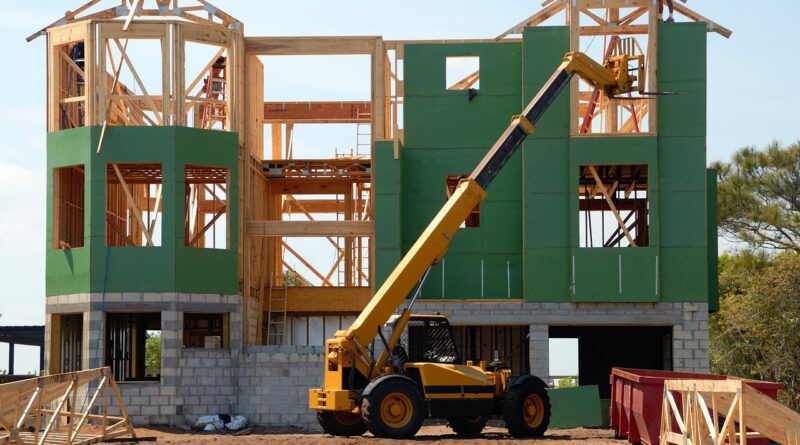
Genie telehandler guide to models, load charts, and jobsite fit
What a Genie telehandler is built to solve
A Genie telehandler is a rough-terrain material handler with a telescopic boom. It is built to lift, carry, and place loads in areas where a straight-mast forklift may not have enough reach or ground capability. In construction, masonry, agriculture, landscaping, and industrial yards, the main buying or rental question is not only “How much can it lift?” It is whether the selected Genie GTH model can handle the load at the required height, forward reach, ground condition, attachment, and access route.
Genie’s current North American GTH range runs from compact machines such as the GTH-5519 to higher-reach models such as the GTH-1056 and GTH-1256. These machines differ in working envelope, transport size, attachment flexibility, and capacity at maximum reach. For more machinery selection topics, see the Equipment & Machines section.
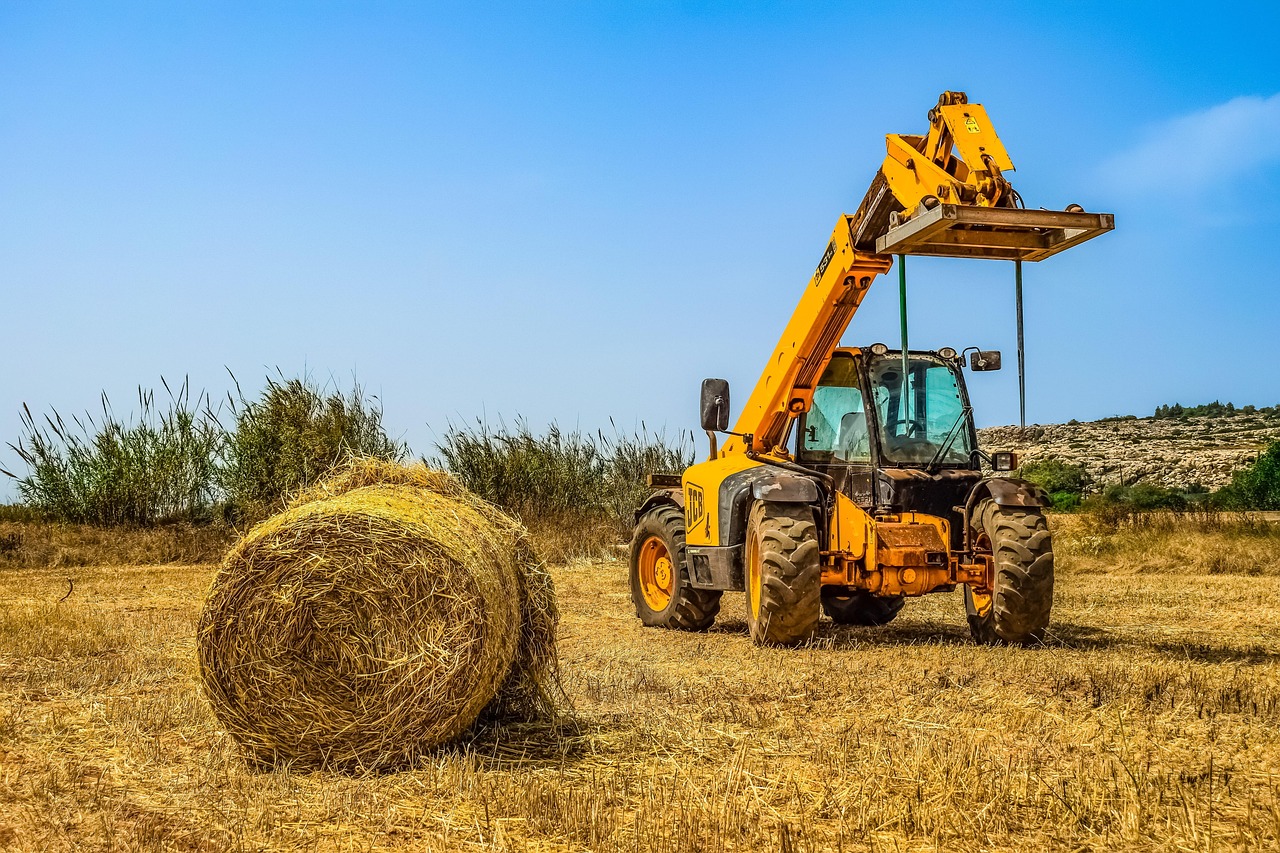
Genie GTH model range at a glance
Model names are useful shorthand, but they should not replace the machine’s data plate, serial-number-specific manual, or load chart. Genie’s own product information notes that model numbers commonly reflect rated capacity and lift height. Actual usable capacity still depends on boom angle, boom extension, attachment, load center, ground conditions, and configuration.
The comparison below summarizes commonly referenced Genie telehandler specifications from Genie’s 2026 North American product information and current model specification sheets. Always verify the exact machine, options, and attachment before planning a lift.
| Genie telehandler model | Max lift capacity | Max lift height | Max forward reach | Capacity at max height | Capacity at max reach | Typical fit |
|---|---|---|---|---|---|---|
| GTH-5519 | 5,500 lb | 18 ft 10 in | 11 ft 3 in | 4,400 lb | 1,900 lb | Compact sites, landscaping, masonry support, tight yards |
| GTH-636 | 6,000 lb | 36 ft | 21 ft 11 in | 5,000 lb | 1,500 lb | General construction where height matters more than heavy reach |
| GTH-844 | 8,000 lb | 43 ft 10 in | 28 ft 2 in | 6,000 lb | 2,000 lb | Framing, masonry pallets, jobsite staging, mid-height placement |
| GTH-1056 | 10,000 lb | 56 ft 7 in | 42 ft | 5,000 lb | 3,000 lb | Higher placement work, steel and material handling, larger sites |
| GTH-1256 | 12,000 lb | 56 ft 3 in | 42 ft | 6,000 lb | 3,500 lb | Heavier loads at reach, larger commercial and industrial jobsites |
How to read the numbers without oversizing the machine
Telehandler selection often goes wrong when rated maximum capacity is treated as capacity throughout the boom’s full working envelope. A 10,000 lb machine does not lift 10,000 lb at every height and every outreach. As the boom extends and the load moves farther from the front axle, available capacity drops. For many jobs, the “capacity at max reach” column is more relevant than the headline rating.
Maximum lift capacity is only one condition
Maximum lift capacity is usually available only in a limited area close to the machine, with approved forks or another approved attachment and a defined load center. If a pallet is off center, an attachment adds weight, or the boom must extend across an excavation, usable capacity may be much lower. OSHA’s powered industrial truck guidance emphasizes that load size, position, and weight distribution affect truck capacity and stability. That principle is especially important on a telescopic boom machine because reach changes the leverage on the chassis.
Capacity at maximum height and maximum reach tell different stories
Two jobs may point to different Genie telehandler models even if the headline load looks similar. A contractor placing material on an upper floor may care most about capacity at maximum height. A crew unloading from one side of a congested area may need capacity at forward reach. For example, the GTH-636 has a 6,000 lb maximum rating but a 1,500 lb capacity at maximum reach. The GTH-844 raises the maximum rating to 8,000 lb and provides 2,000 lb at maximum reach. The GTH-1056 reaches farther and higher, while the GTH-1256 adds more rated capacity for heavier material-handling plans.
Load charts are part of the lift plan
A load chart is not a formality. It is the document that connects load weight, boom angle, boom extension, attachment, and machine setup. Before using a Genie telehandler, the operator and supervisor should confirm the load weight, load center, attachment, travel path, landing point, and ground conditions. If any of those factors changes, the lift plan should be checked again.
Matching a Genie telehandler to common jobsite needs
The right Genie telehandler is the smallest machine that can safely perform the planned work with a reasonable margin, not automatically the largest model available. Oversizing can increase rental cost, transport complexity, fuel use, turning clearance, and ground pressure. Undersizing can lead to unsafe lifts, repeated repositioning, and lost productivity.
Compact access and low-height material handling
The GTH-5519 is the most compact option in this group. Its specification sheet lists a 5 ft 11 in width, 6 ft 6 in stowed height, and 12 ft 3 in stowed length without forks. It is suited to tight residential projects, landscape supply yards, masonry staging, and agricultural tasks where reach is useful but site access is limited. Its 18 ft 10 in maximum lift height and 11 ft 3 in forward reach make it a practical alternative to a larger rough-terrain forklift when the job does not need a 40 ft or 50 ft boom.
General building construction
The GTH-636 and GTH-844 sit in the middle of the range. The GTH-636 provides 36 ft of maximum lift height in a machine rated at 6,000 lb. The GTH-844 adds higher capacity and more reach for heavier pallets and mid-height placement. These models are often easier to justify when crews need a balance of mobility, height, and capacity without stepping up to a 10,000 lb or 12,000 lb class machine.
Higher reach and heavier placement work
The GTH-1056 and GTH-1256 are aimed at larger jobsites where crews need 42 ft of forward reach and more than 56 ft of maximum lift height. The GTH-1056 is rated at 10,000 lb maximum lift capacity. The GTH-1256 raises that headline capacity to 12,000 lb and lists higher capacity at both maximum height and maximum reach. These models are more appropriate when the work involves upper-level staging, heavier bundles, greater outreach, or limited opportunities to reposition the machine close to the landing area.
Attachments can improve productivity but change the math
Telehandlers gain much of their value from attachment flexibility. Forks are the everyday tool, but buckets, carriages, lifting hooks, work platforms where permitted, truss booms, and other attachments may be available depending on the model and region. Genie lists Quick-Attach systems and model-specific accessory options across its telehandler information, but compatibility must be checked by model, serial number, and approved use.
The key selection point is that an attachment is not just an accessory; it becomes part of the lift calculation. Attachment weight reduces remaining capacity, and some attachments shift the load center forward. A bucket used for loose material creates different loading behavior than pallet forks carrying a centered pallet. A lifting hook or jib may change the effective radius. If the attachment has its own chart or rating, that information must be used with the machine’s telehandler load chart.
Hydraulic requirements also matter. Attachments that need auxiliary flow and pressure should be matched to the machine’s hydraulic capability. If a contractor plans to use a broom, grapple bucket, or auger-style tool, flow, pressure, coupler type, and control layout should be confirmed before the machine arrives. A telehandler that can lift the load but cannot properly run the attachment may still be the wrong choice. See also: CNC Machining.
Terrain, access, and transport should shape the decision
A Genie telehandler is built for rough-terrain use, but “rough terrain” does not mean every surface is acceptable. Ground bearing capacity, slope, potholes, debris, soft fill, snow, mud, and underground structures can all affect stability. A lift that is safe on firm, level ground may not be safe on a sloped access road or a freshly backfilled trench line.
Frame leveling and four-wheel steering are useful features on many rough-terrain telehandlers, but they do not remove the need for a stable surface. The operator should set up on ground that can support the combined weight of the machine, load, attachment, and dynamic movement. Travel with the boom raised should be minimized, and site traffic routes should be planned to avoid overhead obstructions, pedestrians, excavations, and congested staging areas.
Transport size is another practical issue. The GTH-5519 is much easier to move and maneuver than a high-reach GTH-1056 or GTH-1256. Larger models may require different trailers, permits, turning space, unloading areas, and access gates. If the machine must serve multiple small sites in a week, transport efficiency can matter as much as lift capacity.
Safety and compliance considerations for U.S. users
In U.S. workplaces, telehandler use intersects with powered industrial truck training rules, construction equipment requirements, manufacturer instructions, and rough-terrain forklift standards. OSHA’s powered industrial truck training framework requires employers to ensure operators are trained and evaluated for the equipment and workplace conditions. OSHA guidance also states that operator performance evaluations are required at least once every three years, with refresher training triggered by unsafe operation, incidents, different equipment, or changed workplace conditions.
ANSI/ITSDF B56.6-2021 addresses safety requirements for rough terrain forklift trucks, including design, operation, and maintenance considerations for machines intended to work on unimproved natural terrain and disturbed construction-site terrain. For an equipment owner or fleet manager, the compliance discussion should not stop at the rental agreement. The site should also maintain inspection routines, operator authorization records, attachment approvals, load chart access, and maintenance documentation.
- Confirm the operator has documented training and evaluation for the telehandler type and workplace conditions.
- Keep the correct operator manual and load charts with the machine.
- Inspect tires, forks, carriage, boom, hydraulics, brakes, steering, alarms, lights, and attachment locking systems before use.
- Verify load weight, load center, and landing point before the lift.
- Keep personnel clear of suspended loads and the machine’s travel path.
- Use only approved attachments and follow the attachment-specific capacity information.
What to check before renting or buying
Before choosing a Genie telehandler, define the work rather than starting with the model number. A short pre-rental or pre-purchase worksheet can prevent most sizing mistakes:
- What is the heaviest load, including packaging, rigging, and attachment weight?
- What is the required landing height?
- How far forward must the load be placed from the front of the machine?
- Will the machine travel loaded, or only pick and place from a setup position?
- What ground conditions and slopes will the machine encounter?
- Which attachments are required, and are they approved for the selected model?
- Are there width, height, turning-radius, or trailer limitations?
- Does the site have trained operators and a documented inspection process?
For many jobs, the best answer will be a compact or mid-range machine because access and maneuverability are more valuable than unused capacity. For heavier commercial jobs, the added reach and capacity of a GTH-1056 or GTH-1256 may reduce repositioning and improve productivity. The best choice is the model whose load chart supports the actual lift, with enough practical margin for the attachment, terrain, and site layout.
Frequently asked questions
What does GTH mean on a Genie telehandler?
GTH is Genie’s telehandler model designation. In many model names, the numbers help indicate approximate lift capacity and lift height. For example, a GTH-1056 is associated with a 10,000 lb class rating and roughly 56 ft of lift height. Exact specifications still need to be checked for the specific machine.
Is a Genie telehandler the same as a forklift?
It performs forklift-style material handling, but it uses a telescopic boom and is generally treated as a rough-terrain forklift truck. That gives it much greater forward reach than a straight-mast forklift, but it also makes load chart discipline more important.
Which Genie telehandler is best for tight sites?
The GTH-5519 is usually the first model to evaluate for tight access because it is compact and has a shorter stowed length, lower stowed height, and narrower width than larger GTH machines. It is not the right choice for every job, however, because its height and reach are much lower than those of the mid-range and high-reach models.
Can attachments reduce telehandler capacity?
Yes. Attachment weight, load center, and geometry can reduce the capacity available for the material being handled. Operators should use the approved load chart and attachment information rather than assuming the base machine rating still applies.
Should I choose a GTH-1056 or GTH-1256?
Both are high-reach Genie telehandlers with 42 ft of listed maximum forward reach. The GTH-1256 provides higher maximum lift capacity and higher listed capacity at maximum reach, while the GTH-1056 may be sufficient where the load chart supports the planned work. The decision should be based on actual load weight, height, outreach, attachment, site access, and rental or ownership cost.