
Can CNC Turning Services Outperform Traditional Milling in Precision Workflows
Our Systems Have Detected Unusual Activity Coming From Your System. Please Try Again Later.
Precision manufacturing often faces a choice between CNC turning and traditional milling. The decisive factor lies in geometry, tolerance, and production scale. CNC turning services dominate when rotational symmetry and surface finish are critical, while milling remains indispensable for complex shapes and multi-axis contours. In modern workflows, hybrid systems now merge both techniques, closing the gap between speed and detail. For most high-volume cylindrical parts—such as shafts or bushings—turning delivers superior repeatability, lower setup time, and predictable tool wear. Milling still rules in flexibility but rarely matches turning’s concentric accuracy.
Comparing CNC Turning and Traditional Milling in Precision Manufacturing
Both CNC turning and milling share the goal of material removal with precision, yet their mechanical principles diverge sharply. Understanding these distinctions helps manufacturers align process selection with design intent.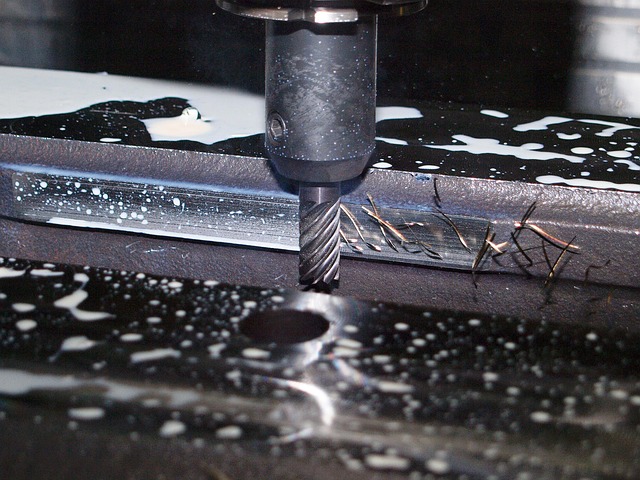
Core Principles of CNC Turning Processes
CNC turning rotates the workpiece while a stationary cutting tool removes material to form cylindrical or symmetrical parts. The process is particularly efficient for components requiring consistent diameters such as pins or threaded rods. High-speed rotation stabilizes chip formation, improving both dimensional accuracy and surface finish. In high-precision cnc turning services, automated tool changers enable continuous production with minimal operator input, especially for aerospace-grade alloys where tolerance drift is unacceptable.
Fundamentals of Traditional Milling Techniques
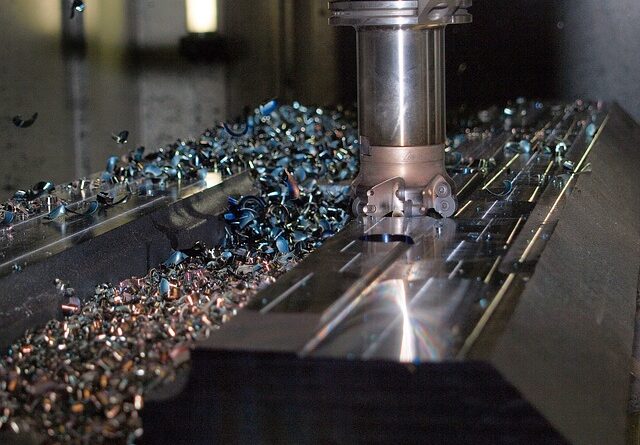
Milling employs a rotating cutter against a stationary workpiece to carve slots, pockets, or flat surfaces. It excels in fabricating prismatic geometries that demand multiple axes of motion. Multi-axis milling machines—often five-axis configurations—allow intricate contours without repositioning the part manually. However, each additional axis introduces calibration complexity that can affect repeatability over long runs. Milling’s adaptability makes it ideal for prototypes or small batches where shape variety outweighs cycle time.
Evaluating Precision Capabilities Between Turning and Milling
In precision manufacturing, accuracy is not only dimensional but also procedural—how reliably those dimensions are reproduced across hundreds or thousands of cycles.
Dimensional Accuracy and Surface Finish Comparison
CNC turning achieves tighter tolerances on round features because rotational symmetry naturally centers the cutting path around the workpiece axis. This results in uniform diameters within microns of specification. Milling can produce intricate forms but may require polishing or grinding to reach comparable smoothness on planar surfaces. Tool path programming directly influences precision; even slight deviations in feed rate during contour transitions can alter finish quality.
Repeatability and Process Stability in High-Tolerance Applications
Turning demonstrates exceptional repeatability due to its controlled kinematics and rigid spindle alignment. Once parameters are set, identical parts emerge consistently across extended production runs. Milling stability depends heavily on machine stiffness and spindle balance; vibration or tool deflection can introduce minor inconsistencies over time. Regular calibration routines help mitigate these effects but increase maintenance intervals compared to turning operations.
Efficiency and Workflow Optimization in CNC Turning Services
Efficiency defines profitability in machining environments where downtime translates directly into cost overruns. CNC turning services often outperform milling when throughput matters more than geometric complexity.
Setup Time and Production Throughput Advantages
Turning setups are typically faster because fixtures like chucks or collets center parts automatically along their axis. Automated chucking systems further cut manual handling time between cycles. Continuous bar feeders sustain production by supplying raw material directly into the spindle without operator interruption—a key advantage for automotive shafts or hydraulic fittings produced in thousands per batch.
Tool Life Management and Maintenance Efficiency
Tool wear during turning follows predictable patterns since engagement remains consistent along the circumference of the workpiece. Real-time monitoring sensors can adjust feed rates dynamically to extend insert life before replacement becomes necessary. Fewer tool changes mean smoother workflow continuity and reduced scrap risk from mid-cycle interruptions.
Material Compatibility and Application Scope of CNC Turning
Material behavior under cutting stress determines process selection as much as geometry does.
Metals and Alloys Commonly Used in Turning Operations
Stainless steel, aluminum, brass, and titanium dominate turning applications due to their machinability balance between strength and ductility. Harder materials demand slower speeds or specialized carbide tooling with coolant delivery optimized for heat dissipation. For example, aerospace titanium alloys require lower cutting speeds but benefit from consistent chip evacuation achievable through high-pressure coolant systems integrated into modern lathes.
Specialized Applications Benefiting from CNC Turning Services
Industries relying on concentricity—like aerospace turbine shafts or automotive drive pins—prefer cnc turning services for their inherent balance control. Medical device manufacturers use micro-turning to achieve sub-millimeter precision on implants such as bone screws where surface integrity affects biocompatibility outcomes.
Integrating CNC Turning with Advanced Manufacturing Technologies
The boundary between turning and milling blurs as hybrid machinery evolves toward fully integrated production cells combining both operations under one control system.
Hybrid Machining: Combining Turning with Milling Capabilities
Multi-tasking centers merge lathe spindles with milling heads so operators can complete complex parts without repositioning them manually. This integration reduces part handling errors while allowing simultaneous machining of cylindrical bases and milled features like keyways or bolt patterns—a significant advantage for components such as pump housings that mix round bores with planar flanges.
Automation and Digital Control Enhancements in Modern CNC Turning Centers
Modern lathes now feature robotic arms transferring finished pieces from chuck to conveyor automatically, streamlining multi-stage workflows. IoT-enabled sensors track spindle temperature, vibration levels, and lubrication flow to predict maintenance needs before breakdowns occur. Integration with CAD/CAM platforms closes the loop between digital design data and physical execution so geometry changes propagate instantly through machine code updates.
Assessing When CNC Turning Outperforms Traditional Milling in Precision Workflows?
Selecting between these two machining methods requires matching process capability with design intent rather than relying on habit or equipment availability alone.
Criteria for Selecting the Appropriate Machining Process
Cylindrical versus prismatic geometry remains the first decision point: if a part’s primary shape revolves around an axis—literally—it belongs on a lathe. Production volume also matters; high-volume runs favor turning efficiency due to faster cycle times per piece, whereas low-volume custom shapes justify milling’s flexibility despite longer setups. When tolerance demands fall below 5 microns concentricity, only dedicated precision lathes consistently meet specification without secondary finishing steps.
Strategic Considerations for Workflow Optimization in Precision Manufacturing Environments
Combining both technologies within one workflow maximizes plant versatility by routing each feature type to its optimal machine class. Simulation tools can model cycle times against cost targets before actual machining begins, revealing trade-offs invisible at quoting stage. Continuous improvement programs focusing on spindle utilization help maintain balanced workloads across hybrid cells where one idle machine could offset overall efficiency gains elsewhere.
FAQ
Q1: What distinguishes CNC turning from milling?
A: Turning rotates the workpiece while cutting tools stay fixed; milling rotates tools around a stationary part to remove material selectively.
Q2: Why is CNC turning preferred for round components?
A: Rotational symmetry allows tighter diameter control and smoother finishes compared to linear tool paths typical of milling machines.
Q3: Can one machine perform both operations?
A: Yes, multi-tasking centers combine lathe spindles with milling heads enabling both processes within a single setup cycle.
Q4: Which materials suit cnc turning services best?
A: Aluminum, stainless steel, brass, copper alloys, and titanium all perform well due to predictable chip formation under rotational loads.
Q5: How does automation improve modern turning workflows?
A: Robotic loaders reduce manual handling time while sensor-based monitoring predicts tool wear early enough to avoid unplanned stoppages.