

What Is ECM Machining and When Should You Use It for Hard Metals
What Is ECM Machining?
ECM machining is a non-traditional metal removal method for conductive parts that are hard, tough, thin, or not easy to cut with standard tools. In the wider group of machining processes, it is used alongside EDM, laser machining, grinding, milling, and broaching, but the metal removal is chemical and electrical instead of mechanical.
The working idea is straightforward. The workpiece is the anode, a shaped tool is the cathode, and electrolyte runs through a narrow gap while direct current dissolves metal from the part surface. Open University Manupedia describes ECM as a process for electrically conductive materials, while an Electrochimica Acta paper from 2016 reports industrial ECM current densities around 100 A/cm² in neutral electrolytes such as aqueous sodium nitrate. (open.edu)
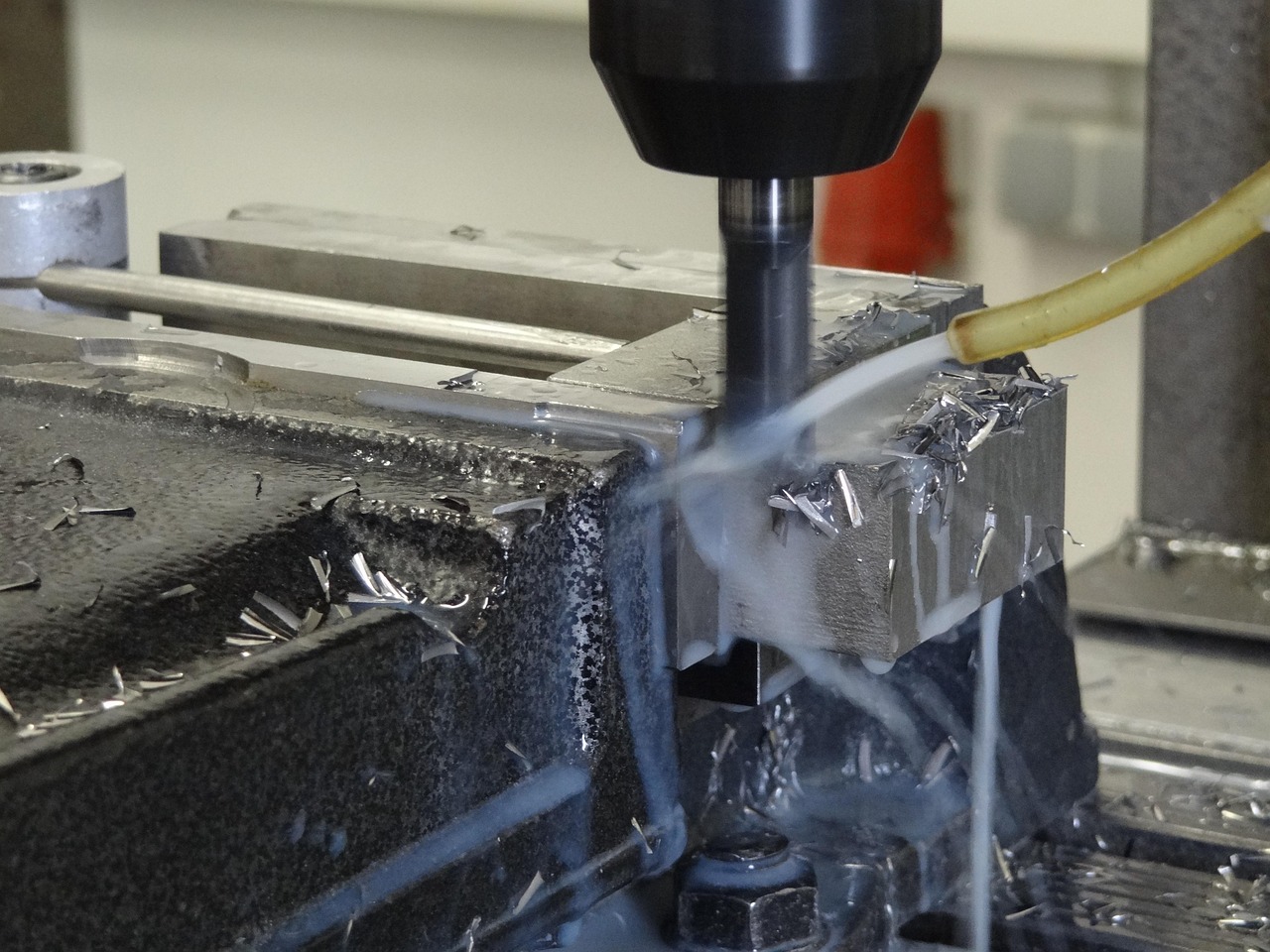
Controlled Anodic Dissolution
ECM removes metal by anodic dissolution. In shop terms, the workpiece surface releases metal ions into the electrolyte. The tool is not scraping chips from the part, and it does not work like a cutter. Because removal follows current flow, the tool shape, gap size, voltage, feed rate, electrolyte chemistry, and flushing all affect the final result.
Conductive Workpiece and Shaped Cathode
You can use ECM only when the workpiece conducts electricity. Stainless steel, nickel alloys, titanium alloys, tool steels, cobalt-chrome, and many superalloys are common candidates. Ceramics, plastics, glass, and most composites are not suitable unless a special hybrid method is used. The cathode tool is usually copper, brass, bronze, or stainless, and it is shaped as the negative of the feature you need.
Flowing Electrolyte and Stable Gap
The electrolyte carries current, clears reaction products, and helps keep the temperature under control. If flow is weak, sludge and gas can upset the gap. If pressure is too high, thin walls or blades may move. One shop-floor point is worth saying plainly: many ECM problems that look electrical at first are actually flushing problems.
Why Does ECM Machining Work Well on Hard Metals?
ECM starts to make sense when the material is rough on normal cutters. Inconel, hardened stainless, titanium, and cobalt-chrome can wear inserts, build heat, and leave burrs. ECM is less affected by hardness because the metal is removed through electrochemistry, not cutting pressure.
Hardness Has Little Effect
With milling or turning, a harder alloy usually means lower cutting speed, higher tool cost, and more attention to holding the part. In ECM, the main concern is electrochemical behavior, not hardness. A hardened steel and a softer steel may still need different settings. Even so, hardness itself is not what wears the tool.
No Cutting Force or Tool Rubbing
Because the cathode does not touch the workpiece, ECM creates very little mechanical stress. This helps when machining thin ribs, fine slots, delicate leading edges, and small holes in parts that would chatter under cutter pressure. It also lowers the chance of distortion after the feature is made. For thin or high-value parts, that can matter more than cycle time alone.
Burr-Free Edges for Small Features
Burr control is one reason buyers ask about ECM. Cross holes, fuel passages, medical slots, and small flow features can be hard to deburr after drilling or milling. ECM can form or finish these features with clean edges. That may remove hand deburring from the route, which is slow, uneven, and easy to underprice during quoting.
How Does ECM Machining Compare with EDM and CNC Milling?
ECM is not a replacement for every cutting process. It works best when heat damage, tool wear, burrs, or hard alloy geometry are driving the cost. When comparing processes, buyers should look at tolerance, finish, surface integrity, volume, environmental handling, and tooling lead time.
ECM vs EDM for Thermal Damage
EDM is also a non-contact process, but it removes metal by spark erosion. A 2022 review indexed by PubMed Central describes die-sinking EDM as a thermal erosion process and discusses performance measures such as tool wear rate, surface roughness, surface integrity, and recast layer formation. ECM works differently because it avoids melting and resolidifying the workpiece surface. For that reason, it is often selected when a recast layer is not allowed. (pmc.ncbi.nlm.nih.gov)
ECM vs CNC Milling for Tool Wear
Milling is still faster and cheaper for many simple shapes, especially aluminum, low-carbon steel, and open features with clear tool access. ECM becomes more useful when cutter life is the main cost problem. Since the cathode tool is not used up like a cutting edge, repeat jobs can run with fewer tool-change issues once the process has been proven. The first setup takes work, but the later batches can be more stable.
ECM vs Grinding for Finishing Work
Grinding gives strong accuracy and surface finish, but wheel wear, heat, and access can limit it. ECM can finish internal forms, pockets, and edges that a wheel cannot reach. For very tight flatness or roundness, grinding may still be the better choice. In real production, the answer is often a mixed route: rough mill first, then use ECM on the feature that causes problems.
What Accuracy, Finish, and Geometry Can You Expect?
ECM capability should be treated as process-specific, not as one fixed number. The machine, power supply, pulse control, cathode design, electrolyte flow, and alloy all affect the result. Public engineering data can still give useful ranges for early planning.
Typical Tolerance Ranges
Open University Manupedia lists typical ECM accuracy of about ±0.1 mm for contoured cavities and about ±0.025 mm for frontal cuts or work with special tools. Those numbers are helpful for early DFM talks. Still, a supplier should prove the exact feature with trials, gage strategy, and inspection data before production release. (open.edu)
Smooth Surfaces from Atomic-Level Removal
The same Open University source gives typical surface roughness of about 0.4 to 0.8 µm Ra, with 0.1 µm Ra possible in certain frontal-cut conditions. That is why ECM is often used for finishing, deburring, and flow-surface work. The point is not only a shiny surface. Smoother passages can matter for pumps, fuel systems, implants, and die surfaces.
Tooling Shape and Electrolyte Flow
The cathode is not just the desired part shape copied in reverse. It needs overcut allowance, flow channels, insulation, lead-in space, and compensation for local current density. Sharp inside corners, blind pockets, and deep narrow forms need extra attention. Good ECM tooling may look plain from the outside, but much of the work is hidden in the gap. See also: CNC Machining.
Where Does ECM Machining Fit in Real Production?
ECM fits best where a difficult feature repeats across many parts. The setup cost is usually too high for a one-off bracket. For hundreds or thousands of hard features with steady quality needs, the cost picture can change in its favor.
Aerospace Blisks and Turbine Features
Aerospace parts often use nickel and titanium alloys because they keep strength at high temperature. Those same alloys are slow and costly to mill. ECM is used for blade roots, blisks, diffuser features, cooling passages, and airfoil finishing. It can handle hard conductive alloys without cutting pressure, which is useful on thin and high-value parts.
Medical and Stainless Components
Medical parts often combine hard-to-machine materials with clean-edge requirements. Cobalt-chrome, titanium, and stainless parts may need burr-free slots, smooth transitions, or low-stress surfaces. ECM can help with orthopedic tools, implant features, and surgical instrument details. Validation, cleaning, and traceability still decide the final process route.
Dies, Molds, and Deep Cavities
Tooling work can also use ECM for hard die materials, complex cavities, and features that would need long, fragile cutters. If a deep pocket burns through end mills or leaves chatter marks, ECM may cut down later finishing time. It is not always cheaper on the first quote. When scrap, polishing, and rework are counted properly, the result may look different.
What Should You Check Before Choosing ECM Machining?
Before you put ECM on a drawing, check the real part problem. Is it tool wear, burrs, heat damage, feature access, or surface finish? Once that is clear, it is easier to judge whether ECM is worth the tooling and process development.
Material Conductivity and Alloy Chemistry
Start with conductivity and alloy chemistry. Stainless, nickel, titanium, and cobalt alloys can behave very differently in the same electrolyte. Passive oxide films, chromium content, and local geometry can change the removal rate. If there is no reliable public data for your exact alloy and electrolyte combination, supplier trials should be treated as required, not optional.
Batch Size and Tooling Cost
ECM tooling needs design time, flow testing, insulation, fixtures, and inspection planning. For a prototype, CNC or EDM may cost less even if the cutting process is slower. For repeat production, ECM becomes stronger because the tool does not wear in the normal cutting sense. Cycle quality can also stay more consistent from batch to batch.
Electrolyte Waste and Operator Safety
Waste handling cannot be left until the end. A U.S. EPA metal products and machinery effluent document states that electrochemical machining includes spent electrolytes and rinses. OSHA’s public hexavalent chromium guidance also flags electroplating and chromium-bearing industrial processes as exposure areas. For chromium-containing ECM work, sampling and handling should follow the rules, not guesswork. (downloads.regulations.gov)
FAQ
Q1: Is ECM Machining the Same as EDM? A: No. ECM removes metal by electrochemical dissolution in an electrolyte, while EDM removes metal by spark erosion. EDM can leave a recast layer; ECM is non-thermal in its removal action.
Q2: What Materials Can You Machine with ECM? A: You can machine electrically conductive metals such as stainless steel, nickel alloys, titanium alloys, hardened steels, and cobalt-chrome. Non-conductive materials need another process or a special hybrid method.
Q3: Does ECM Machining Create Burrs? A: ECM is known for burr-free edges because it dissolves metal without plastic deformation from a cutting edge. That makes it useful for cross holes, slots, flow passages, and small medical or aerospace features.
Q4: Is ECM Machining Good for Prototypes? A: Sometimes, but not always. ECM often needs custom cathodes and trials, so CNC milling or EDM may be better for one-off parts. ECM becomes more attractive when the same hard feature repeats in production.
Q5: What Is the Biggest Risk When Using ECM? A: Poor process control. Gap stability, electrolyte flow, alloy response, waste treatment, and inspection must be planned together. If any one of those is weak, accuracy and surface quality can drift quickly.