
Autonomous Mobile Robots by Wesar: Revolutionizing Industrial Efficiency
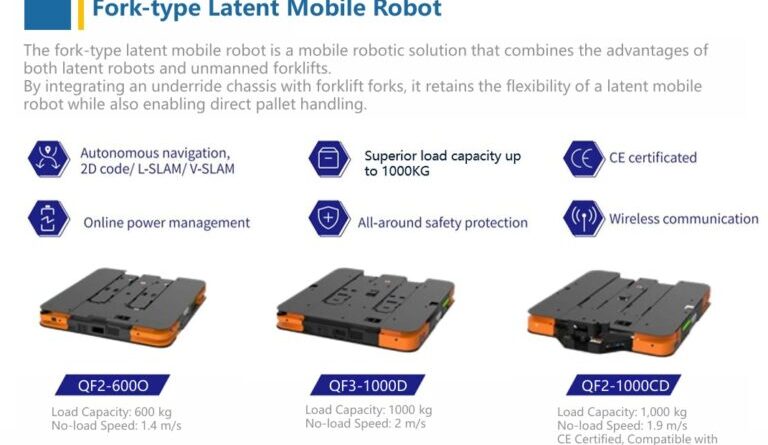
In the fast-paced world of industrial machinery, the demand for efficiency, precision, and seamless operations is ever-increasing. Companies are constantly on the lookout for solutions that can streamline their processes, reduce costs, and enhance productivity. Enter Wesar‘s Autonomous Mobile Robots (AMRs), a game-changer in the realm of industrial automation. These state-of-the-art AGV (Automated Guided Vehicle) robots are transforming the way industries operate, offering a one-stop intelligent factory solution that combines cutting-edge technology with practical application.
Wesar specializes in providing intelligent factory system design and construction, focusing on green intelligent logistics robots. Their AMRs are at the forefront of this innovation, offering a versatile and efficient solution for a variety of industrial applications. But what exactly makes these robots so revolutionary, and why are they becoming an essential tool in the industrial machinery sector?
To understand the impact of Wesar’s AMRs, it’s crucial to first comprehend the challenges faced by the industry. Manufacturing and logistics environments are often characterized by complex workflows, requiring precise coordination and management of resources. Traditional methods, which often rely on manual labor and outdated machinery, are not only time-consuming but also prone to human error. This can lead to inefficiencies, increased operational costs, and, ultimately, reduced profitability.
Wesar’s AMRs address these challenges by providing an autonomous solution that can navigate industrial environments with ease. Equipped with advanced sensors and AI-driven technology, these robots can move seamlessly through factory floors, warehouses, and distribution centers, transporting goods and materials without the need for human intervention. This not only frees up valuable human resources for more critical tasks but also ensures that processes are carried out with precision and consistency.
One of the key benefits of Wesar’s AMRs is their adaptability. Unlike traditional AGVs, which require fixed pathways and specific infrastructure, Wesar’s robots can adapt to dynamic environments. They use sophisticated algorithms to map their surroundings and make real-time decisions, allowing them to navigate around obstacles and adjust to changes in the layout. This flexibility makes them ideal for industries where adaptability and quick response times are essential.
Moreover, Wesar’s AMRs are designed with sustainability in mind. As industries become increasingly aware of their environmental impact, the demand for green solutions is on the rise. Wesar’s robots consume less energy compared to conventional machinery, contributing to a reduction in the overall carbon footprint of industrial operations. This not only aligns with global sustainability goals but also helps companies adhere to stringent environmental regulations.
The implementation of Wesar’s AMRs also leads to significant cost savings. By automating routine tasks, companies can reduce labor costs and minimize the risk of human error, which can lead to costly rework and delays. Furthermore, the increased efficiency and productivity facilitated by these robots can lead to faster turnaround times and improved customer satisfaction, ultimately boosting the bottom line.
A practical example of Wesar’s AMRs in action can be seen in the automotive industry. Car manufacturers often require precise coordination of parts and components to maintain efficient assembly lines. Wesar’s robots can be programmed to transport these components from storage to the production line, ensuring that the right parts are available at the right time. This minimizes downtime and keeps the assembly process running smoothly.
In the e-commerce sector, where rapid order fulfillment is critical, Wesar’s AMRs play a vital role in optimizing warehouse operations. They can quickly and accurately pick and transport items, significantly speeding up the order processing time. This capability is particularly valuable during peak shopping seasons, where the volume of orders can overwhelm traditional manual systems.
But the benefits of Wesar’s AMRs extend beyond efficiency and cost savings. By reducing the reliance on manual labor, these robots also enhance workplace safety. In industries where heavy lifting and repetitive tasks are common, the risk of workplace injuries is high. By taking on these tasks, Wesar’s robots help create a safer working environment, reducing the incidence of work-related injuries and associated costs.
Wesar’s commitment to innovation is evident in their continuous efforts to enhance the capabilities of their AMRs. They are investing in research and development to integrate the latest technologies, such as machine learning and the Internet of Things (IoT), into their robots. This will enable their AMRs to become even more intelligent and responsive, further enhancing their value proposition.
The future of industrial machinery is undoubtedly intertwined with the advancement of automation technologies. As industries strive to remain competitive in an increasingly globalized market, the adoption of autonomous solutions like Wesar’s AMRs is not just a trend but a necessity. These robots are setting a new standard for efficiency, flexibility, and sustainability in the industrial sector.
In conclusion, Wesar’s Autonomous Mobile Robots are revolutionizing the industrial machinery industry by providing a comprehensive solution that addresses the key challenges faced by manufacturers and logistics providers. Their ability to navigate dynamic environments, coupled with their energy efficiency and cost-saving potential, makes them an invaluable asset for any company looking to stay ahead of the curve. As technology continues to evolve, Wesar remains at the forefront, pioneering the next generation of intelligent factory solutions that will define the future of industrial automation.