
Advanced machining processes for precision manufacturing
What advanced machining means in modern manufacturing
Advanced machining is not a single process. It is a practical group of machining methods used when conventional cutting cannot deliver the required material removal, geometry, surface integrity, accuracy, or process stability at an acceptable cost. The category includes nontraditional processes such as EDM, electrochemical machining, laser machining, abrasive waterjet cutting, ultrasonic machining, and newer hybrid systems that combine two or more energy sources. For manufacturers, the value is not novelty. It is the ability to machine hardened alloys, superalloys, ceramics, composites, micro-features, thin walls, and complex profiles with fewer compromises.
Within the broader field of machining processes, advanced machining is best understood as a selection strategy. The question is not whether a process is newer than milling or turning. The real question is whether its removal mechanism fits the part requirement better.
Why conventional machining reaches its limits
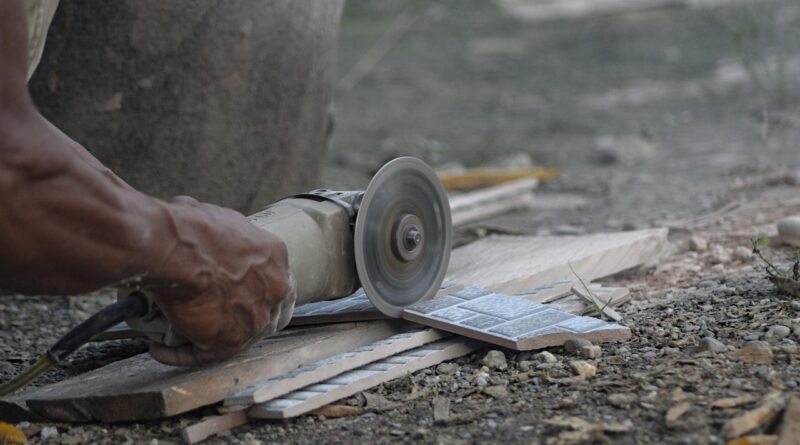
Conventional machining removes material mainly through mechanical contact between a cutting edge and the workpiece. That approach remains highly productive for many metals and production parts. However, the cutting force, tool wear, heat generation, chip formation, and vibration that come with mechanical contact can become limiting factors.
These limits are most visible in several manufacturing situations:
- Difficult-to-cut materials: Nickel-based superalloys, titanium alloys, hardened steels, carbides, advanced ceramics, and fiber-reinforced composites can cause rapid tool wear or unstable cutting.
- Complex internal profiles: Deep slots, sharp internal corners, shaped cooling holes, and narrow cavities may be difficult or impossible to reach with a rotating cutter.
- Thin or delicate parts: Low-stiffness workpieces can deflect under cutting forces, causing dimensional error or chatter.
- Micro-scale features: Small holes, slots, and surface textures may require process control beyond the practical limits of standard tooling.
- Surface integrity requirements: Aerospace, medical, die and mold, and energy components often need controlled surface finish, limited burrs, and predictable subsurface effects.
Advanced machining addresses these problems by changing how material is removed. Instead of relying only on a cutting edge, it may use electrical discharges, controlled electrochemical dissolution, focused heat, abrasive particles, high-pressure fluid, ultrasonic vibration, or a hybrid combination.
Main types of advanced machining processes
The most useful way to compare advanced machining processes is by energy mechanism, not by machine appearance. Industry references such as the ASM Handbook and academic machining texts commonly group nontraditional methods into mechanical, thermal, electrical, electrochemical, chemical, and hybrid categories.
Electrical discharge machining
Electrical discharge machining, or EDM, removes conductive material through controlled electrical sparks between an electrode and the workpiece. Die-sink EDM forms cavities using a shaped electrode, while wire EDM cuts profiles using a continuously fed wire. EDM is valuable for hardened tool steels, carbides, dies, molds, fine slots, and intricate profiles. Its main limitation is that the workpiece must be electrically conductive. Thermal effects can also create a recast layer or microcracks if parameters and finishing passes are not controlled.
Electrochemical machining
Electrochemical machining, or ECM, removes metal by anodic dissolution. A shaped tool acts as the cathode, the workpiece acts as the anode, and an electrolyte carries current through a controlled gap. ECM can machine hard conductive metals without mechanical cutting forces and with very low tool wear. It is especially relevant for complex shapes in aerospace and energy components. The trade-offs include electrolyte handling, fixture complexity, gap control, and the need for careful process qualification.
Laser machining
Laser machining uses concentrated thermal energy for cutting, drilling, trimming, texturing, or micromachining. It is useful when non-contact processing, high speed, small spot size, or automation is important. Laser machining can work on many metals and nonmetals, depending on wavelength, power, pulse duration, and material response. The main risk is heat-affected material, which may require post-processing or parameter optimization when fatigue life, metallurgical condition, or edge quality is critical.
Abrasive waterjet machining
Abrasive waterjet machining cuts by accelerating abrasive particles in a high-pressure water stream. Because the process is mechanically erosive rather than thermally driven, it avoids a heat-affected zone. It can cut metals, stone, glass, composites, ceramics, and layered materials. Common limits include kerf taper, abrasive consumption, slower speeds in thick hard materials, and the need to manage water, slurry, and spent abrasive.
Ultrasonic machining
Ultrasonic machining uses high-frequency vibration and abrasive action to remove material, often from hard and brittle materials. It is useful for ceramics, glass, carbides, and delicate features where conventional cutting may cause cracking or excessive tool force. The process is generally chosen for precision and material suitability rather than maximum material removal rate.
Hybrid machining
Hybrid machining combines process mechanisms to improve performance. A CIRP definition published in manufacturing research describes hybrid processes as systems where process mechanisms, energy sources, or tools interact in a controlled way and significantly affect performance. Examples include laser-assisted milling, ultrasonic-assisted grinding, electrochemical grinding, mill-turn platforms, and additive-subtractive machines. The purpose is usually to reduce tool wear, improve surface quality, shorten the process chain, or machine materials that are otherwise inefficient to cut.
Selection matrix for advanced machining
No advanced process is universally superior. A sound selection starts with the part material, feature geometry, tolerance, surface integrity requirement, production volume, and downstream inspection plan. The following matrix summarizes practical differences.
| Process | Best fit | Key advantages | Important limitations |
|---|---|---|---|
| Wire EDM | Conductive parts with complex 2D profiles | High accuracy, low cutting force, good for hardened metals | Conductive materials only, thermal recast risk, wire and dielectric management |
| Die-sink EDM | Dies, molds, cavities, sharp internal forms | Machines hardened materials and difficult cavities | Electrode manufacturing time, slower removal, surface layer control required |
| ECM | Complex conductive metal shapes | No mechanical tool wear, low cutting force, no burrs in suitable setups | Electrolyte handling, high setup discipline, process gap control |
| Laser machining | Thin sections, micro-holes, trimming, marking, automated cutting | Non-contact, fast, flexible, easy to automate | Heat-affected zone, reflectivity issues, fume control, edge quality limits |
| Abrasive waterjet | Mixed materials, composites, plate cutting, heat-sensitive work | No thermal damage, broad material range, low fixturing force | Kerf taper, abrasive cost, slurry handling, limited fine-detail efficiency |
| Ultrasonic machining | Hard brittle materials and delicate features | Low thermal damage, suitable for ceramics and glass | Lower material removal rate, tool wear, slurry control |
| Hybrid machining | Difficult materials or process-chain reduction | Can improve productivity, tool life, or surface finish | Higher machine complexity, more variables to qualify |
The most common mistake is choosing an advanced process because the material is difficult, without first defining the feature-level problem. For example, abrasive waterjet may be excellent for rough profiling a titanium plate, while EDM may be better for a precise internal corner, and finish milling may still be required for a sealing face. In many factories, the best answer is a process chain rather than a single machine.
How advanced machining changes process planning
Advanced machining affects more than the operation itself. It changes how engineers plan tolerances, datums, fixtures, inspection, and finishing. The earlier these effects are considered, the easier it is to avoid expensive rework.
Design for the removal mechanism
Each process has a physical signature. EDM leaves a spark-eroded surface. Laser machining introduces local heating. Waterjet cutting has a kerf and possible taper. ECM depends on the electric field and electrolyte flow. Ultrasonic machining depends on abrasive action and tool shape. Design engineers should not treat these methods as simple drop-in replacements for conventional milling. Corner radii, minimum web thickness, entrance and exit conditions, hole depth-to-diameter ratio, and allowable surface layer condition should be specified with the selected process in mind.
Control surface integrity, not only dimensions
Dimensional accuracy is only one part of advanced machining quality. Surface roughness, recast layer, heat-affected zone, microcracking, residual stress, burr formation, and contamination may matter more than nominal size in fatigue-loaded or safety-critical parts. A print that specifies tight dimensions but ignores surface integrity can lead to disputes between design, manufacturing, and quality teams. See also: CNC Machining.
Plan for inspection and validation
Advanced machining often produces features that are hard to measure with basic gauges. Micro-holes, narrow slots, internal cavities, and shaped passages may require optical inspection, coordinate measuring machines, computed tomography, airflow testing, metallographic checks, or process coupons. For regulated sectors such as aerospace and medical manufacturing, the validation plan should be developed before production release, not after the first nonconformance.
Cost drivers and sustainability considerations
The cost of advanced machining is rarely just cycle time. Tooling, electrodes, wire, abrasives, electrolytes, shielding gas, optics maintenance, filtration, skilled programming, setup trials, metrology, and waste handling all influence the true part cost. A process with a slower cutting speed can still be economical if it eliminates multiple setups, reduces scrap risk, or avoids a difficult finishing operation.
Energy and environmental factors also deserve attention. ISO 14955-1:2017 addresses the environmental evaluation of machine tools and focuses on energy efficiency during the use stage of the machine tool. For advanced machining, that perspective is useful because auxiliary systems can be significant: dielectric pumps in EDM, high-pressure pumps in waterjet cutting, chillers and extraction systems in laser machining, and electrolyte circulation in ECM. Comparing only spindle power or cutting speed misses much of the picture.
Waste streams differ as well. Waterjet cutting produces spent abrasive and sludge. EDM uses wire or electrodes and requires dielectric management. ECM requires electrolyte control and treatment. Laser machining may need fume extraction and filtration. These factors do not make the processes unsuitable, but they should be included in routing decisions, quotation models, and shop-floor controls.
When advanced machining is the right choice
Advanced machining is usually justified when it solves a defined manufacturing constraint. It may be the right choice when the part includes hard conductive materials, delicate geometries, minimal cutting-force tolerance, intricate internal profiles, micro-features, heat-sensitive laminates, or surface requirements that cannot be met reliably by conventional cutting alone.
It may be the wrong choice when the geometry is simple, the material cuts easily, tolerances are moderate, and conventional machining can meet the specification with stable tooling. In those cases, advanced machining can add unnecessary cost, process risk, and inspection burden.
A practical decision sequence is:
- Define the feature that conventional machining struggles to produce.
- Identify whether the limitation is tool wear, force, heat, access, burrs, surface integrity, or dimensional stability.
- Match the limitation to a removal mechanism such as discharge, dissolution, erosion, laser heating, or hybrid assistance.
- Check material compatibility, including conductivity, reflectivity, brittleness, thickness, and thermal sensitivity.
- Estimate total process-chain cost, including setup, consumables, inspection, finishing, and waste handling.
- Run a controlled trial on representative material before locking the routing.
This method keeps the focus on manufacturability rather than equipment labels. It also helps engineers defend the process choice when cost, quality, or delivery questions arise.
Frequently asked questions
Is CNC machining the same as advanced machining?
No. CNC describes computer numerical control of machine motion. A CNC mill can perform conventional machining, while a CNC EDM, laser machine, or hybrid platform may perform advanced machining. Control technology and removal mechanism are related, but they are not the same thing.
Which advanced machining process is best for hard metals?
It depends on the feature and the metal. EDM is often used for conductive hardened metals and carbides. ECM can be effective for complex conductive metal shapes where burr-free, low-force machining is needed. Laser machining may be suitable for cutting or drilling, but heat effects must be managed.
Does advanced machining eliminate finishing operations?
Sometimes, but not always. It can reduce burrs, enable near-net features, or create geometry that needs less manual work. However, EDM recast layers, laser heat effects, waterjet edge taper, or required sealing surfaces may still require finishing, polishing, grinding, or inspection-based rework.
Why is hybrid machining becoming more important?
Hybrid machining is important because many modern parts combine difficult materials, tight tolerances, and complex features. Combining mechanisms, such as vibration assistance, laser preheating, electrochemical action, or multi-process platforms, can reduce the weaknesses of a single process. The benefit must still be proven for each part family.
What should engineers specify before using advanced machining?
They should specify the functional surfaces, tolerance priorities, allowable surface condition, inspection method, material condition, and any limits on thermal, chemical, or mechanical effects. Clear specifications help prevent a process that meets dimensions from failing functional requirements.