
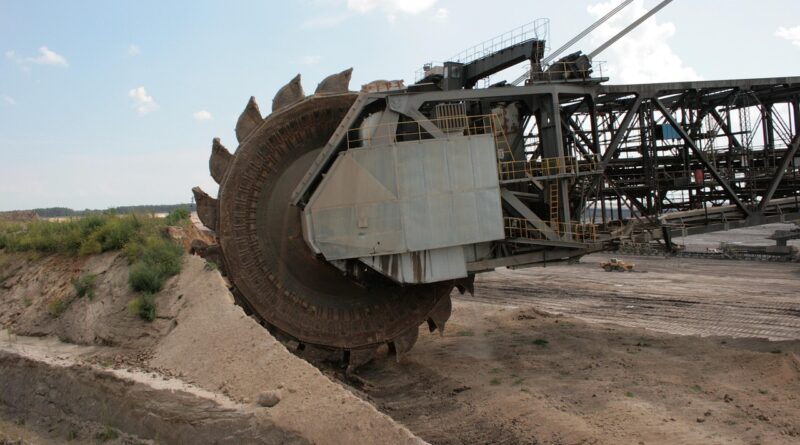
How a bucket wheel excavator works in open pit mining
What a bucket wheel excavator is
A bucket wheel excavator is a large continuous digging machine used mainly in open pit mining. It is not a general-purpose construction excavator. Instead of digging in separate bucket passes like a hydraulic excavator, it uses a rotating wheel fitted with buckets to cut steadily into a mine face. The excavated material is transferred to conveyor belts and, in many operations, moved onward to a spreader, stockpile, crusher, or processing area.
The reason mines use this type of machine is scale. A bucket wheel excavator can be highly productive when the material is suitable, the mine plan is stable, and the conveyor system is designed as part of the same production chain. It is usually selected for continuous, high-volume movement rather than short-term flexibility.
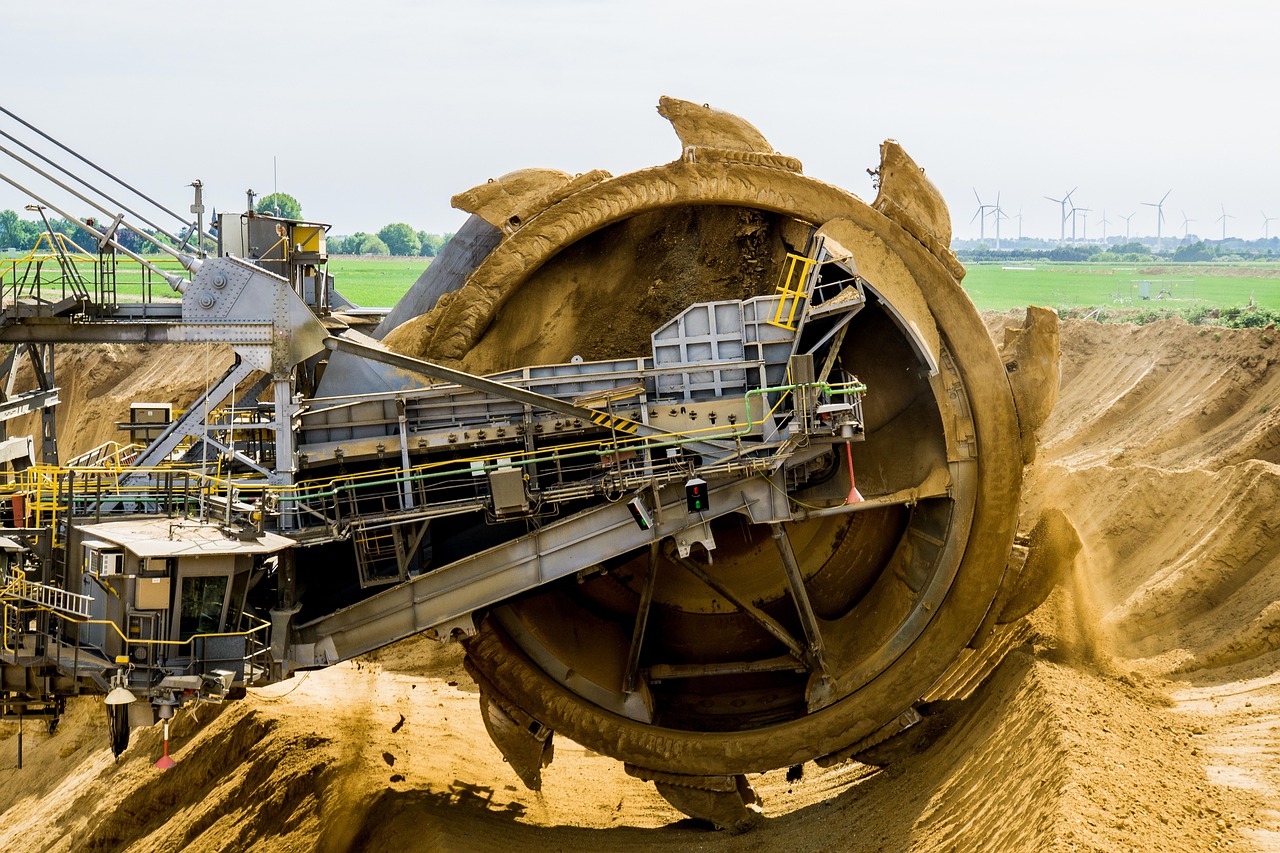
Bucket wheel excavators are most closely associated with lignite, coal overburden, clay, sand, gravel, marl, and other materials that can be cut continuously without the repeated drilling and blasting required for harder rock. Manufacturers such as TAKRAF describe them as crawler-mounted continuous mining machines for overburden and soft to semi-hard deposits. That definition matters because the excavator is only one part of the system. It reaches its value when it is matched with conveyors, power supply, controls, bench geometry, and downstream handling equipment.
For readers comparing excavation methods, this places the bucket wheel excavator in a different category from the machines usually discussed in broader equipment and machines planning. It is less flexible than a hydraulic excavator and truck fleet, but it can move huge volumes at a steady rate when the mine is engineered around continuous flow.
How the cutting and conveying cycle works
The working principle is simple, although the machine itself is complex. A large wheel rotates at the front of the boom. Buckets around the rim bite into the face, fill with material, and discharge it when they reach the correct position. The material drops onto a receiving conveyor on the excavator, then moves through the boom and discharge system to a mine conveyor. From there, it may be sent to a spreader for dumping overburden, to a crusher, to a stockyard, or to another handling stage.
This makes the bucket wheel excavator a continuous-flow machine. A shovel-and-truck operation works in cycles: dig, swing, load, haul, dump, and return. A bucket wheel excavator is designed to cut and discharge continuously, so production depends on keeping the whole chain moving. If the bench conveyor, tripper car, spreader, or power system is unavailable, the excavator cannot achieve its nominal output. For that reason, open pit continuous mining studies often treat the excavator, conveyor, and spreader as one system rather than separate assets.
Main machine groups
- Bucket wheel and buckets: The cutting assembly that removes material from the face.
- Boom structure: Supports the wheel and conveyor while giving the machine reach across the bench.
- Slewing superstructure: Allows the cutting boom to sweep across the face in a controlled arc.
- Crawler undercarriage: Moves the machine slowly along the mining front.
- On-board conveyors: Transfer material from the bucket wheel to the external mine conveyor.
- Electrical and control systems: Coordinate wheel speed, travel, slew motion, conveyor flow, overload protection, and operator supervision.
The machine normally advances slowly. Its value is not travel speed; it is the ability to remove large quantities of material without stopping for every truck load. In well-matched conditions, this creates a more predictable production stream than discontinuous loading and hauling.
Where bucket wheel excavators are used
The strongest use case is large-scale open pit mining with laterally extensive, relatively uniform material. Brown coal and lignite mines in Germany are well-known examples, but the technology has also been used in other regions for coal, overburden, and industrial minerals. TAKRAF’s published equipment information lists bucket wheel excavators across a wide capacity range, from hundreds to many thousands of cubic meters per hour, with bench heights that can reach tens of meters depending on machine design. These figures should be read as manufacturer capability ranges, not as guaranteed performance for every site.
Site conditions matter more than the nameplate rating. A mine is a good candidate when the deposit is broad, the production horizon is long, the material is cuttable, and conveyor routing can follow the pit development. If the orebody is narrow, highly variable, steeply dipping, frequently relocated, or hard enough to require heavy blasting, the advantages can disappear quickly. In those cases, shovel-and-truck or shovel-conveyor combinations may provide better flexibility.
Typical applications
- Removing overburden above lignite or coal seams.
- Mining soft to semi-hard sedimentary materials.
- Feeding long conveyor systems in large open pits.
- Working with spreaders for cross-pit or in-pit dumping.
- Supporting continuous mining where steady material flow is more valuable than mobile flexibility.
The machine is therefore not selected simply because it is large. It is selected when the geology, production target, stripping ratio, mine layout, and power infrastructure support continuous excavation.
Why these machines became so large
Bucket wheel excavators became famous partly because of their extreme size. Guinness World Records has listed Bagger 293, built by MAN TAKRAF in Germany, as one of the largest land vehicles, with published record data describing a machine of roughly 14,196 tonnes, about 220 meters in length, and about 94.5 meters high. Guinness also states that this class of machine can shift extremely large daily volumes of earth under suitable operating conditions. These figures help show the scale of the technology, but they should not be treated as standard specifications for every bucket wheel excavator.
The size is a response to mining economics. In a major open pit, the cost of moving each cubic meter of overburden can determine whether a deposit is viable. A larger bucket wheel, longer boom, higher bench capability, and integrated conveyor route can reduce repeated handling. The machine is designed to keep material moving from the face to the disposal or processing point with fewer interruptions.
However, bigger is not automatically better. A larger excavator brings greater structural loads, higher capital cost, more complex assembly, more demanding maintenance access, and less ability to relocate quickly. It also ties the mine plan to fixed or semi-mobile infrastructure. The practical question is not whether a mine can buy a bigger machine, but whether the complete system can use the machine’s capacity without creating bottlenecks elsewhere.
Advantages compared with shovel and truck systems
The main advantage of a bucket wheel excavator is continuous production. When paired with conveyors and a spreader, it can reduce dependence on truck haulage for suitable overburden streams. That can lower traffic congestion, reduce tire and fuel exposure, and produce a steadier material flow. Electrically powered systems may also shift part of the energy demand away from diesel haul trucks, although the total environmental result depends on the electricity source, mine layout, and replacement of other equipment.
Another advantage is selectivity by layer. A properly controlled bucket wheel can cut along a planned face and bench profile, which helps mines manage overburden removal, seam exposure, and material routing. Modern control systems from automation suppliers such as ABB emphasize coordinated bucket wheel control, equipment protection, and operator support. In practice, automation is not a magic upgrade; it is most valuable when the machine, conveyor, and mine planning data are already disciplined. See also: CNC Machining.
| Factor | Bucket wheel excavator system | Shovel and truck system |
|---|---|---|
| Production style | Continuous cutting and conveying | Cyclic loading and hauling |
| Best material fit | Soft to semi-hard, relatively uniform material | Broader range, including blasted rock |
| Flexibility | Lower once conveyors and benches are established | Higher, especially in variable pits |
| Infrastructure need | High, including conveyors, power, and spreaders | Lower fixed infrastructure but higher mobile fleet need |
| Typical decision driver | Lowest practical cost per unit at very high volume | Adaptability, staged investment, and variable mining conditions |
This comparison should be applied carefully. The best method depends on pit design, haul distance, labor, power prices, maintenance capability, permitting limits, and the expected life of the operation.
Limitations and engineering risks
The biggest limitation is material suitability. A bucket wheel excavator is not ideal for large boulders, highly abrasive hard rock, unexpected cemented layers, or faces that require frequent blasting. Hard inclusions can increase bucket tooth wear, vibration, structural fatigue, and unplanned downtime. Mines using this technology must understand the geological model in detail and update it as the face advances.
Bench stability is another critical issue. Because the machine works along a high exposed face, slope design, drainage, monitoring, and safe operating distance are central to the mine plan. A productive continuous excavator cannot compensate for unsafe geotechnical conditions. If the face geometry is unstable, the mine may have to reduce bench height, change the advance direction, precondition material, or use auxiliary equipment.
System availability is also a major risk. Continuous mining systems can deliver high throughput only when every major element is available. A conveyor failure, transfer point blockage, electrical issue, or spreader outage can stop the whole chain. That makes preventive maintenance, spare parts planning, drive monitoring, belt inspection, and clear shutdown procedures more important than they might appear from the excavator alone.
- Geology risk: Cuttable material may change into harder or blockier zones.
- Layout risk: Conveyor routes may become inefficient as the pit advances.
- Availability risk: One bottleneck can idle a large capital asset.
- Safety risk: High faces and moving conveyor systems require strict operating discipline.
- Strategic risk: Long-life lignite and coal operations face changing energy, permitting, and reclamation expectations.
What buyers and mine planners should verify
A bucket wheel excavator decision should begin with the mine plan, not the machine catalog. The engineering team needs to verify material properties, daily and annual volume requirements, bench heights, conveyor positions, dumping strategy, electrical infrastructure, and maintenance capability. A high-capacity excavator that exceeds the conveyor or spreader capacity will not produce high system output. Likewise, a technically suitable excavator may still be uneconomic if the mine life is too short to justify fixed infrastructure.
Key questions include whether the mine can maintain a long, consistent working face; whether seasonal water or freeze conditions affect cuttability; whether the downstream system can accept peak flow; and whether operators have experience with continuous mining controls. The procurement process should also consider assembly space, transport limitations, foundation loads for transfer points, spare bucket and wear part strategy, and emergency access around the machine.
For most readers, the practical conclusion is clear: a bucket wheel excavator is not a universal upgrade from conventional excavation. It is a specialized system for mines where very high volume, predictable geology, and continuous conveying create a durable cost advantage. When those conditions are present, it can be one of the most productive pieces of mining equipment ever built. When they are absent, its size and complexity can become disadvantages rather than strengths.
Frequently asked questions
Is a bucket wheel excavator the same as a normal excavator?
No. A normal hydraulic excavator digs in individual bucket cycles and usually loads trucks. A bucket wheel excavator cuts continuously with a rotating wheel and transfers material to conveyors. It is a mine-scale production system rather than a general construction machine.
What material can a bucket wheel excavator dig?
It is best suited to soft and semi-hard materials such as overburden, lignite, clay, sand, gravel, and marl. It is generally less suitable for hard, blocky, highly abrasive, or heavily cemented rock unless the mine has designed a specific preparation method.
Why are bucket wheel excavators used with conveyors?
The machine produces a continuous stream of material. Conveyors preserve that continuous flow and move material away from the face without waiting for individual trucks. This is why the excavator, conveyor, and spreader are usually planned together.
Are bucket wheel excavators still relevant?
They remain relevant in specific large open pit operations where geology, production volume, and mine life support continuous excavation. Their role is more limited where deposits are hard, variable, short-lived, or constrained by changing energy and environmental policies.