
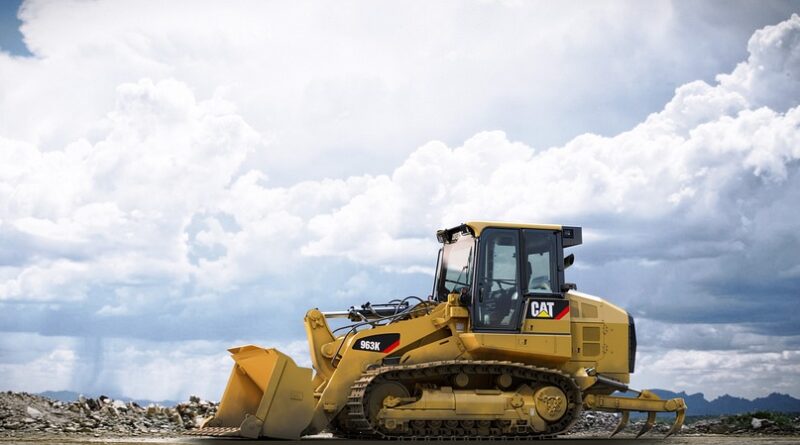
Cat machinery guide for construction, mining and fleet planning
Cat machinery generally means Caterpillar-branded equipment used in construction, mining, quarrying, roadwork, material handling and related industrial jobsites. For fleet owners, the choice is rarely about brand alone. The machine also has to fit the work cycle: size, powertrain, attachments, digital tools, dealer support and operating cost all matter. Caterpillar’s 2025 Annual Report, released in May 2026, reported $67.6 billion in sales and revenues, showing the scale of the Cat equipment ecosystem. Scale, however, does not replace careful specification. A compact excavator, a medium wheel loader and an autonomous mining truck serve very different jobs, and each needs a different ownership plan.
For more coverage of heavy equipment categories and machine selection, visit Equipment & Machines.
What Cat machinery includes
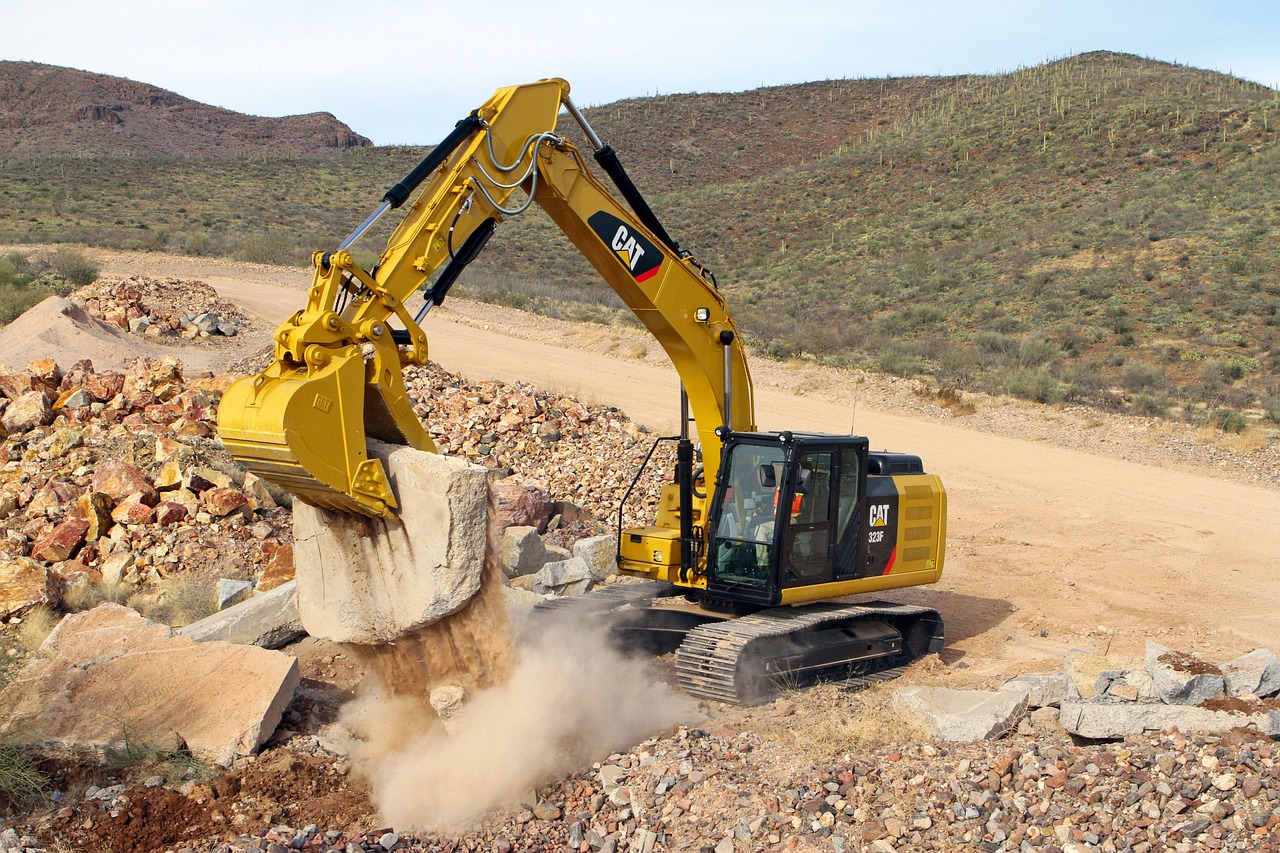
Cat machinery is not a single product type. It includes mobile equipment, work tools, engines, digital systems and support services. In day-to-day fleet language, the term most often refers to earthmoving and material-moving machines such as excavators, dozers, wheel loaders, skid steer loaders, compact track loaders, motor graders, compactors, off-highway trucks and mining machines.
Caterpillar’s public product information organizes equipment by application and size class. Excavators, for example, are grouped into mini, small, medium, large, demolition, long-reach, wheel and purpose-built categories. That distinction matters because a buyer searching for “cat machinery” may be comparing anything from a compact utility machine to a production excavator for quarry loading.
The broader corporate structure also helps explain the product mix. Caterpillar’s current reportable segments are Construction Industries, Resource Industries and Power & Energy. Construction Industries covers many machines used by contractors and infrastructure builders. Resource Industries supports mining, quarrying and heavy construction applications. Power & Energy includes engines, power generation and related systems that may be used alongside or inside industrial equipment.
Common Cat machine categories and where they fit
The most useful way to evaluate Cat machinery is by job function, not by model name alone. Operating weight, payload, reach, cycle time, hydraulic capacity and undercarriage design all affect productivity and ownership cost. The table below summarizes common categories and the questions buyers should address before narrowing a specification.
| Machine category | Typical applications | Key selection factors |
|---|---|---|
| Excavators | Trenching, site preparation, demolition, utility work, mass excavation | Operating weight, dig depth, reach, hydraulic flow, bucket size, attachment compatibility and transport limits |
| Dozers | Clearing, grading, pushing, ripping and rough site development | Blade type, ground pressure, traction, undercarriage wear, grade control options and fuel consumption |
| Wheel loaders and track loaders | Stockpile work, truck loading, aggregates, recycling, snow and yard handling | Bucket capacity, tipping load, lift height, tire or track choice, cycle time and coupler system |
| Skid steer and compact track loaders | Landscaping, light construction, utility work and attachment-driven jobs | Rated operating capacity, auxiliary hydraulics, footprint, ground disturbance and work tool availability |
| Motor graders and compactors | Roadbuilding, grading, soil preparation and asphalt or soil compaction | Grade accuracy, moldboard control, drum type, compaction measurement and operator visibility |
| Off-highway and mining trucks | Quarry haulage, open-pit mining and heavy material movement | Payload class, haul road conditions, loading match, tire strategy, braking systems and automation readiness |
This function-first approach helps avoid a common specification problem: choosing machinery by horsepower or bucket size without checking the full production system. A loader that is too large for the receiving crusher, a truck that does not match the excavator pass count or a compact loader without enough auxiliary hydraulic capacity can all reduce utilization.
Technology is becoming part of the machine specification
Cat machinery is increasingly specified as a connected asset, not only as mechanical equipment. Caterpillar describes VisionLink as a mixed-fleet equipment management system that can handle Cat and non-Cat assets, including connected, non-connected, owned, rented and leased equipment. That is relevant for contractors that rarely operate a single-brand fleet.
Telematics data can support maintenance planning, utilization review, idle-time reduction, fuel analysis and location tracking. The value is not in collecting data for its own sake. It is in turning that data into operating decisions: whether a low-utilization loader should move to another site, whether a machine is idling too much, whether preventive maintenance is being missed or whether rental equipment should be returned earlier.
Caterpillar has also moved further into jobsite automation. On January 7, 2026, the company announced autonomous construction technology covering planned intelligent product lines such as excavators, loaders, haul trucks, dozers and compactors, with site optimization through Cat VisionLink and Cat MineStar systems. The announcement does not mean every construction machine is fully autonomous today. It does show that automation is moving beyond isolated mining applications and toward broader construction workflows.
Mining provides the clearest operating record for autonomy. Caterpillar’s 2025 reporting said its autonomous haul truck fleet expanded to 827 trucks in operation, and that a quarry deployment at Luck Stone’s Bull Run site had hauled more than two million tons autonomously. For buyers, the point is not that every site needs autonomy. It is that machine control, payload systems, collision warning, connected maintenance and site coordination are now part of fleet planning.
Powertrain and emissions choices affect long-term ownership
Most Cat machinery in heavy-duty construction and mining still uses diesel power because diesel engines provide high energy density, fast refueling and proven performance in severe duty cycles. In the United States, diesel-powered nonroad heavy equipment is regulated under EPA programs for compression-ignition engines. EPA guidance updated in 2026 notes that Tier 4 standards require advanced emission control technologies and that ultra-low sulfur diesel fuel has a maximum sulfur concentration of 15 parts per million.
That regulatory context affects equipment age, resale value, maintenance planning and jobsite eligibility. Public projects, urban work zones and environmentally sensitive sites may require newer emissions-compliant machines. Older machines may still be productive, but buyers should verify engine tier, aftertreatment condition, local requirements and parts availability before acquisition.
Electrification is another area to evaluate carefully. Caterpillar’s battery-electric construction equipment page lists machines in development, including the 301.9 electric mini excavator, 906 electric compact wheel loader, 320 electric medium excavator, 950 GC electric medium wheel loader and 395 tethered electric large excavator. The company’s published information describes application-dependent run times, charging options and, for the 395 tethered electric excavator, continuous operation while connected to grid power through an energy distribution system.
For fleet planners, electric equipment should be judged by duty cycle rather than headline run time. Short-cycle indoor work, utility construction, urban jobsites, fixed-route material handling and low-noise applications may be better early candidates than remote high-production work without charging infrastructure. Charging power, grid access, shift length, ambient temperature, utilization rate and backup equipment all influence whether electric machinery is practical.
Dealer support and lifecycle economics can matter as much as purchase price
The visible machine is only one part of the Cat machinery value proposition. The less visible part is support: parts availability, service response, technician capability, rebuild options, rental backup, financing and training. Caterpillar’s dealer network page states that the Cat Dealer Network has 160 independent dealers serving 197 countries with thousands of branches worldwide. That network is a major reason many contractors include Cat machines in long-term fleets. See also: CNC Machining.
Support still has to be checked locally. Dealer strength can vary by region, machine class and application. Before buying a new or used machine, fleet managers should ask the local dealer about technician availability, parts fill rates, field service coverage, planned maintenance packages, telematics support, rebuild programs and attachment availability. A strong purchase price may not be attractive if a machine sits idle waiting for specialized parts or diagnostic support.
Lifecycle cost should include more than fuel. A practical calculation includes depreciation, finance cost, insurance, preventive maintenance, wear parts, tires or undercarriage, ground engaging tools, attachments, operator training, downtime risk, resale value and disposal or trade-in options. For loaders and excavators, buckets, teeth, cutting edges and hydraulic attachments can significantly affect both productivity and maintenance cost. For dozers and track machines, undercarriage management is often one of the largest wear-cost variables.
How to evaluate Cat machinery before adding it to a fleet
A disciplined selection process starts with the work, not the brochure. Define the job material, production target, site conditions, transport requirements and expected annual hours. Then compare machine classes that can meet the target without excessive idle time or oversizing. Oversized machines may appear productive on paper but can increase fuel burn, ground damage, transport cost and maintenance expense.
- Match the machine to the production system. Check loader bucket size against truck capacity, excavator pass count against haul units and compactor type against soil or asphalt conditions.
- Confirm site constraints. Consider access width, overhead clearance, ground bearing pressure, slope, noise restrictions and emissions requirements.
- Review attachment needs early. Hydraulic flow, coupler type, electrical controls and guarding can determine whether one machine can perform multiple tasks.
- Compare ownership models. Rental may suit short-duration or uncertain work. Purchase may suit high annual utilization. Leasing or financing can preserve capital but adds contract terms to the cost model.
- Inspect used machinery carefully. Review service records, oil analysis, undercarriage or tire condition, hydraulic leaks, engine aftertreatment, structural cracks and telematics history where available.
- Plan for operators and maintenance staff. Advanced machine control and connected systems create value only when teams are trained to use them.
The best choice is not automatically the newest or largest machine. It is the machine that delivers the required output with the lowest practical risk over its expected operating life.
What the current direction means for equipment buyers
Cat machinery is moving in three linked directions: connected fleets, selective automation and broader powertrain options. Diesel machines will remain central in heavy construction and mining, while telematics and machine control are becoming standard decision tools. Battery-electric and tethered-electric equipment are developing for applications where charging infrastructure, utilization patterns and emissions goals align. Autonomous systems are expanding from mining into quarry and construction contexts, but adoption will depend on site control, safety planning, workflow repeatability and investment scale.
For buyers, the specification sheet should be reviewed together with the technology and support package. A machine that connects easily to a mixed fleet, supports preventive maintenance and can be serviced quickly may outperform a lower-priced machine over several years. Conversely, advanced features that operators or managers do not use may add cost without improving output.
Sources referenced for this analysis include Caterpillar’s 2025 Annual Report and 2025 Highlights, Caterpillar product and technology information, Caterpillar dealer network information, Caterpillar’s January 2026 autonomy announcement and U.S. EPA guidance on nonroad diesel engine regulations.
Frequently asked questions
Is Cat machinery the same as Caterpillar machinery?
In most equipment discussions, yes. “Cat” is Caterpillar’s primary equipment brand, while Caterpillar is the corporate name. Buyers often use “Cat machinery,” “Cat equipment” and “Caterpillar machinery” to describe the same general product ecosystem.
Which Cat machine is most useful for general construction?
There is no single answer because general construction covers many tasks. Compact track loaders, skid steer loaders, mini excavators, backhoe loaders, medium excavators and wheel loaders are common choices, but the right machine depends on site size, lifting needs, digging depth, materials and attachment requirements.
Should a contractor buy new or used Cat machinery?
New machinery can offer the latest emissions compliance, technology and warranty coverage. Used machinery may lower upfront cost but requires closer inspection of service records, wear components, aftertreatment systems and structural condition. The better choice depends on annual utilization, project certainty and available support.
Does Cat machinery work in mixed fleets?
Yes. Many contractors operate Cat machines alongside equipment from other manufacturers. Caterpillar’s VisionLink platform is positioned for mixed-fleet management, which can help owners monitor Cat and non-Cat assets together when the required telematics connections are available.
Is electric Cat machinery ready for every jobsite?
No. Electric machines should be matched to duty cycle, charging access, shift length and site conditions. They may be promising for lower-noise or lower-emission applications, but high-hour remote production work still requires careful infrastructure and backup planning.