
Can a Small CNC Machine Deliver Industrial Precision on Your Desktop
You Can Now Get a CNC Lathe for Your Desktop
Compact machining has entered a new era. A small CNC machine can now perform precise turning, milling, and engraving tasks once reserved for industrial workshops. These desktop systems combine rigid mechanics, high-speed spindles, and advanced motion control in a footprint that fits on a workbench. For engineers, educators, or product designers, the desktop CNC lathe is no longer a novelty—it’s a practical production tool that bridges the gap between hobby-grade devices and professional manufacturing equipment.
Understanding Desktop CNC Machines?
Desktop CNC machines have evolved from simple engravers into capable precision systems. Their design philosophy emphasizes compactness without compromising accuracy or reliability.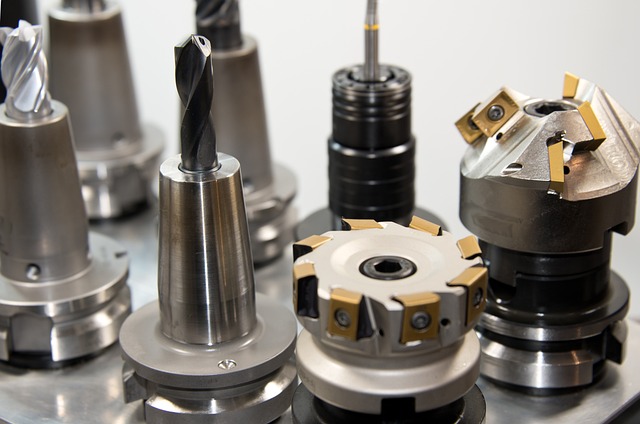
Defining the Small CNC Machine
A small CNC machine is typically built with aluminum or steel frames to maintain stiffness under cutting loads. It uses stepper or servo motors for axis motion, controlled by microcontrollers that interpret G-code instructions. Compared with full-scale industrial mills or lathes, desktop units trade horsepower for accessibility and lower power consumption. Still, they retain core components: a spindle that rotates the cutting tool, linear guides for motion control, drive screws for positioning accuracy, and control electronics linked to computer-aided manufacturing (CAM) software.
Evolution of Compact CNC Technology
The journey from manual machining to compact automation mirrors broader trends in digital manufacturing. Early benchtop mills emerged in the 1980s as educational tools but gained traction when affordable stepper motors and open-source firmware became available. The introduction of microcontrollers like Arduino and GRBL firmware allowed users to customize motion parameters easily. Precision engineering has since miniaturized industrial-grade ball screws and bearings, enabling sub-0.01 mm accuracy in machines small enough to fit on a desk.
Evaluating Precision Capabilities on a Smaller Scale
Precision defines whether a small CNC machine can compete with larger systems. The key lies in mechanical integrity, spindle performance, and feedback control.
Mechanical Accuracy and Repeatability
Mechanical accuracy depends heavily on frame rigidity and component alignment. High-end desktop units use cast-aluminum bases or composite reinforcements to suppress vibration. Ball screws minimize backlash—tiny gaps between screw threads that cause position errors—while preloaded nuts improve repeatability across cycles. Regular calibration using dial indicators or laser measurement ensures consistent results over time.
Spindle Performance and Cutting Dynamics
Spindle quality determines surface finish and material compatibility. Most desktop machines operate between 10,000–24,000 RPM with modest torque output suitable for plastics, wood, or soft metals like aluminum and brass. Excess vibration reduces tool life and precision; thus damping materials are often embedded near the spindle mount. Optimal feed rates must balance chip removal with thermal stability—too slow causes rubbing, too fast risks deflection.
Motion Control and Feedback Systems
Motion control architecture separates consumer-grade machines from professional ones. Open-loop systems rely solely on motor steps without verifying position; closed-loop designs incorporate encoders that monitor actual movement. Encoders detect missed steps due to load changes or mechanical friction, feeding data back to the controller for correction. Advanced software can also compensate for thermal drift as components expand during prolonged operation.
Material Compatibility and Machining Applications
Selecting suitable materials is critical when using compact equipment. While small CNC machines excel at softer materials, their limits appear with dense alloys requiring higher torque.
Suitable Materials for Desktop CNC Operations
Common materials include aluminum 6061-T6, brass 360, acrylics, polycarbonate sheets, carbon fiber composites, and hardwoods like maple or walnut. Hardened steels remain challenging because small spindles lack sufficient torque at low speeds to cut efficiently without excessive wear. Tool selection matters: carbide end mills handle metals better than high-speed steel bits due to superior hardness retention under heat.
Application Areas Across Industries
Desktop CNC units serve diverse sectors—from mechanical prototyping to education. Product designers use them to fabricate enclosure prototypes quickly before mass production begins. Electronics engineers carve circuit board housings or heatsink mounts in-house rather than outsourcing machining jobs. In vocational schools and training centers, these compact systems introduce students to G-code programming and coordinate geometry fundamentals used in industrial machining.
Integrating Desktop CNC Machines into Professional Workflows
Integrating a small CNC machine into an existing workflow requires thoughtful coordination between design software and hardware execution.
Workflow Optimization from CAD to G-code Execution
Modern CAD/CAM suites simplify digital fabrication pipelines by generating toolpaths directly compatible with specific controllers. File preparation involves checking geometry continuity and defining cutting parameters such as spindle speed or step-down depth. Post-processors translate generic G-code into syntax tailored for each machine’s firmware—essential for avoiding miscommunication between software commands and hardware interpretation.
Hybrid Use with Industrial Equipment
Many R&D departments pair desktop units with larger machinery strategically: prototypes are first validated on the smaller system before scaling up production runs on full-size mills or lathes. This hybrid approach reduces material waste during iterative design cycles while maintaining dimensional fidelity between prototype and final part.
Economic and Operational Considerations
Beyond technical performance, economic practicality determines whether professionals adopt desktop solutions widely.
Cost-to-Benefit Analysis for Professional Use Cases
Entry-level professional-grade small CNC machines range from $3,000–$10,000 depending on spindle quality and motion resolution—far below industrial alternatives exceeding $50,000. Maintenance is simpler: lubrication schedules are shorter; part replacements cost less; downtime impacts fewer operations since these systems often run standalone projects rather than full production lines.
Space Efficiency and Energy Consumption Advantages
A typical desktop lathe consumes less than 1 kW of power—comparable to an office printer—and occupies under one square meter of space including its enclosure. This makes it ideal for laboratories or urban workshops where floor area is limited. Lower energy draw also translates into reduced operational costs over time while minimizing environmental impact through efficient chip evacuation systems that reduce waste accumulation.
Future Directions in Small CNC Machine Development
As automation technologies mature further, compact machining platforms will integrate smarter controls and broader capabilities once exclusive to factory-scale systems.
Advancements in Control Software and Automation Integration
Artificial intelligence now plays an emerging role in toolpath generation by analyzing previous cuts to predict optimal speed settings dynamically. Adaptive control algorithms adjust feed rates mid-operation based on sensor feedback detecting chatter or load spikes. Cloud-based dashboards allow remote diagnostics so technicians can monitor performance metrics without being physically present at the workstation.
Emerging Trends in Materials and Tooling Technologies
Manufacturers are developing micro-cutting tools coated with diamond-like carbon films extending lifespan under abrasive conditions common in composites machining. Hybrid setups combining additive manufacturing heads with subtractive spindles enable rapid switching between printing and milling within one platform—a trend reshaping prototyping workflows across industries seeking flexibility within constrained spaces.
FAQ
Q1: What distinguishes a small CNC machine from hobby-grade models?
A: Professional desktop units feature rigid frames, precision ball screws, higher spindle speeds, and closed-loop motor feedback—characteristics absent in most hobby kits designed mainly for light engraving tasks.
Q2: Can a desktop CNC lathe cut stainless steel?
A: Only limited operations are possible using specialized tooling at reduced depths of cut; continuous machining of hardened steels typically exceeds the torque capacity of compact spindles.
Q3: How accurate are modern desktop machines?
A: High-end models achieve positional accuracies around ±0.01 mm under stable temperature conditions when properly calibrated using laser interferometers or gauge blocks.
Q4: Are these machines suitable for continuous production?
A: They’re best suited for short runs or prototyping rather than 24/7 industrial workloads due to smaller duty cycles of motors and bearings compared with heavy-duty counterparts.
Q5: What software do professionals use with small CNC machines?
A: Common choices include Fusion 360 CAM modules or SolidWorks CAM paired with GRBL- or Mach-compatible post-processors depending on controller type used by each system.