
How Does a Laser Carving Machine Redefine Precision in the XLaserlab E3 UV Engraver Market
XLaserlab E3 Laser Engraver Highlights Expanding Capabilities in UV Laser Engraving Machine Market
The XLaserlab E3 laser carving machine marks a major step forward in precision manufacturing. It combines UV laser technology, advanced motion control, and intelligent automation to deliver sub-micron engraving accuracy across diverse materials. This system redefines industrial standards by merging optical innovation with AI-driven process control, meeting the growing demand for ultra-fine detailing in electronics, medical devices, and luxury goods production.
The Evolution of Precision in Laser Carving Technology
Laser carving has evolved from mechanical cutting tools into a digitally controlled process defined by light manipulation. This transformation reshaped how industries approach marking, structuring, and microfabrication.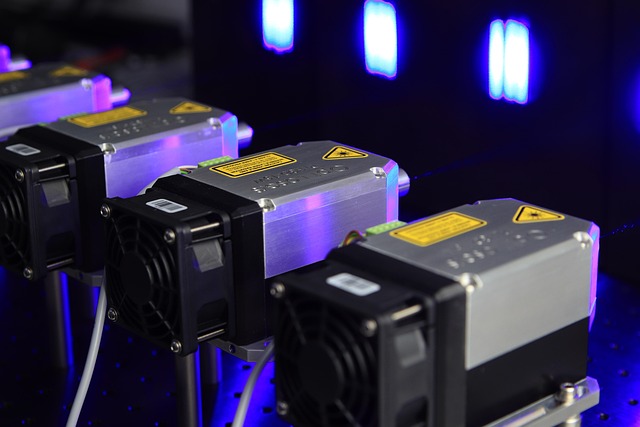
Advancements in Laser Engraving Mechanisms
Traditional mechanical engraving relied on physical contact between tool and surface, limiting resolution and causing wear. The introduction of high-precision laser systems eliminated these constraints, allowing non-contact processing with micron-level detail. UV laser technology further expanded this capability by using shorter wavelengths that interact efficiently with metals, polymers, and ceramics. Stability of wavelength and beam quality directly affects engraving uniformity; even minor fluctuations can alter depth or texture. Industrial-grade lasers now maintain stable outputs across long production cycles, ensuring consistent results.
Integration of UV Laser Technology for Enhanced Material Compatibility
UV lasers operate at wavelengths around 355 nm, producing minimal heat during ablation. This characteristic reduces thermal distortion and enables clean edges on sensitive substrates like glass or polymer films. Such precision is vital for semiconductor packaging or microfluidic device fabrication where dimensional tolerances are extremely tight.
Role of Wavelength Stability and Beam Quality in Achieving Consistent Engraving Results
Consistency depends on maintaining uniform photon density across the beam profile. Gaussian beam shaping and adaptive focusing optics preserve energy distribution even at high scanning speeds. In industrial applications, real-time monitoring systems track wavelength drift to correct deviations before they impact product quality.
The Emergence of the XLaserlab E3 UV Engraver
The XLaserlab E3 represents the culmination of years of refinement in optical design and motion coordination. Its architecture emphasizes both speed and stability while maintaining delicate control over energy delivery.
Overview of the Technological Architecture Behind the XLaserlab E3
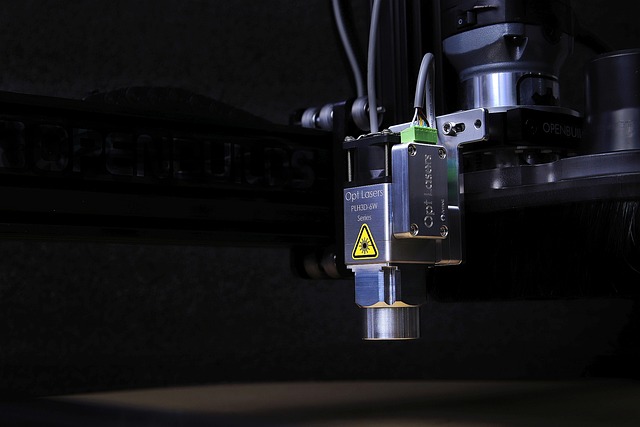
The E3 integrates a solid-state UV laser source with precision galvanometer scanners housed within a vibration-resistant frame. Its modular structure simplifies maintenance while supporting continuous operation under factory conditions. Cooling systems are optimized to stabilize temperature gradients that could otherwise affect optical alignment.
Design Improvements That Enhance Optical Performance and Operational Stability
Enhanced optical coatings increase transmission efficiency and reduce scattering losses within the beam path. Mechanical isolation dampens vibration from external machinery, preserving focus accuracy during prolonged runs. These refinements collectively produce sharper engraving edges and smoother surface finishes.
How the E3 Model Aligns With Industrial Demands for Ultra-Fine Engraving Applications
Industries such as microelectronics require repeatable engraving at scales below 10 microns. The E3’s control algorithms synchronize beam modulation with motion feedback to achieve this level of fidelity. It supports complex vector paths without sacrificing throughput—an essential trait for mass customization lines.
Core Technologies Defining the XLaserlab E3 UV Engraver
At its core, the E3 combines photonics engineering with intelligent automation to deliver unmatched precision in a compact footprint.
UV Laser Source and Optical Path Optimization
Short-wavelength UV lasers minimize heat transfer to substrates, preventing discoloration or deformation during processing. Advanced beam shaping optics refine spot size down to a few micrometers, improving resolution for intricate geometries. Periodic calibration aligns mirrors and lenses along the optical path to maintain depth accuracy across varying surface contours.
Motion Control and Positioning Systems
High-speed galvanometer scanners translate digital designs into precise physical movements at rates exceeding several meters per second. Closed-loop feedback continuously measures mirror angles and corrects errors within milliseconds. Synchronization between motion control software and laser modulation ensures that energy pulses strike exactly where intended—critical when engraving serial numbers or security features on compact components.
Intelligent Software Integration for Process Automation
AI-driven algorithms analyze material reflectivity and adjust power levels automatically during operation. Adaptive focus systems reposition optics based on topographic variations detected by sensors beneath the workpiece. Collected data feeds predictive maintenance models that anticipate component wear before downtime occurs, increasing overall equipment efficiency.
Material Versatility in Laser Carving Applications
The ability to handle multiple materials without tool changes defines modern laser carving machines like the XLaserlab E3.
Expanding Capabilities Across Industrial Materials
UV lasers interact effectively with metals such as aluminum or stainless steel while also marking transparent materials like quartz or sapphire without cracking them. Plastics benefit from reduced charring due to low heat input, making this system ideal for consumer electronics housings or medical tubing identification tasks.
Advantages of UV Laser Carving in Minimizing Heat-Affected Zones (HAZ)
Because UV photons carry higher energy per unit wavelength, they break molecular bonds directly rather than melting material surfaces. This cold-processing effect limits thermal diffusion zones to less than one micron deep—far smaller than what CO₂ or fiber lasers typically produce—preserving substrate integrity.
Surface Modification Possibilities Beyond Simple Marking or Etching Functions
Beyond identification marks, precise energy control allows modification of surface wettability or roughness at micro scales. Such adjustments improve adhesion properties for coatings or bonding layers used in composite assemblies.
Microfabrication and Nanostructuring Potential
Miniaturization trends push manufacturers toward sub-micron structuring capabilities where mechanical tools cannot operate effectively.
Application of Sub-Micron Precision Engraving in Semiconductor and Biomedical Fields
In semiconductor packaging, microvias etched by UV lasers form interconnect channels between circuit layers without damaging dielectric films. Biomedical engineers use similar methods to carve microchannels guiding fluid flow inside lab-on-chip devices used for diagnostics or drug testing.
Use in Creating Microchannels, Fine Texturing, and Anti-Counterfeit Patterns
Controlled pulsed exposure patterns generate holographic textures visible only under specific lighting conditions—ideal for anti-counterfeiting labels on pharmaceuticals or luxury goods packaging.
Correlation Between Pulse Duration, Energy Density, and Structural Fidelity at Nanoscale Levels
Shorter pulse durations combined with moderate energy densities yield cleaner ablation profiles free from recast debris. Maintaining this balance determines whether nanostructures remain dimensionally stable under magnification analysis using SEM imaging techniques common in quality assurance labs.
Redefining Precision Standards in Industrial Manufacturing
Precision metrics no longer rely solely on visual inspection; quantitative evaluation defines competitiveness among manufacturers adopting advanced laser technologies.
Quantitative Metrics for Evaluating Precision Performance
Key parameters include spot diameter (typically 10–20 µm), positional accuracy (±1 µm), and repeatability tolerance below 0.5 µm over extended runs. Comparative tests show that UV-based systems outperform CO₂ lasers by up to 40% in edge sharpness under identical settings according to ISO 11146 beam characterization standards (ISO).
Comparative Analysis With CO₂ and Fiber Laser Systems Under Identical Conditions
CO₂ lasers excel at large-area marking but struggle with fine detail due to longer wavelengths (~10 µm). Fiber lasers offer higher power but induce more thermal stress compared with UV sources operating near 355 nm; hence they suit macro-scale cutting rather than micro-engraving tasks requiring delicate precision.
Implications for Manufacturing Sectors Requiring Ultra-High Dimensional Tolerances
Aerospace component traceability codes or medical implant markings must remain legible after sterilization or coating processes; thus sub-micron consistency offered by machines like the E3 becomes indispensable for regulatory compliance under IEC 60825 safety classifications (IEC).
Enhancing Quality Control Through Real-Time Monitoring Systems
Advanced monitoring bridges design intent with production reality through integrated optical inspection frameworks.
Use of Inline Vision Inspection Tools to Validate Engraving Consistency
Cameras positioned along the work envelope capture live imagery analyzed against CAD references to detect deviations instantly rather than post-process inspection delays common in legacy setups.
Feedback Loops Integrating Optical Sensors for Defect Detection During Production Runs
Sensors measuring backscattered light intensity identify incomplete ablations mid-process so corrective actions can occur immediately without halting operations—a critical feature when running high-volume serial engravings on assembly lines.
Role of Machine Learning Models in Predicting Deviations Before They Occur
Machine learning models trained on historical process data recognize early indicators such as slight focus drift or lens contamination patterns long before visible defects emerge; this predictive capability improves yield rates significantly over time.
Market Implications of the XLaserlab E3 UV Engraver’s Precision Capabilities
Technological advancement always reshapes market hierarchies; precision now serves as both differentiator and value driver within competitive manufacturing ecosystems.
Shifting Competitive Dynamics in the UV Laser Engraving Market
Manufacturers adopting ultra-precise systems can justify premium pricing through reduced scrap rates and faster turnaround times. Smaller firms gain entry into specialized niches previously dominated by large OEMs due to lowered setup complexity afforded by integrated automation suites.
Influence on Pricing Strategies, Production Efficiency, and Customization Potential
Automation cuts labor dependency while maintaining flexibility across short production runs—a balance increasingly valued by clients demanding personalization without cost escalation typical of manual finishing processes.
Adoption Trends Across Electronics, Medical Device Manufacturing, and Luxury Goods Industries
Electronics producers employ these machines for circuit labeling; medical device fabricators engrave serials compliant with UDI regulations; luxury brands utilize them for micro-patterned authenticity seals—all benefiting from identical precision infrastructure adapted through software configuration alone.
Future Outlook: Integration With Smart Manufacturing Ecosystems?
As Industry 4.0 matures globally, integration between hardware intelligence and digital management platforms becomes inevitable for next-generation manufacturing setups like those incorporating the XLaserlab E3 series.
Synergy Between Laser Carving Machines and Industry 4.0 Frameworks
Networked sensors transmit operational data into centralized dashboards enabling cross-facility coordination under standardized communication protocols defined by IEEE industrial IoT frameworks (IEEE).
Potential for Remote Diagnostics, Cloud-Based Process Optimization, and Digital Twin Simulations
Remote diagnostic access allows technicians to adjust parameters via secure cloud interfaces while digital twin simulations predict outcomes before physical trials occur—reducing material waste dramatically across pilot stages according to IEA manufacturing efficiency studies (IEA).
Long-Term Trajectory Toward Fully Autonomous Laser Engraving Production Lines
Future iterations may integrate robotic handling arms synchronized via machine vision networks achieving fully autonomous workflows capable of running continuous shifts without direct human oversight yet maintaining traceable audit trails demanded by regulatory agencies worldwide.
FAQ
Q1: What makes the XLaserlab E3 different from other laser carving machines?
A: It uses a short-wavelength UV source combined with AI-driven automation delivering sub-micron precision suitable for sensitive materials like glass or polymers where traditional lasers cause damage.
Q2: How does its closed-loop feedback improve accuracy?
A: Feedback sensors continuously measure mirror position during scanning correcting any deviation instantly which maintains consistent engraving depth even at high speeds.
Q3: Can it handle reflective metals effectively?
A: Yes its beam modulation compensates reflectivity variations allowing clean engravings on aluminum stainless steel or gold-plated surfaces often problematic for other systems.
Q4: What industries benefit most from adopting this technology?
A: Electronics manufacturers biomedical device producers aerospace suppliers and luxury goods makers all leverage its fine-detail capability combined with reliable throughput performance.
Q5: Is it compatible with smart factory environments?
A: Absolutely it supports network connectivity standards enabling integration into Industry 4.0 infrastructures including remote monitoring predictive maintenance analytics modules.