
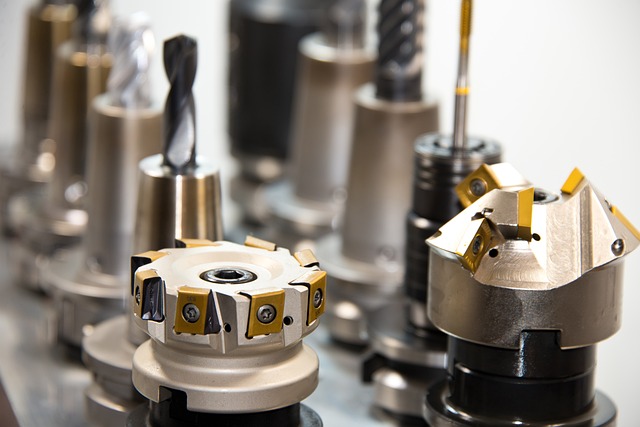
What Makes a CNC Lathe Machine Essential for Precision Metal Cutting
Explore Different Types of CNC Lathe Machine
CNC lathe machines have reshaped the manufacturing landscape by merging digital precision with mechanical reliability. The relationship between cutting pressure and surface roughness is not linear; it depends on tool geometry, feed rate, and material response. In essence, higher roughness can increase frictional resistance, which elevates localized pressure during finishing operations. Yet, advanced control systems in modern CNC lathes regulate these variables dynamically to maintain consistent results even under variable load conditions.
The Evolution of CNC Lathe Technology
The journey from manual to computer-controlled lathes marks one of the most significant leaps in industrial machining. Early manual lathes required constant operator attention, while today’s CNC systems execute programs with micrometer-level precision.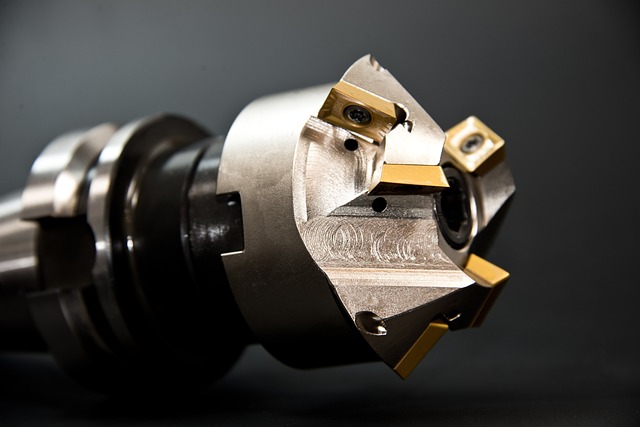
Overview of the Transition from Manual Lathes to CNC-Controlled Systems
Manual lathes relied heavily on operator skill for accuracy. CNC (Computer Numerical Control) technology replaced manual intervention with programmable logic, enabling automated cycles for complex shapes. This shift allowed manufacturers to achieve repeatable results across large production runs without human error dominating outcomes.
How Automation and Digital Control Improved Consistency and Repeatability
Digital controllers introduced feedback loops that continuously monitor position and speed. By combining sensors with servo-driven axes, modern CNC lathes maintain stable cutting forces even during multi-axis interpolation. This automation ensures identical parts across batches—a crucial requirement in aerospace or medical industries.
Integration of CAD/CAM Systems for Enhanced Machining Precision
CAD/CAM integration bridges design and production. Engineers can simulate machining paths before execution, reducing scrap rates and setup time. These systems also allow real-time parameter adjustments based on part geometry or material hardness.
Core Principles Behind CNC Lathe Operation
CNC lathes function through precise mathematical coordination of motion along multiple axes. Each movement follows a programmed path derived from a coordinate system that defines spatial relationships between tool and workpiece.
Explanation of Coordinate Systems and Axis Control in CNC Lathes
Most CNC lathes operate on two primary axes—X (radial) and Z (longitudinal). Multi-axis models introduce Y or C axes for complex contours or off-center drilling. The controller interprets G-code commands into motion instructions that synchronize spindle rotation with tool feed.
The Significance of Tool Paths and Motion Interpolation in Achieving Accuracy
Tool paths define how the cutter travels relative to the part surface. Linear or circular interpolation ensures smooth transitions between points, minimizing tool marks or dimensional deviations. High-end machines use spline interpolation for free-form surfaces where precision curvature is critical.
Role of Servo Motors, Encoders, and Feedback Loops in Maintaining Dimensional Fidelity
Servo motors drive each axis with precision determined by encoder feedback. When deviation occurs, the control system compensates instantly through closed-loop correction. This mechanism sustains dimensional fidelity even under varying loads or thermal expansion.
Precision Metal Cutting: Why CNC Lathes Are Indispensable
Precision machining demands control over every factor influencing surface quality and dimensional tolerance. Among these factors, cutting pressure plays a pivotal role—and it indeed varies with surface roughness during finishing stages.
Achieving Tight Tolerances Through Controlled Machining Parameters
Spindle speed, feed rate, and depth of cut directly affect both accuracy and finish quality. Excessive feed increases cutting pressure, which can distort thin-walled components. Adaptive controls use sensor data to adjust parameters mid-process, maintaining tight tolerances within microns.
Surface Roughness and Its Relationship with Cutting Pressure
As surface roughness increases, contact area between tool and workpiece becomes irregular, causing uneven pressure distribution. During finishing cuts at low feed rates, smoother surfaces reduce frictional drag and stabilize cutting forces. Proper lubrication further minimizes temperature rise that could alter material behavior.
Tool Wear Dynamics in Precision Metal Cutting
Tool wear progresses through abrasion, adhesion, or diffusion depending on cutting conditions. Harder materials accelerate flank wear due to higher contact stress. Coatings like TiAlN or diamond-like carbon extend tool life by reducing frictional heat accumulation.
Material Considerations in CNC Lathe Machining
Different metals respond uniquely under high-pressure turning conditions. Understanding these responses allows machinists to select optimal speeds and feeds for each alloy type.
Behavior of Different Metals Under High Cutting Pressure
Ferrous alloys such as stainless steel generate higher cutting forces than aluminum due to greater hardness and lower thermal conductivity. Non-ferrous materials like brass exhibit better chip breakage but may suffer from built-up edge formation if lubrication is inadequate.
Balancing Surface Integrity and Dimensional Accuracy
Residual stresses from aggressive cutting can distort finished parts after cooling. Techniques like low-stress grinding or cryogenic cooling help preserve both geometry and microstructure integrity when machining sensitive alloys used in turbine blades or implants.
Technological Enhancements Elevating CNC Lathe Performance
Continuous innovation has made modern CNC lathe machines smarter rather than merely faster. Integration of AI-driven algorithms now enables predictive adjustments before deviations occur.
Advanced Control Systems for Precision Optimization
Adaptive control algorithms analyze torque signals to detect anomalies during operation. Closed-loop systems then fine-tune spindle speed or feed rate automatically to prevent chatter or dimensional drift—essential when tolerances fall below 5 microns.
Innovations in Tooling Design for Pressure Management
Multi-layer coatings such as AlCrN reduce frictional heat while maintaining edge sharpness under heavy loads. Insert geometries optimized for chip evacuation prevent pressure spikes that could mar the surface finish during long cuts on hardened steels.
The Strategic Importance of CNC Lathes in High-End Manufacturing Environments
High-end manufacturing sectors depend on consistent precision across thousands of identical components where manual intervention would be impractical or risky.
Applications Demanding Extreme Precision Standards
Aerospace components often require tolerances within ±2 µm since minor deviations can affect aerodynamic performance. In medical device production—like orthopedic implants—surface smoothness determines biocompatibility and wear resistance over years of service life.
Economic and Operational Advantages in Production Lines
Automated calibration routines drastically cut setup time while maintaining process reliability across shifts. Data collected from sensors informs maintenance schedules that reduce downtime by predicting spindle bearing wear before failure occurs.
FAQ
Q1: Does the pressure depend on the roughness of the surface?
A: Yes, higher surface roughness generally increases contact irregularities leading to fluctuating cutting pressures during machining operations.
Q2: How does a CNC lathe maintain consistent accuracy?
A: It uses servo feedback loops that correct positional errors in real time based on encoder signals tied to each axis movement.
Q3: Why are adaptive controls important in precision turning?
A: They adjust machining parameters dynamically when sensors detect vibration or temperature changes that could affect tolerance levels.
Q4: What materials are most challenging for CNC turning?
A: Superalloys like Inconel are difficult due to high strength at elevated temperatures requiring specialized tooling materials such as carbide composites or ceramics.
Q5: How do coatings improve tool performance under high pressure?
A: Coatings reduce frictional heat generation at the chip-tool interface which extends tool life while preserving edge sharpness throughout long production cycles.