
What Makes a Vertical Lathe the Ideal Choice for Precision CNC Machining
Our Systems Have Detected Unusual Activity Coming From Your System. Please Try Again Later.
Vertical lathes play a decisive role in modern precision CNC machining, especially when handling large or asymmetrical components. Their vertical spindle design uses gravity as an ally, offering unmatched stability and accuracy in heavy-duty cutting environments. Compared with horizontal systems, vertical setups reduce vibration and improve chip evacuation efficiency, which directly affects dimensional precision and surface finish. For industries like aerospace, energy, and heavy machinery, these machines have become indispensable tools for achieving consistency in demanding production cycles.
The Structural Concept Behind Vertical Lathes
The mechanical structure of a vertical lathe defines its performance envelope. Engineers often choose this configuration for parts that require both mass support and geometric precision during long machining cycles.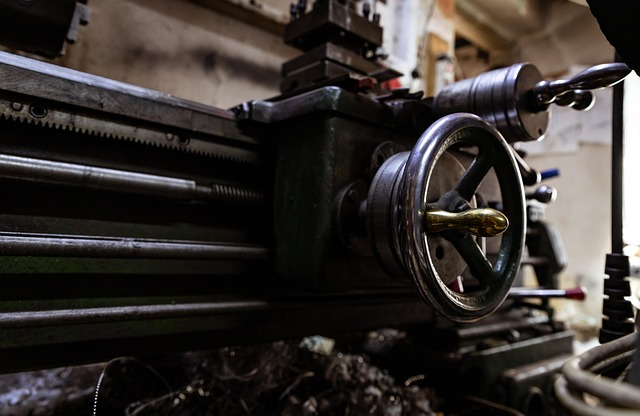
Vertical Lathes Feature a Spindle Oriented Vertically
A vertical lathe’s spindle is positioned upright so gravity naturally assists in stabilizing large workpieces. This setup allows the workpiece to rest securely on the chuck or rotary table instead of being suspended horizontally, reducing deflection during rotation.
The Machine’s Rigid Column and Cross-Rail Design
A rigid column combined with a cross-rail frame enhances the structural stiffness of the system. This rigidity is crucial when performing deep cuts or working with dense materials such as forged steel or cast iron, where any flex can compromise accuracy.
This Configuration Minimizes Deflection and Vibration
Because of its geometry, the vertical layout minimizes bending moments on the spindle bearings. Less vibration translates into longer tool life and improved surface integrity—key factors in high-precision manufacturing.
Comparing Vertical and Horizontal Lathe Architectures
Choosing between vertical and horizontal designs depends largely on part size, weight distribution, and required tolerance levels. Each configuration offers distinct benefits aligned to specific production needs.
Vertical Designs Are Optimized for Large Components
Vertical machines handle heavy or asymmetrical parts more effectively since gravity aids clamping stability. This makes them ideal for turbine housings or large bearing rings where balance is critical.
Horizontal Lathes Suit Smaller Parts or High-Speed Turning
Horizontal configurations excel at producing smaller parts at higher speeds due to easier chip evacuation along the axis of rotation. They are typically used in automotive component production lines where throughput matters more than mass handling.
The Choice Depends on Geometry and Precision Levels
Manufacturers evaluate part geometry, required tolerances, and material properties before selecting either architecture. In practice, many facilities use both systems to cover different job profiles efficiently.
Advantages of Vertical Lathes in High-Precision Applications
Precision machining demands not only accurate motion control but also stable fixturing and thermal management. Vertical lathes provide these advantages inherently through their physical orientation.
Enhanced Workpiece Stability and Clamping Efficiency
Gravity keeps the workpiece seated firmly against the chuck surface, reducing complex fixturing requirements. Fewer clamps mean faster setup times and fewer alignment errors during multi-step operations.
Superior Chip Management and Thermal Control
Chips fall away from the cutting area naturally because of the downward orientation. This prevents recutting debris that could damage tools or distort surfaces under heat buildup. Coolant access also improves since fluid reaches the cutting zone unobstructed by chip accumulation.
Integration of CNC Technology with Vertical Lathe Systems
CNC integration has transformed traditional turning centers into intelligent machining platforms capable of adaptive control, automation, and digital connectivity.
Advanced Control Systems for Multi-Axis Operations
Modern CNC vertical lathes support simultaneous multi-axis motion for contouring complex geometries such as impeller blades or valve bodies. Adaptive algorithms adjust feed rates dynamically based on load feedback to maintain consistent cutting conditions.
Automation Compatibility and Process Optimization
Automation interfaces allow robotic arms to load raw billets or unload finished parts without operator intervention. Integrated sensors track spindle load trends to predict maintenance needs before breakdowns occur—an essential feature for continuous production environments.
Application Domains Where Vertical Lathes Excel
Industries that demand high structural accuracy under substantial loads benefit most from vertical machining platforms due to their inherent stability characteristics.
Aerospace and Energy Component Manufacturing
In turbine casing production or compressor housing machining, maintaining concentricity within microns is vital for aerodynamic efficiency. Even under aggressive material removal rates, vertical lathes sustain tolerance consistency across long cycles.
Heavy Equipment and Industrial Machinery Production
These machines are widely used for gear blanks, bearing housings, pump bodies, and similar components requiring both bulk removal capacity and fine finishing capability within one setup environment.
Factors to Consider When Selecting a Vertical Lathe for Precision Work
Selecting an appropriate machine involves evaluating not just size capacity but also spindle design, rigidity profile, tooling flexibility, and software integration features.
Evaluating Machine Rigidity and Spindle Performance
Spindle torque curves determine how well a machine maintains feed pressure under varying loads. Bearing design influences vibration damping—a crucial factor when machining hard alloys at low rotational speeds.
Assessing Tooling Systems and Fixturing Options
Modular tool holders simplify changeovers between product families while custom fixtures secure irregular shapes safely during rotation. Toolpath optimization software further refines cycle time without sacrificing dimensional control.
Emerging Trends Shaping the Future of Vertical Lathe Machining
As manufacturing moves toward hybrid processes and digital ecosystems, vertical lathe technology evolves beyond traditional turning boundaries into multifunctional intelligent systems.
Hybrid Machining Capabilities Combining Turning and Milling Functions
New-generation machines integrate milling heads alongside turning spindles so operators can complete drilling or contour milling within one setup—reducing repositioning errors while improving throughput efficiency per cycle.
Digitalization and Smart Manufacturing Integration
IoT-enabled sensors now collect live data on temperature gradients, vibration spectra, and power draw patterns across spindles. Digital twin models simulate machining outcomes before actual runs begin—helping engineers anticipate tool wear behavior or potential resonance issues early in planning stages.
FAQ
Q1: What distinguishes a vertical lathe from a horizontal one?
A: A vertical lathe positions its spindle upright so gravity supports heavy workpieces directly on the table surface instead of relying on side-mounted fixtures like horizontal systems do.
Q2: Why are vertical lathes preferred for turbine component manufacturing?
A: Their structure maintains roundness under high loads while providing easy access for multi-axis contouring typical in aerospace-grade geometries.
Q3: How does chip evacuation differ between orientations?
A: In vertical setups chips drop away naturally due to gravity; horizontal machines require additional flushing systems to prevent re-cutting debris buildup.
Q4: Can modern CNC controls improve precision automatically?
A: Yes. Adaptive algorithms adjust parameters such as feed rate or spindle speed based on real-time feedback from torque sensors ensuring uniform cutting conditions throughout each pass.
Q5: What new trends influence future vertical lathe designs?
A: Integration with digital twins, hybrid turning-milling functions, predictive maintenance analytics, and full automation compatibility represent key development directions shaping next-generation systems.