
Can Welding Machine Laser Technology Redefine Cobot Precision In Manufacturing
Laser Welding and the Cobot
Laser welding and collaborative robotics have converged into one of the most transformative developments in modern manufacturing. The combination of a welding machine laser with a cobot brings unmatched precision, flexibility, and process consistency. This synergy is reshaping production lines across industries, enabling higher throughput without compromising quality. The integration of intelligent sensing, adaptive motion control, and AI-driven analytics has turned laser-cobot systems into the backbone of next-generation fabrication environments.
The Convergence of Laser Welding and Collaborative Robotics
The merging of laser welding technology with collaborative robots (cobots) represents a critical step toward smarter, safer automation. Together, they enable manufacturers to achieve levels of precision and repeatability that traditional systems cannot match.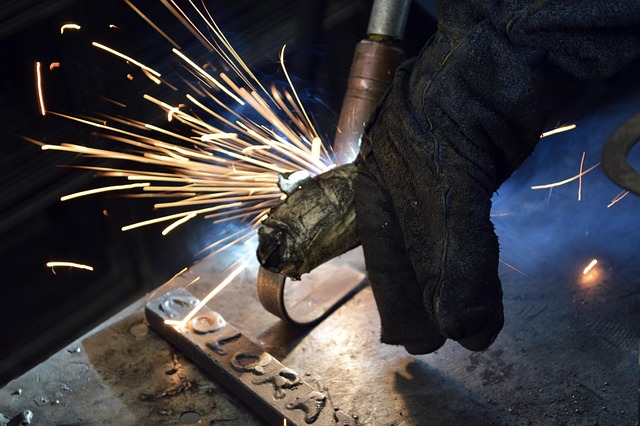
Understanding the Synergy Between Laser Technology and Cobots
Laser welding offers high precision, minimal heat distortion, and superior consistency that are essential for components where tolerances are measured in microns. Cobots add flexibility, adaptability, and safe human-machine collaboration by working alongside operators without the need for physical barriers. When combined, both technologies enhance automation efficiency in advanced manufacturing lines by balancing speed with accuracy.
Evolution of Welding Machine Laser Systems in Industrial Automation
The evolution from traditional arc welding to laser-based systems has been driven by the demand for higher accuracy and lower thermal impact. Modern welding machine laser setups now feature compact fiber or diode lasers that consume less energy yet deliver high power density suitable for robotic integration. Industries such as aerospace, automotive, and electronics increasingly adopt these systems to meet stringent quality requirements while reducing rework rates.
Enhancing Cobot Precision Through Advanced Laser Welding Integration
As cobots take on more complex tasks, integrating advanced laser parameters becomes crucial for maintaining consistent results across variable materials and geometries.
How Laser Parameters Influence Cobot Performance
Beam quality and focus control directly determine weld seam accuracy. A fine-tuned beam ensures stable energy delivery even at high speeds. Real-time feedback loops allow adaptive path correction when deviations occur during welding operations. With integrated sensors monitoring penetration depth and alignment, cobots can maintain consistent welds despite surface irregularities or thermal expansion.
Motion Control and Path Optimization in Laser Welding Cobots
Advanced kinematic algorithms help cobots execute precise trajectories even during rapid movements. AI-driven motion planning compensates for distortions caused by temperature changes or material inconsistencies. Synchronizing laser output modulation with robotic motion creates uniform weld beads across varying thicknesses—a capability especially valuable in multi-pass or circular joint applications.
Intelligent Sensing and Process Monitoring in Cobot-Laser Systems
The intelligence behind modern laser-cobot systems lies not only in their mechanical design but also in their ability to sense, interpret, and react to process data instantly.
Role of Vision Systems in Precision Welding Applications
High-resolution cameras guide cobots to identify joint positions before welding begins. Machine vision tools perform automated inspections immediately after each weld cycle to detect pores or undercuts invisible to the naked eye. When combined with AI algorithms, these vision systems can predict deviations early enough to adjust parameters on the fly—reducing scrap rates dramatically.
Real-Time Data Analytics for Process Optimization
Continuous monitoring of power density, temperature distribution, and travel speed provides valuable insights into process stability. Data analytics platforms flag anomalies before they evolve into defects or downtime events. Predictive maintenance models built from this data extend equipment lifespan by scheduling service only when performance indicators suggest wear or misalignment.
Material Compatibility and Thermal Management Challenges
While laser-cobot systems deliver exceptional precision, challenges remain around material response to concentrated heat sources and maintaining dimensional stability during production cycles.
Addressing Metallurgical Considerations in Laser-Cobot Operations
Material reflectivity plays a major role in determining how efficiently a surface absorbs laser energy—aluminum alloys reflect more than steel, demanding higher initial power settings or specialized coatings. Controlled heat input minimizes microstructural degradation such as grain coarsening or residual stress formation. Hybrid techniques that combine laser energy with arc assistance expand compatibility across dissimilar metals like copper-steel joints often used in battery housings.
Thermal Compensation Strategies for Dimensional Stability
Dynamic cooling mechanisms distribute heat evenly across complex geometries like turbine blades or thin-walled enclosures. Thermal sensors feed live data back to controllers that adjust beam intensity automatically when local temperatures exceed thresholds. Simulation software models heat flow patterns before actual runs begin so engineers can predict deformation zones early in design stages—saving both time and material cost later.
Safety, Standardization, and Scalability in Cobot-Laser Manufacturing Cells
Deploying cobot-laser cells requires strict adherence to safety standards while maintaining scalability for future production demands.
Implementing Safety Protocols for Human-Robot Collaboration with Lasers
Enclosures shield operators from direct radiation exposure during operation cycles while interlock systems trigger automatic shutdowns if unauthorized access occurs or malfunctions are detected. Compliance with ISO 10218 (robotic safety) and ISO/TS 15066 (collaborative operation) ensures workplace safety without sacrificing productivity—a non-negotiable requirement for facilities adopting high-power lasers near human operators.
Scaling Production with Modular Cobot-Laser Platforms
Modular architectures let manufacturers reconfigure cells quickly when switching between product variants or batch sizes. Plug-and-play interfaces simplify integration into existing digital ecosystems such as MES or ERP frameworks. Scalable control software coordinates multiple cobots within one networked environment—ideal for large-scale production lines where synchronized operations reduce idle time significantly.
Future Directions in Laser-Cobot Precision Manufacturing Technologies
The next wave of innovation will further tighten the bond between artificial intelligence, virtual modeling, and physical automation systems powered by lasers.
Emerging Innovations Driving Next-Level Accuracy and Efficiency
Ultrafast pulsed lasers now achieve cleaner edges with smaller heat-affected zones compared to continuous-wave sources. AI-enhanced controllers allow cobots to self-adjust parameters mid-cycle based on live sensor data rather than pre-programmed routines. Cloud-based learning networks share optimized settings across distributed facilities so every unit benefits from collective experience—a practical example of connected manufacturing evolving toward autonomy.
The Strategic Role of Digital Twins in Process Simulation and Optimization
Digital twins create virtual replicas that simulate how a welding machine laser interacts with materials under different conditions before real-world execution begins. Predictive modeling shortens commissioning time by fine-tuning setup variables virtually instead of through trial runs on physical equipment. When linked with manufacturing execution systems (MES), these twins provide real-time feedback loops that continuously refine performance metrics throughout production life cycles.
FAQ
Q1: What industries benefit most from integrating cobots with laser welding?
A: Aerospace, automotive, medical devices, electronics assembly, and precision toolmaking gain substantial benefits due to their demand for tight tolerances and repeatable weld quality.
Q2: How do cobot-laser systems improve production efficiency?
A: They combine fast robotic motion control with precise thermal input management from lasers, cutting cycle times while maintaining consistent joint integrity across complex parts.
Q3: Are there specific standards governing safety for collaborative laser applications?
A: Yes, ISO 10218 covers industrial robot safety requirements while ISO/TS 15066 defines guidelines specifically for collaborative operations involving human proximity.
Q4: What are common challenges when using lasers on reflective materials?
A: High reflectivity can cause unstable absorption leading to incomplete fusion; solutions include adjusting wavelength selection or applying absorptive coatings before processing.
Q5: How does AI contribute to modern laser-cobot integration?
A: AI enables adaptive control through predictive algorithms that adjust beam power or path trajectory based on sensor feedback—resulting in fewer defects and better resource utilization.