
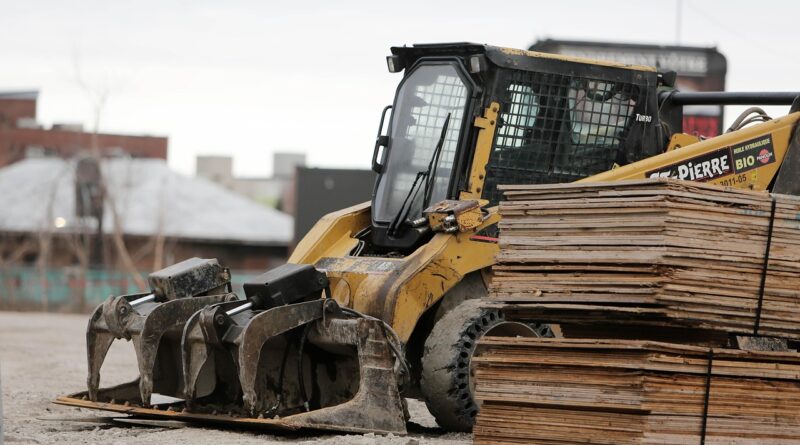
Caterpillar skid steer guide to the next-generation lineup
Quick answer for buyers comparing Cat skid steers
A Caterpillar skid steer is the wheeled compact loader in Cat’s skid steer and compact track loader family. For equipment buyers comparing machines in October 2026, the main change is Caterpillar’s move from the familiar D3 naming system to next-generation skid steer models such as the Cat 250, 260, 270 and 270 XE, introduced in September 2024. These machines are not just cosmetic updates. Caterpillar-published information points to higher lift performance, more torque, updated cab space and broader hydraulic choices.
The practical decision starts with the jobsite. Choose a wheeled skid steer for hard, mostly level ground, fast maneuvering and material handling. Consider a compact track loader instead when traction, flotation or soft-ground stability matter more.
For more machinery coverage by category, visit the Equipment & Machines section.
Why the next-generation Cat skid steer lineup matters
Caterpillar’s September 2024 product release introduced four next-generation skid steer loader models: the 250, 260, 270 and 270 XE. The same release also expanded Cat’s compact track loader range, but the skid steer models are the key point for buyers searching specifically for a Caterpillar skid steer. The new naming is simpler than the D3 system: next-generation skid steers end in 0, while next-generation compact track loaders end in 5.
The update matters because skid steers are often compared only by horsepower or bucket size. That leaves out several specifications that affect daily production. The newer Cat machines emphasize vertical lift geometry, improved rated operating capacity, expanded hydraulic options and a larger cab. Those changes can influence truck loading, pallet handling, snow work, cold planing, broom operation, brush cutting and other attachment-driven jobs.
That does not make the D3 machines obsolete for every buyer. D3 models such as the 226D3, 232D3, 236D3 and 242D3 still appear in Cat product information and dealer channels, and many used fleets continue to run older D-series machines. The better comparison is the job requirement, not the model year alone.
Current model snapshot
The following snapshot uses manufacturer-published product data available for the next-generation skid steer models. Actual machine weight can vary with tires, cab configuration, counterweights, bucket, quick coupler and hydraulic package, so the table should be used for planning rather than as a final purchase specification.
| Model | Gross power | Rated operating capacity | Operating weight | Best-fit applications |
|---|---|---|---|---|
| Cat 250 | 74 hp | 2,689 lb | 7,829 lb | General construction, loading, landscaping and utility work |
| Cat 260 | 74 hp | 3,160 lb | 8,523 lb | Higher-capacity material handling, pallets, snow and site work |
| Cat 270 | 100 hp | 3,557 lb | 10,441 lb | Heavy lift cycles, larger buckets and demanding attachments |
| Cat 270 XE | 121 hp | 4,015 lb | 10,847 lb | High-output hydraulic work and maximum skid steer capacity in the current group |
The step up is not only from the 250 to the 260. The move from the 260 to the 270 is also significant because the 270 adds much more engine output and operating weight, which can help when pushing, lifting and powering attachments. The 270 XE goes further by combining higher rated capacity with the XE hydraulic system, which Caterpillar describes as the highest-flow, highest-pressure hydraulic system in its skid steer lineup.
How to choose the right Caterpillar skid steer
Start with rated operating capacity
Rated operating capacity is one of the most useful comparison points because it connects directly to lift planning. On skid steers, ROC is commonly expressed at 50 percent of tipping load. It is not the maximum a machine can physically lift in every situation. Real jobsite limits include ground slope, attachment weight, load center, tire traction, operator technique and whether optional counterweights are installed.
If the machine will lift palletized materials, compare the weight of the pallet, forks and any wet or irregular material. If it will load trucks, lift height and reach matter as much as ROC. If it will mainly run a bucket for mulch, gravel or demolition debris, check the density of the material and avoid choosing a bucket that makes the machine unstable before it is full.
Match hydraulics to attachments
Hydraulics are where the next-generation Cat skid steer lineup becomes more important for spec decisions. Caterpillar’s September 2024 technical information listed standard auxiliary hydraulic flow at 23 gpm for the new skid steer models, with software-enabled high-flow capability up to 30 gpm on the 250, 260 and 270 when equipped appropriately. Cat also listed High Flow XPS options, and the 270 XE was published with an XE hydraulic option reaching 40 gpm and 4,496 psi.
For buckets, forks, basic grapples and many brooms, standard hydraulics may be enough. For cold planers, wheel saws, brush cutters, mulchers and other continuous-demand tools, the hydraulic package can matter more than a small horsepower difference. Buyers should verify both flow and pressure requirements for each attachment, not just whether a machine is labeled high flow.
Think about lift path and daily work
The newer Cat skid steers are described by Caterpillar as vertical-lift machines. That layout is useful for truck loading, loading hoppers, placing pallets and lifting materials higher while maintaining usable forward reach. Older Cat D3 skid steers included a mix of lift-path choices depending on model. A radial-lift machine can still be efficient for digging and lower-height work, but vertical lift usually has the advantage when the daily job involves loading over the side of a truck or handling pallets.
Choose wheels or tracks based on the ground
A skid steer loader runs on tires. That usually means faster travel on paved or hard-packed surfaces, lower undercarriage cost than a track machine and good maneuverability in confined areas. A compact track loader uses rubber tracks and spreads weight over a larger footprint, which helps on soft, muddy, sandy or uneven terrain. Caterpillar’s own application guidance makes the same broad distinction: skid steers suit firm ground and quick movement, while compact track loaders are better suited to traction-sensitive work and variable ground conditions. See also: CNC Machining.
For contractors doing snow removal, concrete yard work, municipal maintenance or warehouse-adjacent material handling, a wheeled skid steer can be a rational choice. For land clearing, wet grading and steep or soft sites, a Cat compact track loader may be the better tool even if the initial search was for a skid steer.
D3 models versus next-generation models
The D3 series remains important because it is widely understood by operators, mechanics and used-equipment buyers. Manufacturer-published data for D3 examples show how broad the earlier range was: the 226D3 is listed at 67.1 hp, 1,550 lb ROC and 5,849 lb operating weight, while the 242D3 is listed at 74.3 hp, 2,200 lb ROC and 7,138 lb operating weight. Larger D3 machines such as the 262D3 and 272D3 XE served buyers needing more capacity and higher hydraulic performance.
A D3 machine can still make sense when acquisition cost, operator familiarity and attachment compatibility are more important than having the newest cab or hydraulic architecture. That can apply to farms, municipalities, rental backup units and small contractors with known attachment sets. However, buyers should inspect hours, service history, hydraulic condition, tire wear, loader-arm play, cab electronics and emissions-system maintenance before assuming a used machine is the lower-cost choice.
The next-generation Cat skid steer line makes the stronger case when the machine will be a primary production asset. Higher lift capability, more hydraulic flexibility and an improved operator environment can matter when the loader runs long shifts or supports multiple attachments. The best value depends on utilization: a lightly used yard machine and a full-time grading or attachment carrier should not be specified the same way.
Ownership checks before purchase
- Confirm transport limits. Add the machine, attachment, bucket, fuel, trailer and tie-down equipment before assuming a pickup and trailer combination is legal or comfortable.
- Verify attachment compatibility. Check hydraulic flow, pressure, electrical connector requirements, case drain needs, coupler type and minimum carrier weight.
- Compare real configuration weights. Enclosed cab, air conditioning, counterweights, high-flow hydraulics and larger tires can change the operating weight.
- Inspect visibility and access. Lift-arm design, rear camera availability, cab entry, door style and service-panel access affect daily productivity.
- Ask about dealer support. Parts availability, mobile service response, warranty terms and maintenance plans often matter as much as the published spec sheet.
- Treat advertised pricing carefully. Caterpillar states that dealers set actual prices and that displayed MSRP or dealer prices may exclude taxes, freight, attachments and protection plans.
What the lineup means for fleets
The next-generation Caterpillar skid steer lineup shows where compact equipment design is moving: more hydraulic capability, more electronic integration, higher lift performance and closer attention to the operator environment. This reflects how skid steers are used today. Many buyers are not purchasing a loader only to carry a bucket; they expect one carrier to run forks, snow tools, brooms, graders, planers, cutters and specialty attachments.
For fleet managers, the decision should be based on task concentration. If 80 percent of the work is simple loading on hard surfaces, buying too much hydraulic system can add cost without enough return. If the loader is expected to run high-demand attachments for billable work, underspecifying hydraulics can limit revenue and hurt resale appeal. The most useful comparison is therefore not Cat versus another brand in the abstract, but machine configuration versus the work the loader will actually perform.
Frequently asked questions
Is a Caterpillar skid steer the same as a Cat compact track loader?
No. A skid steer uses wheels and is typically preferred on hard, mostly level surfaces where speed and maneuverability matter. A compact track loader uses tracks and is usually better for soft, wet, uneven or traction-sensitive ground.
Which Cat skid steer has the highest capacity in the next-generation lineup?
Among the next-generation Cat skid steer models discussed here, the 270 XE has the highest listed rated operating capacity at 4,015 lb and the highest listed gross power at 121 hp. It is also the model aimed at the most demanding hydraulic work in the skid steer group.
Do I need high-flow hydraulics?
You need high-flow hydraulics only if your attachments require it or if you plan to add demanding tools later. Buckets and forks usually do not need high flow, while planers, saws, brush cutters and mulchers often benefit from or require higher flow and pressure.
Are older Cat D3 skid steers still worth considering?
Yes, if the price, condition, service records and attachment fit are right. The next-generation models offer newer performance and comfort features, but a well-maintained D3 machine can still be a practical choice for lower-hour or less attachment-intensive work.
What specs should I compare first?
Start with rated operating capacity, operating weight, lift height, hydraulic flow and pressure, attachment compatibility and transport weight. Horsepower matters, but it should not be the only spec used to choose a skid steer.