
What Is NC Machining and Is It Better Than Manual Machining?
What Does NC Machining Really Mean for Your Parts?
If you buy or design precision parts, nc machining is a common way to turn a drawing into a finished component. It uses numerical instructions to control machine movement, tool paths, feed rates, spindle speed, and other cutting actions. You can find more related process guides in the machining processes section, but here I am staying with the buying side: what is worth checking before you send a quote request.
Digital Instructions Drive Physical Cutting
NC stands for numerical control. A program tells the machine where to move and how to cut. On current equipment, a computer usually reads the code and controls motors, drives, sensors, and tooling. Manufacturing.gov describes computer numerical control as digital control of a physical machine with actuators, electronics, sensors, and a dedicated computer, often used in manufacturing cells. (manufacturing.gov)
NC, CNC, and the Name Issue
People often say NC machining when they are talking about CNC machining. In normal sourcing work, suppliers and buyers do not always separate the two terms strictly. Older NC systems used punched tape or simpler stored programs. CNC systems brought in computer control, editing, offsets, memory, and better shop-floor feedback. For a buyer, the point is simple: the shop should be able to tell you the machine type, control brand, axis count, and inspection plan without talking around it.
Where Buyers See the Difference
The difference shows up most clearly in repeat orders. After the setup, fixture, tool list, offsets, and inspection method are fixed, the same program can make parts with less operator-to-operator change. That does not mean the first sample comes out right by itself. Anyone who has stood near a machine knows this: the machine is precise, not magic. Poor drawings, weak fixturing, worn tools, and unclear datums still make poor parts.
How Does NC Machining Compare With Manual Machining?
Manual machining still belongs in many shops, especially for repair work, simple one-off jobs, and small adjustments. NC machining makes more sense when the geometry repeats, tolerances matter, or the part has curves, pockets, bolt patterns, and features that take too long to cut by hand. For export orders, that repeatability can decide whether receiving gets a clean batch or a long sorting job.
Repeatability Beats Handwheel Control
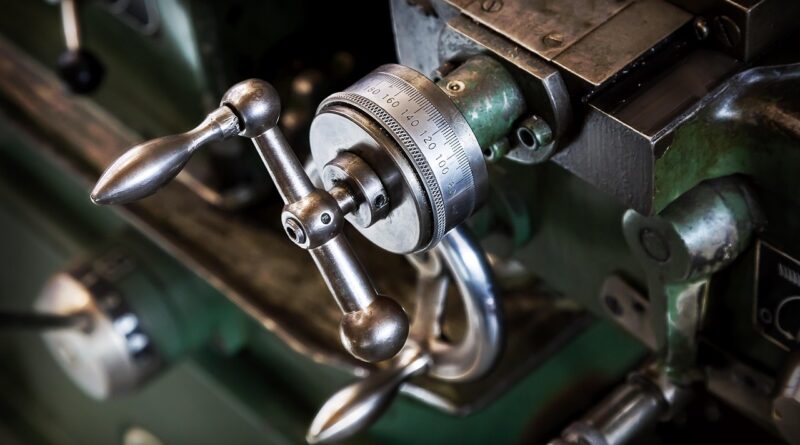
On a manual mill or lathe, the machinist controls movement by hand, using dials, power feeds, and experience. In NC machining, the program controls the path. This makes it easier to hold the same hole pattern on 50 brackets or cut the same thread relief on hundreds of shafts. The value is even clearer when the same part comes back every month.
Setup Still Decides the First Part
The first-piece result still depends on setup work. The shop has to choose the right vise, soft jaws, fixture plate, chuck, or tailstock support. It also has to set work offsets and tool offsets correctly. A simple aluminum plate may take longer to set up than to cut. That can feel frustrating to a buyer, but it is normal in machining. Setup is where a lot of cost sits.
Skilled Operators Remain Important
Automation changes the job, but it does not remove the need for skill. The U.S. Bureau of Labor Statistics notes that machinists may work to accuracy sometimes within 0.0001 inch, and it lists machine tools such as mills, lathes, grinders, lasers, waterjets, and wire EDM in the occupation. Its May 2024 data also reported a median annual wage of $56,150 for machinists. That says skilled machining is still a real trade, not just button pushing. (bls.gov)
Which Materials and Parts Fit NC Machining Best?
NC machining works with many materials, but each material changes the cutting plan. Aluminum cuts fast and often gives a clean surface. Stainless steel usually needs slower speeds and good coolant control. Engineering plastics can move after cutting if stress is locked inside the stock. The right process is not only about whether a part can be machined. It is about whether it can be machined again and again at a fair cost.
Aluminum, Steel, Brass, and Engineering Plastics
Aluminum 6061 is often used for fixtures, housings, covers, and prototype parts. Steel is common for shafts, pins, plates, dies, and load-bearing pieces. Brass works well for fittings and electrical components. Plastics such as POM, nylon, PTFE, and PEEK need sharp tools and heat control. If your part will be anodized, plated, heat treated, or welded later, mention it at the quote stage. It can change both price and process choice.
Prismatic Parts, Shafts, Pockets, and Threads
Milling is used for flat faces, slots, pockets, holes, and 3D surfaces. Turning is used for round parts such as bushings, spacers, pins, and threaded shafts. Mill-turn equipment can combine both operations, which cuts down setups for parts with both round and milled features. Holes, threads, counterbores, grooves, keyways, and O-ring seats are normal daily work for a capable shop.
Tough Features That Need Early Review
Deep narrow pockets, tiny internal corner radii, thin walls, long unsupported shafts, and tight true-position callouts should be checked before production starts. A designer may draw a 1 mm internal radius because it looks fine on screen. The machinist sees tool reach, chatter, breakage, and added cycle time. Early review can save days, and on rush orders it can save more than that.
What Tolerances Can You Expect From NC Machining?
Tolerance is not one fixed promise across all NC machining jobs. It depends on material, part size, machine condition, tool wear, fixture stiffness, temperature, inspection method, and feature type. A short aluminum spacer is not the same job as a 700 mm stainless rail. If a supplier gives the same tolerance answer for every part, it is worth asking follow-up questions.
Drawing Tolerances Guide the Process
A good drawing tells the shop what matters. Use tight tolerances only where they affect fit, movement, sealing, or safety. If every dimension is held too tightly, the price goes up fast. For many general machined parts, standard tolerances are enough on non-critical features. Bearing bores, dowel holes, sealing grooves, and datum faces usually need tighter control.
Inspection Data Closes the Loop
Inspection may include calipers, micrometers, bore gauges, height gauges, surface roughness testers, CMM reports, and first article inspection. Ask for the inspection level that matches the part risk. A simple spacer may only need basic dimensional checks. A medical fixture, aerospace bracket, or hydraulic valve body may need a full inspection report with traceability. The drawing should make that clear before production.
Surface Finish Depends on More Than Speed
Surface finish comes from tool geometry, material, tool wear, step-over, feed, coolant, rigidity, and post-process work. A shiny surface is not always the right surface. For sliding, sealing, or fatigue-sensitive areas, call out a roughness value such as Ra on the drawing. If appearance matters, provide a sample or a clear finish standard. Phrases like nice finish are risky because each shop may read them differently. See also: CNC Machining.
How Should You Prepare Drawings and Files for NC Machining?
Better input makes quoting faster and reduces rework. A supplier can price the job more accurately when you send the 3D model, 2D drawing, material grade, quantity, finish, tolerance needs, and delivery target together. If one item is missing, the price may be wrong. If two are missing, a simple RFQ can turn into a long email thread.
Clean CAD, Clear 2D Drawings
Send STEP files for geometry and PDF drawings for tolerances, threads, notes, and inspection points. The model shows the shape, while the drawing tells the shop what must be controlled. If there is a revision history, mark the current revision clearly. If the part mates with another part, share that context when you can. It helps the supplier find design traps before material is cut.
G Code, Posts, and Machine Dialects
G code is common, but it is not always portable from one machine to another. The ISO 6983 preview says the format is commonly called G code or ISO programming, and it also states that compliance does not guarantee program interchangeability between different machine tools. That matters when a job moves from one supplier to another or from one control brand to the next. A small post-processor difference can still create a shop-floor problem. (evs.ee)
Practical Notes That Cut Delay
State whether sharp edges should be broken, whether burrs are allowed in hidden areas, and whether threaded holes must be checked with go/no-go gauges. Also mention packaging needs. Thin parts can pass inspection and still arrive scratched if packing is poor. It is not an exciting topic, but packaging has spoiled plenty of otherwise good machining jobs.
When Is NC Machining the Right Buying Choice?
NC machining is usually a good choice when you need precise parts without paying for hard tooling. It fits prototypes, bridge production, custom machinery, spare parts, fixtures, and mid-volume batches. For very high volumes, casting, forging, stamping, or injection molding may be cheaper if tooling cost can be spread across a large run.
Prototype Runs Need Fast Feedback
For prototypes, NC machining lets you test real material and real geometry quickly. A machined aluminum housing can show assembly problems, cable clearance issues, and sealing trouble before tooling money is spent. If a prototype needs three revisions, machining usually handles those changes more easily than a tool-based process. That is one reason buyers keep using it during early development.
Mid Volume Orders Need Stable Fixtures
For 50 to 5,000 pieces, the biggest savings often come from fixtures, tool life control, and inspection planning. The U.S. Census Bureau reported in October 2024 that U.S. manufacturing establishment employment rose from 11.2 million in 2021 to 12.3 million in 2022, while value of shipments rose from $6.1 trillion to $7.1 trillion. That broader manufacturing picture is useful for buyers. It shows that dependable production methods still matter, not only a low sample price. (www2.census.gov)
Cost Depends on Time, Tools, and Risk
Machining cost comes from programming time, setup time, cycle time, material waste, tooling, inspection, scrap risk, and finishing. NIST reported in 2020 that industrial CNC practice still relies on low-fidelity data transfer between CAM and machine tools, and that G code was not designed to transmit feedback data. In plain terms, the digital chain still has gaps. That is why an experienced review before cutting still matters. (nist.gov)
FAQ
Q1: Is NC Machining the Same as CNC Machining? A: In many buying conversations, yes, people use the terms loosely. Strictly speaking, CNC is the computer-controlled form of numerical control and is the modern standard in most precision shops.
Q2: What File Format Should You Send for NC Machining? A: Send a STEP file for 3D geometry and a PDF drawing for tolerances, threads, material, finish, and inspection notes. Native CAD files can help if the supplier asks for them.
Q3: Can NC Machining Hold Very Tight Tolerances? A: Yes, but tight tolerance depends on material, geometry, machine condition, fixture design, tool wear, and inspection method. Put tight limits only on features that truly need them.
Q4: Is NC Machining Good for Small Batch Orders? A: Yes. It is often a good fit for prototypes, custom parts, spare parts, and small to mid-size batches because it does not need expensive dedicated tooling.
Q5: How Can You Reduce NC Machining Cost? A: Use practical tolerances, avoid very deep narrow pockets, allow standard tool radii, choose common materials, combine clear drawings with clean CAD files, and discuss finishing needs early.