
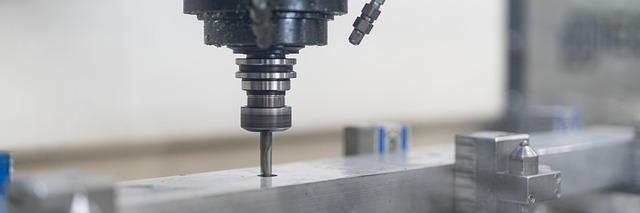
Can CNC Machine Milling Redefine Precision Parts for Ford Cars in 2026
Parts for Ford Cars by CNC Machine Milling
CNC machine milling has become the backbone of Ford’s precision manufacturing strategy for 2026 and beyond. The company’s shift toward electric and hybrid vehicles demands tighter tolerances, faster production cycles, and sustainable machining practices. Advanced milling systems now combine multi-axis control, AI-driven analytics, and digital twins to achieve repeatable accuracy at micron levels. This transformation is not just about speed; it defines a new era where automation, material science, and data converge to produce lighter, stronger, and more efficient automotive components.
The Evolution of CNC Machine Milling in Automotive Manufacturing
The evolution of CNC machine milling reflects a broader shift in how automakers like Ford approach design flexibility and production agility. As the industry moves toward electrification, every gram of material and every micron of deviation matters.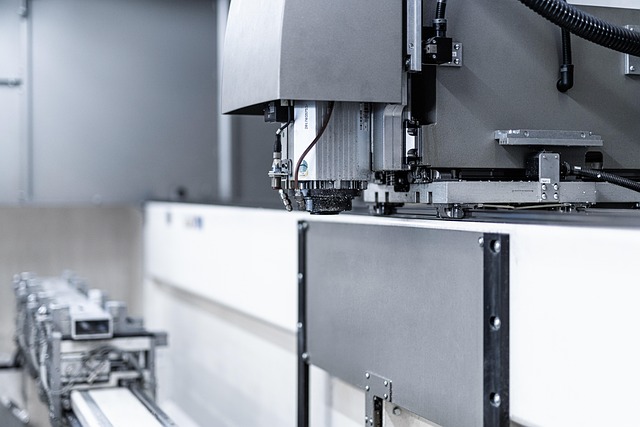
Shifting Standards in Precision Engineering for 2026
Advancements in CNC milling are reshaping automotive part design and production. For Ford’s next-generation vehicles, precision requirements now reach sub-micron tolerances. These tighter specifications are driven by electric powertrain demands where even small variations can impact efficiency or noise levels. Digital twins and smart manufacturing systems enhance repeatability by simulating machining paths before cutting begins. This digital-first approach allows engineers to validate part geometry under real-world stress conditions without wasting material.
The Role of CNC Machine Milling in Ford’s Production Ecosystem
CNC machine milling supports complex geometries essential for modern engine housings, battery enclosures, and chassis components. Multi-axis machining provides simultaneous movement across several planes, allowing intricate contours to be milled in one setup. This reduces tool changes and human intervention while maintaining uniform quality across high-volume runs. Adaptive control systems further align with Ford’s automation goals by adjusting feed rates based on live sensor feedback, minimizing vibration and energy consumption during long production shifts.
Technological Innovations Driving CNC Milling Accuracy
Precision today depends as much on data as on mechanical stability. Innovations in AI algorithms, predictive maintenance, and tooling materials are redefining what accuracy means on the shop floor.
Integration of AI and Predictive Analytics in Milling Operations
Artificial intelligence within CNC controllers predicts tool wear patterns using vibration signatures and spindle load data. When anomalies appear, compensation occurs automatically without halting production. Predictive maintenance powered by analytics minimizes downtime by scheduling interventions before failure occurs. Real-time dashboards help process engineers make decisions that balance throughput with surface quality—something especially critical for aluminum castings used in Ford’s EV platforms.
Advances in Tooling Materials and Cutting Strategies
Tooling has evolved from standard carbide inserts to nanocoated variants capable of withstanding extreme temperatures at high speeds. These coatings reduce friction and extend tool life significantly under dry or semi-dry cutting conditions. Dynamic toolpath optimization software recalculates cutter engagement angles on the fly to suppress chatter while improving surface finish consistency. Hybrid cutting techniques that merge additive layering with subtractive finishing are emerging as practical solutions for lightweight structural parts where weight-to-strength ratio is paramount.
Digitalization and Smart Manufacturing in CNC Milling
Digitalization has turned traditional machining into a connected ecosystem where machines communicate as part of an intelligent network rather than isolated units.
The Emergence of Connected Machining Environments
IoT-enabled CNC machines now transmit performance data across entire production lines through secure industrial networks compliant with ISO/IEC 30141 frameworks. Cloud-based monitoring platforms allow remote diagnostics so process engineers can adjust parameters without being physically present at the workstation. Smart sensors embedded within spindles track vibration amplitude, temperature gradients, and torque fluctuations to maintain consistent precision even during extended operations.
The Impact of Digital Twins on Process Simulation
Digital twins create virtual replicas of physical machines that simulate behavior under different cutting loads or thermal conditions before actual machining starts. This capability reduces trial-and-error cycles while enabling rapid prototyping without consuming raw materials unnecessarily. Continuous feedback loops between digital models and live equipment refine calibration automatically after each cycle, driving cumulative accuracy improvements over time.
Redefining Tolerances for Ford’s Precision Components
As materials evolve—from lightweight aluminum alloys to composite reinforcements—milling strategies must adapt accordingly to maintain dimensional integrity throughout assembly automation lines.
Meeting Automotive Material Challenges with Advanced Milling Techniques
High-strength alloys used in electric vehicle frames require optimized feeds and speeds due to their hardness variability across batches. Thermal distortion management becomes critical when machining large aluminum engine blocks since expansion can easily offset alignment by several microns if uncontrolled. Precision milling keeps these distortions within acceptable limits while ensuring seamless fitment during robotic assembly.
Achieving Micron-Level Accuracy Through Enhanced Calibration Systems
Modern laser calibration systems verify spindle alignment along all axes over long production runs without manual intervention. Closed-loop feedback mechanisms detect deviations instantly during each machining cycle, applying corrective motion commands within milliseconds. Integrated coordinate measuring systems (CMMs) provide real-time validation so that every component leaving the line meets geometric dimensioning standards defined under ISO 1101 guidelines.
Sustainable Manufacturing Through CNC Machine Milling Innovations
Sustainability is no longer optional; it shapes how energy is consumed, how materials are recovered, and how waste is minimized throughout manufacturing chains.
Energy Efficiency in High-Speed Milling Operations
Adaptive power management modules automatically scale energy draw based on spindle load rather than fixed consumption rates. Some high-end spindles feature regenerative braking systems that recover kinetic energy during deceleration phases—an innovation inspired by hybrid vehicle technology itself. Optimized coolant delivery methods target only active cutting zones to reduce fluid waste while maintaining stable thermal conditions around workpieces.
Material Utilization and Waste Reduction Strategies
Near-net-shape milling reduces excess stock removal by starting closer to final geometry dimensions derived from casting simulations. Recyclable chip collection units separate metal types for closed-loop reuse within foundries supporting circular economy goals outlined by IEA industrial sustainability reports. Intelligent nesting algorithms inside CAM software plan multiple parts per billet layout to minimize scrap generation across entire batches.
Preparing the Workforce for the Next Generation of CNC Technology
Machines may be smarter than ever, but skilled professionals remain vital to interpret data streams and manage complex hybrid workflows combining additive layering with precision subtraction.
Skill Development for Advanced CNC Programming and Troubleshooting
Operators now require fluency across hybrid CAM environments capable of handling both deposition paths and traditional cutter routes simultaneously. Troubleshooting increasingly depends on analyzing sensor data patterns rather than visual inspection alone since many issues originate from micro-level vibrations invisible to the naked eye. Continuous training programs built around ISO-certified curricula help workers stay aligned with evolving machine intelligence frameworks entering mainstream manufacturing lines.
Collaboration Between Engineers, Programmers, and Machine Operators
Cross-functional collaboration fosters faster problem-solving when integrating new materials or revising toolpaths mid-production run. Shared data ecosystems connect design teams with operators through unified dashboards so everyone accesses identical performance metrics from concept through final inspection stages. Such transparency accelerates adoption of emerging milling technologies throughout Ford’s global supply chain where consistency remains non-negotiable.
FAQ
Q1: What makes CNC machine milling crucial for Ford’s EV parts?
A: It allows precise shaping of lightweight alloys needed for electric powertrains while maintaining tight tolerances critical for efficiency.
Q2: How does AI improve reliability in CNC operations?
A: AI algorithms predict tool wear early and adjust parameters automatically to prevent defects or unexpected downtime.
Q3: Why are digital twins important in modern manufacturing?
A: They simulate real machining behavior virtually so engineers can optimize processes before physical execution begins.
Q4: What sustainability benefits come from advanced milling?
A: Energy-efficient drives, coolant recycling systems, and reduced material waste contribute directly to lower carbon footprints per component produced.
Q5: Which skills will future CNC operators need most?
A: Data interpretation from sensors, hybrid programming knowledge combining additive-subtractive methods, and cross-disciplinary teamwork capabilities will define next-generation expertise levels.