
Are Band Saw Blades Evolving Fast Enough for Precision Metal Cutting in 2026
News, Reviews and Articles About Band Saw Blades and Parts
The evolution of band saw blades is reshaping precision metal cutting across industries. By 2026, advancements in material science, automation, and sustainability will redefine how manufacturers approach blade design and performance. High-speed steel and carbide technologies are giving way to hybrid composites, while AI-driven monitoring ensures consistent results in demanding sectors like aerospace. The next generation of blades will not only cut faster but also think smarter—adapting to materials in real time while minimizing waste.
Technological Advancements in Band Saw Blade Design
Modern band saw blades have evolved beyond simple cutting tools into engineered systems designed for efficiency and longevity. Material innovation, coating technology, and refined tooth geometry now determine the competitive edge of every production line.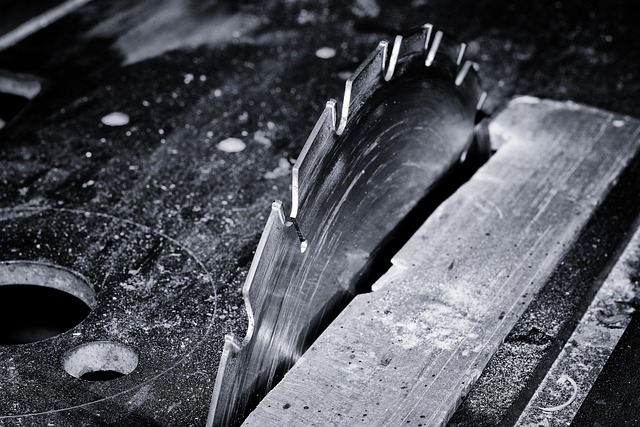
Evolution of Blade Materials and Coatings
High-speed steel remains a cornerstone for general-purpose cutting, but carbide-tipped and bimetal blades now dominate heavy-duty applications due to their superior hardness. Manufacturers are fine-tuning alloy compositions to strike a balance between rigidity and flexibility, reducing premature fracture under cyclic loads. Advanced coatings such as titanium nitride (TiN) and aluminum titanium nitride (AlTiN) minimize friction at high feed rates, extending tool life by up to 30%. These coatings also improve heat dissipation—a crucial factor when cutting high-alloy steels or nickel-based superalloys used in aerospace components.
Innovations in Tooth Geometry and Set Patterns
The geometry of a blade’s teeth defines its performance envelope. Variable pitch designs reduce harmonic vibration during metal cutting, leading to quieter operation and smoother finishes. Optimized rake angles enhance chip evacuation, preventing clogging when slicing through dense materials like stainless steel or Inconel. Adaptive set patterns—where tooth offsets adjust dynamically based on material density—are emerging as a key feature in automated production environments that handle mixed workloads.
The Role of Automation and Smart Manufacturing in Blade Performance
Automation has become the silent partner of modern machining. For band saw blades, it means self-monitoring systems that learn from every cut and adapt parameters for maximum efficiency.
Integration of Sensor-Based Monitoring Systems
Embedded sensors within the saw frame now track blade wear, temperature fluctuations, and tension levels in real time. This data feeds predictive maintenance algorithms capable of forecasting potential failure before downtime occurs. In high-throughput plants, such predictive insights help maintain steady productivity across multiple shifts while minimizing scrap rates.
Digital Calibration and Adaptive Cutting Parameters
CNC-controlled band saws can automatically adjust feed speed or pressure based on live feedback from the blade’s sensors. AI-driven systems interpret variations in resistance or vibration to fine-tune cutting parameters for each alloy type or thickness. Digital calibration routines synchronize multiple machines across facilities, ensuring every cut meets identical tolerance standards—a critical requirement for aerospace fasteners or surgical instruments.
Challenges Facing the Evolution of Band Saw Blades by 2026
Despite rapid progress, several technical barriers still constrain the next leap forward in blade technology.
Limitations in Material Science and Manufacturing Techniques
Even with advanced metallurgy, fatigue resistance remains a limiting factor under continuous stress cycles. Edge retention at microscopic scales is difficult to sustain without escalating production costs. Precision grinding required for micro-tooth geometries demands specialized equipment that drives up manufacturing expenses. Scaling these processes while maintaining tight dimensional tolerances continues to challenge both toolmakers and machine builders.
Balancing Speed, Accuracy, and Cost Efficiency
Increasing cutting speed often comes at the expense of surface integrity unless supported by efficient cooling systems or optimized lubrication flow. Cost-sensitive industries hesitate to adopt premium alloys despite their extended lifespan because initial investment outweighs short-term gains. Manufacturers must constantly weigh productivity improvements against long-term durability—a balancing act that defines competitiveness in metal fabrication markets.
Industry Trends Shaping the Future of Precision Metal Cutting
The demand for tighter tolerances and sustainable manufacturing practices is steering research toward smarter materials and greener processes.
Demand for Ultra-Fine Tolerances in Aerospace and Medical Sectors
Aerospace components require micron-level consistency where even minor deviations can lead to structural imbalance or thermal stress failures. Similarly, medical implants rely on burr-free edges that reduce post-machining polishing time. Enhanced edge profiles combined with thermal stability coatings enable precise cuts through titanium alloys without inducing micro-cracks or altering metallurgical properties.
Sustainability and Resource Efficiency in Blade Production
Manufacturers are adopting recyclable core materials that retain strength while reducing environmental footprint. Energy-efficient sintering methods lower carbon emissions during production cycles. Lifecycle analysis now guides design decisions—from raw material sourcing to end-of-life recycling—aligning with global sustainability frameworks such as ISO 14001 environmental management standards.
Emerging Research Directions for Next-Generation Band Saw Blades
As digital manufacturing converges with new material technologies, research teams are exploring hybrid approaches that merge physics-based design with intelligent control systems.
Hybrid Blade Technologies Combining Multiple Cutting Principles
Hybrid designs integrate laser-assisted heating zones or ultrasonic vibration modules along the blade edge to enhance precision when cutting brittle metals or composites. Composite structures combining flexible backing layers with hardened teeth zones deliver resilience against shock loads without sacrificing sharpness retention. Experimental self-lubricating coatings further reduce heat buildup during prolonged operations—a promising direction for continuous-run production lines.
Collaboration Between Toolmakers, Machine Builders, and End Users
Cross-disciplinary collaboration accelerates innovation by merging field data from end users with design simulations from toolmakers. Machine builders tailor drive dynamics around specific blade characteristics to minimize resonance effects at high RPMs. Continuous feedback loops between users and manufacturers refine tooth geometry over time based on real-world wear patterns—creating a closed learning cycle that steadily improves performance metrics year after year.
FAQ
Q1: What materials are most commonly used for modern band saw blades?
A: High-speed steel remains common for general use, while carbide-tipped and bimetal designs dominate heavy-duty industrial applications due to their superior hardness and wear resistance.
Q2: How do coatings like TiN improve blade life?
A: Titanium nitride coatings reduce friction between the blade surface and workpiece, improving heat dissipation during high-speed cuts which extends operational lifespan significantly.
Q3: Why is variable pitch tooth design important?
A: Variable pitch reduces vibration frequencies generated during metal cutting, resulting in smoother finishes and less noise compared to uniform tooth spacing.
Q4: What role does automation play in maintaining blade accuracy?
A: Sensor-based automation continuously monitors tension, temperature, and wear conditions allowing predictive maintenance that prevents sudden failures during operation.
Q5: How is sustainability influencing future blade production?
A: Manufacturers increasingly use recyclable cores and energy-efficient processes guided by lifecycle analysis principles aligned with international environmental standards like ISO 14001.