
What Makes a Drill Countersink Bit Essential for Precision CNC Work in 2026
Snappy Tapered Drill Countersink Bit Set
Precision machining in 2026 demands more than accurate coordinates; it requires intelligent tooling that adapts to evolving materials and tighter tolerances. The drill countersink bit has become a critical component in CNC workflows, bridging the gap between drilling and finishing operations. Its tapered geometry not only enhances alignment but also contributes to consistent surface integrity across production runs. By combining advanced tool materials, sensor-driven feedback, and adaptive programming, modern countersinking achieves aerospace-grade precision with reduced cycle times.
The Role of Drill Countersink Bits in Modern CNC Precision Work
Countersinking is no longer a secondary process but an integral part of high-accuracy assembly preparation. As CNC systems advance, the role of the drill countersink bit expands from simple hole finishing to a precision-controlled operation that influences both mechanical fit and visual quality.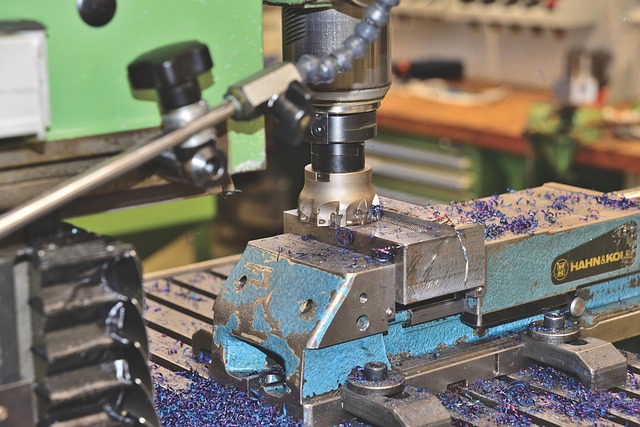
Function of a Drill Countersink Bit
A drill countersink bit is designed to create a conical recess where screw heads or fasteners sit flush with or below the surface. This geometry improves load distribution and aesthetics, particularly in aerospace and electronics housings where flush surfaces are mandatory. In addition, it minimizes burr formation by shearing material cleanly rather than deforming it, which reduces post-processing time. Its precise angle—typically 82° or 90°—ensures that fasteners seat accurately, preventing stress concentration around the hole edge.
Enhancement of Surface Finish and Alignment
Proper countersinking improves both alignment and surface texture. When used after drilling, the bit removes minor irregularities left by the previous operation. This results in smoother transitions between parts during assembly. In automated setups, consistent countersink angles contribute to repeatable clamping torque values across multiple components, which is crucial for maintaining dimensional stability under vibration or load.
Minimization of Burr Formation and Improved Aesthetics
Burr-free edges are essential for components exposed to dynamic environments such as turbine housings or automotive chassis panels. The sharp cutting edges of modern bits reduce material tearing even in tough alloys like Inconel or titanium. Visually, this leads to cleaner interfaces that require no manual deburring—a significant productivity gain in mass production lines.
Integration of Countersinking in CNC Machining Processes
Modern CNC systems treat countersinking as part of a unified toolpath strategy rather than an isolated step. This integration allows for better synchronization between drilling, chamfering, and finishing operations within one continuous cycle.
CNC Programs Incorporating Countersink Operations
In multi-step drilling cycles, G-code instructions define both depth and angular parameters for each countersink pass. By embedding these commands directly into the machining sequence, operators eliminate manual tool changes and reduce setup errors. Machine controllers can automatically adjust feed rates based on material hardness readings from integrated sensors.
Toolpath Optimization for Depth and Angle Precision
Toolpath generation software uses mathematical interpolation to maintain consistent depth even when surface curvature varies slightly due to casting tolerances. This precision avoids overcutting while preserving uniform cone geometry around each hole. Advanced CAM packages also simulate chip evacuation patterns to prevent clogging during deep countersinks.
Machine Control Compensation for Tool Wear
Over long production runs, spindle runout or gradual wear can alter effective cutting angles. High-end CNC systems compensate dynamically using feedback from torque sensors or laser measurement probes mounted near the spindle nose. These adjustments maintain geometric accuracy without halting production for manual recalibration.
Material Science Behind Next-Generation Countersink Bits
The evolution of drill countersink bits reflects broader progress in metallurgical engineering aimed at balancing hardness with resilience under extreme cutting conditions.
Tool Material Innovations for 2026 Production Demands
High-speed steel (HSS) remains common but newer variants enriched with cobalt improve red hardness at elevated temperatures. Carbide-tipped bits deliver superior wear resistance when machining abrasive composites or stainless steels. Nanocomposite coatings such as TiAlN or AlCrN further reduce friction by forming self-lubricating oxide layers under heat exposure, extending tool life significantly compared with uncoated counterparts.
Geometry and Edge Design for Enhanced Precision
Multi-flute configurations distribute cutting loads evenly across edges, reducing chatter at high RPMs. Variable-angle flutes adapt better to mixed-material assemblies where aluminum meets steel inserts within one housing unit. Micro-honed edge preparation strengthens cutting lips against micro-chipping that often occurs during repeated plunges into hard substrates.
Stable Performance Across Alloys
An improved hardness-to-toughness ratio allows modern bits to sustain consistent performance across diverse alloys without premature cracking. This versatility is particularly valuable in industries transitioning toward lightweight hybrid materials combining metals with carbon-fiber reinforcements.
CNC Programming Considerations for Countersinking Operations
Programming strategies determine whether a countersinking process achieves true repeatability or drifts over time due to accumulated micro-errors.
Toolpath Strategies for Precision and Efficiency
Adaptive feed control adjusts movement speed according to material density variations detected via spindle load sensors. Pecking cycles—brief retractions between cuts—help dissipate heat buildup during deep recess formation, preventing thermal distortion around hole edges. Synchronizing spindle speed with feed rate ensures uniform chip thickness across all passes.
Compensation Techniques in G-Code Programming
Tool length offsets stored within machine memory maintain constant depth even when tools are replaced mid-run. Real-time monitoring systems analyze spindle power consumption to infer wear progression; control software then modifies feed per revolution accordingly. Digital twin simulations predict how cumulative wear might shift final geometry before actual machining begins.
Simulation-Driven Process Validation
Before physical execution, virtual models replicate full machine dynamics including backlash effects and coolant flow distribution. These predictive analyses allow engineers to fine-tune parameters without risking scrap parts—a cost-saving measure especially relevant in aerospace prototyping environments.
Metrology and Quality Assurance in Countersinking Applications
Precision verification defines whether theoretical accuracy translates into practical reliability on finished components.
Measuring Accuracy in Countersink Depth and Angle
Coordinate measuring machines (CMMs) verify angular conformity within ±0.1° tolerance bands typical of aviation hardware standards like ISO 15065:2019. Optical scanners map entire surfaces at sub-micron resolution to detect deviations invisible under tactile probing methods. Automated inspection cells perform these checks inline during batch production rather than after completion.
Surface Integrity and Finish Evaluation Methods
Profilometers measure roughness (Ra) values down to 0.2 µm on critical sealing faces where smoothness affects gasket performance. Microscopic inspection identifies localized heat tinting or coating delamination caused by excessive cutting temperature spikes. Statistical process control (SPC) charts track variation trends over time so maintenance schedules can be aligned with actual wear data instead of fixed intervals.
Future Trends Shaping Countersink Technology by 2026 and Beyond
As manufacturing shifts toward smart factories, drill countersink bits are becoming digital assets capable of communicating their own condition data directly into networked control ecosystems.
Smart Tooling Integration with CNC Systems
Embedded MEMS sensors now capture vibration signatures at frequencies above human hearing range to detect imbalance before catastrophic failure occurs. Temperature probes embedded near flutes transmit data wirelessly back to machine controllers enabling on-the-fly coolant flow adjustments through closed-loop logic algorithms powered by AI analytics engines hosted on local edge servers rather than remote clouds for latency reduction.
AI-Driven Predictive Maintenance Models
Machine learning models trained on historical wear datasets forecast remaining useful life (RUL) per tool instance allowing operators to replace bits precisely when needed instead of following conservative schedules that waste usable capacity while avoiding sudden breakage events disrupting automated lines running 24/7 cycles common in electronics manufacturing clusters across Asia-Pacific plants certified under IEC 62890 lifecycle management frameworks.
Sustainable Manufacturing Approaches in Tool Design and Use
Recyclable carbide substrates reduce environmental footprint once tools reach end-of-life stages since recovered tungsten can be reprocessed into new blanks without degrading structural integrity beyond ISO 14021 eco-label thresholds recognized globally by industrial buyers prioritizing circular economy compliance metrics over mere cost efficiency alone. Advanced coating chemistries enable dry machining eliminating coolant waste streams while maintaining comparable tool longevity thereby lowering total energy consumption per machined component by up to 18 percent based on comparative trials conducted under controlled lab conditions replicating real factory loads observed during pilot programs funded through regional innovation grants supporting green transition technologies within metalworking sectors worldwide.
FAQ
Q1: What makes a drill countersink bit different from a standard drill?
A: It features a conical cutting section designed specifically for creating recesses that accommodate screw heads flush with the surface rather than producing straight cylindrical holes only suitable for bolts or pins.
Q2: How does tool wear affect countersink accuracy?
A: Gradual edge rounding changes effective cutting angles leading to inconsistent depths; modern CNCs counteract this through real-time compensation using spindle load feedback loops.
Q3: Which materials benefit most from nanocomposite-coated bits?
A: Hard-to-machine alloys like titanium or nickel-based superalloys see reduced frictional heating resulting in longer lifespan compared with conventional coatings such as TiN alone.
Q4: Can digital twins really predict tool failure?
A: Yes; simulation models replicate mechanical stress accumulation allowing preemptive replacement scheduling before dimensional drift exceeds tolerance limits verified through CMM inspection routines.
Q5: Are coolant-free countersinking methods practical?
A: With advanced coatings that dissipate heat efficiently they are increasingly viable especially where environmental regulations restrict coolant disposal practices without sacrificing cut quality or productivity levels expected in modern manufacturing plants.