
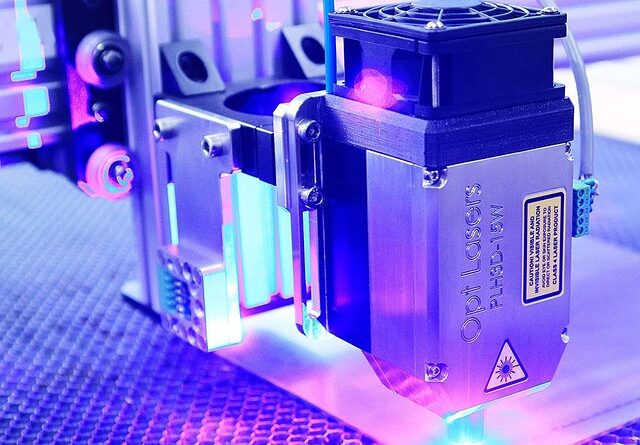
Is a Wood Cutting Machine with Laser Technology Redefining Precision
Laser Wood Cutting Machine
Laser wood cutting machines have transformed the woodworking industry by merging precision optics with automated control. Unlike mechanical tools, these systems use concentrated light energy to cut, engrave, and shape wood with exceptional accuracy. The result is faster production, minimal waste, and consistent quality across complex designs. For industrial users, laser systems represent a decisive shift toward digital manufacturing, where flexibility and repeatability define competitiveness.
The Emergence of Laser Technology in Wood Cutting
The progression from traditional woodworking to laser-based systems marks one of the most significant advancements in material processing. This transition reshaped how manufacturers approach precision, speed, and design complexity.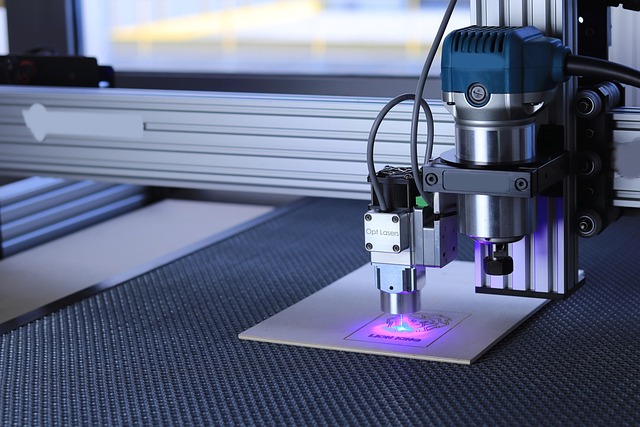
Evolution from Traditional to Laser-Based Cutting
Wood cutting once relied on manual saws and later on CNC routers that used rotating blades. These methods demanded physical contact with the workpiece, causing wear and limiting detail resolution. The introduction of laser-integrated systems replaced mechanical friction with optical energy. By focusing a high-intensity beam, lasers achieved smoother edges and tighter tolerances. Milestones such as the development of CO₂ lasers in the 1960s and their adaptation for non-metal materials in later decades made precision cutting accessible to furniture makers and sign producers alike. Compared to mechanical tools that remove material through abrasion, optical cutting uses photothermal conversion—turning light into heat—to vaporize wood fibers directly.
Core Components of a Laser Wood Cutting Machine
A modern laser wood cutting machine combines several core subsystems working in harmony. The laser source—commonly CO₂ for organic materials—generates infrared radiation absorbed efficiently by cellulose. Fiber and diode lasers are also emerging for specialized applications requiring compact setups or variable wavelengths. Optics guide and focus the beam through mirrors and lenses onto the target surface. Motion control systems driven by stepper or servo motors move the worktable or head precisely along programmed paths. Integration with CAD/CAM software allows digital designs to translate into real-world cuts automatically, enabling seamless customization without manual retooling.
Mechanisms Behind Laser Precision in Wood Cutting
Precision in laser cutting depends on how thermal energy interacts with organic structures like lignin and cellulose. Understanding these interactions allows operators to fine-tune parameters for both speed and surface quality.
How Laser Energy Interacts with Wood Materials
When a focused beam strikes wood, localized heating causes pyrolysis followed by vaporization of the material along the cut path. The process forms a narrow kerf defined by controlled energy density. Variables such as wood density influence absorption rates; denser hardwoods require higher power settings than softwoods. Moisture content also affects outcomes—too much water can cause charring or incomplete cuts due to steam formation. Grain direction alters heat flow, making cross-grain cuts slightly rougher unless compensated by speed adjustments. Operators manage carbonization by optimizing air assist pressure and beam dwell time to reduce discoloration along edges.
Calibration and Control for Dimensional Accuracy
Dimensional accuracy relies on proper calibration of optical components and motion axes. Beam alignment ensures that energy distribution remains symmetrical across the field, while focal length adjustment maintains minimum spot size at varying thicknesses. Advanced machines employ adaptive control algorithms that monitor kerf width through sensors and adjust feed rate or power in real time to maintain uniformity. Mechanical stability plays an equally important role; vibration damping structures prevent micro-deviations that could distort fine patterns during prolonged runs.
Advantages of Using Laser Technology in Wood Processing
For manufacturers seeking high throughput without sacrificing quality, laser technology offers measurable benefits over traditional methods.
Enhanced Accuracy and Repeatability
Laser cutters achieve sub-millimeter tolerances routinely—often within ±0.05 mm under controlled conditions—far exceeding what blade-based machines can maintain after hours of operation. Because there is no tool wear, repeatability stays consistent across thousands of cycles, which is crucial for mass production of decorative panels or instrument parts. Precise contouring reduces offcuts and optimizes raw material usage, improving yield rates per sheet.
Expanded Design Flexibility and Complexity Handling
Unlike mechanical routers limited by bit diameter or feed direction, lasers can execute intricate geometries such as filigree patterns or micro-perforations without risk of tool breakage. Switching between cutting, engraving, and marking modes requires only parameter changes within software rather than hardware swaps. This flexibility supports rapid prototyping workflows where designers iterate multiple versions digitally before committing to full-scale production.
Technical Considerations for Industrial Implementation
Adopting laser systems at scale involves evaluating operational efficiency alongside safety compliance requirements.
Energy Efficiency and Operational Economics
While laser sources consume electrical power proportional to output wattage, they eliminate many mechanical losses inherent in spindle-driven cutters. A 150W CO₂ system typically draws less total energy per unit cut length than an equivalent CNC router operating under heavy load conditions. Maintenance focuses mainly on optics cleaning rather than blade sharpening or replacement, lowering downtime costs over time. In high-volume environments such as cabinetry manufacturing lines, lifecycle cost analyses often favor lasers despite higher upfront investment due to reduced consumables expenditure.
Safety Standards and Environmental Controls
Industrial safety standards like IEC 60825 classify lasers based on emission hazards; Class 4 systems used for cutting require enclosed housings with interlocks to protect operators from direct exposure. Fume extraction units capture particulates released during pyrolysis to maintain air quality within permissible occupational limits set by ISO guidelines for workplace ventilation design (ISO 14644). Proper thermal management prevents overheating of both machine components and surrounding materials during continuous operation.
Integration with Smart Manufacturing Systems
Laser wood cutting machines increasingly form part of interconnected production ecosystems where automation enhances throughput consistency.
Role of Automation in Laser Wood Cutting Operations
Robotic arms now handle sheet loading and unloading tasks synchronized with gantry motion controllers for precise positioning accuracy within ±0.1 mm tolerance bands. IoT-enabled sensors embedded across drive assemblies transmit performance data continuously to centralized monitoring dashboards that flag deviations before failure occurs—a practice aligned with predictive maintenance strategies widely adopted across Industry 4.0 facilities.
Digital Workflow Optimization through AI Assistance
Artificial intelligence contributes further refinement by analyzing historical cut data to adjust path strategies dynamically for reduced travel distance between features. Machine learning models trained on diverse wood species predict optimal power-speed ratios automatically once a new batch is scanned via onboard cameras recognizing grain patterns or color tone variations. Data-driven feedback loops enhance yield consistency across multi-shift operations without extensive operator intervention.
Future Directions in Laser-Based Wood Fabrication Technologies
Innovation continues at both hardware and process levels as manufacturers aim for higher efficiency alongside sustainability goals.
Advancements in Beam Modulation and Hybrid Systems
Emerging variable-pulse lasers allow modulation between continuous-wave output for deep cuts and short bursts for surface texturing within one setup, improving finish control especially on veneer laminates prone to scorching under constant exposure regimes. Hybrid CNC-laser configurations combine subtractive milling with optical finishing passes so users can mill grooves mechanically then refine edges optically within one coordinate framework—a practical approach gaining traction among custom furniture producers seeking multifunctional capabilities.
Sustainability Through Technological Innovation
Next-generation modules emphasize lower electrical draw through improved resonator efficiency exceeding 30% wall-plug conversion rates compared with older CO₂ tubes averaging below 15%. Manufacturers are exploring recyclable composite substrates compatible with precision laser machining processes that minimize off-gassing emissions during processing cycles. Digital traceability integrated via QR-coded batch logs supports circular manufacturing models where each component’s lifecycle—from raw panel sourcing to end-of-life recovery—is documented electronically for environmental accountability audits aligned with ISO 14001 standards.
FAQ
Q1: What type of laser is most suitable for cutting wood?
A: CO₂ lasers are preferred because their infrared wavelength (10.6 µm) is strongly absorbed by organic materials like cellulose, providing clean cuts without excessive burning when properly tuned.
Q2: How thick can a laser wood cutting machine cut?
A: Typical mid-range CO₂ units handle up to 20 mm hardwood depending on beam power; industrial-grade systems exceeding 300W can process thicker boards efficiently using multiple passes if necessary.
Q3: Does moisture content affect cut quality?
A: Yes, high moisture leads to steam generation that disrupts vaporization uniformity; pre-drying wood stabilizes results while reducing edge charring significantly.
Q4: Are fiber lasers effective for woodworking?
A: Fiber lasers excel at metals but less so on organics due to shorter wavelengths (around 1 µm) having lower absorption rates in cellulose; however hybrid setups occasionally use them for engraving composite woods.
Q5: What maintenance does a laser cutter require?
A: Routine cleaning of mirrors, lenses, exhaust filters, plus periodic alignment checks ensure optimal performance; neglecting optics hygiene often causes power loss or uneven kerf widths over time.