
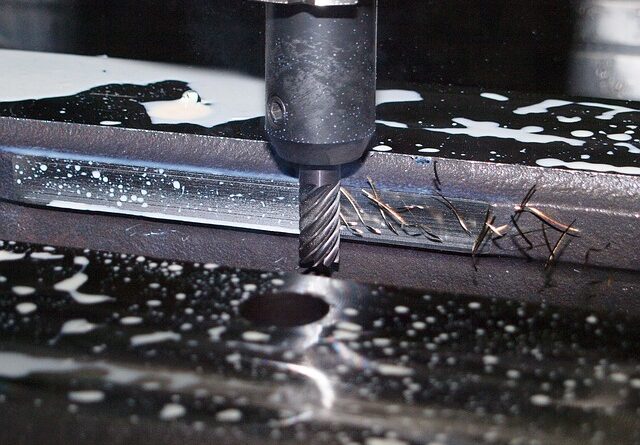
How Cutting Tools Benefit From Tactile Sensor Integration in Machining
Tactile Sensor Transforms Tool Wear Detection in Machining
Tactile sensing is redefining how machining systems perceive and respond to tool wear. By embedding tactile sensors directly into cutting tools, engineers gain real-time data on pressure, force, and contact patterns that were once invisible. This shift enables predictive maintenance, reduces downtime, and improves machining accuracy. The integration of these sensors marks a decisive move toward smart manufacturing, where every tool becomes a source of actionable data rather than just a passive component. The result is a more resilient and adaptive machining environment capable of maintaining precision under demanding industrial conditions.
The Role of Tactile Sensors in Modern Machining
The introduction of tactile sensors has altered the landscape of machining control systems. These devices now act as the bridge between mechanical action and digital interpretation, allowing machines to “feel” their work.
Understanding the Functionality of Tactile Sensors
Tactile sensors detect physical interactions such as force, pressure, and contact patterns with remarkable sensitivity. They mimic human touch by translating mechanical stimuli into electrical signals that can be analyzed by control systems. When integrated into cutting tools, these sensors provide continuous feedback on tool–workpiece interactions, making it possible to adjust parameters like feed rate or depth in real time. For example, in high-precision milling operations, even minor deviations in force distribution can signal early wear or material inconsistencies.
Evolution of Sensing Technologies in Machining Processes
Early machining relied heavily on indirect indicators such as vibration or acoustic emissions to infer tool condition. These methods offered limited accuracy since they measured secondary effects rather than direct contact forces. With the evolution of tactile sensing materials—like piezoresistive films and MEMS-based arrays—engineers achieved higher resolution and faster response times. The shift from passive observation to active sensor integration has allowed modern CNC systems to interpret minute variations in contact pressure with unprecedented clarity.
Enhancing Tool Wear Detection Through Tactile Feedback
Tool wear detection has traditionally been reactive; operators inspected tools after failures occurred. Tactile sensing changes this paradigm by turning each machining cycle into a continuous diagnostic process.
Mechanisms of Tool Wear Identification Using Tactile Data
As cutting edges degrade, the distribution of forces across the tool surface shifts subtly but measurably. Pressure mapping through tactile arrays can identify these shifts early, pinpointing micro-defects or edge chipping before they lead to catastrophic failure. Real-time tactile data also supports adaptive compensation strategies within CNC controllers—adjusting cutting parameters automatically when wear exceeds set thresholds. This not only extends tool life but also maintains consistent dimensional accuracy throughout production runs.
Comparison Between Traditional and Sensor-Based Wear Monitoring
Traditional wear monitoring depends on visual inspection or post-process analysis using microscopes or profilometers. These methods are slow and interrupt production cycles. In contrast, tactile sensors enable non-intrusive monitoring during operation without halting the machine. Continuous data collection allows predictive maintenance scheduling based on actual wear progression rather than fixed intervals. This approach reduces unplanned stoppages and improves overall equipment effectiveness across machining lines.
Integration Strategies for Tactile Sensors in Cutting Tools
Integrating tactile sensors into cutting tools requires careful engineering to maintain structural integrity while ensuring accurate signal transmission.
Design Considerations for Sensor Embedding
Sensor placement must avoid disrupting the natural dynamics of the cutting process. Typically, sensors are embedded near the cutting edge or flank face where contact forces are most significant. Encapsulation materials must resist high temperatures—often exceeding 800°C—and endure intense vibration without degradation. Signal routing from embedded sensors demands robust shielding to prevent electromagnetic interference common in industrial environments.
Data Acquisition and Signal Processing Requirements
High-frequency sampling is essential for capturing transient events such as chip breakage or sudden load spikes during machining. Raw sensor signals often contain noise from spindle vibrations or coolant flow; thus, filtering algorithms are applied to extract meaningful features related to wear progression. Machine learning models trained on historical tactile datasets can then classify wear states automatically, forming part of intelligent decision-making frameworks within Industry 4.0 architectures.
Performance Improvements Achieved Through Sensor Integration
The measurable benefits of tactile sensor integration extend beyond wear detection—they influence every aspect of machining performance from accuracy to uptime.
Impact on Machining Accuracy and Surface Quality
Real-time feedback allows precise control over feed rate and depth adjustments during operation. By minimizing tool deflection caused by uneven loads, dimensional accuracy improves significantly even under variable material hardness conditions. Moreover, maintaining optimal contact between tool and workpiece enhances surface finish quality—a critical factor in aerospace or medical component manufacturing where tolerances are extremely tight.
Efficiency Gains in Process Optimization and Maintenance Scheduling
Predictive analytics derived from tactile data enable dynamic optimization of tool replacement intervals based on actual usage patterns rather than arbitrary time limits. This reduces unnecessary replacements while avoiding unexpected failures mid-production. Plants adopting such systems report increased OEE due to fewer stoppages and smoother workflow transitions between batches. Closed-loop control further refines process consistency by adjusting parameters automatically when deviations are detected.
Future Directions in Smart Cutting Tool Development
The progress in tactile sensing lays groundwork for fully autonomous machining ecosystems where tools communicate seamlessly with digital platforms.
Advances in Sensor Miniaturization and Material Innovation
Miniaturized flexible tactile sensors now conform easily to complex geometries like multi-flute cutters or form tools without affecting balance or rigidity. New high-temperature-resistant composites extend operational lifespan even under dry-cutting conditions where heat buildup is severe. Hybrid sensing approaches combining tactile with thermal and acoustic measurements enhance diagnostic reliability by correlating multiple physical phenomena simultaneously.
Role of Artificial Intelligence and Digital Twins in Machining Intelligence
Artificial intelligence models trained on extensive tactile datasets refine predictive maintenance precision beyond human capability. Digital twins—virtual replicas of physical machining systems—simulate real-time behavior using live sensor inputs to forecast outcomes before they occur on the shop floor. Together these technologies pave the way for self-correcting machining cells capable of learning from each operation cycle and continuously improving performance metrics over time.
FAQ
Q1: How do tactile sensors differ from strain gauges used in machining?
A: Strain gauges measure deformation at specific points, while tactile sensors capture distributed pressure profiles across surfaces, offering richer spatial information for analyzing tool–workpiece interactions.
Q2: What challenges exist when embedding sensors into small-diameter cutting tools?
A: Limited space restricts sensor size and wiring routes; engineers often use flexible micro-sensors or wireless modules to overcome these constraints without weakening the tool body.
Q3: Can existing CNC machines be retrofitted with tactile-sensing capability?
A: Yes, many systems allow modular sensor attachments connected via standard interfaces; however, calibration is essential to align feedback loops with machine control logic accurately.
Q4: How does real-time feedback improve surface finish?
A: Continuous monitoring prevents overload conditions that cause chatter or deflection; stable force distribution ensures smoother cuts and consistent texture across machined parts.
Q5: Are tactile sensors cost-effective for mass production environments?
A: While initial costs are higher than conventional setups, savings from reduced downtime, extended tool life, and fewer rejects typically offset investment within one or two production cycles.