
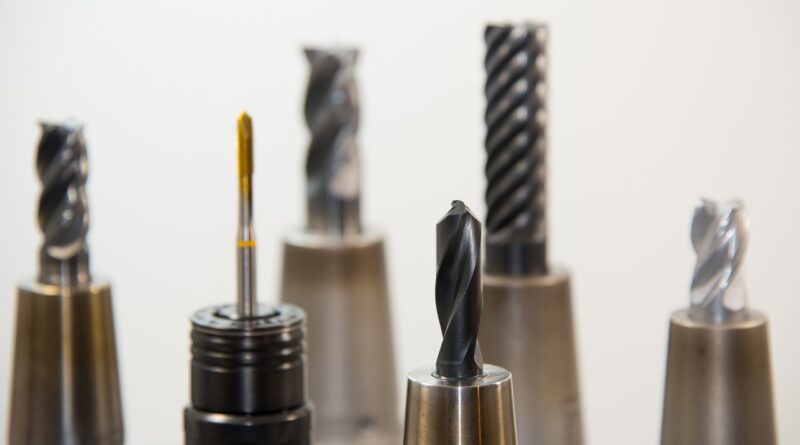
How Do You Choose the Right CNC Machining Manufacturer for Precision Parts?
How Do You Choose a CNC Machining Manufacturer Without Guesswork?
Choosing a CNC machining services partner starts with one basic question: can this cnc machining manufacturer make your part again and again, keep records, and ship it without turning every small revision into a rush job? A low quote can look good in a spreadsheet. But one missing datum, a rough burr, or a late plating batch can take away the saving. Most buyers have seen this at least once.
Quality System First
A serious manufacturer should have a written quality process, not only a tidy shop floor and some inspection tools. ISO describes ISO 9001:2015 as a globally recognized quality management standard focused on meeting customer requirements and improving the quality management system. ISO also notes that more than one million certificates have been issued across 189 countries. For buyers, the point is simple: certification does not make a supplier perfect, but it gives both sides the same terms for audits, corrective actions, records, and customer complaints. (iso.org)
Clear DFM and Quote Review
Before cutting metal, the supplier should check wall thickness, corner radii, thread depth, datum choices, finish notes, and tolerance stacks. A useful review should not feel like the shop is making trouble. It should feel like someone is trying to protect your cost and delivery date. If your drawing puts a tight tolerance on a cosmetic face that never mates with another part, the right shop will ask why. That one question may remove a second operation.
Real Capacity, Not Just a Machine List
A long equipment list can look strong, but real capacity depends on people, fixtures, programming, inspection time, and shift planning. Ask who programs the job, who approves the first article, and what the shop does when the lead machinist is tied up on another job. The U.S. Bureau of Labor Statistics projected overall employment of machinists and tool and die makers to decline 2 percent from 2024 to 2034, while CNC tools and automation reduce some routine tasks. The point is not that skilled people have disappeared. It means setup skill, process planning, and inspection ownership still matter in daily production. (bls.gov)
What Capabilities Should a Strong CNC Machining Manufacturer Have?
Capability is not just machine travel and spindle speed. You need a supplier whose process fits your part family. A bracket, a heat sink, a shaft, and a manifold all need different machining choices. In most cases, the right fit is the shop that has already handled similar geometry, material, finish, and packing issues.
Milling, Turning, and Multi-Axis Work
For prismatic parts, CNC milling covers pockets, slots, tapped holes, profiles, and milled faces. For round parts, CNC turning controls diameters, grooves, bores, threads, and concentric features. Multi-axis machining helps when the part has angled holes, blended surfaces, or several sides that must follow one datum scheme closely. You do not always need 5-axis machining. Sometimes a steady 3-axis setup with a proper fixture is cheaper and lower risk.
Material Experience Across Metals and Plastics
Material experience matters on the shop floor. Aluminum 6061 does not cut the same as 7075. Stainless steel 304 and 316 need proper tool choice and heat control. Brass can run fast, but small edges may still need careful burr control. Engineering plastics such as POM, PTFE, PEEK, and nylon can move after machining if the part has thin walls or uneven stress. Ask the shop which materials they run every week, not only what is listed on their website.
Finishing, Assembly, and Packaging Control
Machining may only be part of the order. Your parts may also need anodizing, passivation, black oxide, bead blasting, polishing, laser marking, inserts, helicoils, or simple sub-assembly. A capable supplier should manage outside finishing suppliers with drawings, samples, color requirements, and inspection notes. Packaging also needs attention. A good aluminum cover can still arrive scratched if it rubs against another part for ten days during transit.
Why Do Tolerances and Inspection Reports Matter So Much?
Precision work goes wrong when tolerance, inspection, and revision data do not match. It sounds like paperwork, but this is where real cost is often lost. If the drawing, CAD model, purchase order, and inspection plan say slightly different things, the shop may make the part as instructed and the part may still fail in assembly.
Tolerance Fit to Function
Every tight tolerance should have a clear reason. Bearing seats, sealing faces, press-fit pins, and optical mounts often need tighter control. Cosmetic covers, guards, spacers, and simple mounting plates often do not. When you open up non-critical features, the manufacturer can use faster cuts, simpler fixtures, and fewer inspection steps. You still get the function you need, and the part is easier to repeat.
First Article and In-Process Checks
For prototypes, a basic inspection report may be enough. For production, a first article inspection gives you a baseline before the batch gets bigger. In-process checks help catch tool wear, thermal drift, and fixture movement before scrap builds up. NIST reported in 2020 that inadequate design and modeling data creates major cost losses in discrete manufacturing, with estimated potential savings of 8.9 billion dollars from better digital data stream management and another 10.3 billion dollars from smoother digital information transfer. For CNC buyers, the message is direct: clean CAD, clear drawings, and controlled revisions are not just office work. They are part of cost control. (nist.gov)
CMM, Gauges, and Traceable Records
A good inspection plan should match the feature being checked. CMM inspection is useful for complex geometry and datum relationships. Pin gauges, thread gauges, micrometers, height gauges, and surface roughness testers may be faster for normal checks. Ask for sample reports before you place the order. The report should show feature names, nominal values, tolerances, actual results, and pass or fail status. If a supplier sends a blurry caliper photo with no drawing reference, treat it as a warning sign.
How Should You Judge Lead Time, Cost, and Batch Flexibility?
Cost and lead time are connected. Faster delivery usually needs machine priority, quick programming, fast material sourcing, and close follow-up with finishing vendors. Lower cost usually needs stable geometry, repeat orders, fewer setups, and fewer surprises. The useful comparison is total job risk, not only unit price.
Prototype Speed With Production Thinking
A prototype should answer design questions, but it should also show production problems early. If a supplier makes the first part with a one-off shortcut that cannot scale, the next order may feel like starting again. Ask whether prototype fixtures, toolpaths, and inspection choices can support the next 50 or 500 pieces. For export buyers, this matters because freight time can hide small delays until the schedule is already tight.
Unit Cost Hidden in Setup Time
Setup time can drive the price of small batches. One complex part may need several operations, custom soft jaws, tool changes, probing, deburring, and inspection. If you order five pieces, that setup cost is spread across only five units. If you order 100 pieces, the unit price can drop because the setup is shared. A transparent cnc machining manufacturer will explain this instead of sending a number with no background.
Small-Batch and Repeat-Order Rhythm
Many buyers need 10 pieces now, 30 pieces after testing, and then 300 pieces after approval. That order pattern is common in robotics, automation, medical devices, and industrial equipment. The U.S. Census Bureau says its Manufacturers’ Shipments, Inventories, and Orders survey has run monthly since 1957 and tracks shipments, new orders, unfilled orders, and inventories from large manufacturing establishments. This data is wider than one machine shop, but the lesson still applies: production commitments and backlog are real business signals. Ask suppliers how they reserve capacity for repeat orders. (bhs.econ.census.gov) See also: CNC Programming.
What Communication Signals Show a Supplier Is Reliable?
Many machining problems start as communication problems. A missed email can delay material. A vague finish note can cause rework. A hidden drawing revision can create a full batch of old-version parts. Reliable suppliers make the work visible before you have to chase them.
Drawing Questions Before Cutting Metal
Good shops ask questions early. They may ask whether a sharp inside corner can become a radius, whether a blind thread depth is functional, or whether a surface finish applies to all faces or only one face. These questions may add a day to the quote, but they lower the chance of a bad batch. A supplier that never asks anything may be very experienced, or may not have checked the drawing closely. There is a big difference.
Change Control in Plain Language
Revision control should be boring. In this work, that is a good thing. The purchase order, drawing, 3D model, finish requirement, and inspection report should all point to the same revision. If you change a hole size after quote approval, the supplier should confirm cost, lead time, and scrap risk before moving on. Nobody likes revision tables, but they stop real parts from becoming expensive scrap.
Export Documents and Delivery Updates
For international orders, communication also means packing lists, commercial invoices, HS codes, material declarations when needed, and tracking details. If parts need protective oil, VCI bags, foam trays, or clean packaging, write it clearly. The supplier should confirm it clearly as well. A small shipping detail can become a large problem. A batch of precision turned shafts with damaged thread starts is no longer only a logistics issue. It becomes an assembly issue.
Which Red Flags Should You Avoid Before Sending an RFQ?
Some red flags show up before the purchase order is issued. Finding them early is cheaper than arguing after delivery. If the supplier cannot explain process, inspection, material, or schedule in plain terms, the job may carry more risk than the quote shows.
Vague Tolerance Promises
Be careful with phrases like very precise, aircraft quality, or no problem on every feature. Real precision has limits, inspection methods, and cost. A supplier should tell you when a tolerance is easy, when it is difficult, and when it needs another process such as grinding, honing, EDM, or special fixturing. Big promises may sound good, but machining is not magic.
No Sample Inspection Path
If the part is new, ask how the first sample will be checked. Will the shop provide a first article report? Which features are critical? Who approves the sample before the full batch runs? For aerospace and defense work, supplier discipline is more formal. SAE states that AS9100 includes ISO 9001 quality system requirements and adds requirements for the aviation, space, and defense industry. If your sector needs that level of control, choose a manufacturer that can support it before the RFQ becomes urgent. (saemobilus.sae.org)
Price That Ignores Risk
The cheapest quote may be fine when the part is simple and the supplier already runs similar jobs. It becomes risky when the quote leaves out material certification, tight inspection, finishing yield, burr removal, or special packaging. Ask what is included. Ask what is excluded. A professional cnc machining manufacturer will welcome clear requirements because they prevent arguments later.
FAQ
Q1: What Should You Send to a CNC Machining Manufacturer? A: Send a 3D CAD file, a 2D drawing with tolerances, material grade, finish needs, quantity, target delivery date, and any inspection requirements. If the part has critical features, mark them clearly.
Q2: Is the Cheapest CNC Machining Quote Always a Bad Choice? A: Not always. It can work for simple parts with open tolerances. For precision parts, compare inspection scope, material proof, finishing control, packaging, and revision control before choosing only by price.
Q3: When Should You Ask for a First Article Inspection? A: Ask for it when the part is new, has tight tolerances, fits into an assembly, or will move into repeat production. It gives you a documented baseline before the full batch runs.
Q4: How Can You Lower Machining Cost Without Hurting Function? A: Review non-critical tolerances, allow practical radii, avoid very deep narrow pockets, use common material sizes, and separate cosmetic needs from functional surfaces.
Q5: What Makes a CNC Machining Manufacturer Good for Export Orders? A: Look for clear English communication, stable quality records, export packing experience, reliable delivery updates, and the ability to match drawings, reports, invoices, and shipping documents without confusion.