
Motor grader applications, controls, and selection factors for contractors
What a motor grader does
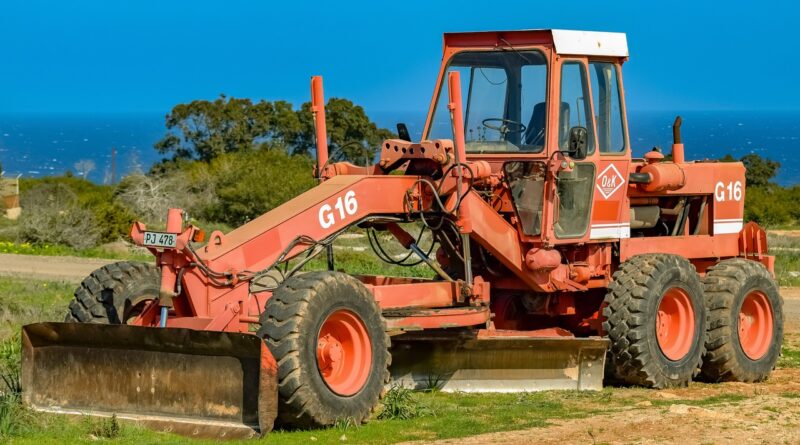
A motor grader is a self-propelled wheeled machine designed to cut, move, spread, and finish material with an adjustable moldboard positioned between the front and rear axles. On a jobsite, it is the machine used when a surface needs to be shaped accurately rather than simply pushed, loaded, or compacted. Motor graders establish road crowns, maintain shoulders, reshape gravel roads, trim subgrade, spread aggregate, clean ditches, and support haul road maintenance.
For contractors comparing machines across the jobsite, the grader has a different role from a dozer, wheel loader, or excavator. A dozer is suited to pushing and rough cutting. A wheel loader moves and stockpiles material efficiently. An excavator digs, lifts, and places. A grader refines the surface after bulk earthmoving has created the general shape. That is why it remains important in road construction, municipal maintenance, mining, site development, and snow operations. For more equipment context, see the Equipment & Machines section.
Core applications in roadbuilding and site work
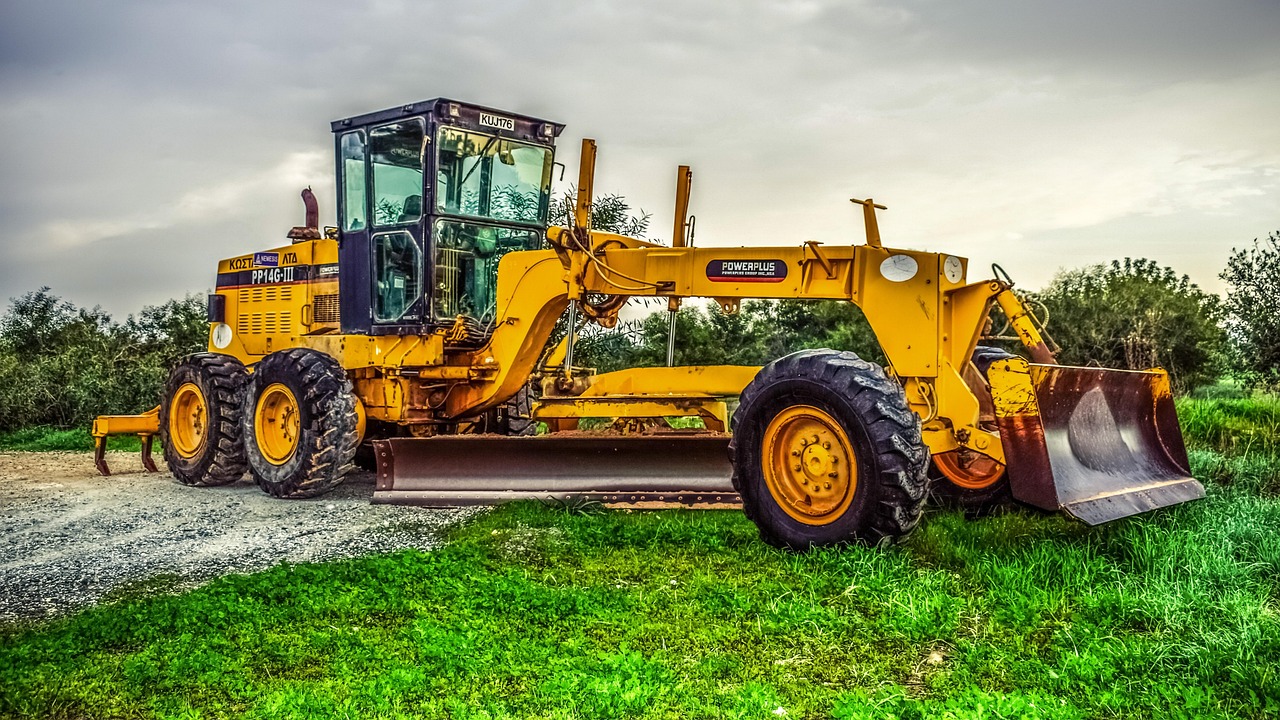
The most visible use of a motor grader is road construction, but its value extends across several stages of a project. In early work, it can shape subgrade after rough earthmoving. During base preparation, it spreads and blends aggregate. Near the finish stage, it trims the surface to meet cross-slope, crown, or drainage requirements. In maintenance work, it restores surfaces damaged by traffic, weather, settlement, or poor drainage.
Common motor grader applications include:
- Fine grading: Trimming subgrade or base material to the required elevation and slope before paving, compaction, or surfacing.
- Road maintenance: Cutting washboards, pulling shoulder material, restoring gravel road crowns, and redistributing loose aggregate.
- Ditching and shoulder work: Creating drainage paths and shaping shoulders so water moves away from the traveled surface.
- Haul road maintenance: Keeping mine, quarry, and industrial haul roads smooth enough to reduce tire damage, truck shock loading, and speed restrictions.
- Snow and ice operations: Using moldboards, wings, V-plows, or front blades to clear roads, lots, and industrial access routes.
- Scarifying and light ripping: Loosening compacted gravel, old road surfaces, or hard material before reshaping.
A grader is not normally the fastest tool for mass excavation. Its advantage is controlled material movement across a long, adjustable blade. That makes it especially useful when surface tolerance, drainage, ride quality, or material conservation matters more than raw pushing force.
Main components that affect performance
Most grader specifications start with horsepower, operating weight, moldboard size, and drive configuration. In the field, however, performance depends on how these elements work together. More engine power can help in heavy cutting, but blade control, balance, traction, and operator visibility often decide whether the machine can hold grade consistently.
Moldboard and circle
The moldboard is the curved blade that cuts and moves material. Its angle, pitch, side shift, and lift determine how material rolls across the blade and where it leaves the windrow. The circle allows the moldboard to rotate, while hydraulic controls position the blade for cutting, spreading, shouldering, backsloping, or ditching. Manufacturer operating guides commonly describe working moldboard angles in a broad range, often around 10 to 45 degrees depending on material, slope, and desired windrow movement.
Frame articulation and wheel lean
Articulation lets the front and rear frames angle relative to each other. Operators use it to tighten turns, offset the rear wheels from the front wheels, counter side draft, work around obstacles, and reduce the effect of heavy blade loads. Wheel lean helps counter lateral forces and improves steering control when the blade is loaded. These controls are a major reason graders require more operator skill than many other earthmoving machines.
Drive, tires, and weight distribution
Many graders use tandem rear axles to support traction and stability, while the front axle provides steering and follows the surface. Tire choice matters because graders may work on loose aggregate, wet subgrade, hard haul roads, or snow-covered surfaces. Weight distribution also affects cut depth, steering response, and the machine’s ability to keep the blade engaged without bouncing.
How to choose the right motor grader
Selecting a motor grader should start with the work, not with the largest model available. A municipal road department maintaining gravel roads may prioritize visibility, fuel efficiency, moldboard reach, snow attachments, and ease of service. A mining operation may put more weight on power, machine weight, durability, tire management, and haul road production. A site contractor may value transportability, grade control compatibility, and versatility across shorter passes.
| Selection factor | Why it matters | Questions to ask |
|---|---|---|
| Application | Road maintenance, fine grading, haul roads, and snow work place different loads on the machine. | Will the grader mainly cut, maintain, spread, trim, or plow? |
| Operating weight | Weight improves blade penetration and stability, but may increase transport and ground pressure concerns. | Is the surface firm enough, and can the machine be moved between jobs economically? |
| Horsepower | Power supports heavy cuts, larger moldboards, and high-resistance material. | Will the machine work in loose gravel, compacted base, clay, snow, or mine haul roads? |
| Moldboard size | Blade width and height affect coverage, windrow capacity, and maneuverability. | Does the blade match road width, shoulder work, ditching, and site constraints? |
| Controls | Lever, steering wheel, joystick, and assisted systems influence comfort and training needs. | What control layout will current and future operators use most effectively? |
| Technology readiness | 2D slope, laser, sonic, total station, or GNSS systems can reduce rework when used properly. | Does the project require digital grade control or only visual/manual grading? |
| Attachments | Scarifiers, rippers, wings, plows, and front blades expand seasonal and material capability. | Will attachments be used often enough to justify cost and weight? |
Pass length is also important. Long road passes reward a grader’s ability to maintain a consistent cut and windrow. Short site-development passes often require more turning, reversing, articulation, and coordination with other machines. In those conditions, maneuverability and operator visibility can be more valuable than maximum horsepower.
Controls, grade technology, and operator skill
Motor graders are known for demanding operator coordination. Steering, articulation, wheel lean, moldboard lift, blade side shift, circle rotation, blade pitch, transmission speed, and throttle must work together. When an input is late or excessive, the result can be ridges, scalloping, poor drainage, or repeated passes.
Modern graders address this challenge in two ways. First, control layouts have evolved from traditional lever banks to joystick and assisted systems on many models. Second, grade technologies help the operator maintain slope or elevation more consistently. These can include cross-slope systems, sonic trackers, laser references, GNSS machine control, and robotic total station guidance. The right system depends on site conditions. GNSS can be useful for larger open sites, while laser or total station systems may be preferred where higher vertical accuracy or limited satellite visibility is a concern.
Technology does not remove the need for skilled operation. It changes the task. Operators still need to understand material behavior, moisture, windrow placement, cut depth, drainage, traffic control, and how the machine reacts under blade load. A grade-control system can help hold a design surface, but it cannot compensate for poor haul sequencing, unstable subgrade, or material that is too wet to finish properly.
Attachments that expand grader use
Attachments can turn a grader from a finishing machine into a multi-season road maintenance platform. A scarifier mounted ahead of the moldboard can loosen compacted gravel or break a crusted surface before reshaping. Rear rippers can help open tougher material, although they should be used within the machine’s limits. Front blades and V-plows support snow removal. Side wings increase snow-casting or shoulder-shaping capability. Moldboard extensions can improve coverage but may increase side draft and reduce maneuverability in tight areas.
Attachment selection should consider frequency of use, hydraulic requirements, visibility, transport width, added weight, and interference with normal blade movement. For example, a front-mounted attachment may improve snow performance but affect sight lines or front axle loading. A rear ripper may be valuable for maintenance crews working compacted gravel roads, but it adds cost and may not be necessary for fine-grade contractors that rarely loosen material. See also: CNC Machining.
The best attachment package is usually the one that supports repeated work rather than occasional possibilities. Contractors should calculate how often an attachment will reduce passes, replace another machine, extend seasonal utilization, or improve surface quality.
Safety, maintenance, and jobsite coordination
Because graders often work near traffic, workers, trucks, and other equipment, safe operation depends on more than the machine itself. Visibility, communication, backing procedures, speed control, and predictable travel paths are critical. OSHA guidance for construction equipment emphasizes precautions for obstructed rear views, including backup alarms or observers in applicable situations. That guidance is especially relevant because graders frequently reverse, reposition, and work around laborers, dump trucks, compactors, and survey crews.
Daily inspection should cover tires, hydraulic hoses, cutting edges, circle wear, moldboard hardware, articulation joints, brakes, lights, alarms, mirrors, cameras if fitted, fluid levels, and leaks. Cutting edges deserve close attention because worn or uneven edges reduce grading accuracy and can make the machine harder to control. Circle and drawbar wear can also show up as inconsistent blade response, especially during fine work.
Maintenance planning should match the application. A grader maintaining long gravel roads may accumulate hours steadily and need close attention to cutting edges, tires, and articulation components. A machine used for finish grading may have fewer high-load hours but stricter requirements for blade response and grade-control calibration. A snow machine may face corrosion, impact damage, and seasonal idle periods. Matching maintenance to application helps avoid treating every grader as if it has the same duty cycle.
Practical buying and fleet planning checklist
Before purchasing, renting, or assigning a motor grader, contractors should define the production problem the machine must solve. A grader that is too small may require too many passes and struggle in heavy material. A grader that is too large may be expensive to transport, difficult to use in confined areas, and underutilized on light-duty work.
- Identify the primary work: construction grading, road maintenance, haul road upkeep, snow removal, or mixed use.
- List typical materials, including gravel, aggregate base, clay, sand, snow, or mine road surface material.
- Measure expected road widths, shoulder conditions, pass lengths, and turning constraints.
- Decide whether grade control is required by contract, productivity goals, or quality expectations.
- Check operator experience with lever controls, joystick controls, articulation, and digital grade systems.
- Review transport limits, tire costs, cutting-edge costs, service access, and dealer or rental support.
- Plan attachments around recurring work, not rare edge cases.
- Confirm safety equipment, lighting, alarms, cameras, mirrors, and communication practices for the jobsite.
For a mixed fleet, the grader should be scheduled with loaders, compactors, water trucks, and haul units so the surface can be shaped at the right moisture level and traffic condition. Good grading is rarely isolated work. It depends on material supply, compaction timing, drainage decisions, and the ability to correct problems before they are buried under the next layer.
Frequently asked questions
What is the difference between a motor grader and a bulldozer?
A bulldozer is typically used for pushing, rough grading, clearing, and heavy earthmoving with a front blade. A motor grader is used for controlled shaping and finishing with a long moldboard mounted between the axles. The grader is better suited to crowns, slopes, shoulders, ditches, and smooth road surfaces.
Can a motor grader replace a dozer?
Usually not. A grader can move and spread material, but it is not the preferred machine for heavy pushing, ripping, or bulk excavation. On many projects, the dozer creates the rough shape and the grader refines the surface.
Is grade control necessary on every grader?
No. Manual grading remains common, especially in road maintenance and simpler gravel work. Grade control becomes more valuable when projects require tighter tolerances, digital models, reduced staking, or fewer rework passes. The cost should be weighed against project complexity and operator capability.
What size motor grader do contractors need?
The right size depends on material, road width, pass length, blade load, transport limits, attachments, and expected utilization. Light road maintenance, urban work, large highway projects, and mining haul roads can all point to different machine sizes.
Why are motor graders considered difficult to operate?
They require simultaneous control of steering, articulation, wheel lean, blade angle, blade lift, speed, and material flow. Small changes can affect the finished surface. Assisted controls and grade technology can help, but operator judgment remains central to quality results.
Bottom line
A motor grader is most valuable when the job requires accurate surface shaping rather than bulk material movement. Its productivity depends on the match between machine size, blade setup, controls, attachments, operator skill, and site conditions. Contractors evaluating graders should focus on the work they perform most often: road maintenance, fine grading, haul road support, snow removal, or mixed fleet use. When the machine is selected and scheduled correctly, it can reduce rework, improve drainage, extend road life, and create a smoother surface for the next construction step.