
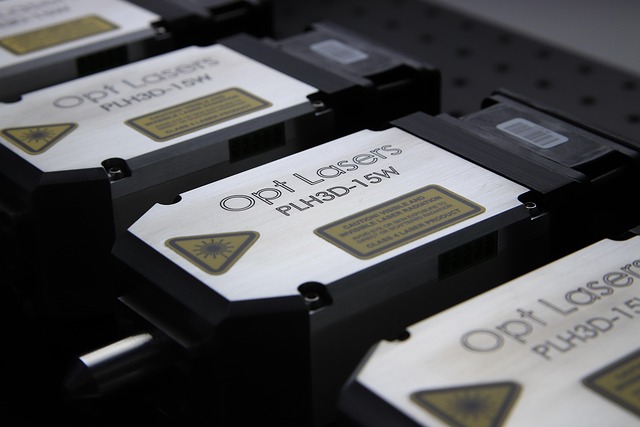
Is A CNC Laser Cutter The Ultimate Tool For Precision Testing And Engraving
Testing the Best Laser Cutters and Engravers Is One of the Best Parts of My Job
The evaluation of a cnc laser cutter reveals how modern precision engineering merges automation with optics. Among fabrication technologies, laser systems excel in repeatability, speed, and surface quality. The most advanced units integrate fiber or CO₂ sources with multi-axis CNC controls to deliver micron-level accuracy. Industrial testing environments rely on these machines to prepare standardized samples and validate dimensional tolerances. Selecting the right system depends on material type, power range, and calibration stability rather than brand prestige.
Understanding the Capabilities of a CNC Laser Cutter?
Modern cnc laser cutters combine digital control with optical precision to achieve consistent results across metals, polymers, and composites. They have become essential for industries that demand both repeatable accuracy and adaptable cutting profiles.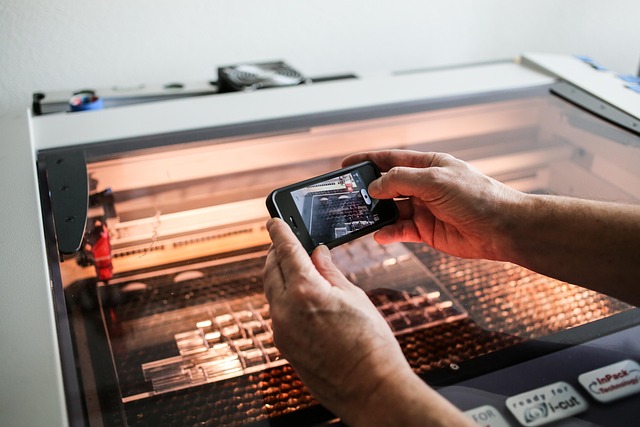
The Technology Behind CNC Laser Cutting
CNC integration allows a computer to dictate every movement of the cutting head through programmed coordinates. The laser beam’s focus and motion are synchronized so that each pulse removes material precisely where intended. Precision is achieved through servo-driven motion systems, closed-loop feedback sensors, and adaptive beam modulation that maintains constant energy density over complex geometries. The relationship between wavelength and material absorption defines how efficiently energy converts into heat—fiber lasers perform best on metals due to shorter wavelengths, while CO₂ systems handle organics more effectively.
Types of CNC Laser Cutters and Their Applications
CO₂ lasers use gas mixtures excited by electrical discharge; fiber lasers employ doped optical fibers; diode lasers rely on semiconductor junctions. Each structure influences efficiency and maintenance needs. Fiber systems dominate metal fabrication because they cut faster with less distortion, while CO₂ units remain preferred for wood or acrylic engraving. Diode lasers serve lightweight tasks such as labeling or PCB marking. Across testing labs, these machines prepare tensile specimens or micro-engraved identifiers used in traceability programs.
Evaluating Precision in CNC Laser Cutting and Engraving?
Assessing precision involves quantifiable metrics rather than subjective impressions. Dimensional accuracy depends on calibration routines, environmental stability, and software compensation strategies.
Defining Precision Parameters in Laser Operations
Key parameters include kerf width—the width of material removed—edge roughness measured in micrometers, and tolerance deviation from design geometry. Beam focus determines energy concentration; pulse duration affects melt behavior; energy density influences microstructure at the cut edge. Regular calibration aligns optical paths with mechanical axes to maintain sub-0.05 mm consistency even after long production cycles.
Factors Influencing Engraving Accuracy
Feed rate dictates how long the beam interacts with a surface; excessive speed reduces depth uniformity while slow passes risk thermal discoloration. Power modulation adjusts intensity dynamically to preserve contrast in detailed patterns. Spot size defines resolution limits: smaller spots yield finer detail but require higher alignment accuracy. Advanced controllers apply real-time correction algorithms that counteract drift caused by vibration or temperature fluctuation.
Comparing CNC Laser Cutters with Alternative Precision Tools?
Mechanical cutting tools once dominated prototyping labs but now coexist with non-contact laser processes offering cleaner results for delicate materials.
Mechanical vs. Laser-Based Cutting Systems
Mechanical systems rely on physical contact—blades or bits—which wear over time and alter tolerance consistency. A cnc laser cutter eliminates tool wear entirely since it uses light rather than pressure to remove material. This non-contact approach minimizes deformation in thin foils or brittle ceramics while maintaining sharp edges without burrs. However, mechanical routers may still outperform lasers when deep cuts or thick metals exceed available power levels.
Integration with Other Fabrication Technologies
Hybrid workflows combine additive manufacturing for rough geometry creation followed by cnc laser finishing for precise contours. In R&D environments, such integration supports rapid iteration between design modification and prototype validation. CAD/CAM interoperability allows seamless data transfer from modeling software to machine controllers, reducing translation errors that could affect dimensional fidelity.
The Role of CNC Laser Cutters in Precision Testing Environments?
Testing laboratories depend on controlled fabrication conditions to ensure repeatable results across experiments involving strength measurement or thermal analysis.
Applications in Dimensional Verification and Material Analysis
Laser cutters produce standardized coupons for tensile or fatigue testing where even slight geometric variance can skew outcomes. Their fine control enables consistent edge quality critical for stress distribution studies. When paired with coordinate measuring machines (CMMs), post-cut verification confirms dimensional conformity within microns—vital for aerospace or biomedical research protocols governed by ISO 9013 standards.
Enhancing Quality Control Through Automated Processes
Modern systems integrate sensors monitoring beam intensity and axis speed in real time. Feedback loops adjust parameters instantly if deviations occur, sustaining uniformity across batches. Some industrial setups employ machine learning models trained on historical cut data to predict optimal settings before operation begins, improving throughput while maintaining traceable digital records suitable for audit-ready manufacturing lines.
Advancements Driving the Next Generation of CNC Laser Cutters?
Technological progress focuses on smarter optics, faster motion systems, and predictive software tools that anticipate process variations before they appear.
Innovations in Beam Delivery and Control Systems
Adaptive optics stabilize focal points even when cutting curved surfaces or multi-layer composites. Multi-axis stages extend capability beyond flat sheets into three-dimensional contours used in turbine components or medical implants. High-speed galvanometer mirrors enable engraving at thousands of millimeters per second without sacrificing clarity—a leap particularly visible in microelectronics marking applications.
Software Developments Enhancing Precision Capabilities
Predictive simulation modules now model heat diffusion patterns across materials so operators can refine settings before committing to production runs. AI-assisted path planning rearranges vector sequences to shorten cycle times while preserving detail resolution. Cloud-connected dashboards allow technicians to monitor performance remotely, diagnosing alignment drift or lens contamination without halting operations—a practical feature for distributed production networks.
Practical Considerations When Selecting a CNC Laser Cutter for Professional Use?
Choosing an appropriate system involves balancing performance metrics against operational realities such as maintenance capacity and budget constraints.
Assessing Performance Requirements Based on Application Goals
Material type dictates wavelength choice: fiber lasers excel on reflective alloys; CO₂ suits organics; diodes handle plastics efficiently. Power rating determines maximum thickness achievable per pass while chassis rigidity affects vibration damping during high-speed moves. Long-term reliability depends not only on component quality but also on vendor support including periodic calibration services crucial for certified laboratories.
Cost-Benefit Analysis for Industrial Implementation
Capital cost varies widely—from compact benchtop engravers under 10 kW to industrial platforms exceeding 1 MW—but total ownership extends beyond purchase price. Consumables like lenses or assist gases add recurring expenses; operator training impacts productivity ramp-up time. For small research facilities scalability matters more than throughput; large-scale plants prioritize uptime ratios exceeding 95 percent since downtime directly translates into lost revenue streams.
FAQ
Q1: What makes a cnc laser cutter different from a traditional milling machine?
A: It uses focused light instead of mechanical force to remove material, which eliminates tool wear and reduces deformation risks on thin substrates.
Q2: Which materials benefit most from fiber laser technology?
A: Metals such as stainless steel, aluminum, and brass respond efficiently due to high absorption at fiber wavelengths near 1 µm.
Q3: How often should calibration be performed?
A: For precision-critical environments like aerospace testing labs, monthly optical alignment checks are recommended alongside annual full-system recalibration under ISO guidelines.
Q4: Can engraving depth be controlled precisely?
A: Yes, adjusting power output and feed rate allows micron-level depth control suitable for serial numbers or microfluidic channel fabrication.
Q5: Are hybrid cnc laser systems worth considering?
A: In multi-process facilities combining additive printing or milling stages, hybrids offer workflow flexibility though they require more complex maintenance planning.