
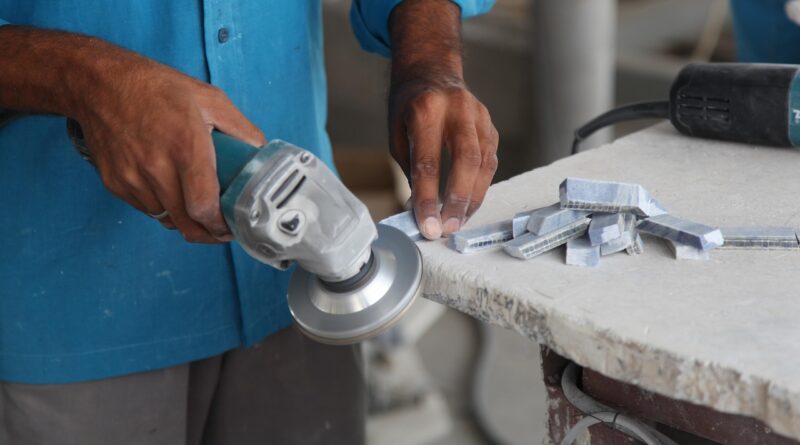
How to choose stone cutting tools for granite, marble and engineered stone
Selection starts with the stone, the machine and the control method
Stone cutting tools should be chosen around four practical details: the material being cut, the machine driving the tool, the required edge quality and the dust-control method. A blade that performs acceptably on concrete pavers may chip polished marble, glaze on dense granite, or create unsafe dust conditions when used dry on engineered stone. For most fabrication and jobsite cutting, diamond tools are the practical standard. The useful question is not simply whether the tool contains diamond, but whether its bond, rim design, kerf, speed rating and wet or dry rating match the job. For related coverage on machining and tooling topics, see Cutting & Tooling.
Public safety guidance from OSHA, NIOSH and abrasive-wheel standards also points to a second selection rule: the cutting system is part of the tool choice. Water feed, local exhaust, guards, flanges, shrouds, HEPA vacuums and respiratory protection can determine whether a technically suitable tool is actually suitable for the workplace.
Main families of stone cutting tools
The phrase stone cutting tools covers several tool families. Some are used for primary slab cutting, some for openings and installation adjustments, and others for edge shaping or surface preparation. Treating them as interchangeable is one of the fastest ways to reduce cut quality and tool life.
| Tool type | Common use | Selection points to check |
|---|---|---|
| Bridge saw and slab saw diamond blades | Straight cutting of granite, marble, quartzite, engineered stone and other slabs | Diameter, arbor, segment design, kerf, wet rating, machine power and recommended RPM range |
| Handheld diamond blades | Jobsite cutting of stone veneer, pavers, tile, masonry units and installation adjustments | Tool guard compatibility, maximum RPM, dry or wet rating, dust collection option and cut depth |
| Continuous rim and tile-style blades | Chip-sensitive cutting in marble, porcelain, ceramic and polished surfaces | Rim style, thin kerf control, cooling method, feed rate and support under the workpiece |
| Diamond core bits | Sink openings, faucet holes, anchor holes and service penetrations | Diameter, thread or shank, wet or dry use, drilling speed, coolant delivery and hole depth |
| Diamond cup wheels and profiling tools | Grinding, beveling, shaping, surface preparation and edge correction | Bond, grit size, shroud fit, grinder rating, dust extraction and amount of stock removal |
| Wire saws and gang saws | Quarrying, block squaring and large-scale primary stone processing | Machine type, wire specification, tensioning, coolant, production rate and block material |
For small shops and contractors, the most common buying decision is between a segmented blade, a turbo-style blade and a continuous rim blade. Segmented blades tend to clear slurry and heat efficiently and are common where speed matters. Continuous rim blades are usually selected where edge chipping must be minimized. Turbo designs sit between those two priorities, depending on the exact rim and bond.
Match the tool to how the stone behaves
Stone names are useful, but they do not tell the whole story. Hardness, abrasiveness, mineral content, veining, resin content and slab support all affect the cut. A shop cutting granite all day has different tool requirements from an installer trimming a marble threshold or a fabricator opening an engineered stone countertop.
Granite and quartzite
Granite and quartzite are hard materials that commonly require diamond blades designed for hard stone. The blade must expose fresh diamond fast enough to keep cutting, while the steel core still runs true under load. Wet cutting is widely preferred in slab fabrication because it cools the blade, helps carry away swarf and reduces airborne dust. Quartzite can be especially demanding because some varieties combine high hardness with fracture-prone structures. In those cases, a blade marketed only as general purpose may cut slowly or chip the edge.
Marble, limestone and travertine
Marble, limestone and travertine are softer than granite, but they are not automatically easier to cut well. Veining, voids and polished faces can make them vulnerable to edge breakage, bruising and surface chipping. Continuous rim or marble-specific blades are often preferred when finish quality matters more than aggressive feed rate. Support under the slab or tile is just as important as blade choice; vibration can turn a suitable blade into a poor cut.
Engineered stone and sintered surfaces
Engineered stone, porcelain slabs and sintered surfaces require close attention to the tool maker’s material recommendations. These materials can be dense, brittle and chip-sensitive. Engineered stone has also drawn significant safety attention because cutting and grinding can generate respirable crystalline silica. OSHA and NIOSH guidance for countertop work emphasizes wet methods, local exhaust ventilation, HEPA-filtered collection where appropriate, and avoidance of uncontrolled dry processing.
Sandstone, concrete pavers and abrasive masonry
Sandstone, concrete pavers and other abrasive materials can wear the bond matrix quickly. A blade intended for hard, dense stone may lose segments or wear down prematurely if it is pushed through highly abrasive material. For these jobs, look for a blade specified for abrasive stone or masonry, and check whether undercut protection is recommended.
Why diamond bond matters more than the diamond label
A diamond tool cuts because exposed diamond particles fracture and abrade the stone while the surrounding bond matrix gradually wears away. The bond must hold the diamond long enough to use it, then release it before the cutting surface becomes dull. This is why two blades with the same diameter and similar-looking segments can perform very differently.
A useful rule is that harder, less abrasive materials generally need a softer-acting bond to expose fresh diamond, while softer or more abrasive materials often need a harder, more wear-resistant bond. Supplier terminology, however, is not perfectly standardized. One brand’s medium bond may not behave like another brand’s medium bond. Material-specific recommendations and field feedback are more reliable than color codes or generic labels.
When a blade is too hard for the job, it may glaze, cut slowly, generate heat and require dressing on an abrasive block. When the bond is too soft for an abrasive material, the tool may cut fast at first but wear out quickly. If the rim design is too aggressive for a polished or brittle stone, the result may be edge chipping even if the bond is close to correct.
Wet cutting, dry cutting and silica control
Wet cutting is not only a finish-quality preference. It is also a heat and dust control method. Water cools the blade, helps remove slurry from the kerf and can reduce airborne dust at the point of cut. That is why many bridge saws, tile saws and fabrication systems are built around water delivery. See also: CNC Machining.
Dry cutting should be treated as a controlled exception, not as the default. A dry-rated blade still needs to be used on a compatible machine, within its speed rating, with proper guards and with dust controls that fit the site conditions. In occupational settings in the United States, OSHA’s construction silica standard sets an action level of 25 µg/m³ and a permissible exposure limit of 50 µg/m³, both measured as 8-hour time-weighted averages. Employers must evaluate the applicable rule, task and control method rather than assuming a dry-rated blade solves the exposure problem.
OSHA describes respirable crystalline silica as very small particles generated when materials such as stone, rock, concrete, brick, block and mortar are cut, sawed, ground, drilled or crushed. For stone work, this means the tool, the dust-control system and the housekeeping procedure need to be considered together. Wet sweeping, HEPA-filtered vacuuming and slurry management are part of the system; uncontrolled dry sweeping can reintroduce fine dust into the air.
Mechanical safety is equally important. Before mounting any cutting wheel or diamond blade, verify the maximum RPM, arbor fit, flange condition, guard position and the machine manufacturer’s instructions. Abrasive-wheel safety practices associated with ANSI B7.1 and OSHA machine-guarding rules are built around a simple principle: a rotating wheel stores significant energy, and misuse can create severe hazards.
A practical buying checklist for stone cutting tools
A good purchase specification is more useful than a long product list. Before ordering, capture the real application in enough detail for a supplier to recommend a specific bond and rim design.
- Identify the stone accurately. Note whether the job involves granite, marble, limestone, quartzite, engineered stone, porcelain, sandstone or mixed masonry. If the stone varies, say so.
- Define the operation. Straight slab cutting, plunge cutting, miter cutting, drilling, grinding and edge profiling place different loads on the tool.
- Record the machine data. Include blade diameter, arbor, RPM, horsepower, feed system, coolant delivery and guard or shroud limitations.
- Specify the finish requirement. A rough opening cut and a visible polished edge do not need the same rim design or feed strategy.
- State the control method. Wet cutting, local exhaust ventilation, shroud and HEPA vacuum, or a combination should be planned before the tool is selected.
- Ask for the operating window. Request recommended speed, feed guidance, dressing instructions and signs of glazing or overload.
- Track performance by job. Record linear feet cut, material type, tool wear, chipping and operator comments so future purchases are based on evidence rather than habit.
Avoid vague terms such as premium, fast or universal unless the supplier also states the intended stone, machine and use condition. Universal blades can be convenient for occasional mixed work, but production cutting usually benefits from narrower tool selection.
Troubleshooting common cutting problems
| Problem | Likely causes | What to check first |
|---|---|---|
| Slow cutting with heat buildup | Bond too hard, dull diamonds, insufficient water, low feed pressure or wrong RPM | Dress the blade if recommended, verify coolant flow and compare the blade specification with the stone |
| Rapid segment wear | Bond too soft for abrasive material, excessive feed, poor slurry removal or undercutting | Switch to an abrasive-material blade and improve coolant or debris evacuation |
| Edge chipping | Rim too aggressive, vibration, unsupported workpiece, wrong feed direction or excessive speed | Improve support, reduce vibration and consider a continuous rim or finer-cutting blade |
| Blade wandering | Core deflection, worn bearings, side pressure, warped blade or incorrect kerf for the machine | Inspect machine alignment, arbor fit, flange condition and feed technique |
| Excessive dust | Dry cutting without adequate controls, poor shroud fit, weak vacuum airflow or dry cleanup | Review wet method, local exhaust, HEPA collection and housekeeping procedure |
| Cracking or segment loss | Impact, overheating, side loading, wrong mounting or tool damage | Stop using the tool, inspect the machine and replace damaged components before restarting |
Frequently asked questions
Are diamond tools always required for stone cutting?
Not always. Hand chisels, splitters, wire systems, waterjet equipment and abrasive methods all have roles. For powered cutting of hard natural stone, engineered stone, tile and masonry, diamond blades and bits are usually the most practical option because they combine cutting speed with wear resistance.
Can one blade cut both granite and marble?
Sometimes a general-purpose blade can make occasional cuts in both materials, but it is rarely the most efficient choice for repeated work. Granite, marble and quartzite place different demands on bond, rim style and edge control. Dedicated blades are usually easier to justify when cut quality, tool life or labor time matters.
Is dry cutting acceptable if the blade is dry rated?
A dry rating means the blade is designed to tolerate dry operation under specified conditions. It does not automatically satisfy dust-control or workplace safety requirements. For stone materials that can generate respirable crystalline silica, dry cutting should be evaluated against applicable regulations, exposure controls and site procedures.
What is the most common mistake when buying stone cutting tools?
The most common mistake is buying by diameter and price while ignoring material, bond, machine speed and dust control. A cheaper blade that chips the stone, cuts slowly or wears out early can cost more than a better matched tool.
When should a stone cutting blade be replaced?
Replace a blade if it is cracked, warped, missing segments, worn below the manufacturer’s minimum usable segment height, vibrating abnormally or cutting poorly after proper dressing and setup checks. Do not continue using a damaged wheel or blade to finish a job.