
What Are Diagonal Cutting Pliers and How Do You Choose the Best Pair?
Why Do Diagonal Cutting Pliers Matter in a Real Workshop?
Diagonal cutting pliers are the kind of tool that sits in a pouch until a clean wire cut is needed. In electrical assembly, panel building, maintenance, and light mechanical work, they save time because the angled jaws can get into tight spots and cut wire close to the surface. If you work with cutters, crimpers, snips, and similar hand tools, you can also browse more related tool topics in the Cutting & Tooling section.
The working principle is not complicated. Two sharp jaws meet at an angle and put hand force into a narrow cutting line. The harder part is choosing the right pair for the job. A cutter that works well on copper leads may chip on spring wire, and a small flush cutter may leave a clean end on electronics leads but wear out fast on steel tie wire. In real use, selection starts with material, access, safety, and how many cuts the tool will make each day.
Angled Jaws for Close Access
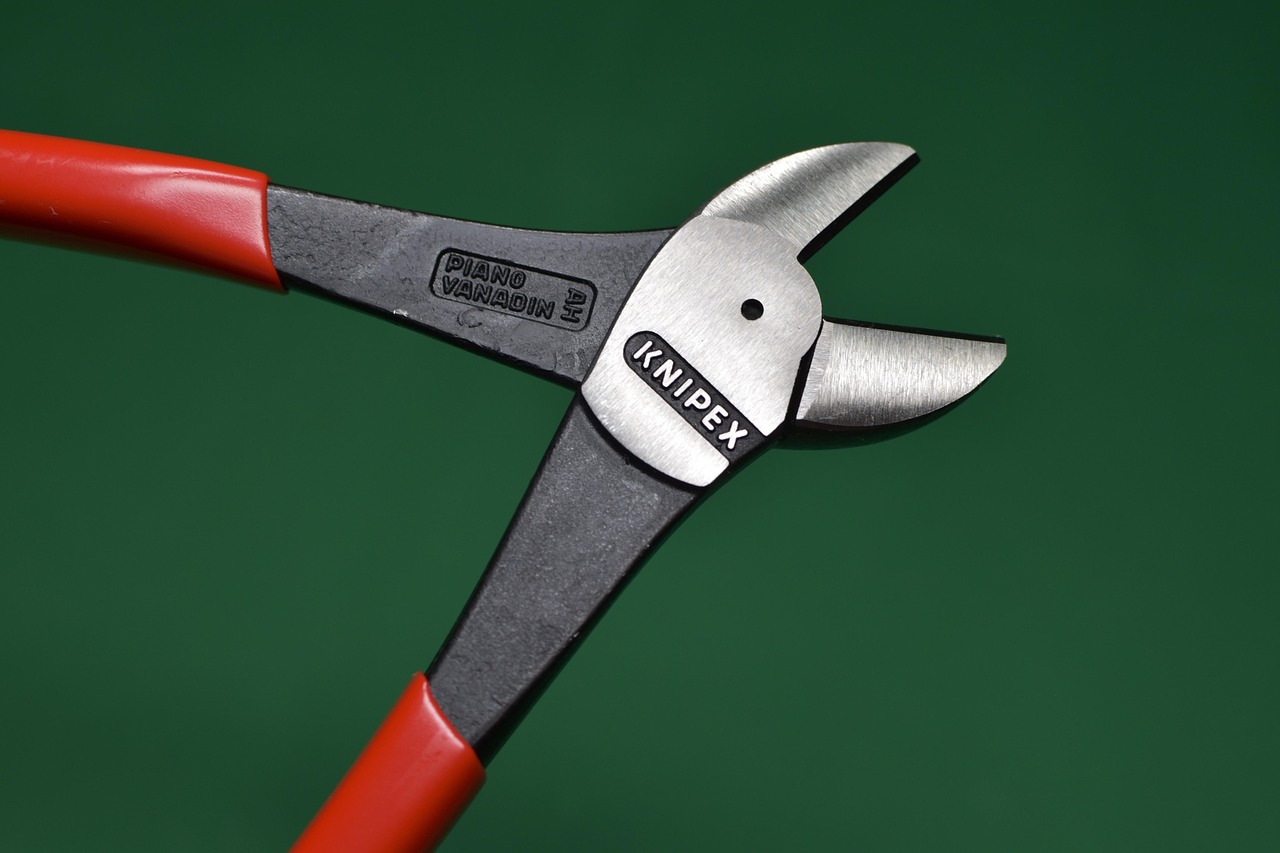
The diagonal head helps you cut close to a terminal, cable tie, solder joint, or harness branch. That angle is why many trades call them side cutters, even though the cutting edges run diagonally across the nose. In a packed control panel, the jaw angle can decide whether you get a neat cut or scratch the connector face.
Shear Action Instead of Crushing
A good pair should not just squeeze wire until it snaps. The two cutting edges pass force through the wire and shear it, so edge shape and alignment matter. A clean shear leaves fewer burrs, reduces loose strands on flexible cable, and feels smoother in the hand.
Small Tool, High Repeat Value
Cutting one 1.5 mm copper wire is easy work. Cutting hundreds of them during one shift is a different matter. Handle span, spring return, head weight, and edge hardness start to show their value after repeated use. These details may look small in a catalog, but workers notice them quickly when hands get tired.
What Standards and Public Data Should Guide Your Choice?
Words such as heavy duty, professional grade, and high leverage only help when they are backed by numbers or test references. You do not need a full standards library on the bench, but you should know which public references make a cutter specification easier to trust.
ISO 5749 for Dimensions and Test Values
ISO lists ISO 5749:2004 as the standard for pliers and nippers, diagonal cutting nippers, with principal dimensions and test values used to verify function in line with ISO 5744:2004. This does not cover every buying point, but it gives a formal base for size and performance testing. It is more useful than loose marketing wording when you compare tools from different suppliers. (iso.org)
OSHA Rules for Safe Tool Condition
In the United States, OSHA 29 CFR 1926.300 says hand and power tools must be maintained in safe condition. The same OSHA rule says workers exposed to flying, abrasive, splashing, or similar hazards need proper personal protective equipment. For cutters, that means simple checks before use: no chipped jaws, no loose pivot, no damaged insulated grips, and eye protection when wire ends may fly. (osha.gov)
Published Capacity Data as a Reality Check
Capacity tables are useful when you compare tools. For example, a KNIPEX data sheet for a 160 mm diagonal cutter lists 206 g weight, 160 x 53 x 21 mm dimensions, and cutting capacities of 4.0 mm soft wire, 3.0 mm medium-hard wire, and 2.0 mm hard wire. Use those numbers as one manufacturer example, not as a rule for every 160 mm cutter on the market. (knipex.com)
How Do You Match the Cutter to Wire Type?
Wire type should be the first filter. If you skip that step, even an expensive cutter can feel wrong on the bench. Copper, aluminum, plastic cable ties, music wire, stainless wire, and hardened pins do not behave the same under the jaws. A cutter made for soft electrical work should not be forced through hard fastener wire just because the jaws can close around it.
Soft Wire Needs Clean Edge Contact
Soft copper and aluminum cut best when sharp edges meet evenly near the base of the jaw. For stranded cable, avoid cutting at the very tip unless the tool is rated for that use. The base of the cutting edge usually gives better strength and leverage. If strands spread out after cutting, the edge may be dull, out of line, or too thick for fine electrical work.
Hard Wire Needs Rated Jaw Steel
Hard wire is where many cutters get damaged. If the label does not list hard wire capacity, it is better not to guess. Piano wire, spring wire, and hardened clips can dent ordinary diagonal cutters. Once that half-moon dent appears, it will mark soft wire cuts as well. Keeping one hard-wire-rated cutter in the toolbox usually costs less than replacing several general cutters during the year.
Cable Ties Need the Right Finish
Cable ties are not hard, but they can show the weakness of the wrong edge style. Standard bevel cutters may leave a sharp plastic tail that catches gloves or skin. Flush cutters or dedicated plastic cutters leave a cleaner end. In control cabinets, this small point matters because technicians will reach into the same harness later.
Which Jaw Style Fits Your Work Best?
Jaw style affects the cut face, tool strength, and access. Many buyers only check tool length, but two 160 mm cutters can perform very differently if one has a semi-flush edge and the other has a heavy bevel. Choose by the cut you need and the material you handle, not by size alone.
Standard Bevel for General Cutting
A standard bevel leaves a small peak on the cut end, but it gives the cutting edge more support. This makes it a practical choice for maintenance, shop repair, wiring, and mixed materials. If the cutter will stay in a shared toolbox, a standard bevel is often safer because not every user treats cutting edges carefully.
Semi-Flush Edge for Cleaner Ends
A semi-flush edge removes more of the peak while keeping more strength than a true flush cutter. It fits electronics assembly, small terminal work, and wire harness production. If the cut end sits near insulation, seals, or fingers, the cleaner finish can reduce extra trimming and small rework.
High-Leverage Head for Tougher Cuts
High-leverage cutters move the pivot closer to the cutting edge or use longer handles. This gives more cutting force with less grip force. They feel useful on thicker wire, but the head may be larger. In a crowded cabinet, a slim head can be the better choice because access is often the real limit. See also: CNC Machining.
How Should Handle Design Affect Daily Use?
Handle design is not only about comfort. It also affects output, because sore hands slow work and can lead to rough cuts. Public ergonomic guidance gives helpful figures for two-handle tools such as pliers and nippers.
Grip Span Between 2.5 and 3.5 Inches
OSHA’s electrical contractors eTool says a handle span of 2.5 to 3.5 inches is generally best for hand tools used by electrical workers. NIOSH hand-tool guidance also points to longer handles for high-force tasks, commonly in the 4 to 6 inch range, and wiring-task guidance notes that pliers used as an interim measure should have at least a 4 inch handle, preferably 5 inches, plus spring return. The shop takeaway is simple: if the handle opens too wide or ends in the middle of your palm, repeated cutting becomes harder quickly. (osha.gov)
Spring Return for Repetitive Work
A spring return opens the jaws after each cut. For production wiring, electronics trimming, and small cable tie work, it reduces finger movement and saves time over many cuts. For heavier shop cutting, some users prefer no spring because the tool feels steadier and fits better in a pouch. There is no single right answer here; match the spring choice to the number of cuts per hour.
Grip Material for Control
Dipped handles are slim and easy to wipe clean. Multi-component grips add size and comfort, which can help during longer jobs. Insulated grips are a separate type and must match the electrical rating and test standard required for the work. Do not treat a red or yellow handle as proof of insulation, because color is not a safety certificate.
What Buying Checks Prevent Costly Mistakes?
A diagonal cutter is easy to buy too quickly. The product photo looks acceptable, the price fits the budget, and the size seems close enough. Even so, a few checks can prevent damaged edges, poor fit, and safety problems. For procurement teams, the same checks also make supplier comparison cleaner.
Check Jaw Alignment Before Use
Close the jaws slowly under light pressure. The cutting edges should meet evenly without a visible gap near the base or tip. A small manufacturing error can become a daily problem on fine wire. Also check side play at the pivot, because too much looseness lets wire wedge between the edges instead of cutting cleanly.
Compare Capacity to Your Hardest Material
Do not choose the cutter by the easiest job on the line. Choose it by the hardest material it will cut during normal work. If a line cuts 0.8 mm copper leads all day but sometimes cuts 2 mm hard wire, that occasional hard cut should guide the tool choice. A written capacity list is better than memory, especially when several shifts share the same tools.
Separate Electrical Safety from Comfort
Comfort grips and insulated tools are not the same thing. For live electrical work, use only properly rated insulated cutters, follow site procedures, and inspect the insulation before use. For de-energized assembly work, comfort, access, and cut quality may matter more than electrical rating. Mixing those two needs often leads to the wrong purchase.
FAQ
Q1: Are Diagonal Cutting Pliers the Same as Side Cutters?
A: In many workshops, yes. Side cutters is a common trade name for diagonal cutting pliers. The key feature is the diagonal cutting edge across the jaw, which helps you cut close to a surface.
Q2: Can You Cut Screws with Diagonal Cutting Pliers?
A: Usually no, unless the tool is rated for that material and diameter. Screws are often harder than common wire and can chip the cutting edge. Use bolt cutters, screw cutters, or a dedicated fastener tool instead.
Q3: What Size Diagonal Cutting Pliers Should You Buy First?
A: A 160 mm or 6 inch pair is a practical first choice for many electrical and maintenance tasks. Choose smaller cutters for electronics access and larger high-leverage cutters for thicker or harder wire.
Q4: Why Do Some Cutters Leave Sharp Wire Peaks?
A: Standard bevel cutters leave a small peak because the edge geometry favors strength. If you need a flatter end, look for semi-flush or flush cutters, but keep them away from hard wire unless the maker clearly allows it.
Q5: How Do You Make Diagonal Cutting Pliers Last Longer?
A: Cut only rated materials, use the base of the jaw for tougher cuts, keep the pivot clean, avoid twisting during the cut, and store the tool where the edges cannot strike other steel tools.