
Grader machine explained for road construction and site preparation
What a grader machine does
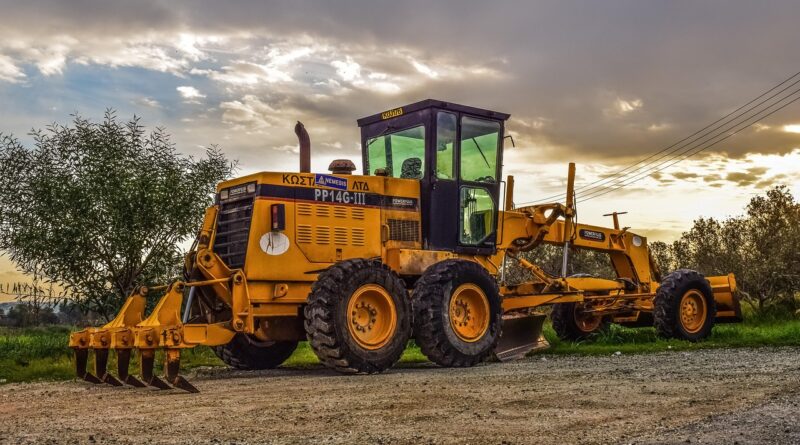
A grader machine is a self-propelled heavy equipment unit fitted with a long adjustable blade, or moldboard, used to cut, spread, level, and shape soil, aggregate, and road-base materials. In roadbuilding, it is most useful after rough earthmoving is complete and before compaction, paving, or final surface maintenance. By adjusting blade angle, pitch, height, articulation, and wheel lean, the operator can build a controlled surface profile such as a flat pad, shoulder, ditch line, or crowned gravel road. The machine is commonly known as a motor grader, road grader, or simply a grader.
Its main value is precision. A grader machine is not normally the fastest choice for moving large volumes of earth; dozers, scrapers, loaders, and excavators are usually better suited to that work. The grader’s strength is producing consistent slopes, smooth transitions, stable road crowns, and accurate finished grades over long distances.
Why graders matter in road construction
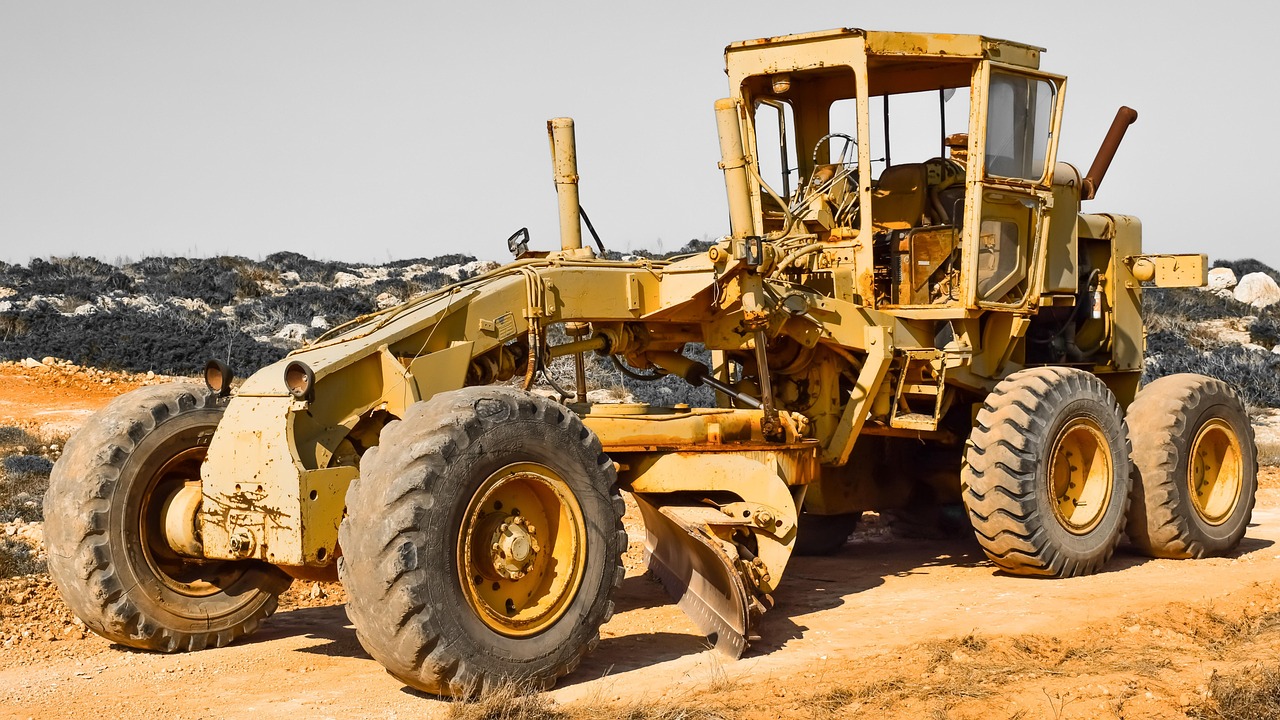
Road construction depends on layers. The subgrade, subbase, base course, shoulders, drainage features, and final pavement or wearing surface all need the correct shape before they can perform as intended. A grader machine helps establish that geometry. If the surface is too flat, water can collect. If the crown is too steep, traffic comfort and material retention can suffer. If the base is uneven, compaction becomes inconsistent, and defects may show through the finished pavement.
For gravel and unpaved roads, the grader is also a core maintenance machine. Public road guidance from the Federal Highway Administration emphasizes crown, drainage, moisture, and material handling as central issues in gravel road performance. FHWA guidance for unpaved-road work describes using a motor grader with a slope meter or electronic grade control to maintain the required crown, with five percent often used as a typical crown target. The exact target still depends on the road type, agency specification, traffic speed, climate, and material behavior.
On paved-road projects, graders are commonly used to trim subgrade, spread granular base, blend material at shoulders, form side slopes, and prepare surfaces for compactors and paving equipment. On industrial sites, they support pad preparation, haul-road maintenance, yard leveling, and drainage shaping. For more equipment explainers and machine-selection topics, visit the Equipment & Machines section.
Main parts of a grader machine
A grader can look straightforward from a distance, but its productivity comes from several adjustable systems working together. Understanding those systems also explains why operator skill has such a direct effect on finish quality.
Moldboard, circle, and drawbar
The moldboard is the long curved blade that cuts and moves material. It can be raised, lowered, angled, side-shifted, and tilted. The circle allows the blade to rotate, while the drawbar connects the blade assembly to the frame. Together, these components let the operator windrow material to one side, spread material across a lane, shave high spots, fill low areas, or form a ditch. Wear in the circle, drawbar, slide rails, or blade linkage can reduce grading accuracy, so these parts are important inspection points.
Frame articulation and wheel lean
Many motor graders have an articulated frame, allowing the front and rear sections to bend relative to each other. This improves maneuverability and helps the grader work on curves, shoulders, and confined road sections. Wheel lean allows the front wheels to lean into the direction of side load, helping resist blade forces when cutting, ditching, or moving material across the machine.
Scarifier and ripper attachments
A scarifier or rear ripper breaks compacted surfaces before grading. This is useful when a gravel road has potholes, washboarding, hard crust, or embedded defects that cannot be corrected by light blading alone. Once the surface is loosened, the grader can remix and reshape the material instead of only scraping over the top.
Cab controls and grade technology
Modern graders may use joystick controls, slope indicators, cross-slope systems, laser guidance, or 3D machine-control systems. These technologies do not replace the operator, but they can help hold a target slope or elevation more consistently. Their value is highest on long repetitive passes, airport surfaces, industrial pads, and road sections where tolerance requirements are tight.
Common uses and the right machine fit
A grader machine is used where surface shape matters more than raw digging force. The same machine can handle many tasks, but productivity depends on material condition, grade tolerance, traction, blade width, jobsite access, and operator experience.
| Application | What the grader does | Important considerations |
|---|---|---|
| Road subgrade trimming | Removes high spots and prepares a uniform foundation | Survey control, moisture condition, and compaction sequence |
| Granular base spreading | Distributes aggregate to the required depth and cross slope | Material gradation, blade angle, and avoiding segregation |
| Gravel road maintenance | Restores crown, pulls shoulder material, fills depressions, and improves drainage | Proper moisture, light repeated passes, and follow-up compaction |
| Ditching and shoulder work | Shapes side slopes, drainage channels, and shoulder transitions | Blade reach, wheel lean, stability, and traffic control |
| Industrial pads and yards | Creates a level surface or designed slope for buildings, storage areas, or circulation routes | Fine-grade tolerance, machine-control needs, and turning space |
Grader size should match the work. Smaller graders can be useful on municipal roads, subdivision work, and tighter sites. Mid-size graders are common in road construction, county road maintenance, and commercial site preparation. Larger graders are used for heavy highway work, mining, large haul roads, and high-production earthworks. Manufacturer specification sheets show that mid-size machines are commonly available with moldboards around the 12- to 14-foot range, while larger models and configurations vary by brand, attachment, tire package, and regional market.
Grader vs dozer, loader, and excavator
Choosing a grader machine makes sense when the job actually requires grading. Many sites use several machines in sequence rather than expecting one unit to do every task.
| Machine | Primary strength | Where a grader is better |
|---|---|---|
| Bulldozer | Pushing and rough shaping large volumes of soil over short distances | Final smoothing, long-distance road shaping, and accurate cross slope |
| Wheel loader | Loading, stockpile handling, and short-cycle material movement | Uniform spreading, blade-controlled finish, and road crown maintenance |
| Excavator | Digging, trenching, slope cutting, and lifting with reach | Continuous surface finishing across lanes, pads, and shoulders |
| Compact track loader | Small-site versatility and attachment use | Longer passes, smoother road profiles, and higher finish-grade consistency |
A dozer can rough in a road, a loader can place aggregate, and a compactor can build density. The grader brings the surface into its intended shape. In many roadbuilding workflows, it turns placed material into a controlled profile ready for compaction and quality checks.
How to evaluate a grader machine before use or purchase
Selection should start with the work, not horsepower alone. A machine that is too small may struggle to maintain speed and blade load in tough material. A machine that is too large may be inefficient on narrow roads, urban jobs, or tight maintenance routes. See also: CNC Machining.
- Blade size and reach: Check whether the moldboard width, side shift, and articulation can handle the lane width, shoulder, ditch, or pad geometry.
- Traction and drive configuration: All-wheel-drive graders can help in soft, wet, or high-resistance conditions, but they also add cost and complexity.
- Operating weight: More weight can improve cutting ability and stability, but transport limits, bridges, soil conditions, and fuel use must be considered.
- Hydraulic response: Smooth and predictable blade control is essential for fine grading. Jerky or delayed response makes accuracy harder to maintain.
- Visibility: Operators need a clear view of the moldboard ends, front wheels, rear frame, surrounding workers, and traffic.
- Attachment compatibility: Scarifiers, rippers, front blades, snow wings, and grade-control systems should match the intended work.
- Service access: Daily checks, cutting-edge replacement, hydraulic inspection, and circle maintenance affect uptime as much as headline specifications.
- Technology needs: Cross-slope or 3D control may be worth the investment when projects require repeatable grade accuracy, while simpler slope indicators may be enough for routine road maintenance.
For used machines, pay close attention to articulation joints, circle wear, moldboard slide wear, hydraulic cylinders, tandem drives, steering, tires, brakes, and service records. A grader can look clean while still having looseness in the components that determine finish quality.
Operating practices that affect grading quality
Good grading is not just a machine capability; it is a process. Before work begins, crews should understand the target elevation, cross slope, drainage direction, material condition, and compaction plan. If the material is too dry, it may segregate or fail to bind. If it is too wet, it may roll, rut, or pump under traffic.
A typical workflow starts with survey control or digital design data, followed by rough material placement. The grader then cuts high areas and moves material toward low areas, often creating a windrow that can be spread in later passes. The operator adjusts blade angle and pitch to control whether the blade cuts aggressively, carries material, or finishes lightly. After shaping, rollers compact the surface, and the grade is checked again. The process may repeat until density and surface tolerance are acceptable.
For gravel roads, light maintenance blading is different from reconstruction. Light blading can restore shape when defects are shallow and material remains available. Severe potholes, deep washboarding, poor aggregate gradation, missing crown, or failed drainage may require scarifying, adding material, reshaping, watering, and compacting. Simply dragging a blade over a failed surface can make it look better for a short time while leaving the underlying problem in place.
Safety and maintenance considerations
Graders often work close to traffic, workers on foot, utility structures, drainage edges, and changing ground conditions. OSHA road-construction safety materials identify struck-by incidents involving vehicles and heavy equipment as a major construction hazard. That makes traffic control, exclusion zones, seat belt use, backup alarms, mirrors, cameras, spotters, and communication procedures part of the grading plan, not an afterthought.
Daily maintenance should include checking fluid levels, leaks, tires, brakes, steering, lights, warning devices, blade hardware, cutting edges, scarifier teeth, hydraulic hoses, and articulation points. The operator should also watch for unusual vibration, blade chatter, loose circle movement, overheating, and changes in hydraulic response. Because grading quality depends on mechanical tightness, small wear issues can become production problems before they become breakdowns.
Cutting edges and end bits need regular attention. Worn or uneven edges make it harder to hold a consistent grade and can increase fuel use by forcing extra passes. Tire pressure and tire condition also matter because an uneven machine stance can affect blade position. On jobs using machine control, sensors and calibration checks should be treated as part of the maintenance routine.
Frequently asked questions
Is a grader machine the same as a motor grader?
In most construction contexts, yes. “Grader machine,” “motor grader,” and “road grader” usually refer to the same type of self-propelled machine with a long adjustable moldboard used for grading and surface shaping.
Can a grader machine replace a bulldozer?
Not usually. A bulldozer is better for heavy pushing and rough earthmoving, while a grader is better for precise shaping, smoothing, spreading, and maintaining road geometry. Many road projects use both machines at different stages.
What is the most important skill for a grader operator?
The operator must understand blade control, material flow, slope, drainage, and machine positioning. Small adjustments in blade pitch, angle, articulation, and speed can determine whether the pass cuts smoothly, carries material correctly, or creates new irregularities.
Does every grader need 3D machine control?
No. 3D control can improve consistency on complex or high-tolerance projects, but routine gravel-road maintenance or simple pad work may only require stakes, slope indicators, cross-slope control, or experienced manual operation. The technology should match the tolerance requirement and project volume.
Why is drainage mentioned so often with graders?
Because the grader often creates the surface shape that moves water away from the road or work area. Crown, cross slope, shoulders, and ditches all influence whether water drains properly or stays on the surface and weakens the structure.