
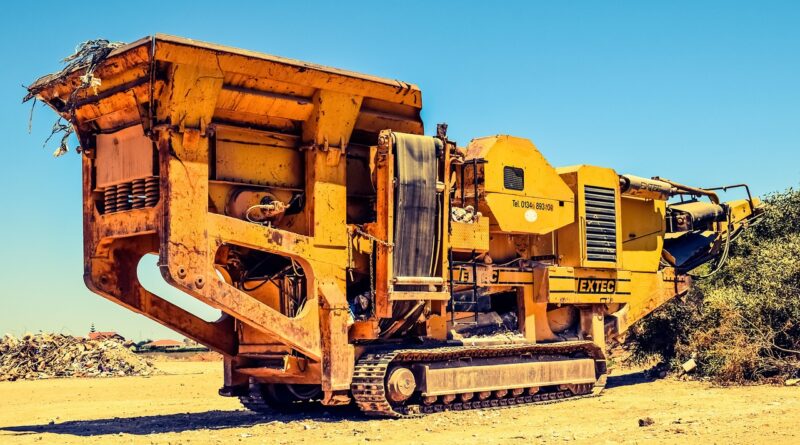
Jaw crusher basics for primary crushing applications
What a jaw crusher does in a crushing plant
A jaw crusher is usually the first major size-reduction machine in an aggregate, mining, quarrying, demolition, or recycling circuit. It uses two jaw plates to compress feed material until it is small enough to leave the discharge opening. For plant managers and equipment buyers, the main question is not simply whether a jaw crusher can break rock. It is whether the feed opening, closed side setting, throughput, wear package, and maintenance access fit the material and the downstream process.
In most crushing flowsheets, a jaw crusher is selected for primary crushing because it can accept relatively large feed, handle hard and abrasive material, and produce a coarse product for a cone crusher, impact crusher, screen, or stockpile. It is not the right machine for every duty, but it remains one of the most widely used options in heavy-duty mechanical size reduction.
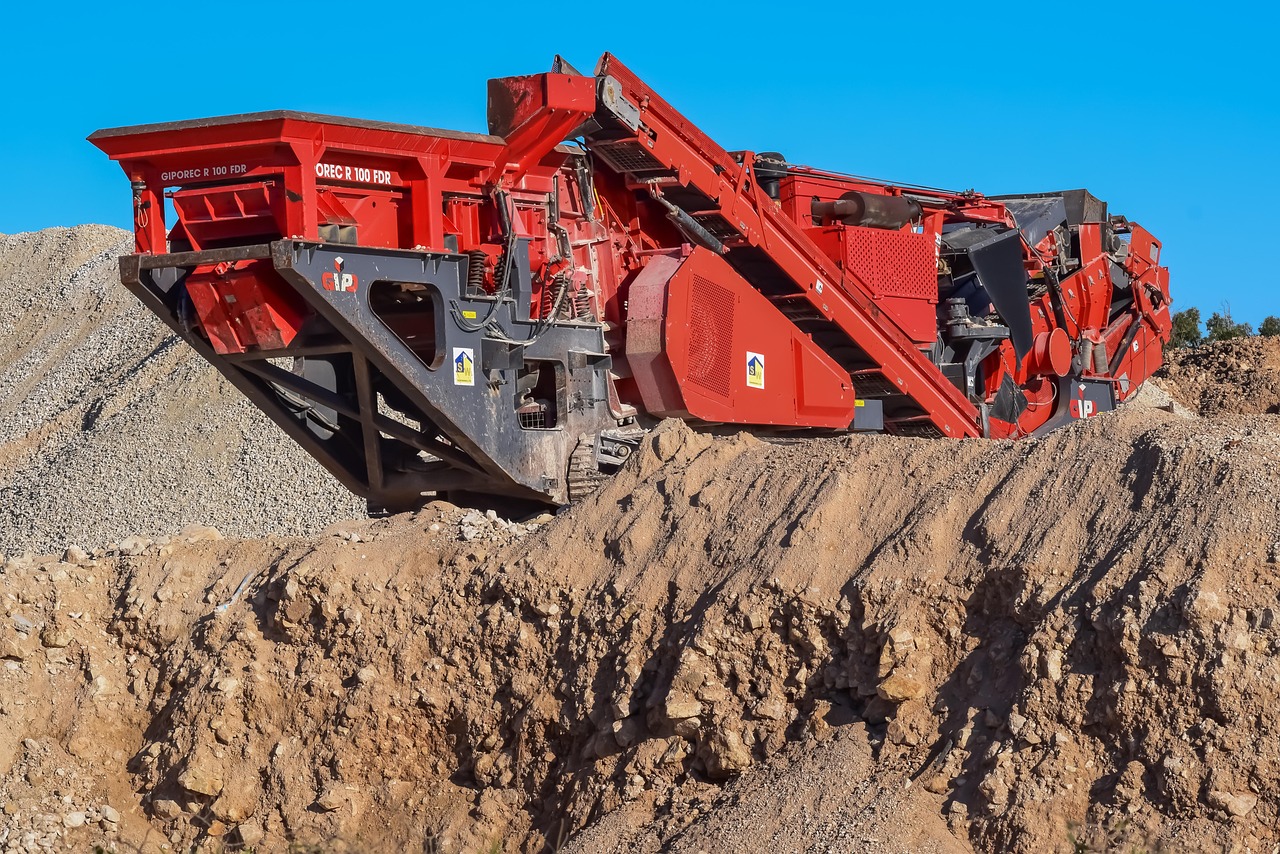
For more equipment explainers and machine selection guides, visit the Equipment & Machines section on MechMeld.
How a jaw crusher works
A jaw crusher breaks material by compression. The machine has a fixed jaw plate and a moving jaw plate. Material enters from the top through the feed opening. As the moving jaw advances toward the fixed jaw, rock or recycled material is squeezed, cracked, and reduced. When the moving jaw retreats, smaller particles move downward by gravity. The cycle repeats until the material is small enough to pass through the discharge gap.
The size of a jaw crusher is commonly described by its feed opening, often expressed as width by depth. In practical selection, that opening must be large enough to accept the largest expected lump without frequent bridging. Many sizing discussions assume that most feed should be meaningfully smaller than the opening, not equal to it. Oversize rock, slabby demolition material, and irregular feed can reduce capacity even when the nominal crusher dimensions appear suitable.
Key terms used when specifying a jaw crusher
- Feed opening: The entrance size at the top of the chamber, which limits the maximum practical feed size.
- Gape: The distance between the fixed and moving jaw at the feed opening.
- Closed side setting: The narrowest discharge opening during the crushing cycle, often called CSS.
- Open side setting: The widest discharge opening during the cycle, often called OSS.
- Reduction ratio: The relationship between feed size and product size. Technical references commonly describe jaw crushers as moderate-reduction primary machines, with the practical ratio depending on rock type, chamber design, and setting.
- Scalping: Removing fines or undersize material before the crusher, often with a grizzly feeder or screen, to improve throughput and reduce unnecessary wear.
Where jaw crushers fit in primary crushing
Jaw crushers are most often used at the front of a plant, where raw feed is coarse and uneven. In a quarry, that feed may come from blasted rock. In construction recycling, it may come from concrete slabs or mixed demolition material. In mining, it may be run-of-mine ore that needs to be prepared for conveying, screening, or secondary crushing.
The jaw crusher’s strength is its ability to accept difficult feed and produce a consistent coarse product with a robust mechanical design. Compared with many impact crushers, it is generally better suited to hard, abrasive feed where wear cost is a major concern. Compared with a gyratory crusher, it is often simpler and more economical for small to medium-capacity primary applications. Gyratory crushers may still be preferred in very high-capacity mines where continuous feed and large tonnage justify the installation.
| Primary option | Typical advantage | Common limitation | Where it often fits |
|---|---|---|---|
| Jaw crusher | Robust compression crushing for coarse, hard feed | Capacity can drop with sticky fines, slabby feed, or poor choke conditions | Quarries, recycling plants, small and medium mining circuits |
| Gyratory crusher | High-capacity continuous primary crushing | Higher installation complexity and capital cost | Large mines and major fixed plants |
| Impact crusher | Higher reduction and better shape in suitable materials | Wear can be high with hard, abrasive rock | Limestone, recycling, and applications where shape is important |
| Sizer or roll crusher | Controlled product with some wet or friable materials | Less suitable for every hard-rock duty | Coal, soft minerals, and selected industrial materials |
This comparison is a selection starting point, not a universal rule. Material tests, expected feed gradation, moisture, abrasiveness, target product size, operating hours, and maintenance strategy should guide the final choice.
Selection factors that affect performance
A jaw crusher that looks correct on rated capacity may still underperform if the feed and circuit are mismatched. The following factors have the largest practical effect on output, reliability, and total cost of ownership.
Feed size and feed shape
The largest feed lump should be smaller than the practical acceptance limit of the chamber. Flat, elongated, or slabby material can bridge more easily than rounded stone. Reinforced concrete can also create problems if rebar is not controlled before it reaches the chamber. A larger feed opening may reduce blockages, but it can also increase machine size, power demand, foundation load, and purchase cost.
Material hardness and abrasiveness
Hard and abrasive stone generally favors compression crushing, but wear parts still matter. Jaw plate metallurgy, tooth profile, cheek plates, and chamber design affect wear life and product gradation. A softer limestone duty and a hard granite duty should not be treated as the same application, even if the required tons per hour are similar.
Moisture and fines content
Wet fines can pack in the chamber, reduce effective capacity, and increase housekeeping around the crusher. Scalping fines before the crusher can help when the raw feed contains a large amount of undersize material. It also reduces the amount of material that passes through the jaw unnecessarily, which can support wear life and energy efficiency.
Closed side setting and target product
The CSS controls discharge size, but a tighter setting is not always better. Reducing CSS can improve product size while reducing throughput, increasing wear, and raising power draw. If a downstream cone crusher or screen is part of the circuit, the jaw crusher should be set to feed that equipment efficiently rather than to make the smallest possible product by itself.
Plant layout and feeding method
Jaw crushers perform best when feed is controlled and distributed evenly across the chamber. A vibrating grizzly feeder, a properly designed chute, and adequate hopper volume can be as important as the crusher model. Poor feeding can cause uneven jaw wear, surging conveyor loads, reduced capacity, and frequent stoppages.
Fixed, mobile, and portable jaw crusher configurations
Jaw crushers are available in fixed, portable, and mobile configurations. A fixed installation is typically chosen for long-life quarry or mining operations where civil works, conveyors, dust control, and maintenance access can be optimized around a permanent plant. Fixed plants can be highly efficient, but they require more up-front planning.
Portable jaw plants are built on skids or wheeled frames. They are useful when an operator needs relocation flexibility without the full mobility of a tracked unit. They are common in contract crushing, temporary aggregate production, and regional recycling work.
Mobile tracked jaw crushers are often selected for demolition recycling, road construction, and quarry faces where moving closer to the feed reduces haulage. Their advantages include faster setup and location flexibility. Trade-offs can include more limited space for maintenance access, closer attention to transport dimensions, and the need to manage fuel, hydraulic systems, and onboard screening or recirculation options.
The right configuration depends on how long the machine will stay in one place, how material will be loaded, whether permits and dust controls are tied to a fixed location, and how often the plant must be moved. See also: CNC Machining.
Wear, maintenance, and operating discipline
Jaw crushers are rugged machines, but they are not maintenance-free. The main wear components include jaw plates, cheek plates, toggle-related parts, bearings, and liners in high-contact areas. Wear is not only a parts-cost issue; it also changes the chamber geometry. As jaw plates wear, product gradation, capacity, and power demand can shift.
Good maintenance practice starts with regular inspection of the jaw dies, fasteners, bearings, lubrication system, drive belts, guards, and discharge area. Operators should also watch for unusual vibration, rising motor load, uneven product, metal contamination, and more frequent blockages. These symptoms often appear before a major failure.
Operational habits that reduce downtime
- Keep feed size within the machine’s practical limit, not just its catalog opening.
- Use scalping when fines or sticky material are reducing capacity.
- Avoid running the chamber empty for long periods when the design expects a steady material bed.
- Check jaw plate wear patterns and rotate or replace parts according to the manufacturer’s instructions.
- Control tramp metal with magnets or upstream procedures where recycling or mixed feed is involved.
- Plan safe blockage clearing procedures before production starts, not during an emergency stop.
Safety deserves special attention. Crushing equipment contains stored energy, pinch points, falling-material hazards, and heavy wear parts. In the United States, OSHA and MSHA guidance consistently emphasizes guarding, lockout procedures, safe access, and controlled maintenance practices around crushing and conveying equipment. Plant-specific procedures should be written, trained, and enforced before the crusher enters production.
Environmental and permitting considerations
Jaw crushing can create dust, noise, vibration, and material spillage. These issues affect permitting, worker exposure, neighbor complaints, housekeeping, and component life. Water sprays, enclosure, extraction, transfer-point design, belt sealing, and road dust control may all be part of a compliant plant design.
For U.S. nonmetallic mineral processing plants, Environmental Protection Agency materials identify crushers, screens, conveyors, and transfer points as process areas where particulate emissions can be relevant. Exact requirements vary by jurisdiction, plant type, throughput, mobility, and permit conditions, so operators should verify local and federal obligations before installing or relocating a jaw crusher.
Noise control also matters. Primary crushers can generate impact noise from feed loading as well as mechanical noise from the drive, flywheels, and discharge zone. Layout choices such as placing the crusher below grade, using barriers, controlling drop heights, and maintaining liners can reduce avoidable noise and wear at the same time.
A practical checklist before choosing a jaw crusher
Before requesting quotes or comparing models, build a short technical brief. This helps prevent a common purchasing mistake: comparing machines by rated capacity while ignoring the conditions behind that rating.
- Material: Rock type, ore type, concrete, asphalt, slag, or mixed recycling feed.
- Feed gradation: Maximum lump size, percentage of fines, and expected variation by bench, pit, or jobsite.
- Moisture and clay: Seasonal conditions, sticky fines, and whether washing or scalping is needed.
- Required output: Target tons per hour and required product size for the next process.
- Downstream equipment: Screens, cone crushers, impact crushers, conveyors, surge bins, and stockpiles.
- Operating schedule: Hours per day, days per week, and acceptable planned downtime.
- Site constraints: Power supply, loading equipment, foundation, transport limits, dust control, noise limits, and maintenance access.
- Wear strategy: Jaw plate type, expected wear rate, spare parts availability, and change-out method.
- Safety plan: Guarding, lockout, blockage clearing, lifting points, access platforms, and operator training.
If the application is critical, material testing and a manufacturer-reviewed flowsheet are worth the effort. Catalog capacities are useful for screening options, but real production depends on the whole system around the crusher.
Frequently asked questions
Is a jaw crusher used for primary or secondary crushing?
A jaw crusher is most commonly used for primary crushing. It can serve in some secondary applications, but cone crushers and impact crushers are more common after the primary stage, when the feed is already smaller and a more controlled product shape or size is required.
What materials can a jaw crusher process?
Jaw crushers are used for hard rock, quarry stone, many ores, concrete, demolition debris, slag, and other compressible materials. Suitability depends on hardness, abrasiveness, moisture, feed size, contamination, and the target product.
What causes low jaw crusher capacity?
Common causes include oversize feed, slabby material, too many sticky fines, poor feeder control, a CSS that is too tight, worn jaw plates, insufficient scalping, restricted discharge, and downstream bottlenecks. The crusher may not be the only limiting factor in the plant.
How often should jaw plates be replaced?
There is no universal replacement interval. Jaw plate life depends on material abrasiveness, feed size, operating hours, chamber design, metallurgy, and whether the plates are rotated when appropriate. Operators should track wear thickness, product changes, and power draw instead of relying only on calendar time.
Is a jaw crusher better than an impact crusher?
Neither machine is better in every case. A jaw crusher is often preferred for hard, abrasive primary feed and lower wear cost per ton. An impact crusher may be preferred for softer material, recycling applications, or where product shape and higher reduction are more important than wear life.
Bottom line
A jaw crusher is a dependable primary crushing machine when it is matched to the feed, product target, and plant layout. Strong specification work focuses on feed opening, CSS, wear package, feeder design, dust control, maintenance access, and downstream capacity, not on headline tons per hour alone. For buyers and operators, that system-level view is what turns a rugged machine into a reliable production asset.