
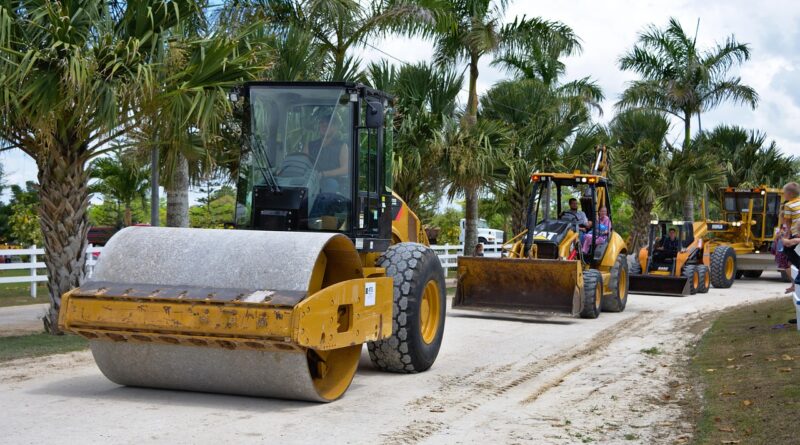
JCB backhoe loader models compared for construction and municipal work
What a JCB backhoe loader is built to do
A JCB backhoe loader is built for buyers who need one machine to load, dig, travel between tasks and run attachments without sending both an excavator and a loader to every job. Based on JCB’s U.S. product information available in September 2026, the range includes compact tracked and urban machines as well as full-size 3CX and 4CX models for contractors, public works crews, utilities, agriculture and site maintenance.
The right choice is not automatically the highest-spec model. It depends on transport limits, road travel, trenching depth, loader capacity, operator availability, emissions equipment preferences and how often the machine will work in narrow streets or soft ground.
For more machinery coverage and equipment selection guides, visit the Equipment & Machines section.
Current JCB backhoe loader range at a glance
JCB’s backhoe range is broad because the category now covers more than the traditional full-size construction backhoe. In North America, the public product pages highlight compact models such as the 1CXT and 3CX Compact, along with larger 3CX and 4CX variants. Specifications vary by market, tires, dipper configuration, shovel option and dealer package, so the figures below are best used for shortlisting rather than as a final purchase specification.
| Model or family | Best-fit applications | Notable published details | Main trade-off to check |
|---|---|---|---|
| 1CXT | Small jobsites, landscaping, property work and tight access tasks | 49 hp engine, tracked undercarriage, optional extending dipper to 10 ft 1 in dig depth, and no DEF requirement according to JCB | Lower reach and capacity than a full-size backhoe |
| 3CX Compact | Urban utility work, road repair, municipalities and narrow sites | 74 hp engine, 13,514 lb operating weight, four-wheel steering and no DPF or DEF requirement listed by JCB | Compact size helps in streets but may limit heavy excavation production |
| 3CX | General construction, farm support and mixed contractor work | 4.4-liter engine family, 74 hp published for the base 3CX range, center-mount layout and air conditioning listed as standard | Lower power than 109 hp variants |
| 3CX Plus and 3CX Pro | Higher-production trenching, roading and frequent repositioning | JCB lists 109 hp, higher torque, six-speed autoshift features on current upgraded models and DualDrive availability on 109 hp 3CX models | Higher acquisition cost and more features to match to operator skill |
| 4CX Pro | Public works, utility corridors, loader-heavy work and demanding terrain | 109 hp, all-wheel steer positioning, 28/28 wheel arrangement and DualDrive availability in current JCB information | Larger footprint and transport planning matter more |
How the main models differ in real work
1CXT for access, attachment use and light excavation
The 1CXT is the smallest JCB backhoe loader option in the current U.S. information reviewed. Its value is not in matching the dig depth or loader lift of a full-size machine. It is in combining compact track loader maneuverability with a rear excavator end. JCB says the machine can use a universal quick hitch compatible with many skid steer attachments and can be equipped with an optional handheld tool auxiliary. That combination may suit contractors who already run skid steer attachments but want a machine that can also open trenches, set small utilities or handle repair work without bringing a mini excavator.
The limitation is clear. An optional extending-dipper dig depth of 10 ft 1 in does not replace a larger excavator or full-size backhoe on deeper utility work. For landscaping, maintenance, confined-property access and trailerable tasks where local rules permit, however, the smaller footprint may deliver more value than maximum breakout force.
3CX Compact for streets and constrained jobsites
The 3CX Compact is aimed at urban construction, municipal maintenance and road repair where a conventional full-size backhoe may take up too much space. JCB states that its turning capability and switchable steering modes allow work within a single roadway lane. Its published 13,514 lb operating weight and 74 hp engine place it above the 1CXT but below the larger 3CX and 4CX machines in jobsite presence.
Two operating-cost details are worth checking. JCB lists no DPF and no DEF requirement for the 3CX Compact, and also states 500-hour service intervals. For fleets that value simple daily checks and predictable maintenance scheduling, those points can matter as much as headline horsepower. The trade-off is compact geometry. If the crew regularly loads high-sided trucks, digs long deep trenches or lifts heavier materials, a larger 3CX or 4CX should stay on the comparison list.
3CX and 4CX for production, travel speed and versatility
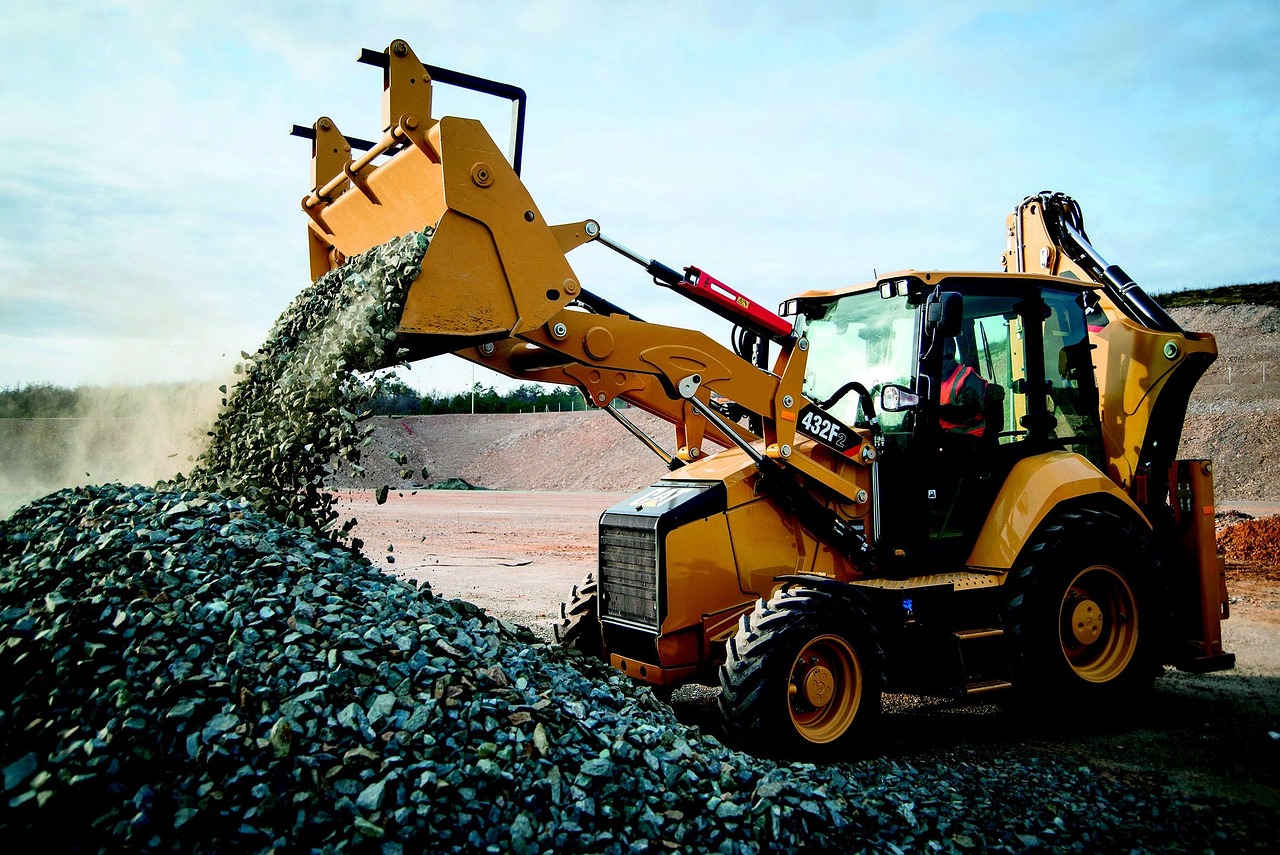
The traditional 3CX and 4CX families remain central to JCB’s backhoe identity. Current JCB information lists a 4.4-liter engine family, 74 hp for the base 3CX and 109 hp for higher-spec 3CX and 4CX models. JCB also publishes a general-purpose shovel capacity of 1.4 cubic yards and a 6-in-1 shovel capacity of 1.3 cubic yards across the comparison table for the 3CX and 4CX range. For excavation, JCB states that the range can reach dig depths of up to 20 ft in the appropriate configuration, while comparison tables list common 14 ft and 15 ft excavator configurations depending on model and dipper arrangement.
The 4CX Pro adds all-wheel steer capability and is positioned for stronger loading and excavating performance. For public works departments and utility contractors, that can be useful when the backhoe must road between locations, reposition often and work in poor access conditions. For buyers who mainly need occasional digging and loading around a yard, the additional specification may not be necessary.
The 2025 and 2026 updates that matter
Two recent JCB announcements are relevant for buyers comparing a new JCB backhoe loader with older machines. On Jan. 29, 2025, at the ARA Show in Las Vegas, JCB announced upgraded 3CX and 4CX backhoe loaders. The company described changes including improved roading performance, a six-speed auto-shift transmission, a new outer box dipper option and an upgraded operator-focused cab. These are manufacturer claims, not independent productivity tests, but they show where JCB is focusing development: travel efficiency, operator comfort and faster repositioning.
On Aug. 30, 2026, JCB announced that its DualDrive system would be showcased at PWX 2026 and available on 109 hp 3CX and 4CX backhoe loader models. JCB describes DualDrive as a system that lets the operator move the machine while remaining in the excavator operating position, using integrated drive and steering controls at the rear. The productivity case is strongest in trenching, ditch cleaning, utility installation and municipal maintenance, where traditional backhoe operation often requires repeated seat rotation and repositioning from the loader controls. Buyers should still ask dealers which model, build slot and control package includes the feature. See also: CNC Machining.
Spec checks before shortlisting a model
The most useful comparison starts with the job cycle, not the brochure. A contractor digging short service lines and loading spoil into trucks needs a different balance from a municipality patching roads, cleaning ditches and moving between small sites all day. Before shortlisting a model, confirm these points with the dealer and the written specification sheet.
- Dig depth and reach: Check the exact dipper configuration. A standard dipper, inner extending dipper and outer extending dipper can change the working envelope and attachment choices.
- Loader lift and bucket type: A general-purpose bucket, 6-in-1 shovel, forks or specialty attachment can change cycle time and stability requirements.
- Road speed and travel duty: If the machine will travel between jobs without a lowboy, transmission, tires, braking, lighting and local road rules matter.
- Hydraulic attachment needs: Breakers, augers, compactors and handheld tools require the right auxiliary flow, couplers and controls.
- Emissions and fuel: The U.S. Environmental Protection Agency regulates nonroad diesel engines under tiered standards. EPA information states that Tier 4 rules rely on advanced emission-control technologies and ultra-low sulfur diesel with a maximum sulfur concentration of 15 ppm. Buyers should confirm the exact emissions configuration of the machine they are ordering.
- Operator environment: Cab visibility, seat rotation, control pattern selection, steering modes and display layout directly affect productivity in stop-start utility work.
Ownership factors and limitations
A backhoe loader earns its place when utilization is spread across many tasks. If the machine only excavates all day, a dedicated excavator may dig faster. If it only loads aggregates, a wheel loader may move more material. The backhoe loader’s advantage is flexibility: it can trench in the morning, load trucks after lunch, carry attachments, backfill, grade and road to the next repair without another machine move.
That flexibility also makes fleet discipline important. Crews should track hours by task, not just total engine hours. If a JCB backhoe spends most of its life as a loader, loader capacity and bucket setup deserve more attention. If it spends most hours on utilities, the excavator end, stabilizer setup, rear visibility and repositioning controls matter more. Maintenance planning should include daily checks, tire or track condition, hydraulic hose inspection, attachment wear, pins and bushings, and the availability of trained operators.
The dealer conversation should cover more than price. Ask about lead time, warranty coverage, telematics availability, parts support, service intervals, finance terms only if they apply to the purchase date, and whether published promotions are still active. Offers shown on manufacturer pages can expire, and they may not apply to every customer or configuration.
Frequently asked questions
Which JCB backhoe loader is best for tight urban work?
The 3CX Compact is the clearest fit for urban streets and confined road repair because JCB positions it for limited-space jobs and single-lane working. The 1CXT is even smaller and useful where tracked compact-machine maneuverability is the priority, but it gives up reach and capacity compared with larger machines.
Is a 4CX Pro always better than a 3CX?
No. The 4CX Pro offers higher-end capability, including all-wheel steer positioning and a 109 hp class specification in current JCB information, but it also brings a larger footprint and likely higher cost. A 3CX may be the more practical choice for general construction, farm support or lower-hour mixed work.
What is DualDrive on a JCB backhoe loader?
DualDrive is JCB’s system for moving the machine while the operator remains at the excavator controls. JCB announced in August 2026 that it would be available on 109 hp 3CX and 4CX models. It is most relevant to trenching, ditching and municipal tasks that require frequent repositioning.
Should buyers choose a backhoe loader or separate compact machines?
Choose a backhoe loader when one operator needs loading, digging, backfilling and road travel in a single machine. Choose separate machines when excavation volume, loader productivity or simultaneous two-machine work is high enough to justify the extra transport, operators and maintenance.