
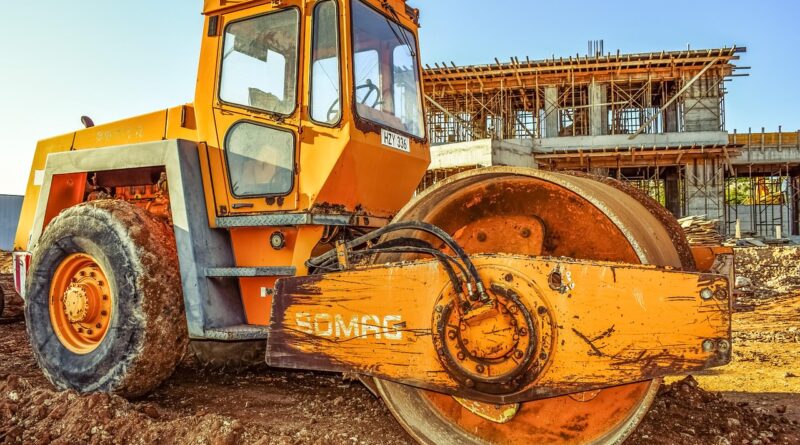
Soil compactor guide for matching machines to soils and jobsites
How a soil compactor fits the job
A soil compactor is used to densify fill, subgrade, trench backfill, and base material so the finished structure is less likely to settle, rut, pump, or crack. The selection should start with the soil and the work area, not with brand, horsepower, or machine weight alone. Granular soils usually respond well to vibration. Cohesive soils often need impact, kneading, or padfoot action. Confined trenches require equipment that can compact effectively without putting operators, pipe, or excavation edges at unnecessary risk.
A workable compaction plan also includes moisture control, lift thickness control, pass tracking, and field density testing. Without those controls, even a powerful machine can produce uneven density and rework. For contractors, rental managers, and equipment buyers, the practical question is not simply which compactor is bigger. It is which compactor can deliver the specified density in the available space, with the available soil, under safe operating conditions.
What soil compaction is trying to achieve
Mechanical compaction rearranges soil particles and reduces air voids. In construction, the target is usually stated as a percentage of a laboratory maximum dry density at or near optimum moisture content. ASTM D698 defines Standard Proctor compaction effort at 12,400 ft-lbf/ft³, while ASTM D1557 defines Modified Proctor effort at 56,000 ft-lbf/ft³. AASHTO T 99 and AASHTO T 180 serve similar roles in many transportation specifications. These laboratory values do not compact the site; they provide the reference curve used to judge whether field compaction is acceptable.
Moisture is as important as machine force. If the soil is too dry, particles may not rearrange efficiently. If it is too wet, water pressure and softening can prevent density gain and leave the surface unstable. That is why many earthwork specifications define both a target density and an allowable moisture range. The machine, water truck, aeration time, lift thickness, and testing schedule need to be planned as one process.
Main soil compactor types and where they fit
Forward plate compactors
Forward plate compactors are common on landscaping, paving, utility, and small foundation jobs. They use a vibrating base plate to move forward while compacting the surface. Their strengths are simplicity, maneuverability, and good performance on granular materials such as sand, gravel, and bedding aggregate. They are usually not the first choice for deep cohesive clay because vibration alone may not break down and reorient sticky particles effectively.
Reversible plate compactors
Reversible plates are heavier and can travel forward or backward, which makes them useful in trenches, narrow approaches, and larger granular base areas. The added mass and compaction force can help on thicker lifts than a light forward plate, but the correct lift depth still depends on material, moisture, and the model’s rated capability. Reversible plates are often a practical middle ground between small plates and ride-on rollers.
Tamping rammers
A tamping rammer, often called a jumping jack, delivers high-impact blows through a narrow shoe. That impact makes it useful for cohesive soils, mixed backfill, and trench work where a plate cannot deliver enough vertical energy. Rammers are slower than plates on open granular areas, but they can be the right machine around pipes, footings, and confined utility repairs. Operators should avoid forcing a rammer through unsuitable loose granular material where it may walk, dig, or displace material instead of densifying it evenly.
Walk-behind and remote trench rollers
Trench rollers use drums, often padfoot drums, to compact cohesive and semi-cohesive backfill in utility trenches and confined excavations. Remote-control models can reduce the need for an operator to stand in hazardous zones, although they do not remove excavation hazards. Trench rollers are productive when the trench width, pipe clearance, soil type, and protective system allow safe operation.
Single-drum rollers
Single-drum rollers are used on larger subgrade, embankment, road base, and site preparation work. Smooth drums are commonly associated with granular soils and aggregate layers. Padfoot or sheepsfoot drums are used for cohesive and semi-cohesive soils that benefit from kneading and penetration. Modern vibratory rollers may allow adjustments to amplitude, frequency, and speed, but those settings should be matched to the soil and specification rather than treated as universal controls.
Pneumatic tire and static rollers
Pneumatic tire rollers apply kneading pressure through rubber tires and can be useful on certain soils, base materials, and asphalt-related work. Static rollers rely mainly on machine weight. They may be part of a compaction train, but on many soil jobs they are less effective than a properly selected vibratory or padfoot machine. Their value depends on the material, thickness, surface condition, and acceptance criteria.
How to match the machine to material, lift, and access
The table below summarizes typical selection logic. It is not a substitute for the project specification, geotechnical report, or equipment manual, but it helps narrow the decision before a machine is rented or purchased.
| Job condition | Typical first choice | Key limitation to check |
|---|---|---|
| Clean sand, gravel, or aggregate base in a small area | Forward or reversible plate compactor | Lift thickness and edge confinement |
| Granular base over a larger open area | Vibratory roller or heavy reversible plate | Uniform moisture and pass coverage |
| Clay, silt, or cohesive trench backfill | Tamping rammer or padfoot trench roller | Safe trench access and protective systems |
| Semi-cohesive subgrade or embankment fill | Padfoot single-drum roller | Moisture conditioning and lift depth |
| Utility repair around structures or pipes | Rammer, small plate, or trench roller depending on clearance | Pipe damage risk and compaction beside haunches |
| Open road subgrade or building pad | Single-drum smooth or padfoot roller based on soil type | Soft spots, proof rolling results, and test density |
Lift thickness is one of the easiest controls to state and one of the most common controls to miss. A machine that performs well on a thin lift may leave the lower part of a thicker lift under-compacted. That hidden weak layer can later appear as settlement, pavement distress, or failed density tests. When specifications give a maximum loose lift thickness, the field crew should treat it as a production limit, not a paperwork detail.
Access can change the correct machine. A large roller may be efficient on a building pad but impractical against a wall, inside a utility cut, or close to an excavation edge. Conversely, using a small plate across a large road base may be too slow and may create inconsistent overlap. Equipment planning should be part of the earthwork method, not an afterthought. For more machinery topics in this category, visit MechMeld’s Equipment & Machines section.
Moisture, passes, and compaction energy
More passes do not automatically fix a compaction problem. If the soil is outside its workable moisture range, additional passes may polish the surface, pump water, or break down aggregate without producing the required dry density. The better approach is to condition the material first: add water and mix when it is dry, aerate or replace material when it is too wet, and keep lift thickness within the machine’s effective depth.
Pass count is still useful as a production control, especially after test strips or trial sections establish a repeatable method. A contractor may determine that a particular soil, within a particular moisture range, reaches acceptance after a defined number of passes with a specific roller setting. That method still needs to be verified by density testing and adjusted when borrow material, weather, moisture, or lift thickness changes. See also: CNC Machining.
On larger road and earthwork projects, intelligent compaction systems can add value by recording roller passes, stiffness-related measurements, temperature for asphalt applications, and coverage maps. The Federal Highway Administration has documented intelligent compaction as a way to improve process control, but it should complement—not replace—project acceptance testing unless the specification explicitly allows that approach.
Field testing and acceptance
Field acceptance normally compares in-place density with the laboratory reference established for that material. ASTM D6938 covers nuclear methods for in-place density and water content of soil and soil-aggregate by shallow-depth measurement. Other field methods, such as sand cone testing, may also be specified. The key point is that the test must match the material, layer, and specification.
A common construction requirement is a minimum percentage of maximum dry density, such as 90%, 95%, or another value stated in the project documents. Those numbers should not be copied from another job without engineering review. A pavement subgrade, structural fill beneath a foundation, landscaped area, retaining wall backfill, and utility trench may all carry different risks and acceptance criteria.
Good compaction records should identify the material source, lift number, loose or compacted thickness, moisture condition, machine type, approximate pass count, test location, test method, result, and any retesting after correction. This documentation protects both quality and schedule because it helps show whether failures are isolated, material-related, moisture-related, or caused by equipment mismatch.
Safety and operating limits
Compaction equipment adds weight, vibration, and movement to a jobsite. In trenches and excavations, those forces can increase risk if the machine is operated too close to an unsupported edge or inside an unsafe excavation. In the United States, OSHA’s excavation rules under 29 CFR 1926 Subpart P require protective systems for many excavations 5 feet or deeper unless the excavation is made entirely in stable rock; a competent person must also evaluate shallower excavations when cave-in hazards are present.
Ride-on rollers introduce rollover and struck-by hazards. NIOSH guidance on ride-on roller/compactors emphasizes rollover protective structures, seat belts, training, site-specific traffic control, and safe work practices. Operators also need to understand slope limits, soft shoulders, blind spots, vibration exposure, hearing protection, and manufacturer instructions. For mobile road construction machinery, ISO 20500-4:2026 addresses safety requirements specific to compaction machines in ISO-based compliance environments.
Small machines need the same discipline. Plate compactors and rammers can injure feet, hands, and backs; they can also damage utilities, pipe bedding, fresh concrete edges, or nearby structures if used carelessly. Safe operation starts with underground utility location, stable footing, personal protective equipment, proper lifting methods, and clear communication between operators, spotters, and inspectors.
Common mistakes to avoid
- Choosing by size alone. A heavier machine is not automatically correct if the soil type, access, or pipe clearance is wrong.
- Ignoring moisture. Dry or wet material can fail even after repeated passes.
- Overfilling lifts. Thick lifts may pass at the surface while staying loose below.
- Using vibration in the wrong setting. Vibration can be effective on granular material but may be inefficient or harmful near sensitive structures or unsupported edges.
- Skipping test strips. A short trial area can confirm lift depth, pass count, and moisture range before full production begins.
- Treating density tests as paperwork. Failed tests are feedback about material, moisture, machine selection, or workmanship.
Frequently asked questions
Is a plate compactor the same as a soil compactor?
A plate compactor is one type of soil compactor. The broader category includes plates, rammers, trench rollers, single-drum rollers, pneumatic tire rollers, and other machines used to densify soil or soil-aggregate layers.
How many passes does a soil compactor need?
There is no universal pass count. The answer depends on soil type, moisture, lift thickness, machine size, vibration settings, and the required density. Test strips and field density tests are the best way to establish a reliable pass pattern.
Can a plate compactor be used on clay?
A light plate compactor is usually not ideal for cohesive clay because vibration alone may not deliver enough impact or kneading. A rammer, padfoot trench roller, or padfoot single-drum roller is often more suitable, depending on job size and access.
What is the most important specification to check before renting a soil compactor?
Start with soil type and required density, then check lift thickness, operating weight, compaction force, plate or drum width, vibration settings, access clearance, and safety requirements. The machine must fit both the material and the physical work area.
Why does a compacted area still fail a density test?
Common causes include moisture outside the target range, excessive lift thickness, the wrong machine for the soil, poor overlap, changed borrow material, soft underlying layers, or testing against the wrong Proctor curve. The correction should address the cause rather than simply adding random passes.