
What is a compactor and how to choose the right type for each job
Compactor basics
A compactor is a machine that increases material density by reducing voids, rearranging particles or compressing loose material into a more stable mass. On construction sites, the term usually refers to soil, aggregate and asphalt equipment such as plate compactors, rammers and rollers. In plants, warehouses and municipal operations, it may also refer to waste compactors that reduce the volume of packaging, scrap or refuse.
Choosing the right compactor is not simply a matter of size. The best match depends on the material, specified density, lift thickness, working space, surface finish, operator exposure and power source. A machine that performs well on an open granular base may be inefficient, unsafe or noncompliant in a trench or enclosed building.
For more equipment explainers and machinery comparisons, see the Equipment & Machines section on MechMeld.
Main compactor types and where each fits
The term compactor covers several machine families. They all apply force, but they do it through different mechanisms. Construction compactors may rely on vibration, impact, kneading, static weight or a combination of these effects. Waste compactors use hydraulic or mechanical pressure to reduce volume rather than to meet a geotechnical density target.
| Compactor type | Typical use | Best fit | Key limitation |
|---|---|---|---|
| Forward plate compactor | Paver base, sidewalks, patch work, granular backfill | Small to medium areas with sand, gravel or crushed aggregate | Limited depth and less control in cohesive soils |
| Reversible plate compactor | Deeper granular lifts, utility reinstatement, confined site work | Jobs needing more force and back-and-forth movement | Heavier to transport and still not ideal for wet clay |
| Tamping rammer | Trench backfill, foundations, utility work | Narrow spaces and cohesive or mixed soils | Small footprint makes it slow on open areas |
| Walk-behind roller | Paths, small asphalt work, road repair, landscape construction | Larger strips where a plate is too slow | Needs room to turn and may bridge over soft spots |
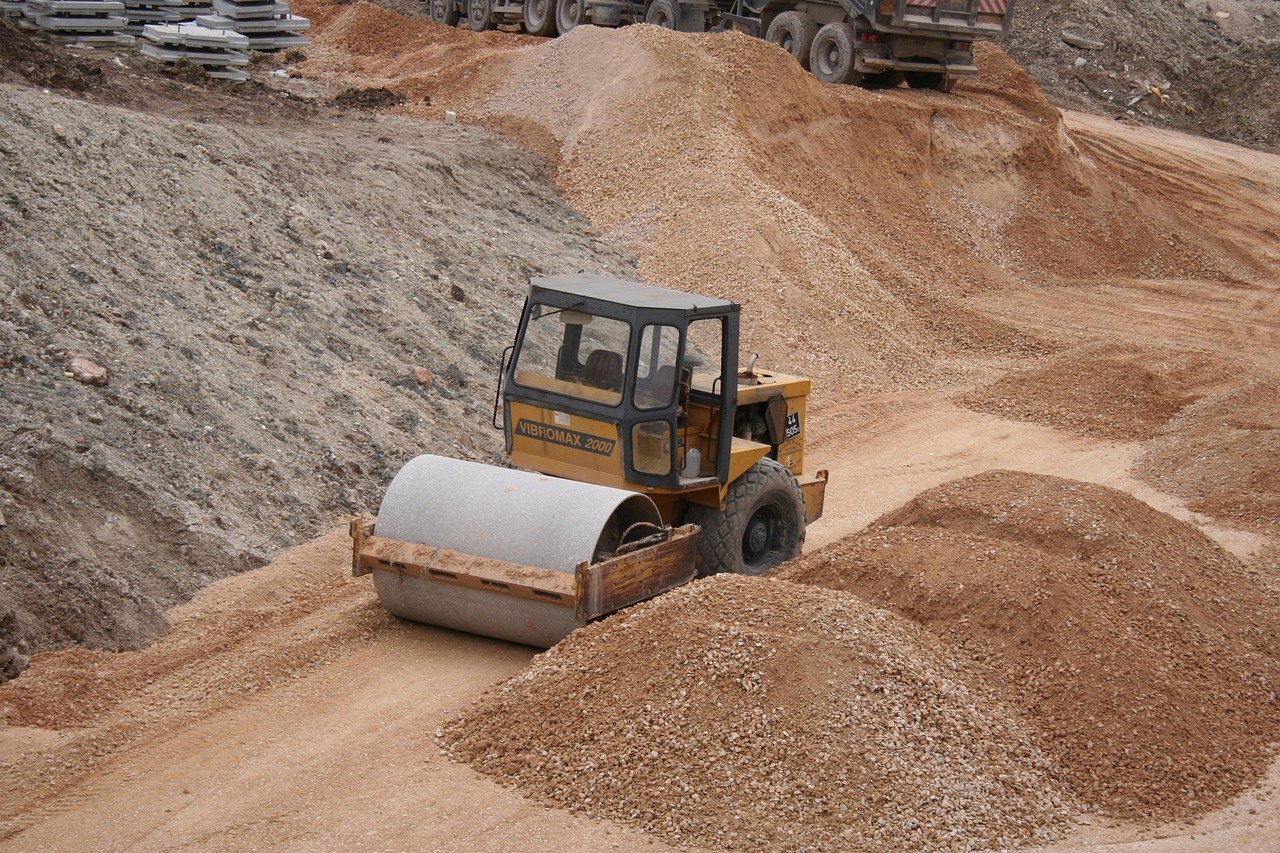
| Ride-on smooth drum roller | Road base, granular fill, asphalt | Open, continuous areas with production targets | Not suited to tight trenches or highly confined edges |
| Padfoot or sheepsfoot roller | Embankments, cohesive soils, clayey fills | Projects needing kneading action in fine-grained soil | Leaves a textured surface and is not a finishing machine |
| Stationary waste compactor | Packaging waste, refuse, production scrap | Facilities reducing haulage volume | Requires guarding, loading controls and material compatibility review |
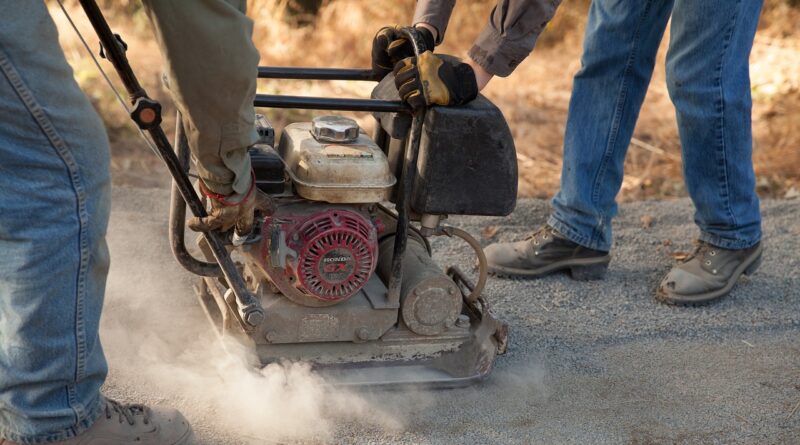
Plate compactors are widely used because they are compact, transportable and quick to deploy. Their vibrating base plate transfers energy into granular material, helping particles settle into a denser arrangement. Common applications include paver installation, small concrete preparation, utility patches and shoulder repair. A forward plate is simple and economical; a reversible plate adds more control and force for thicker granular work.
Rammers, sometimes called jumping jacks, use repeated impact through a narrow shoe. This concentrated force is useful where a plate is too wide or where cohesive soil needs more impact energy. A rammer is not the fastest choice for a broad parking area, but it can be the practical choice in a trench, near a footing or around pipe zones where access and control matter more than coverage rate.
Rollers dominate open-area compaction. Smooth drum rollers are widely used for granular base and asphalt, while padfoot rollers are selected when clayey soils need kneading action. Pneumatic tire rollers add contact pressure through rubber tires and are often associated with asphalt and certain base operations. On modern highway projects, intelligent compaction systems may add GPS-based pass mapping, onboard displays and stiffness-related feedback. FHWA materials describe this technology as a quality control aid, not as a simple replacement for all field density testing.
Match the compactor to material, lift and space
The most common selection mistake is treating compaction as a horsepower problem. More force can help, but only when it reaches the material that needs densification. If the lift is too thick, the top may appear firm while the lower portion remains loose. If the soil is too wet or too dry, extra passes may add time without achieving the specified density.
Start with the material. Granular soils such as sand, gravel and crushed stone respond well to vibration because the particles can rearrange under cyclic motion. Cohesive soils such as clay and high-plasticity silt behave differently because they tend to hold shape and moisture. Rammers and padfoot rollers are often more suitable for these materials, although the exact choice should follow the project specification and field testing.
Next, review the density requirement. Civil projects commonly reference a percentage of maximum dry density determined by laboratory compaction testing. ASTM D698 is associated with standard Proctor effort, while ASTM D1557 is associated with modified Proctor effort. FHWA geotechnical references explain the related concept of a compaction curve, where dry unit weight reaches a peak near an optimum moisture content. In practical terms, the field crew needs to know not only which compactor to use, but also whether the soil moisture is close enough to the target range.
Then check access. A ride-on roller may be productive on an open road base, but it may be impossible to use safely near a trench wall, pipe obstruction or building edge. A rammer may be slower per square foot, yet better where the working width is narrow. A trench roller can bridge the gap on larger utility excavations, especially where remote operation keeps the operator away from unstable edges or difficult visibility zones.
Specifications that matter when comparing machines
Marketing sheets often emphasize engine power, but a useful comparison is broader. A buyer, renter or site manager should review how the machine transfers energy, how it fits the work area and how it affects the operator.
- Operating weight: Heavier machines can deliver more static load, but weight also affects transport, lifting points, trailer needs and surface damage risk.
- Centrifugal force: On vibratory plates and rollers, this indicates the vibratory force generated by the eccentric system. It should be considered with frequency, amplitude and contact area, not in isolation.
- Frequency and amplitude: Higher frequency can suit granular materials and asphalt finishing, while higher amplitude may help with deeper granular lifts. The right setting depends on the material and specification.
- Plate, shoe or drum width: Width controls productivity and access. A wider drum can cover more area, but it may not compact tight edges effectively.
- Forward speed and pass count: Moving too fast can reduce energy transfer. A documented rolling pattern is often more valuable than simply adding random passes.
- Water system: Asphalt work may require water to reduce material pickup on the drum or plate. Soil compaction may require separate moisture conditioning before compaction begins.
- Power source: Gasoline, diesel, battery-electric and hydraulic options create different constraints for emissions, runtime, maintenance and indoor use.
- Operator controls: Handle isolation, emergency stop access, remote control, visibility and vibration exposure all affect practical productivity.
For stationary waste compactors, the specification set changes. Instead of centrifugal force and drum width, decision makers usually compare chamber size, compaction force, loading height, cycle controls, container compatibility, guarding, lockout provisions and the material stream. Cardboard, mixed packaging, light manufacturing scrap and wet refuse do not behave the same way under compression.
Safety, emissions and compliance considerations
Compactors create hazards that are easy to underestimate because many models look simple. The risks include crushing, overturning, vibration exposure, noise, dust, exhaust gases, line strikes, unstable edges and contact with nearby workers. A safe plan should be tied to the specific site, not copied from a generic checklist.
Carbon monoxide is a critical issue with fuel-powered compactors and related small engines. NIOSH and OSHA guidance warns that gasoline-powered tools can create dangerous carbon monoxide concentrations indoors or in partially enclosed spaces. For compaction work inside buildings, garages, basements, tunnels or enclosed structures, electric, battery or properly engineered alternatives should be evaluated before any internal-combustion machine is considered. Ventilation and monitoring requirements should be set by a competent safety professional. See also: CNC Machining.
Dust can also be a concern. OSHA’s respirable crystalline silica rule for construction addresses exposure from tasks that disturb silica-containing materials. A plate compactor on clean aggregate is not the same exposure scenario as demolition debris, dry soil with silica content or adjacent cutting and grinding work. If dust is visible or the material is unknown, the control plan should address water, ventilation, housekeeping and respiratory protection based on the task.
Vibration deserves attention on walk-behind equipment. NIOSH has long published guidance on hand-arm vibration exposure, and compactors can contribute to fatigue, numbness or longer-term health concerns when use is prolonged. Anti-vibration handles, maintained isolators, task rotation, gloves selected for the actual hazard and regular inspection of worn mounts can reduce risk, but they do not remove the need to manage exposure time.
Emissions rules matter for larger diesel compactors. In the United States, EPA nonroad diesel engine standards apply to many categories of construction equipment, and Tier 4 standards introduced advanced emission-control requirements for newer engines. For rental fleets and used equipment purchases, the practical checks are the engine data plate, local jobsite requirements, idling rules, maintenance records and whether aftertreatment components have been altered.
Procurement and maintenance checklist
Whether buying or renting, the most reliable compactor is the one that matches the work and arrives ready to operate. The following checklist can help screen options before a job starts.
- Define the material: Identify whether the job involves granular fill, cohesive soil, asphalt, mixed backfill, recycled aggregate or waste material.
- Confirm the target: Review project specifications for density, lift thickness, moisture range, surface finish and test method.
- Measure access: Check working width, overhead clearance, slope, trench depth, turning space, nearby utilities and edge stability.
- Select the compaction method: Match vibration, impact, kneading or static pressure to the material instead of selecting only by engine size.
- Plan transport and lifting: Verify machine weight, lifting eyes, trailer capacity, ramp angle and tie-down points.
- Inspect wear items: Look at plate condition, drum surfaces, rammer shoe wear, belts, mounts, hydraulic hoses, water bars and scrapers.
- Check service records: Review oil, filters, air cleaners, hydraulic fluid, battery condition and aftertreatment maintenance where applicable.
- Control operator exposure: Plan hearing protection, vibration management, dust control, exhaust control and rest intervals.
- Document the pattern: Establish pass count, direction, overlap and testing points so compaction quality can be verified rather than guessed.
Maintenance should focus on the components that transfer force. Loose bolts, worn isolators, glazed belts, damaged drums and poor engine performance can all reduce compaction output. For rollers, water spray systems, scrapers and vibration systems should be checked before asphalt or base work begins. For rammers, shoe condition, bellows integrity and air filtration are especially important because dust and impact loads are severe.
When a larger compactor is not the better choice
Upsizing can improve productivity on open, uniform areas, but it can also create problems. A heavy roller may crush pipe bedding, push material laterally, damage curbs or fail to compact against vertical edges. A large plate may bridge over low spots instead of correcting them. On asphalt, excessive vibration or poor timing can damage the mat rather than improve density. On cohesive soil, repeated passes with the wrong machine can pump water to the surface and make the layer weaker.
The practical rule is to choose the smallest machine that can meet the density, lift and production requirement safely. That does not mean choosing underpowered equipment. It means balancing contact area, force, access and verification. If the project requires documented compaction, field density testing, proof rolling, intelligent compaction records or other quality checks should guide the final method.
Frequently asked questions
Is a plate compactor the same as a rammer?
No. A plate compactor uses a vibrating flat plate and is usually better for granular materials and broader surfaces. A rammer uses concentrated impact through a narrow shoe, making it more useful in trenches, confined spots and some cohesive soils.
Can one compactor handle every jobsite task?
Usually not. Small projects may get by with one machine, but professional work often uses more than one compactor type. For example, a rammer may be used near pipe bedding, a reversible plate on granular backfill and a roller on the open surface layer.
How many passes does a compactor need?
There is no universal number. Pass count depends on material, moisture, lift thickness, machine force, speed and density requirement. A test strip or project specification is a better guide than a fixed rule of thumb.
Can a fuel-powered compactor be used indoors?
Internal-combustion compactors should not be treated as ordinary indoor tools. Carbon monoxide from small engines can become dangerous in enclosed or partially enclosed spaces. Electric, battery or externally powered alternatives should be considered, and any indoor plan should include competent safety review and monitoring.
What should be checked before renting a compactor?
Confirm the material, required density, lift depth, access width, transport method and power source. Inspect the plate, shoe or drum, verify service condition and ask whether the selected model is appropriate for the soil or asphalt layer rather than choosing by price alone.