
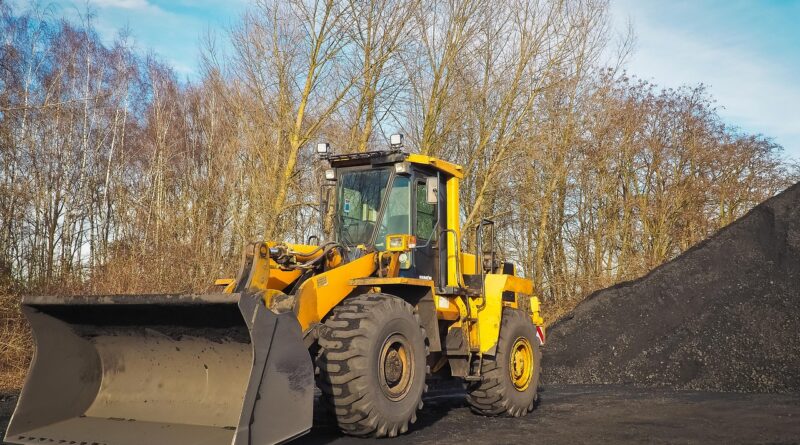
Wheel loader guide for sizing, attachments, safety, and ownership cost
What a wheel loader does and why sizing matters
A wheel loader is a self-propelled earthmoving machine with front-mounted equipment, usually a bucket or other attachment, used to load, carry, stockpile, feed, and handle bulk materials. In fleet planning, the key question is not which wheel loader has the most horsepower. It is whether the machine can move the target material at the required cycle time, with the correct bucket, safe visibility, manageable fuel or charging cost, and acceptable maintenance downtime. For more equipment coverage across construction and manufacturing applications, see the Equipment & Machines section.
Wheel loaders sit between highly mobile jobsite carriers and dedicated production loading machines. They are used in construction, quarrying, aggregates, waste handling, snow removal, forestry yards, ports, industrial plants, and recycling facilities. Their value is flexibility: the same base machine may load trucks in the morning, handle pallets with forks in the afternoon, then push snow or feed a hopper with the right work tool. That versatility also makes selection easy to get wrong if the machine is sized only by engine power or purchase price.
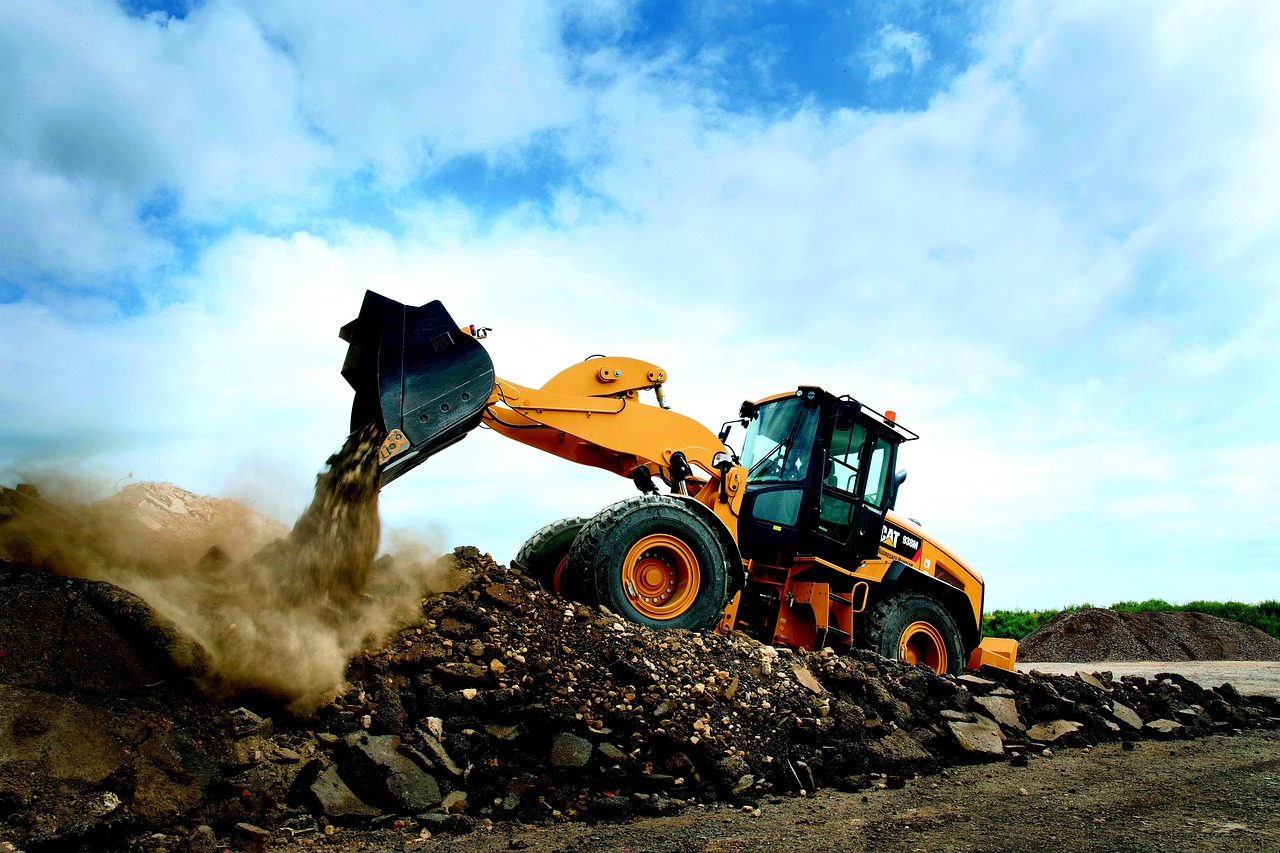
Industry references such as ISO 7131 describe loaders in terms of terminology and commercial specifications. For buyers, that is a useful reminder to compare rated operating data, bucket ratings, linkage type, tire configuration, hydraulic capability, and attachment compatibility rather than model names alone. In daily operation, a correctly specified wheel loader improves loading accuracy, reduces unnecessary rehandling, and lowers stress on tires, driveline, brakes, hydraulics, and operators.
Match the wheel loader to the application first
The most important specification is the work the loader must repeat day after day. A compact wheel loader used in landscaping or municipal work faces different limits than a large quarry loader feeding haul trucks. Before comparing brands or models, define the material, target hourly tonnage or cubic yards, travel distance, loading height, ground condition, attachment mix, transport limits, and operator skill level.
Construction and site development
On construction sites, loaders often support earthmoving, pipe crews, roadwork, backfill, grading support, pallet movement, cleanup, and material staging. Mobility and visibility may matter as much as breakout force. A mid-size machine with ride control, quick coupler options, and a general-purpose bucket may outperform a larger loader if the site is congested or the machine has to switch tasks throughout the day.
Quarry, aggregate, and sand operations
In aggregate yards and quarry environments, production loading is usually the priority. Bucket fill factor, truck pass matching, tire protection, drivetrain cooling, and payload management become critical. A loader that can fill a truck in fewer passes is attractive, but only if the bucket size matches material density and the machine remains stable, controllable, and durable under repeated high-cycle loading.
Waste, recycling, and industrial yards
Waste and recycling work places more emphasis on guarding, cooling package protection, cab filtration, high-lift reach, and attachment durability. Lighter bulk materials may justify a larger bucket, while abrasive or sharp material requires stronger cutting edges, wear plates, and tire protection. In plants and yards, telematics and idle-time tracking can be especially useful because machines may spend long periods waiting, making short carries, or feeding fixed equipment.
Key specifications to compare before buying
A wheel loader specification sheet can be dense, but several fields drive most real-world decisions. These numbers should be read together. A larger bucket may require a heavier machine, wider tires, a different linkage, or additional counterweight. Higher horsepower may not improve productivity if traction, operator visibility, truck positioning, or site layout is the real bottleneck.
| Specification | Why it matters | Selection note |
|---|---|---|
| Operating weight | Influences stability, traction, transport, and ground pressure | Do not oversize if roads, slabs, or trailers have limits |
| Bucket capacity | Determines pass count and cycle productivity | Match capacity to material density, not just volume |
| Breakout force | Shows digging and pile penetration capability | Important for shot rock, packed soil, and high-density material |
| Dump height and reach | Determines ability to load trucks, hoppers, and bins | Check real attachment and tire configuration, not a generic brochure value |
| Hydraulic flow | Controls attachment performance | Critical for brooms, grapples, snow tools, and specialty attachments |
| Linkage type | Affects lift path, rollback, visibility, and tool handling | Z-bar, tool-carrier, high-lift, and parallel-lift layouts serve different tasks |
| Tires | Control traction, ride, wear, heat, and puncture resistance | Choose tread and compound for surface, cycle distance, and debris |
A common mistake is treating bucket size as a stand-alone productivity number. A loader working in dry mulch can carry a much larger bucket than one working in wet sand or dense aggregate. If the bucket is too large for the material, the machine may become unstable, slow, tire-wearing, and uncomfortable to operate. If it is too small, the loader runs more cycles than necessary, wasting fuel, time, and operator attention.
Attachments and linkage decide daily usefulness
The bucket is only the starting point. Wheel loaders can use general-purpose buckets, light-material buckets, rock buckets, side-dump buckets, high-tip buckets, pallet forks, grapples, snow pushers, sweepers, pipe and log handling tools, and quick couplers. Each attachment changes the machine’s weight distribution, hydraulic demand, visibility, and lifting behavior.
For high-volume loading, the bucket should be matched to truck body height, material density, and desired pass count. For yard work, a coupler may be more valuable than a small increase in horsepower because fast tool changes keep the loader productive across mixed tasks. For pallet and pipe handling, parallel lift and precise low-speed control may matter more than peak breakout force.
Linkage choice deserves careful attention. Z-bar linkage is widely used because it supports strong breakout and efficient bucket loading. Tool-carrier and parallel-lift arrangements can provide better fork handling and attachment control. High-lift configurations help load taller trucks, hoppers, or containers, but may affect stability, cost, and cycle time. Buyers should ask dealers for a lift chart based on the exact tires, counterweight, coupler, bucket, and attachment expected in service.
Technology is changing wheel loader productivity
Modern wheel loaders increasingly include technology that was once limited to large production fleets. On-board payload systems, rearview cameras, object detection, telematics, idle tracking, fuel-use reporting, automatic digging assistance, ride control, and operator profiles can all affect operating cost. Caterpillar’s recent wheel loader technology materials emphasize payload accuracy and operator-assist functions, while Komatsu promotes SmartLoader Logic on certain models to match engine torque to the work phase. These examples point to a broader direction: OEMs are using electronics to reduce wasted motion, misloads, fuel burn, and operator variation.
Payload measurement is especially useful in quarry, aggregate, asphalt, concrete, and recycling operations. A loader that repeatedly underloads trucks wastes hauling capacity. A loader that overloads trucks may create rehandling, compliance, spillage, tire, or scale problems. Even when the system is not legal-for-trade, on-board weighing can guide operators toward more consistent passes and better shift-level production data.
Telematics is practical only when the data is reviewed and used. Location, hours, idle time, fault codes, fuel use, and maintenance alerts can help managers decide whether a loader is correctly deployed. A monthly report showing excessive idle time, repeated over-temperature alerts, or too many short moves may be more useful than a dashboard nobody checks.
Diesel, hybrid, and electric wheel loaders
Diesel remains the dominant power source for wheel loaders in many heavy-duty applications because it supports long shifts, high power density, fast refueling, remote sites, and established service networks. Electric and hybrid options, however, are moving from demonstration to practical use in selected duty cycles. Battery-electric loaders are most attractive where daily runtime is predictable, charging can happen on site, noise and exhaust emissions matter, and the work involves shorter cycles or indoor-adjacent operations.
Compact electric wheel loaders are already used in urban, municipal, landscaping, indoor, and noise-sensitive work. Larger electric loaders are also appearing in specific markets and applications. Volvo Construction Equipment, for example, has promoted electric wheel loader models including compact L20 and L25 machines and the larger L120 Electric. Industry reporting has also noted that electrification is progressing unevenly by region, with adoption stronger in some Chinese wheel loader segments and more selective in North America and Europe. See also: CNC Machining.
The practical question is not whether electric is universally better. It is whether the site has the right duty cycle and infrastructure. Buyers should calculate shift hours, travel distance, hydraulic demand, break periods, charger size, electrical service, backup charging plan, battery warranty, cold-weather performance, and residual value. For high-production quarry loading far from power infrastructure, diesel may remain the practical choice. For a recycling facility with predictable routes, utility access, and emissions concerns, electric may be worth a closer look.
Safety and maintenance should shape the specification
Wheel loader safety depends on machine design, operator training, site traffic control, maintenance, and supervision. OSHA materials on construction struck-by hazards highlight the risk around heavy equipment. OSHA interpretation guidance for construction equipment also notes that end-loader buckets and similar raised components must be lowered or blocked when equipment is not in use, with controls neutralized, the motor stopped, and brakes set unless work requires otherwise. MSHA fatality reports involving loaders also show recurring issues around visibility, traffic control, raised buckets, berms, braking defects, and people working near mobile equipment.
A safer specification starts with visibility. Rearview cameras, mirrors, lighting, object detection, clean windows, and low-profile attachments can help operators see people, trucks, berms, stockpile faces, and fixed structures. Technology does not replace site rules. A loader working around pedestrians should have controlled travel paths, exclusion zones, communication procedures, speed limits, and a clear rule for where people may stand during truck loading or maintenance.
Maintenance access affects both safety and cost. Ground-level service points, grouped filters, swing-out cooling packages, automatic lubrication options, reversible fans, and clear diagnostic alerts reduce the chance that basic maintenance will be skipped. Tires, brakes, articulation joints, pins, bushings, cutting edges, hydraulic hoses, lights, cameras, alarms, and cab steps should be part of routine inspection. A loader that is easy to inspect is more likely to stay safe and productive.
How to estimate total ownership cost
The purchase price is only one part of wheel loader economics. Total cost includes financing or lease cost, fuel or electricity, preventive maintenance, repairs, tires, cutting edges, bucket wear parts, operator time, insurance, transportation, technology subscriptions, downtime, and resale value. In high-cycle loading, tires and fuel can become major cost drivers. In attachment-heavy yard work, coupler durability and hydraulic reliability may matter more.
A basic ownership review should compare at least three options: buying new, buying used, and renting or leasing. New machines offer warranty coverage, current technology, dealer support, and known history. Used machines can lower capital cost but require careful inspection of hours, service records, pins, bushings, bucket condition, emissions system, transmission behavior, hydraulic performance, articulation wear, and tire life. Rental can make sense for seasonal work, uncertain projects, or specialty attachments.
Where data is available, managers should calculate cost per loaded ton, cost per hour, and cost per cycle. A more expensive loader may be cheaper if it loads more accurately, burns less fuel, avoids tire damage, reduces truck wait time, and spends fewer days down. Conversely, a highly specified machine can be wasteful if the work is light, intermittent, or better suited to a compact loader, skid steer, telehandler, or excavator.
Frequently asked questions
What is the difference between a wheel loader and a front-end loader?
The terms often overlap in everyday use. A wheel loader is a dedicated articulated or rigid-frame machine with wheels and front-mounted loading equipment. “Front-end loader” can refer to a wheel loader, but it may also describe a loader attachment mounted on a tractor or another carrier. For specification and purchasing, use the exact machine category and model data.
How big should a wheel loader bucket be?
Bucket size should be based on material density, machine tipping load, target pass count, truck or hopper height, and site conditions. A larger bucket is not automatically better. If the material is dense or the site is uneven, oversizing the bucket can reduce stability, increase tire wear, and slow the cycle.
When does a compact wheel loader make sense?
A compact wheel loader makes sense where maneuverability, transportability, visibility, turf or pavement protection, low fuel use, and attachment versatility are more important than maximum breakout force. It is common in landscaping, municipalities, snow removal, rental fleets, farms, warehouses, and tight urban projects.
Are electric wheel loaders ready for heavy work?
Electric wheel loaders are practical in selected applications, especially predictable duty cycles with available charging and strong reasons to reduce exhaust emissions or noise. For continuous high-production loading, remote sites, or very long shifts, diesel may still be easier to support. The decision should be based on runtime, charging, dealer support, and total cost rather than powertrain alone.
What should be inspected before buying a used wheel loader?
Inspect service history, hours, engine start behavior, transmission shifting, hydraulic response, steering articulation, pin and bushing wear, bucket condition, tire life, brake performance, cooling system cleanliness, leaks, fault codes, cab controls, cameras, lights, and safety devices. A professional inspection is advisable for high-value machines or production-critical applications.
Bottom line
The right wheel loader fits the work cycle, material, attachment plan, safety environment, and cost target. Horsepower and bucket capacity matter, but they are only part of the decision. Buyers should compare complete configurations, ask for real lift and payload data, verify attachment needs, evaluate visibility and maintenance access, and calculate cost per unit of work. When those factors align, a wheel loader becomes more than a material mover; it becomes a flexible production asset across the jobsite, yard, quarry, or plant.