
Can Milling Machine Cutters Improve Machinability and Surface Roughness Prediction
Machinability and ANN Based Prediction of Surface Roughness for TiAlN and PCD Coated End Mill Cutters on AA6061 Hybrid Composite
Milling machine cutters play a decisive role in determining the machinability of advanced composites. For AA6061 hybrid composites reinforced with ceramics or graphite, the choice between TiAlN and PCD coated end mills directly affects tool wear, chip formation, and surface finish. Comparative studies reveal that TiAlN coatings provide better thermal stability at high speeds, while PCD coatings deliver superior hardness and friction control. Artificial Neural Networks (ANN) further enhance predictive accuracy for surface roughness, enabling manufacturers to fine-tune parameters without extensive trial runs. The integration of coating science with intelligent modeling now defines the next stage in precision machining.
Understanding the Relationship Between Milling Machine Cutters and Machinability
The interaction between cutter design, material properties, and cutting environment defines how efficiently a workpiece can be machined. Machinability is not a static property; it evolves with tool geometry, lubrication method, and reinforcement type.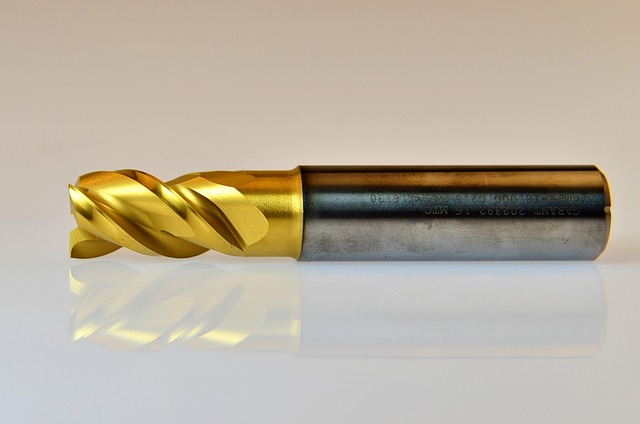
Fundamentals of Machinability in Metal Cutting
Machinability describes how easily a material can be cut under specific conditions. It depends on cutting forces, chip formation behavior, tool wear rate, and resulting surface quality. Materials with high hardness or abrasive reinforcements tend to reduce machinability by increasing tool wear. Ductility also matters: too much ductility leads to built-up edges that degrade surface finish. The cutting environment—particularly lubrication—helps reduce temperature rise at the cutting zone, preserving tool life.
Influence of Workpiece Material Characteristics Such as Hardness, Ductility, and Reinforcement Type
AA6061 hybrid composites combine an aluminum matrix with ceramic or graphite reinforcements that enhance strength but introduce abrasiveness. Hard particles like SiC or Al₂O₃ accelerate flank wear on cutters. A balanced combination of ductility from the matrix and hardness from reinforcements is essential for stable chip flow during milling.
Role of Cutting Environment and Lubrication in Maintaining Tool Performance
Lubrication reduces friction between cutter and workpiece while removing heat from the cutting zone. Dry machining may simplify operations but often increases temperature-induced wear. Minimum quantity lubrication (MQL) provides a compromise by supplying fine mist lubrication that maintains tool integrity without excessive fluid use.
The Role of Cutter Geometry and Coating in Machinability
Tool geometry governs chip evacuation efficiency and stress distribution during milling. Coatings then extend performance by improving heat resistance and reducing adhesion.
Effect of Rake Angle, Clearance Angle, and Helix Design on Chip Evacuation and Cutting Efficiency
A positive rake angle lowers cutting forces by easing shear deformation but may weaken edge strength. Proper clearance angle prevents rubbing between flank face and workpiece surface. Helix design influences chip removal; higher helix angles promote smoother evacuation but can increase deflection in slender tools.
Contribution of Coating Materials Like TiAlN and PCD to Wear Resistance and Heat Dissipation
TiAlN coatings withstand high temperatures through their aluminum oxide layer formation during oxidation, allowing stable operation above 800°C. In contrast, PCD coatings exhibit extreme hardness (up to 9000 HV) with low friction coefficients that minimize adhesive wear. Both coatings improve dimensional accuracy when matched to correct cutting parameters.
Influence of Tool Substrate Material on Vibration Damping and Dimensional Accuracy
Substrates such as tungsten carbide offer good stiffness but limited damping capacity compared to cermet bases. Enhanced damping reduces chatter marks on finished surfaces—a critical factor when machining lightweight alloys like AA6061 composites where rigidity is lower than steel components.
Comparative Analysis of TiAlN and PCD Coated End Mill Cutters on AA6061 Hybrid Composite
The machinability difference between TiAlN- and PCD-coated tools becomes evident under high-speed milling where heat generation dominates tool behavior.
Material Characteristics of AA6061 Hybrid Composite
AA6061 hybrid composite consists primarily of an aluminum matrix strengthened by hard ceramic or graphite particles. These reinforcements improve tensile strength but raise abrasiveness levels during milling operations. Under high-speed conditions, differential thermal expansion between matrix and reinforcement causes micro-fractures that challenge cutter stability.
Performance Evaluation of TiAlN Coated Cutters
TiAlN coated end mills display strong oxidation resistance at elevated temperatures due to their protective oxide layer formation. They maintain hardness beyond 800°C, extending tool life even under aggressive feeds. Surface finish improves when operating within moderate speed ranges since excessive speed may cause adhesion buildup despite coating protection.
Performance Evaluation of PCD Coated Cutters
PCD coated cutters excel in wear resistance because diamond particles resist abrasion from hard reinforcements effectively. Their low friction coefficient prevents built-up edge formation leading to mirror-like finishes on machined surfaces. However, they are less suited for interrupted cuts where impact loads risk chipping the brittle diamond layer.
Predicting Surface Roughness Using Artificial Neural Networks (ANN)
Predictive modeling using ANN has become essential for controlling quality metrics such as surface roughness without exhaustive experimentation.
Importance of Surface Roughness Prediction in Precision Machining
Surface roughness directly correlates with fatigue strength and dimensional tolerance in precision parts like aerospace brackets or automotive housings. Predicting roughness helps manufacturers achieve target finishes while minimizing costly trial adjustments across multiple process variables.
Structure and Training of ANN Models for Surface Roughness Prediction
Typical ANN models use spindle speed, feed rate, depth of cut, cutter type, and coating material as input nodes. Data preprocessing—normalization or noise filtering—enhances training accuracy. Algorithms such as backpropagation or Levenberg–Marquardt methods adjust connection weights until predicted outputs align closely with measured roughness data.
Validation and Performance Assessment of ANN Models
Model validation involves comparing predicted values against experimental results using indicators like R² (coefficient of determination) or RMSE (root mean square error). Sensitivity analysis then identifies which factors most influence roughness—often feed rate dominates followed by cutter type—and these insights feed into adaptive control systems for real-time optimization.
Enhancing Machinability Through Process Optimization Strategies
Optimization links experimental insights with statistical techniques to find parameter sets yielding maximum efficiency at minimum cost.
Optimization Techniques for Improved Machining Efficiency
Taguchi design methods allow systematic variation across limited experiments to identify influential parameters quickly. Response surface methodology refines these results further by modeling interactions among variables like speed, feed rate, and depth of cut for multi-objective trade-offs between surface quality and tool life.
Multi-Objective Optimization Balancing Tool Wear, Cutting Force, and Surface Quality
Balancing competing outcomes requires defining weight factors for each objective—minimizing wear while maintaining acceptable roughness levels often leads to intermediate speed settings rather than extremes that favor only one metric.
Role of Hybrid Cooling-Lubrication Techniques in Cutter Performance Enhancement
Hybrid cooling strategies combining MQL with cryogenic jets significantly lower cutting temperature while maintaining environmental sustainability compared to flood cooling systems traditionally used in industry.
Industrial Implications and Future Research Directions in Milling Cutter Technology
Advances in coating science combined with intelligent prediction tools are reshaping how industries approach high-precision milling tasks involving lightweight alloys.
Implementation in Aerospace and Automotive Component Manufacturing
Both TiAlN- and PCD-coated cutters find application in aerospace structural parts where aluminum composites dominate due to their strength-to-weight ratio advantages. Longer tool life reduces downtime costs while consistent finishes lower post-machining rework rates across production lines.
Economic Benefits from Extended Tool Life and Reduced Rework Rates
Extended service intervals translate directly into lower tooling expenses per component batch—a key metric for mass production sectors like automotive powertrain housing manufacturing where cycle times are tightly controlled.
Emerging Trends in Smart Machining Systems with Predictive Analytics Integration
Future research focuses on integrating machine learning models beyond ANN into adaptive control frameworks capable of real-time decision-making based on sensor feedback loops—a step toward fully autonomous digital twin environments capable of predicting failures before they occur.
FAQ
Q1: What makes AA6061 hybrid composite difficult to machine?
A: Its ceramic or graphite reinforcements increase hardness and abrasiveness causing accelerated tool wear during milling operations.
Q2: Why choose TiAlN coating over uncoated tools?
A: TiAlN provides superior thermal stability through oxide layer formation that protects against oxidation at high temperatures improving durability under heavy loads.
Q3: How does PCD coating improve surface finish?
A: The diamond structure minimizes friction preventing built-up edge formation resulting in smoother surfaces especially useful for finishing passes on aluminum alloys.
Q4: What parameters are most influential in ANN-based roughness prediction?
A: Feed rate typically exerts the greatest effect followed by spindle speed then cutter type depending on material composition.
Q5: Can hybrid cooling replace traditional flood lubrication?
A: Yes, MQL combined with cryogenic jets offers effective temperature control while reducing fluid waste making it more sustainable for modern machining environments.