
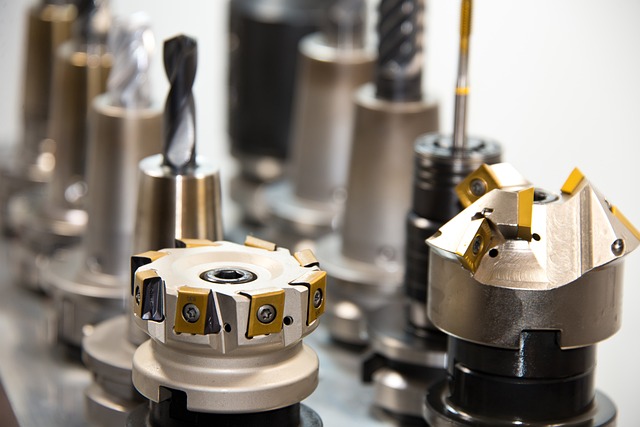
CNC Programming Courses vs Traditional Machining Skills Which Drives Precision
Our Systems Have Detected Unusual Activity Coming From Your System. Please Try Again Later.
Precision machining has evolved from the craftsman’s bench to the digitally controlled workspace. Today, CNC programming courses have become a cornerstone of modern manufacturing education, bridging traditional mechanical intuition with algorithmic precision. Vectric’s VCarve software exemplifies this shift, enabling router-based workflows that balance creativity and repeatability. The future of machining lies not in replacing human skill but in merging it with computational control to achieve consistency, flexibility, and efficiency.
The Evolution of Machining Precision
The journey from manual craftsmanship to automated control reshaped how industries define accuracy and repeatability.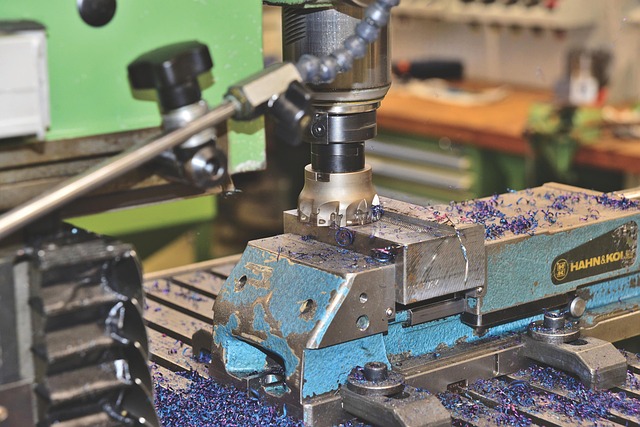
The Shift From Manual Machining to CNC Automation
Early machinists worked by feel and sound. Their precision came from experience rather than data. With CNC automation, machines began following digital instructions instead of manual adjustments. Human error decreased, while production repeatability improved dramatically. This transformation changed the required skillset across sectors—operators became programmers who understood both metal behavior and code syntax.
How Precision Standards Have Changed Over Time
As automation spread, tolerance expectations tightened. Dimensional accuracy now depends on software calibration rather than hand-eye coordination. Surface finishes that once relied on operator finesse are now governed by toolpath algorithms and spindle feedback loops. Yet mechanical craftsmanship remains vital; even the most advanced systems still depend on setup quality and machine alignment.
Understanding CNC Programming Courses in Modern Manufacturing
CNC programming courses serve as the new foundation for machinists entering digital manufacturing environments.
Core Competencies Taught in CNC Programming Courses
These programs teach how to write G-code, optimize toolpaths, and configure machines for different operations. Students also learn simulation methods to predict tool wear or collision risks before cutting begins. A key focus lies in material modeling—how aluminum responds differently from titanium under identical feed rates.
Integration of CAD/CAM Tools in CNC Education
Modern training merges design with execution through CAD/CAM integration. Students create parts digitally, assign tools from virtual libraries, and define cutting parameters based on machine type. Simulation modules allow them to test programs virtually before running physical jobs, saving both time and resources.
Traditional Machining Skills and Their Continued Relevance
Despite automation’s rise, manual machining hasn’t disappeared; it simply shifted roles within workshops.
The Role of Manual Machining in Today’s Workshops
Manual lathes and mills remain indispensable for prototypes or one-off repairs where programming time outweighs production needs. Skilled machinists can adjust feeds mid-cut by sensing vibration changes—a form of feedback no sensor fully replicates yet.
Bridging Traditional Techniques With Digital Systems
Hybrid workflows now dominate precision shops: manual setups followed by CNC finishing ensure dimensional integrity while maintaining flexibility. Experienced machinists contribute critical insights into fixturing stability and tool wear patterns that software alone can’t predict accurately.
Comparing Skillsets: Analytical vs Experiential Precision Drivers
Precision today comes from two sources—analytical logic encoded in software and experiential judgment honed through years of practice.
Analytical Precision Through CNC Programming Expertise
Programmers rely on mathematical models to maintain consistent dimensions across thousands of parts. They use compensation tables for thermal drift or backlash correction. Data-driven control enables mass production without deviation between units.
Experiential Precision Through Manual Craftsmanship
Conversely, human operators detect subtle irregularities—tool chatter, chip color changes—that algorithms might overlook. They can modify techniques instantly when facing unpredictable materials like cast iron or composites with variable density layers.
Vectric CNC Software and Its Role in Router-Based Workflows
Vectric’s ecosystem stands out for its accessibility and adaptability within router-based manufacturing setups.
How VCarve Enhances Workflow Efficiency for Router Applications
VCarve simplifies routing tasks by generating efficient toolpaths for 2D or shallow 3D cuts. Its nesting features minimize material waste during sheet processing—a crucial factor in cabinetry or signage industries where margins are tight. Custom post-processors align design output precisely with each router model’s motion control system.
Job Types That Align With VCarve’s Capabilities
VCarve excels across three major job categories where speed meets artistry.
Signmaking and Decorative Carving Projects
Vector-based engravings benefit from layered toolpaths that handle depth variations smoothly without requiring complex 3D modeling knowledge.
Cabinetry and Furniture Component Fabrication
Its parametric design tools allow repeating components—drawer fronts or panels—to maintain exact fit tolerances across batches while reducing setup time between runs.
Prototyping and Small-Batch Manufacturing
For small manufacturers testing product geometry before scaling up, VCarve offers quick iteration cycles that shorten development timelines significantly compared to traditional CAM systems.
Balancing Educational Pathways: Choosing Between Course-Based Learning and Workshop Experience
Selecting between structured learning through cnc programming courses or hands-on apprenticeship depends on career goals and production contexts.
When CNC Programming Courses Offer Strategic Advantage
Formal training suits environments emphasizing automation consistency—such as aerospace or automotive plants—where process control outweighs improvisation. These courses also prepare students for Industry 4.0 integration by teaching data interpretation alongside machine operation principles.
When Traditional Machining Experience Adds Value
In custom fabrication shops where each part differs slightly, adaptability matters more than automation speed. Veteran machinists’ diagnostic intuition complements algorithmic decision-making by identifying root causes behind unexpected surface marks or chatter patterns faster than any code debugger could manage.
The Future of Precision Engineering: Integrating Both Worlds
The next generation of manufacturing professionals will blend tactile awareness with computational fluency rather than choosing one over the other.
Emerging Trends in Hybrid Skill Development
Training programs increasingly combine digital modeling with manual craft exercises—students might program a contour cut digitally then finish it manually to feel the difference firsthand. Collaboration between programmers and machinists improves not only accuracy but also machine uptime since both sides understand each other’s constraints better.
Building a Sustainable Workforce for Advanced Manufacturing
Cross-disciplinary knowledge strengthens resilience against technological disruption. Continuous learning keeps teams adaptable as new materials, sensors, and AI-driven controls emerge within modern factories worldwide.
FAQ
Q1: What makes cnc programming courses essential today?
A: They teach not just coding but also process planning, simulation analysis, and integration with CAD/CAM tools—all crucial for Industry 4.0 readiness.
Q2: Why is manual machining still taught?
A: It develops tactile sensitivity useful for troubleshooting issues that sensors may miss during automated runs.
Q3: How does VCarve differ from other CAM platforms?
A: It focuses on router applications with strong nesting functions and easy post-processor customization rather than heavy multi-axis milling features.
Q4: Which industries benefit most from hybrid workflows?
A: Aerospace prototyping, custom furniture making, and repair tooling sectors gain efficiency by combining manual setup accuracy with CNC repeatability.
Q5: What future skills will machinists need?
A: A mix of coding literacy, material science insight, machine calibration expertise, plus old-fashioned patience during fine-tuning operations will define tomorrow’s precision workforce.