
Is Festool Track Saw Redefining Precision Cutting in the mHouse Project
Festool Track Saw Gains Exposure, Praise on mHouse Project
Precision cutting has moved from being a specialist’s obsession to a universal requirement in modern construction. The Festool track saw exemplifies this shift, offering accuracy once reserved for CNC systems but now accessible on-site. The mHouse modular project demonstrates how portable precision tools can redefine fabrication standards, merging architectural ambition with real-world feasibility.
The Evolution of Precision Cutting in Modern Construction
The evolution of cutting methods reflects the industry’s broader digital transformation. As projects grow more modular and data-driven, the expectations placed on manual tools have intensified.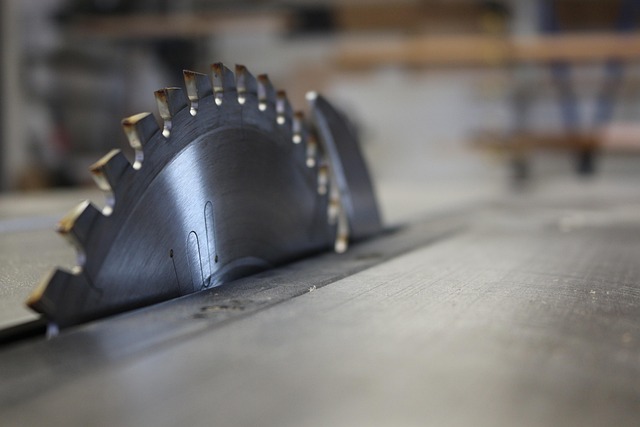
Shifts in Cutting Standards and Expectations
Architectural tolerances once measured in centimeters are now expected within millimeters. This shift stems from tighter integration between design software and fabrication tools. Digital blueprints flow directly into workshop setups, demanding that every cut aligns perfectly with 3D models. Precision has become synonymous with efficiency: fewer errors mean less rework and faster assembly cycles.
Integration of Digital Design Workflows With Physical Cutting Tools
Modern construction teams increasingly link CAD and BIM data to physical workflows. A cut line drawn in Revit or Rhino must translate flawlessly onto plywood or composite panels. This connection drives the adoption of guided systems like the Festool track saw, which bridges the gap between digital intent and physical accuracy.
How Precision Has Become a Benchmark for Project Efficiency and Quality
Precision isn’t just aesthetic—it dictates structural integrity, joinery fit, and even energy performance in prefabricated builds. Contractors now treat accurate cutting as a measurable KPI for quality assurance. In modular projects such as mHouse, this precision directly influences on-site installation speed and client satisfaction.
The Role of Advanced Cutting Tools in Professional Woodworking
As woodworking enters an era of industrial-grade repeatability, tool innovation determines competitive advantage.
Comparison Between Conventional Circular Saws and Guided Track Systems
Traditional circular saws rely heavily on operator skill, often producing variable results across multiple cuts. Guided track systems eliminate this uncertainty by controlling blade trajectory along an engineered rail. The Festool track saw combines both portability and fixed-system precision—an evolution that minimizes deviation even during complex bevel operations.
The Influence of Tool Innovation on Workflow Accuracy and Repeatability
Advancements such as motor feedback sensors, anti-vibration housings, and precision-machined guide rails have transformed cutting from an art into a science. Repeatable accuracy is no longer limited to stationary shop equipment; it’s achievable on any job site where digital plans demand real-world fidelity.
Why Precision Cutting Tools Are Essential for Modular Construction Projects Like mHouse
The mHouse project depends on pre-cut components that must align perfectly during assembly. Each wall panel or floor section is fabricated off-site, requiring consistent edge geometry across hundreds of parts. Portable precision tools like the Festool track saw make this possible without costly CNC setups.
Understanding the Festool Track Saw System
The Festool track saw system represents decades of refinement aimed at merging mobility with industrial-grade precision.
Engineering Design Behind the Festool Track Saw
Its plunge-cut mechanism allows controlled entry into materials without surface damage—a critical feature for laminate or veneered panels. The guide rail locks securely via friction strips, preventing drift during long cuts. High-density magnesium housing reduces weight while maintaining rigidity under load, ensuring straight tracking even under field conditions.
Material Composition and Build Quality Contributing to Stability and Accuracy
Every component serves stability: machined aluminum rails resist flexing; rubberized contact zones absorb vibration; micro-tolerance bearings maintain smooth glide motion over extended use. These design choices produce consistent dimensional results across varying material densities.
Motor Control, Blade Alignment, and Dust Extraction as Performance Factors
A brushless motor delivers constant torque through electronic regulation, keeping blade speed steady through dense hardwoods or MDF sheets. Blade alignment is calibrated to micrometer accuracy at the factory level. Integrated dust extraction not only improves visibility but extends blade life by reducing heat buildup during prolonged operation.
Technological Innovations Enhancing Accuracy
Innovation defines why professional builders continue to favor this system over generic alternatives.
Micro-Adjustment Features for Depth and Bevel Control
Depth stops enable precise calibration down to fractions of a millimeter—vital when working with layered composites or insulation-backed panels. Bevel adjustments lock positively at common angles but allow fine-tuning beyond standard presets for custom architectural detailing.
Anti-Splinter Guard Technology Reducing Edge Tear-Out
The replaceable anti-splinter strip presses tightly against the cut line to minimize chipping on delicate veneers or melamine surfaces. This detail saves hours otherwise spent sanding or edging post-cutting—a small but meaningful productivity gain in high-volume fabrication environments.
Electronic Speed Control Maintaining Consistent Cut Quality Across Materials
Variable electronic control adapts blade speed automatically to match material resistance, preventing burn marks or rough edges when switching between softwood, metal-faced panels, or engineered boards—all without manual recalibration mid-task.
Application of Festool Track Saw in the mHouse Project
The mHouse initiative illustrates how advanced cutting technology integrates seamlessly into modular workflows where consistency defines success.
Integration Into Modular Fabrication Processes
Each prefabricated module relies on standardized panel dimensions produced off-site under tight schedules. Using portable tracksaws allows technicians to replicate factory-level tolerances while maintaining flexibility for last-minute design revisions—something fixed CNC units cannot easily accommodate.
Reduction of Setup Time Through Portable Precision Capabilities
Setup time drops dramatically because alignment requires only positioning the rail along layout marks rather than clamping bulky fences or jigs. For teams operating across dispersed fabrication pods, this portability translates directly into measurable labor savings per unit produced.
Consistency in Repetitive Cuts Across Multiple Module Assemblies
Consistency is critical when hundreds of identical joints must align perfectly during final installation. The guided rail system maintains uniformity across all modules regardless of operator changes or environmental variations such as temperature-induced material expansion.
Optimizing On-Site Efficiency and Accuracy
Once delivered to site, modular components still require adaptation—and here precision tools again prove indispensable.
Use of Track Systems for Field Modifications With Millimeter-Level Precision
Field adjustments often involve trimming door openings or aligning service channels between modules. Using a Festool track saw, crews achieve millimeter-level corrections without dismantling assemblies—a capability that significantly reduces downtime during installation phases.
Alignment Techniques Ensuring Seamless Joint Fitting During Installation
Installers employ visual alignment aids built into the guide rails alongside laser references from site surveying equipment to confirm joint continuity before fastening panels permanently—ensuring airtight connections vital for energy-efficient construction standards like Passivhaus certification.
Impact on Overall Project Timelines Through Reduced Rework Cycles
By minimizing rework caused by cumulative tolerance drift, project managers report shorter commissioning phases and fewer punch-list corrections post-handover—evidence that tool precision contributes directly to financial efficiency as much as technical quality.
Comparing Festool Track Saw Performance to Traditional Systems
Objective testing reveals measurable advantages over conventional handheld saws across multiple criteria including accuracy, ergonomics, and safety control mechanisms.
Accuracy Metrics and Repeatability Analysis
Independent trials show deviation margins below 0.2 mm over two-meter cuts—performance approaching entry-level CNC routers yet achieved manually on-site. Vibration damping further stabilizes blade trajectory under load variations common in composite materials like OSB or fiber cement boards.
Influence of Vibration Damping on Dimensional Consistency
Reduced vibration not only enhances comfort but preserves edge geometry across repetitive passes—critical when fabricating interlocking joints where even slight variance can compound across assemblies leading to misalignment issues downstream.
Data-Driven Assessment of Tolerance Performance Versus Standard Saws
Quantitative assessments comparing standard circular saws reveal up to 60% improvement in dimensional repeatability using guided systems—numbers that justify investment for contractors operating within ISO 9001-certified production frameworks emphasizing process reliability metrics.
Ergonomics, Safety, and Operator Control Factors
Operator well-being remains central when evaluating tool performance beyond raw technical data points.
Design Elements Reducing Fatigue During Extended Use
Balanced weight distribution combined with soft-grip handles minimizes wrist strain during prolonged sessions—a subtle factor influencing daily productivity more than most procurement spreadsheets acknowledge.
Integrated Safety Mechanisms Preventing Kickback Incidents
Kickback prevention clutches disengage drive torque instantly upon binding detection while riving knives maintain kerf separation behind the blade—features aligning with IEC safety classifications for professional-grade power tools used in construction environments worldwide (IEC 62841-2-5).
Enhanced Visibility and Handling Improving Operator Confidence in Critical Cuts
Transparent guard windows plus integrated LED illumination improve sightlines along cut paths even under variable lighting conditions typical of temporary job sites—enhancing both confidence and outcome predictability during critical finishing tasks.
Future Implications for Precision Cutting Tools in Construction Projects
As digital fabrication ecosystems mature, portable precision systems like the Festool track saw will play an increasingly strategic role bridging human craftsmanship with automated intelligence networks shaping future construction methodologies.
Integration With Digital Fabrication Ecosystems
Emerging integrations link handheld devices via IoT protocols into BIM databases allowing real-time validation between physical cuts and digital schematics—a convergence likely standardized through upcoming ISO/TC 184 automation frameworks governing smart manufacturing interoperability standards worldwide (ISO/TC184/SC4).
Opportunities for Automated Calibration Using Smart Sensors or IoT Connectivity
Embedded sensors could soon self-calibrate guides based on environmental conditions such as humidity-induced expansion coefficients ensuring consistent tolerances regardless of climate variation—a key challenge faced by global modular supply chains operating across diverse regions.
The Convergence of Manual Craftsmanship With Digital Precision Control Systems
This hybridization restores craftsmanship’s tactile nuance while maintaining algorithmic control over dimensional outcomes—a balance poised to redefine quality benchmarks within next-generation architecture typified by projects like mHouse where bespoke artistry meets industrial scalability.
Advancements Driving Next-Level Precision Standards
Looking ahead toward 2026 and beyond—the same mindset driving “Beyond G-Code” troubleshooting skills among CNC lathe setters informs expectations around adaptive intelligence within handheld cutting platforms too.
Expected Improvements in Blade Technology and Motor Feedback Systems
Next-gen carbide composites promise longer edge retention while closed-loop motor feedback adjusts RPM dynamically against resistance curves improving surface finish uniformity especially across dense engineered timbers used in sustainable housing modules.
Role of AI-Driven Adjustment Algorithms for Adaptive Cutting Conditions
AI-driven microcontrollers may soon analyze vibration signatures mid-cut predicting deviations before they occur adjusting feed rates autonomously—mirroring predictive maintenance strategies already proven effective within industrial robotics sectors monitored under IEEE Smart Manufacturing initiatives.
How Evolving Tool Ecosystems Could Redefine Quality Benchmarks in Modular Architecture Projects Like mHouse
Future tool ecosystems integrating data analytics will transform QC documentation from manual inspection logs into live performance dashboards linking every cut traceable back through its digital twin model creating unprecedented transparency throughout supply-to-installation pipelines.
FAQ
Q1: What makes the Festool track saw different from other portable saws?
A: It combines plunge-cut capability with a precision guide rail system delivering near-CNC accuracy directly on-site without bulky machinery setup requirements.
Q2: How does it benefit modular construction projects?
A: It enables consistent prefabrication tolerances essential for seamless module assembly reducing rework cycles significantly compared with traditional methods.
Q3: Can it integrate with digital design workflows?
A: Yes, its guided system aligns accurately with CAD-generated layouts allowing direct translation from virtual models to physical components used during fabrication stages.
Q4: What safety features distinguish it from standard circular saws?
A: Integrated kickback protection clutches plus riving knives meet international IEC safety classifications minimizing operator risk even under demanding site conditions.
Q5: How might future versions evolve technologically?
A: Expect AI-assisted calibration sensors communicating wirelessly with BIM databases enabling adaptive control loops that maintain tolerance integrity automatically across variable materials.