
Can CNC Turning Revolutionize Surface Hardening Methods in 2026
New Hardening Methods Available for CNC Turning
CNC turning is evolving beyond simple shaping into a core driver of material performance. The latest hardening techniques integrated directly into turning cycles are changing how manufacturers approach wear resistance and fatigue life. By merging surface hardening with precision machining, production lines now achieve both dimensional accuracy and metallurgical enhancement in one step. This shift is defining the next generation of manufacturing where process control, real-time feedback, and hybrid systems create stronger, more reliable components.
The Intersection of CNC Turning and Surface Hardening Technologies
Modern manufacturing no longer treats turning and hardening as separate stages. The two are converging through digital control systems that merge mechanical precision with thermal science.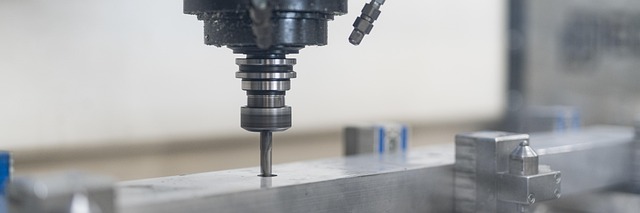
Evolution of CNC Turning in Modern Manufacturing
CNC turning has moved from manual feed adjustments to fully automated, sensor-driven processes. Early machines focused mainly on shaping geometry; today’s systems manipulate surface layers at the microstructural level. Integration with digital monitoring platforms allows engineers to maintain consistent cutting forces, temperature distribution, and tool wear patterns. These variables now influence not only surface finish but also hardness gradients within the top microns of a component.
Role of Surface Hardening in Performance Enhancement
Surface hardening remains central to extending part life in aerospace shafts, automotive gears, and hydraulic pistons. Induction heating, carburizing, and nitriding have been refined to work in tandem with CNC operations instead of afterward. This synergy reduces distortion from repeated heating cycles while improving fatigue strength and corrosion resistance. Metallurgists are increasingly collaborating with machinists to synchronize material response with tool path design—a sign that mechanical processing and heat treatment are finally speaking the same language.
How CNC Turning Parameters Influence Surface Integrity
The quality of a turned surface depends not just on tooling but on how energy transfers between tool and material. Each parameter—speed, feed rate, depth of cut—shapes the final microstructure.
Effects of Cutting Speed, Feed Rate, and Tool Geometry
When cutting speed rises too high, excessive heat can soften the surface layer before cooling rapidly again, forming brittle zones or tensile stresses. Conversely, slower speeds may cause tearing or built-up edges that harm finish quality. Feed rate determines chip thickness and thus residual stress directionality. Adjusting rake angle or nose radius alters contact pressure distribution across the tool tip, influencing both hardness uniformity and roughness amplitude. Experienced operators often balance these factors to avoid post-machining hardening altogether.
Thermal and Mechanical Interactions During Machining
During high-speed turning, localized heat zones can reach 600°C or more—enough to trigger phase transformations similar to induction hardening but confined to thin layers. Meanwhile, compressive deformation beneath the cutting edge refines grains naturally through plastic strain hardening. Researchers are developing predictive models that simulate these coupled thermal-mechanical effects in real time using finite element analysis validated by infrared thermography.
Integrating Surface Hardening Processes with CNC Turning Operations
As hybrid manufacturing gains ground, combining forming and heat treatment within one setup is becoming practical rather than experimental.
Hybrid Machining-Hardening Systems
Laser-assisted turning uses a focused beam ahead of the cutting tool to preheat material just enough for easier shearing while simultaneously inducing controlled hardening upon cooling. Plasma-assisted variants apply similar logic but suit tougher alloys like titanium or Inconel. Real-time temperature sensors embedded near the tool tip maintain uniform hardness across curved geometries without secondary treatment stages. This integration shortens cycle times by up to 40 percent compared with sequential machining then furnace hardening.
Automation and Process Synchronization
Modern CNC controllers can trigger induction coils or laser heads automatically once a pass completes. Feedback from embedded thermocouples adjusts power input instantly if deviation occurs. Such synchronization allows both geometric precision and metallurgical consistency within tolerances tighter than ±2 HRC across complex contours. Multi-axis lathes further expand reach into undercuts or inner bores that traditional furnaces cannot treat evenly.
Advanced Troubleshooting Skills for CNC Lathe Setters in 2026
By 2026, lathe setters will need deeper diagnostic insight than simple code editing offers. Their role will resemble that of process analysts bridging machining data with materials science.
Diagnosing Microstructural Anomalies from Machining Parameters
When hardness maps show patchy zones or unexpected soft spots, skilled setters trace them back to unstable coolant delivery or erratic spindle torque rather than blaming heat treatment alone. Microscopic irregularities often point toward poor thermal control during finishing passes. Using portable microhardness testers or eddy current sensors mid-run helps confirm whether grain refinement is proceeding as modeled.
Precision Calibration Beyond G-Code Adjustments
Automated compensation algorithms correct minor deviations automatically, but manual offset tuning remains vital when working high-hardness steels above 55 HRC. Operators interpret vibration spectra recorded by accelerometers mounted on turret heads; spikes at specific frequencies indicate chatter-induced subsurface cracking risk. Early correction prevents costly rework later in production runs.
Mastery of Sensor Data Interpretation for Predictive Maintenance Planning
Future setters must read live telemetry streams showing temperature gradients, spindle load curves, and acoustic signatures simultaneously. Recognizing correlations between these signals allows prediction of tool failure hours before it occurs—a key feature in predictive maintenance frameworks already piloted under ISO 13399 data standards for cutting tools.
The Role of Drill Press Machining in Complementary Processes
Even as CNC dominates precision work, drill press machining continues supporting pre-hardening preparation steps vital for dimensional accuracy downstream.
Supporting Pre-Hardening Operations Through Drill Press Techniques
A properly aligned drill press ensures concentric holes that resist distortion during subsequent heating cycles. When used before induction or carburizing treatments, it stabilizes wall thickness so thermal expansion remains uniform around critical bores. In integrated workflows where parts move from drill press stations into CNC cells automatically via robotic transfer arms, throughput rises without sacrificing tolerance control—a small yet crucial advantage in mass production environments demanding repeatability within microns.
Future Trends in CNC-Based Surface Engineering by 2026 and Beyond
The coming years promise smarter materials responding actively to machining stimuli rather than passively enduring them.
Smart Materials and Adaptive Machining Strategies
New alloys containing shape-memory phases adjust their lattice structures dynamically when exposed to controlled heat from cutting interfaces. Adaptive software running on machine controllers modifies feed rates based on live feedback loops from embedded sensors inside workpieces themselves—a concept already explored under IEEE industrial automation initiatives aiming for self-correcting manufacturing ecosystems.
Sustainability Considerations in Combined Machining-Hardening Processes
Reducing chemical baths used in carburizing lowers emissions significantly while hybrid systems consume less electricity thanks to localized heating only where needed. Energy audits across European plants following IEA efficiency benchmarks show up to 25 percent savings when adopting combined machining-hardening lines instead of separate furnaces—proof that sustainability now aligns directly with productivity goals rather than opposing them.
FAQ
Q1: What advantages does integrating surface hardening into CNC turning offer?
A: It eliminates separate heat treatment steps while improving hardness consistency and reducing total cycle time by combining shaping with controlled thermal processing.
Q2: How do cutting parameters affect surface integrity?
A: Cutting speed governs heat generation; feed rate influences stress orientation; tool geometry shapes pressure distribution—all together determining roughness and residual stress balance.
Q3: Why is drill press machining still relevant today?
A: It provides accurate hole preparation before hardening stages ensuring dimensional stability during thermal expansion phases critical for tight-tolerance assemblies.
Q4: What skills will CNC lathe setters need by 2026?
A: They must analyze real-time sensor data, correlate vibration patterns with subsurface defects, adjust offsets manually beyond automated corrections, and interpret metallurgical feedback effectively.
Q5: How do hybrid machining-hardening systems support sustainability goals?
A: By reducing energy use through localized heating zones and minimizing reliance on chemical treatments while maintaining mechanical performance equal to conventional multi-stage processes.