
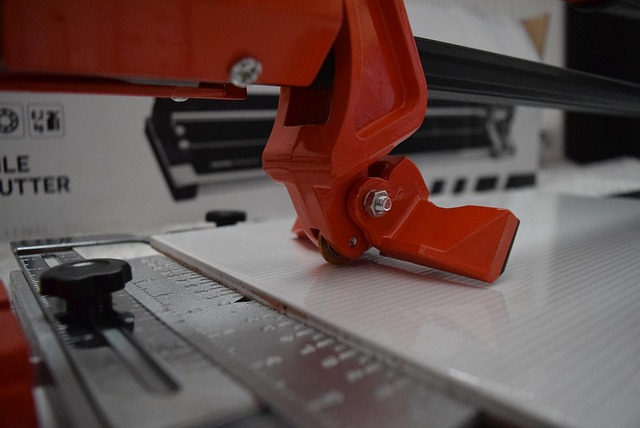
What Makes a Wet Saw for Tile the Core of 10 Essential Tiling Tools
Fairwood Manufacturing Doubles Life of CNC Router With MachMotion Controller Upgrade
Fairwood Manufacturing extended the operational life of its woodworking CNC machine by replacing its outdated controller with a MachMotion retrofit system. The upgrade restored precision, reliability, and compatibility with modern software without replacing the entire router. This case illustrates how a control retrofit can double machine lifespan while cutting downtime and costs. For industrial operators, it proves that controller modernization is not just maintenance—it’s a strategic investment that transforms legacy equipment into high-performance assets.
Extending the Operational Life of a Woodworking CNC Machine
CNC routers in woodworking plants face complex wear patterns over years of production. Their mechanical structures often outlast their electronic systems, but controller obsolescence and component failures frequently shorten service life. As OEM support fades, maintenance becomes reactive rather than preventive, driving up costs and reducing uptime.
Lifespan Challenges in CNC Routers
Mechanical wear affects linear bearings, ball screws, and spindle assemblies. Over time, even well-maintained machines lose motion accuracy due to backlash or vibration. Controller obsolescence poses another threat: older systems may not communicate with modern CAD/CAM software or servo drives. When electronics fail or replacement parts become unavailable, machine owners are forced to consider full replacement—an expensive decision for equipment that remains mechanically sound.
Legacy controllers also create bottlenecks in data processing speed and interface usability. Operators struggle with outdated displays or limited programming capabilities, leading to inefficiencies that accumulate across shifts. As support contracts expire, troubleshooting becomes dependent on scarce expertise or costly third-party services.
The Role of Control Systems in Machine Longevity
The control system defines how effectively a woodworking CNC machine executes toolpaths and maintains repeatability under load. Even if mechanical assemblies remain intact, an outdated controller can limit feed rates and restrict automation potential. A modernized control architecture restores synchronization between motors and drives, improving both precision and consistency.
In many retrofit projects like Fairwood’s, upgrading only the controller yields performance gains equivalent to new equipment at a fraction of the cost. Modern controllers allow integration with advanced servo tuning tools and digital feedback loops that were previously unavailable on legacy systems.
The MachMotion Upgrade: Technical Overview
A proper retrofit is more than swapping electronics—it’s an engineering process that aligns new technology with existing mechanics. Fairwood’s project illustrates how structured integration can revitalize an aging router for another decade of service.
Core Features of MachMotion CNC Controller Systems
MachMotion systems use an industrial-grade PC-based architecture designed for real-time motion control. Advanced servo tuning tools refine acceleration curves and interpolation algorithms for smoother motion paths. The operator interface features intuitive touch-screen controls tailored to production-floor conditions where speed and clarity matter most.
Compatibility is critical in retrofits; MachMotion controllers are built to integrate with existing servo motors or drives when possible. This minimizes downtime during installation while preserving mechanical investments already made in the machine frame and axes.
Integration Process for Woodworking CNC Machines
Before installation, engineers assess the condition of electrical panels, wiring harnesses, and drive configurations to determine which components require replacement or adaptation. The retrofit involves interfacing new MachMotion hardware with retained mechanical assemblies through standardized connectors and safety interlocks.
Once installed, calibration ensures positional accuracy across all axes using laser measurement tools or dial indicators. Parameter optimization fine-tunes acceleration profiles for smooth transitions between cuts. Operator training concludes the process so staff can fully utilize new features such as job queuing or remote diagnostics.
Performance Enhancements After MachMotion Retrofit
Upgrading the control system transforms both motion quality and reliability metrics of a woodworking CNC machine. Fairwood’s post-retrofit analysis showed measurable improvements in cut smoothness, repeatability, and cycle time efficiency.
Improved Motion Control and Accuracy
Modern interpolation algorithms produce fluid toolpaths even at high feed rates. Real-time feedback from encoders allows continuous correction during movement, maintaining micron-level precision on detailed wood carvings or cabinet panels. Enhanced acceleration profiles reduce tool chatter at corners and transitions, yielding cleaner finishes without additional sanding cycles.
This improvement directly impacts production consistency—operators report fewer rejected parts due to dimensional drift or surface irregularities after retrofitting.
Increased Reliability and Reduced Downtime
Replacing aging OEM electronics significantly lowers failure rates because newer components operate within tighter voltage tolerances and thermal limits. Built-in diagnostic dashboards display live system health indicators such as motor temperature or axis load balance.
Predictive maintenance becomes possible when these data points are logged over time. By identifying early deviations from baseline performance, technicians can schedule interventions before breakdowns occur—reducing unplanned downtime by up to 40% in some plants.
Simplified troubleshooting further shortens recovery times since error codes are displayed in plain text rather than cryptic numeric sequences common in older controllers.
Economic and Operational Impact of Controller Upgrades
For many manufacturers, capital budgeting favors retrofits over full replacements once lifecycle cost analysis is performed. The economic argument strengthens when factoring reduced disruption during installation compared to commissioning a new machine line.
Cost Efficiency Compared to Full Machine Replacement
Retrofitting preserves high-value mechanical components such as frames and spindles while extending usable life by another 10–15 years. It avoids disposal costs associated with heavy industrial equipment recycling while requiring only a fraction of the capital needed for new machinery procurement.
Production interruptions typically last days instead of weeks during controller upgrades, allowing faster return on investment through resumed operations almost immediately after commissioning.
Productivity Gains from Enhanced System Capabilities
Modern controllers integrate seamlessly with current CAD/CAM software suites used in woodworking design workflows. Automated toolpath optimization reduces manual programming time per job setup by as much as 30%. Operators benefit from simplified interfaces where common functions are accessible through graphical menus rather than code entry lines.
Improved feedback visibility also minimizes operator errors since deviations are flagged instantly on-screen instead of being discovered post-process during inspection stages.
Long-Term Sustainability in CNC Operations
Sustainability extends beyond energy efficiency—it includes maximizing asset utilization throughout its lifecycle while minimizing waste from premature disposal.
Supporting Continuous Improvement Through Upgradable Architecture
MachMotion’s modular platform allows incremental software enhancements without major hardware changes. This flexibility supports continuous improvement initiatives common under ISO 9001 frameworks where iterative upgrades align with evolving production goals.
As Industry 4.0 technologies mature, open communication protocols within these controllers facilitate integration with smart factory networks or automated material handling systems—future-proofing investments against technological shifts.
Extending the Lifecycle of Industrial Equipment Responsibly
By upgrading instead of replacing entire machines, companies reduce environmental impact through lower material consumption and waste generation. Modern power supplies within new controllers also consume less energy under equivalent workloads compared to legacy designs built decades earlier.
This approach aligns with global sustainability directives encouraging resource efficiency across manufacturing sectors while maintaining competitive productivity levels expected in contemporary woodworking operations.
FAQ
Q1: How long does a typical woodworking CNC retrofit take?
A: Most retrofits complete within one to two weeks depending on complexity; larger routers may require additional calibration days for multi-axis alignment verification.
Q2: Does upgrading the controller affect warranty coverage on other components?
A: Typically no; warranties apply separately unless modifications alter original drive configurations beyond manufacturer specifications.
Q3: Can existing servo motors be reused during a MachMotion upgrade?
A: Yes, provided they meet electrical compatibility standards verified during pre-assessment testing phases before installation begins.
Q4: What training do operators need after retrofit completion?
A: Training covers interface navigation, job setup procedures, diagnostic interpretation, and routine maintenance scheduling using built-in monitoring tools.
Q5: How much longer can a retrofitted woodworking CNC machine operate compared to its original lifespan?
A: On average, controller upgrades extend operational life by 8–15 years depending on mechanical condition at time of retrofit implementation.