
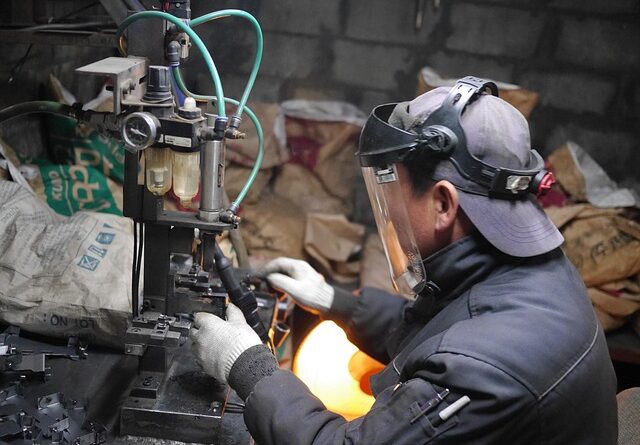
What OSHA Says About Training Resistance Welding Operators Using a Spot Welding Machine
What OSHA Says About Training Resistance Welding Operators
Resistance welding, particularly spot welding, demands precision and strict adherence to safety standards. OSHA’s regulatory framework requires employers to train operators not only in technical aspects but also in hazard recognition, equipment handling, and emergency procedures. The agency’s rules under 29 CFR 1910 Subpart Q set a clear expectation: no operator should work with a spot welding machine without documented training that covers both general and specific safety practices.
OSHA’s Regulatory Framework for Resistance Welding Operations
OSHA’s approach to resistance welding blends technical control measures with human factors. Its standards are designed to prevent electrical shock, burns, and mechanical injuries while maintaining consistent weld quality.
Overview of OSHA Standards Relevant to Resistance Welding
Resistance welding falls under OSHA’s 29 CFR 1910 Subpart Q, which governs welding, cutting, and brazing across industrial settings. Within this subpart, employers must provide proper training, maintain equipment safely, and protect workers from hazards such as electrical energy and heat exposure. The regulation emphasizes that competent supervision is essential; operators must demonstrate proficiency before working independently. In practice, this means verifying that each operator knows how to inspect cables, adjust electrode pressure, and identify early signs of malfunction.
How OSHA Defines Operator Training Requirements
OSHA mandates that employees receive training enabling them to recognize and avoid hazards associated with welding operations. This includes both general industry principles—like fire prevention—and machine-specific instructions tied to the particular spot welding machine used on site. Documentation of all training sessions is strongly advised because inspectors often request proof during audits or incident reviews. Employers who maintain detailed records reduce their exposure to citations and improve internal accountability.
Essential Training Elements for Spot Welding Machine Operators
Training content must go beyond theoretical instruction. OSHA expects hands-on learning supported by real-world examples of hazard control in resistance welding environments.
Understanding the Principles of Resistance Welding
Operators should grasp how current flow, electrode pressure, and heat generation interact during the resistance welding process. These variables directly influence weld integrity and operator safety. A skilled technician can adjust parameters based on material thickness or coating type to prevent overheating or weak joints. Familiarity with different metals’ resistance properties helps avoid spatter or burn-through issues that compromise both quality and safety.
Safe Operation Procedures According to OSHA Guidelines
Before activating any spot welding machine, operators are expected to inspect electrodes for wear or contamination and confirm all cable connections are secure. Proper setup minimizes risks such as arcing or fire caused by poor grounding. During operation, awareness of pinch points around moving arms is crucial since hand injuries remain one of the most common incidents in resistance welding shops. Hot surfaces require careful handling; even brief contact can cause severe burns if gloves are inadequate or absent.
Electrical Safety and Lockout/Tagout Practices
Electrical hazards remain central concerns in resistance welding operations. OSHA’s 29 CFR 1910.147 outlines lockout/tagout (LOTO) procedures that must be followed whenever maintenance or repair work occurs. Operators need training on identifying all energy sources within the system—including stored electrical charge in capacitors—and how to de-energize equipment safely before cleaning or adjustment tasks begin. Regular drills reinforce these habits so operators respond correctly under pressure rather than improvising unsafe shortcuts.
Personal Protective Equipment (PPE) and Hazard Control Measures
Even with proper engineering controls in place, personal protective gear remains a critical layer of defense against physical harm during spot welding activities.
Required PPE for Resistance Welding Operations
OSHA emphasizes that operators wear flame-resistant clothing along with gloves designed for both heat resistance and dexterity. Eye protection through goggles or face shields guards against flying sparks or intense light generated during each weld cycle. Footwear should feature nonconductive soles to reduce electric shock risk when standing near energized equipment. Selecting PPE specific to hazard type—heat versus UV radiation—ensures optimal protection without compromising mobility.
Ventilation and Fume Control Requirements
Resistance welding may generate fumes depending on materials used or coatings present on workpieces. OSHA requires adequate ventilation systems compliant with 29 CFR 1910.252 air quality standards to prevent inhalation risks. Local exhaust ventilation positioned near electrodes captures airborne contaminants at their source. Operators should be trained to notice warning signs such as metallic taste or eye irritation that indicate poor ventilation performance so corrective actions can be taken promptly.
Employer Responsibilities Under OSHA Standards
Beyond operator behavior, employer management systems determine whether safety programs succeed over time. Compliance depends on structured planning rather than reactive enforcement after incidents occur.
Developing a Comprehensive Training Program
Employers must design formal programs covering theory, safe practices, and supervised application using actual production machines. A balanced curriculum combines classroom instruction with floor demonstrations where trainees practice setting up electrodes or adjusting current levels safely. When new machinery models arrive—often featuring digital control panels—refresher sessions help maintain competency across all staff levels. Supervisors should observe performance periodically to confirm skills remain current.
Recordkeeping and Compliance Verification
Written documentation serves as evidence of compliance during inspections by regulators or third-party auditors. Each record should include date of session, topics covered, instructor credentials, and trainee signatures verifying attendance. Companies conducting internal audits every six months typically detect procedural drift early enough to correct it before citations arise from official inspections.
Continuous Improvement in Welding Safety Programs
Safety management does not end once compliance is achieved; it evolves alongside technology and workforce dynamics within manufacturing environments.
Incorporating Technological Advances into Training Modules
Modern spot welding machines often integrate programmable logic controllers (PLCs) or robotic interfaces requiring updated training materials tailored to automation features. Simulation-based learning tools now allow operators to practice parameter adjustments virtually before applying them on live systems—a low-risk method proven effective for skill retention among new hires in high-turnover industries like automotive assembly.
Promoting a Safety Culture Among Welding Teams
A sustainable safety culture depends on open dialogue rather than top-down directives alone. Encouraging workers to report near-misses without fear supports proactive hazard identification long before accidents happen. Peer mentoring also strengthens team cohesion; experienced welders guiding newer colleagues create informal oversight networks complementing formal supervision structures expected by OSHA inspectors.
FAQ
Q1: What OSHA standard applies specifically to resistance welding?
A: Resistance welding operations fall under OSHA’s 29 CFR 1910 Subpart Q covering Welding, Cutting, and Brazing requirements applicable across general industry workplaces.
Q2: How often should spot welding operators receive refresher training?
A: Refresher sessions are recommended whenever new equipment is introduced or when changes occur in procedures affecting safety performance.
Q3: What documentation does OSHA expect employers to keep?
A: Employers should maintain written records listing training dates, subjects taught, instructor names, participant signatures, and any evaluations conducted during sessions.
Q4: Are there specific PPE items required for spot welders?
A: Yes, including flame-resistant clothing, insulated gloves, face shields or goggles for eye protection, and nonconductive footwear suitable for electrical environments.
Q5: Why is ventilation important during resistance welding?
A: Adequate ventilation prevents accumulation of metal fumes produced when heating coated materials; poor air movement increases risk of respiratory irritation or chronic illness over time.