

How Can CNC Services Near Me Compare With China Precision CNC Expertise
China Precision CNC Brings Advanced Manufacturing Expertise to Global Clients
China’s precision CNC sector has become a cornerstone of global manufacturing, combining scale, automation, and quality control that few regions can match. While local “CNC services near me” providers deliver agility and customization, China’s industrial clusters offer unmatched technological breadth and cost efficiency. The convergence of digital manufacturing, AI-driven analytics, and international quality systems has positioned Chinese CNC firms as strategic partners for industries seeking both performance and scalability.
The Global CNC Manufacturing Landscape
The global CNC industry has evolved into a tightly connected ecosystem shaped by innovation, competition, and digital transformation. From small workshops to multinational suppliers, every player now operates within a network defined by precision standards and real-time data exchange.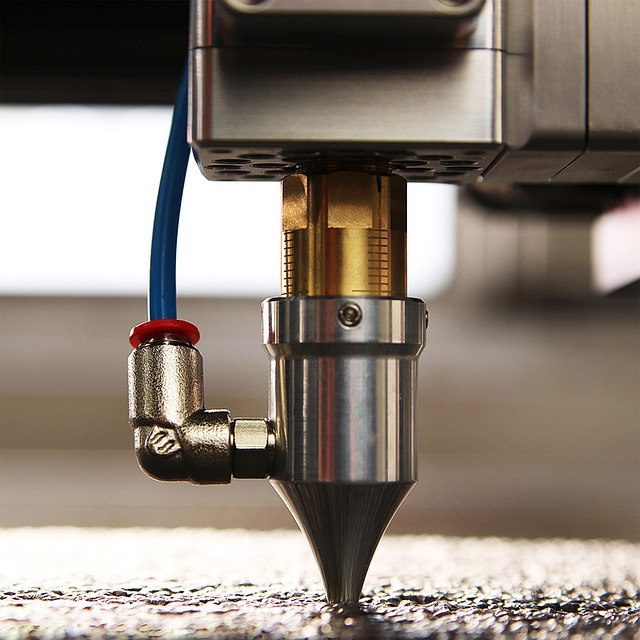
The Evolution of CNC Machining Services
CNC machining began as an extension of manual milling but quickly advanced into automated systems capable of micron-level accuracy. The integration of CAD/CAM software allowed engineers to translate complex designs into executable code, while robotics introduced continuous production with minimal human intervention. As Industry 4.0 gained traction, real-time monitoring and adaptive control became standard features. Today, predictive maintenance powered by AI algorithms further reduces downtime and waste.
The Role of Digital Transformation, CAD/CAM Integration, and Robotics
Digital transformation reshaped the entire workflow—from design validation to final inspection. Modern CNC facilities integrate CAD/CAM platforms that synchronize tool paths directly with machine controllers. Robotics handle repetitive tasks such as tool changes or part loading, improving consistency and safety. In advanced setups, these robots communicate through IoT networks that feed data into centralized dashboards for process optimization.
How Global Competition Has Driven Innovation and Specialization in CNC Manufacturing
Competition among global suppliers has accelerated specialization across regions. European manufacturers often focus on ultra-high-precision aerospace parts; North American firms emphasize prototyping speed; Asian producers dominate high-volume component fabrication. This segmentation encourages cross-border collaboration where each region contributes distinct strengths—design innovation from the West balanced by production efficiency from Asia.
The Position of Local CNC Services in the Global Market
Local “CNC services near me” providers remain vital despite globalization. They serve as agile partners for rapid prototyping and short-run production where communication speed outweighs cost considerations.
Strengths and Limitations of Local “CNC Services Near Me” Providers
Local workshops excel in responsiveness. Engineers can discuss tolerances face-to-face or adjust designs overnight. However, limited access to advanced 5-axis machines or automated inspection systems can restrict their ability to compete on complex geometries or large orders. Cost structures also tend to be higher due to smaller batch sizes and localized labor expenses.
Common Industries Served by Local Workshops
Typical clients include automotive repair firms needing custom jigs, aerospace subcontractors requiring quick-turn prototypes, and tooling companies producing molds or fixtures for regional factories. These sectors value flexibility more than volume efficiency.
Challenges Faced by Local Service Providers in Scaling Capabilities
Scaling remains difficult for small shops because investment in high-end equipment demands significant capital outlay. Maintaining consistent quality across multiple shifts without digital tracking tools also limits throughput potential. Many local providers therefore partner with overseas manufacturers for bulk production while retaining design control domestically.
China’s Precision CNC Expertise in Context
China’s manufacturing infrastructure has matured beyond cost advantage alone; it now represents a hub of technological sophistication supported by skilled labor and policy-driven modernization programs.
Technological Advancements Driving China’s CNC Industry
Chinese facilities increasingly deploy 5-axis machining centers capable of producing intricate aerospace housings or medical implants in one setup. Multi-tasking lathes combine turning and milling operations to reduce handling time. IoT-enabled sensors track spindle vibration and temperature for predictive maintenance analytics powered by AI platforms. Government-backed industrial clusters encourage shared R&D resources that accelerate equipment upgrades across suppliers.
Workforce Skill Development and Quality Management Systems
National training initiatives have expanded technical education focused on CNC programming languages like G-code and Siemens NX operation. Many plants operate under ISO 9001 or IATF 16949 frameworks aligned with automotive supply chains worldwide. Statistical process control (SPC) software monitors dimensional trends during machining rather than after completion, allowing immediate correction before deviation accumulates.
Comparing Local CNC Services With China Precision Capabilities
Selecting between domestic workshops and Chinese manufacturers involves trade-offs among cost structure, technology level, and logistical complexity.
Cost Efficiency and Production Scale Differences
Large-scale Chinese plants benefit from economies of scale: bulk material procurement lowers per-unit costs while automated lines reduce labor intensity. Domestic shops often offset higher costs with faster lead times or design adaptability suited for niche components requiring frequent revisions.
Technological Depth and Equipment Capability Comparison
Chinese facilities routinely handle titanium alloys, stainless steel grades like 316L, engineering plastics such as PEEK or Delrin—all under controlled environments ensuring repeatability within ±0.005 mm tolerance ranges. Many domestic workshops still rely on 3-axis mills limiting contour accuracy on freeform surfaces. Advanced metrology tools including coordinate measuring machines (CMMs) or laser scanners are standard in Chinese plants but less common locally due to expense.
Supply Chain Integration and Lead Time Considerations
Despite geographic distance, integrated logistics networks allow predictable delivery windows through consolidated freight channels managed digitally from order confirmation to customs clearance. Domestic suppliers provide same-day communication advantages but may lack the scalability required for thousands of identical units per month.
Strategic Factors Influencing Vendor Selection for Experts in the Field
Professionals evaluating vendors must weigh technical collaboration potential over mere pricing differences since long-term reliability often defines project success more than initial quotes do.
Evaluating Technical Competence Beyond Cost Metrics
Design-for-manufacturing (DFM) consultation distinguishes mature vendors from transactional ones. A capable partner translates conceptual models into machinable geometry while maintaining structural integrity during scaling from prototype to production batches—a critical factor in optical instrumentation or surgical device fabrication where micro-tolerances dictate functionality.
Quality Assurance Frameworks That Define Competitive Edge
Inspection methodology varies widely: some firms rely solely on post-process CMM verification while others integrate in-process probing systems detecting drift mid-cycle. Aerospace contracts demand full traceability down to raw material certificates logged through ERP-linked databases compliant with defense procurement standards like AS9100D.
Future Directions for Collaboration Between Local Providers and Chinese Manufacturers
The next phase of global manufacturing will likely merge proximity-based prototyping with offshore mass production under unified digital management systems.
Hybrid Production Models Leveraging Global Strengths
A growing number of companies use local workshops for early-stage iterations then shift validated designs to Chinese plants for scaling—maintaining speed without sacrificing unit economics. Cloud-based project management tools synchronize revision histories so engineers across continents view identical datasets simultaneously.
Emerging Trends Shaping the Next Phase of Precision CNC Manufacturing
Additive-subtractive hybrid machines combining laser sintering with milling are gaining adoption among high-mix producers seeking flexibility without secondary setups. Smart factories employing machine learning optimize cutting parameters dynamically based on sensor feedback loops reducing scrap rates by measurable margins. Sustainability initiatives push toward coolant recycling units and energy-efficient servo drives lowering carbon intensity per machined part—a trend aligning environmental responsibility with operational savings.
FAQ
Q1: What gives China an edge over local “CNC services near me”?
A: Its combination of scale economies, advanced automation infrastructure, skilled workforce training programs, and globally recognized quality certifications provides consistent output at competitive pricing levels rarely achievable locally.
Q2: Are local workshops still relevant?
A: Yes—they remain essential for rapid prototyping cycles or low-volume custom parts where personal communication shortens iteration time despite higher unit costs.
Q3: How do Chinese manufacturers maintain precision at volume?
A: Through SPC monitoring systems integrated into machine controllers plus automated metrology ensuring deviations are corrected before affecting entire batches.
Q4: What industries benefit most from hybrid production models?
A: Sectors like medical devices or consumer electronics that require fast design validation followed by large-scale rollout see the greatest efficiency gains from this approach.
Q5: How is sustainability influencing future CNC operations?
A: Energy-efficient motors, closed-loop coolant recovery systems, and recyclable packaging materials are becoming standard practice as manufacturers align with global emission reduction goals set by organizations such as ISO 14001-certified frameworks.