
How to choose a cutting saw for metal fabrication and machining
What a cutting saw does in a production shop
A cutting saw is a powered sawing machine or saw system used to separate stock such as bar, tube, plate, extrusion, casting feedstock, or fabricated assemblies before machining, welding, assembly, or shipment. The right saw is not simply the machine that can get through the material. It is the process that delivers the required length, squareness, surface condition, burr level, cycle time, and operator protection at an acceptable cost.
In metal fabrication and machining, the practical choice is usually among a band saw, cold saw, abrasive cut-off saw, and high-speed circular saw. Each option balances purchase price, kerf loss, heat input, blade life, automation potential, and safety controls in a different way. This guide focuses on matching a cutting saw to shop conditions rather than comparing brand claims.
For related tool and process coverage, see Mechmeld’s Cutting & Tooling section.
Main cutting saw types and where they fit
Shops often start by naming a saw type, but the better starting point is the workpiece. A bundle of mild steel tube, a stainless shaft, an aluminum extrusion, and an abrasive composite part may all need sawing, yet they place different demands on the blade, frame, coolant, fixturing, and chip or dust control.
Band saws
A band saw uses a continuous toothed blade running over wheels. In manufacturing, horizontal band saws are widely used for bar stock, structural sections, tube, and billets. The format is valued because it handles a broad range of sizes with relatively low kerf loss and moderate tooling cost. A band saw is often a practical choice when material variety is high, cut volume is moderate, and flexibility matters more than the shortest possible cycle time.
The limitations come from blade guidance, tooth loading, and machine rigidity. Thin-wall tube can strip teeth if the tooth pitch is too coarse. Large solids can wander if the blade is worn, guides are loose, or feed pressure does not suit the material. In production work, automatic feeding, bundle clamping, chip brushes, and coolant delivery can be as important as the catalog cutting capacity.
Cold saws
A cold saw is typically a circular saw designed to transfer heat into the chip rather than into the workpiece. In metalworking, cold saws are used where cut squareness, burr control, and repeatability are more important than the lowest machine purchase price. They are common for tube, small to medium bar, profiles, and miter cuts in fabrication environments.
Cold saws generally produce a cleaner edge than abrasive cut-off saws and can reduce secondary deburring. Blade selection and clamping are still critical. A cold saw cutting thin-wall tube needs a different tooth form and pitch than one cutting solid alloy bar. Poor fixturing can create chatter, shorten blade life, and leave a cut face that looks like a tooling problem even when the root cause is workholding.
Abrasive cut-off saws
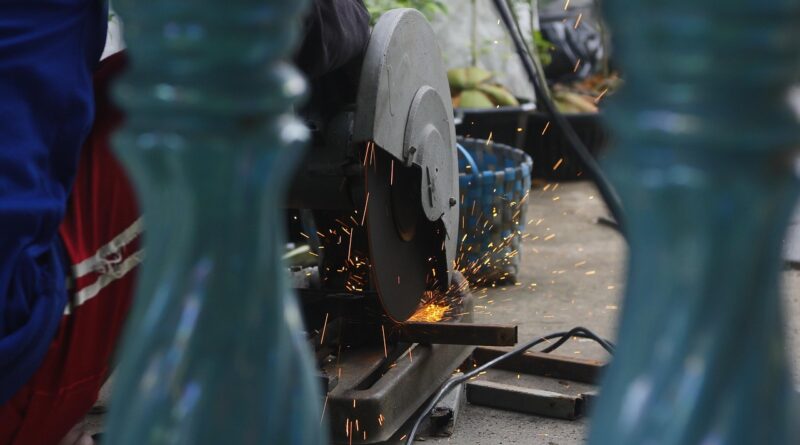
An abrasive cut-off saw uses a bonded abrasive wheel rather than a toothed blade. It is commonly selected for rough cutting, maintenance work, hard materials, or situations where low initial cost and versatility are more important than cut finish. It can be effective, but it usually produces more heat, sparks, dust, wheel wear, and burr than a toothed metal-cutting saw.
Because abrasive wheels are consumables and can fail if misused, speed rating, wheel condition, mounting, guarding, and operator training need close attention. OSHA rules for abrasive wheel machinery address guarding and safe use considerations, and shops should verify the specific requirements that apply to their equipment and jurisdiction.
High-speed circular and carbide saws
High-speed circular saw systems, including carbide-tipped saws, are used when cycle time, cut length repeatability, and automation justify higher investment. These systems can be strong candidates for production cutting of tube, bar, and nonferrous profiles. In the right application, they can deliver fast cuts, consistent lengths, and clean faces that reduce downstream machining or deburring.
The tradeoff is a narrower process window. Material grade, coating, tooth geometry, spindle rigidity, clamping, lubrication, and chip evacuation must work together. A carbide circular saw that performs well on aluminum extrusion may not be the right choice for heavy, interrupted cuts in mixed steel sections.
Selection criteria that affect cut quality and cost
A cutting saw should be specified around the complete cut, not just the maximum workpiece size. A common mistake is buying capacity while underestimating tolerance, burr control, material handling, or operator interaction. The following comparison can help structure the decision.
| Selection factor | Why it matters | Practical check |
|---|---|---|
| Material and hardness | Determines blade material, tooth geometry, wheel type, speed, and coolant strategy. | List the common grades and the hardest or most abrasive material the saw must cut. |
| Cross-section | Solids, bundles, thin-wall tube, structural shapes, and extrusions load teeth differently. | Record both maximum size and typical daily size, not only catalog capacity. |
| Cut tolerance | Tighter length and squareness requirements may require a more rigid saw and better feed control. | Define acceptable length variation, angular error, and face condition before quoting equipment. |
| Volume and takt time | Low-volume shops may value flexibility; production lines may need automation and fast indexing. | Calculate parts per shift, changeover frequency, and operator availability. |
| Kerf and material value | Wider kerf increases scrap, especially with expensive alloys or high-volume cuts. | Include kerf loss in cost per cut, not only blade or wheel price. |
| Secondary operations | Burrs, heat-affected edges, and poor squareness can add machining, deburring, or welding fit-up time. | Evaluate the sawed part at the next process, not only at the saw station. |
For a job shop, the best cutting saw may be the one that tolerates variation without constant setup changes. For a dedicated production cell, the better choice may be a narrower, faster, more automated system. The economic answer can change once labor, scrap, deburring, coolant management, and machine uptime are included.
Blade, speed, feed, and workholding decisions
Blade life is rarely controlled by blade choice alone. It depends on tooth engagement, surface speed, feed rate, coolant or lubrication, chip removal, machine rigidity, and clamping. A blade that fails early on one saw may perform normally on another machine with better guides and more consistent feed.
Match tooth pitch to the workpiece
Tooth pitch must keep enough teeth engaged in the material while leaving room for chips. If the pitch is too coarse for thin-wall tube, teeth can grab and strip. If it is too fine for a large solid bar, gullets can pack with chips, increasing heat and blade stress. Variable-pitch blades are often used to reduce vibration across mixed sections, but they are not a substitute for correct setup.
Control speed and feed together
Surface speed and feed rate should be treated as a pair. Excessive speed can overheat teeth or wheels. Too little feed can rub instead of cut, dulling the tool and work-hardening some alloys. Too much feed can deflect the blade, overload teeth, or create a rough cut. Manufacturers’ data is a useful starting point, but actual machine condition, coolant delivery, and workpiece shape can require adjustment.
Do not treat clamping as an accessory
Workholding is central to saw performance. Tube and profiles can distort if clamped poorly. Bundles can shift. Short remnants can become unstable at the end of a cut. Miter cutting adds side loads that can expose weak fixturing. A good saw specification should include vise design, support rollers, outfeed handling, stop systems, and safe methods for removing short offcuts.
Safety and compliance considerations
Cutting saw safety is not limited to personal protective equipment. The main hazards include the point of operation, rotating parts, blade or wheel failure, flying chips, sparks, hot workpieces, noise, coolant mist, dust, and manual handling of heavy stock. OSHA’s general machine guarding rule, 29 CFR 1910.212, identifies hazards such as point of operation, ingoing nip points, rotating parts, flying chips, and sparks. It also requires guarding where machine operation exposes employees to injury. ANSI B11.10-2003, reaffirmed in 2020, specifically addresses safety requirements for metal sawing machines, including design, construction, modification, operation, and maintenance. See also: CNC Machining.
For abrasive cut-off operations, wheel condition and rating deserve special discipline. OSHA’s abrasive wheel machinery requirements include provisions for guarding and safe mounting practices. A damaged wheel, an incorrect flange, or a machine speed above the wheel’s rating can create a high-energy failure. The safety review should also confirm that guards are usable in the intended cutting position. A guard that must be removed for normal work is a process design problem, not an operator preference issue.
Coolant and lubrication add another layer of control. NIOSH has described metalworking fluid aerosols as mist and contaminants generated during machining and grinding operations, and has associated occupational exposure with respiratory and skin health concerns. That does not mean every saw application has the same exposure profile, but coolant selection, concentration control, mist collection, housekeeping, and skin protection should be part of the process plan.
Lockout, blade change procedures, training, and inspection routines should be documented for production saws. The goal is to make the safe method the normal method: guarded cutting, stable workholding, controlled chip flow, clean access for maintenance, and no need for hands near the danger zone during the operating cycle.
How to compare total cost per cut
Purchase price is only one part of saw economics. A lower-cost cutting saw can be expensive if it creates slow cycles, frequent blade changes, scrap, poor fit-up, or extra deburring. Conversely, a higher-capital machine may be excessive if the work is occasional, varied, and tolerant of rougher edges.
A practical cost-per-cut model should include blade or wheel cost, expected cuts per blade, operator time, setup time, scrap from kerf and rejected parts, coolant and filtration, maintenance, energy, floor space, and downstream rework. The model does not need to be complex to be useful. Even a simple spreadsheet can show whether the main cost is tooling, labor, lost material, or secondary finishing.
One useful test is to compare the saw station with the next operation. If sawed blanks go directly into a machining center, poor length control may reduce fixture reliability or increase facing time. If cut tube goes to welding, burrs and out-of-square ends may affect fit-up. If parts go to assembly, heat discoloration or sharp edges may create handling and quality problems. The value of a better saw is often captured after the cut, not at the saw alone.
Maintenance practices that protect productivity
Routine maintenance should match the failure modes of the saw type. Band saws need blade tension checks, guide inspection, wheel condition checks, chip brush maintenance, coolant flow verification, and vise alignment. Cold saws and carbide circular saws need spindle condition, blade runout, clamp pressure, gearbox or drive inspection, lubrication, and chip evacuation checks. Abrasive cut-off saws need wheel inspection, correct mounting hardware, guard condition, and dust or spark control.
Operators should be encouraged to report changes in sound, vibration, cut time, burr formation, and cut straightness. These signals often appear before a blade breaks or a quality failure occurs. Maintenance teams should also track blade life by material and operator shift where possible. If one material, setup, or shift consumes blades unusually fast, the issue may be process variation rather than blade quality.
Cleanliness matters. Packed chips can redirect coolant, damage blade teeth, interfere with vises, and create slip or fire hazards. A cutting saw is often viewed as a roughing machine, but roughing processes still need stable inputs. Clean guides, correct coolant, sharp blades, and aligned work supports are what make repeatable cutting possible.
Frequently asked questions
Is a cutting saw the same as a chop saw?
Not always. A chop saw usually refers to a pivoting cut-off machine, often abrasive or circular. A cutting saw is a broader term that can include band saws, cold saws, abrasive cut-off saws, portable saws, and automated circular saw systems.
Which cutting saw gives the cleanest cut in metal?
For many metal fabrication applications, a properly selected cold saw or carbide circular saw can produce a cleaner, squarer cut than an abrasive cut-off saw. However, the answer depends on material, section shape, blade selection, fixturing, and tolerance requirements.
When is a band saw the better choice?
A band saw is often a strong choice when the shop cuts varied materials and sizes, needs reasonable kerf control, and does not require the fastest possible cycle time. It is especially useful for bar stock, billets, tube, and general-purpose material preparation.
Does coolant always improve cutting saw performance?
No. Coolant or lubrication can improve heat control, chip evacuation, and tool life in many metal sawing operations, but it must be compatible with the material, blade, machine, and exposure controls. Some applications use mist, flood coolant, wax, minimum-quantity lubrication, or dry cutting depending on the process.
What standard applies to metal sawing machine safety?
In the United States, OSHA machine guarding requirements are a primary regulatory reference, and ANSI B11.10 addresses safety requirements for metal sawing machines. Shops should confirm the current requirements for their equipment, industry, and jurisdiction before installing or modifying a saw.
Bottom line
The best cutting saw is the one that matches the material, tolerance, volume, safety requirements, and downstream process. A band saw may be the flexible workhorse, a cold saw may reduce finishing, an abrasive cut-off saw may suit rough and maintenance work, and a carbide circular saw may justify itself in high-volume production. The sound decision is made by comparing the complete cut: setup, fixturing, blade life, kerf, burr, coolant, operator protection, and what happens to the part after it leaves the saw.