
Is A CNC Lathe Machine For Sale The Right Investment For Precision Experts
Our Systems Have Detected Unusual Activity Coming From Your System. Please Try Again Later.
Precision manufacturing today relies heavily on digital control, and CNC lathe machines have become the backbone of that transformation. Their ability to produce consistent, high-tolerance parts at scale makes them indispensable across aerospace, automotive, and medical sectors. A well-chosen CNC lathe machine for sale can deliver measurable productivity gains and financial returns when integrated into a strategic workflow. The following sections examine their operational value, investment logic, and long-term role in expert-level manufacturing environments.
Evaluating the Strategic Role of CNC Lathe Machines in Precision Manufacturing
CNC lathes stand out not just for their automation but for how they reshape production planning. They transform traditional turning into a data-driven process that connects directly with design systems.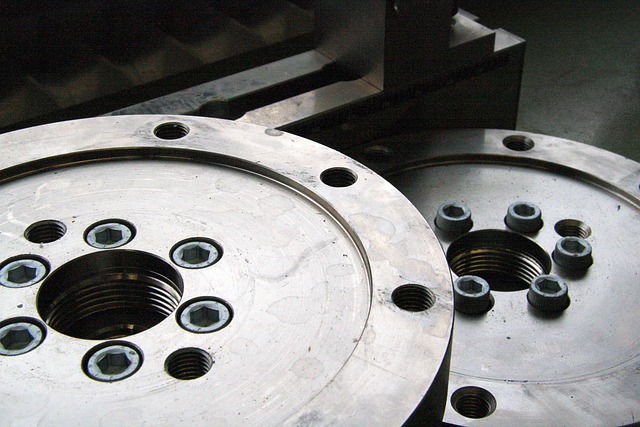
Functionality and Capabilities of CNC Lathes
A CNC lathe machine automates turning operations to achieve consistent part dimensions within micron-level tolerances. These machines use servo-controlled spindles and tool turrets to perform high-speed cutting with minimal human input. Multi-axis configurations—commonly two to nine axes—enable simultaneous machining of complex geometries such as turbine shafts or orthopedic implants. When linked with CAD/CAM platforms like Vectric or Mastercam, programming becomes faster and repeatable, reducing setup errors while maintaining geometry accuracy.
Comparing CNC Lathes to Other Precision Machining Tools
Compared with milling machines or hybrid centers, lathes specialize in rotational symmetry. Milling excels at planar surfaces, while hybrid systems combine both functions but demand higher capital outlay. Selection depends on material hardness, required surface finish, and batch size. For instance, stainless-steel valve bodies suit a high-torque lathe better than a vertical mill due to continuous chip load distribution. Automation level also matters—fully automated cells lower per-part cost but require skilled setup engineers to maintain throughput balance.
Assessing the Investment Value of a CNC Lathe Machine for Sale
Investing in advanced machinery involves balancing upfront expenditure against operational efficiency over time. The true worth emerges from lifecycle performance rather than sticker price alone.
Financial Considerations for Purchasing a CNC Lathe
A new CNC lathe machine for sale typically costs between mid-five figures to several hundred thousand dollars depending on spindle power and control sophistication. Yet energy savings and reduced scrap often offset these expenses within three years. Maintenance contracts covering firmware updates and spindle calibration protect uptime but add recurring costs. Tooling systems and software licenses also affect ROI calculations; multi-purpose toolholders may cut replacement cycles by 20%. Financing through equipment leasing spreads cost while preserving liquidity, though depreciation schedules must align with tax policies governing capital assets.
Productivity Gains and Process Optimization Potential
Automated tool changers minimize manual handling during production runs, allowing operators to supervise multiple machines simultaneously. Adaptive control features adjust feed rates based on cutting resistance, extending tool life under variable loads. Continuous operation—sometimes termed lights-out machining—pushes daily utilization beyond 20 hours without fatigue risks common in manual setups. Machine monitoring dashboards collect spindle load data to identify bottlenecks early, enabling predictive maintenance scheduling that reduces unplanned downtime.
Aligning CNC Lathe Capabilities with Expert-Level Applications
High-precision industries depend on repeatable accuracy where even microns matter. Proper alignment between machine capacity and application requirements determines competitiveness.
High-Precision Industries Benefiting from CNC Turning Technology
Aerospace manufacturers rely on precision turning for jet engine components demanding sub-10-micron concentricity across titanium alloys. In medical manufacturing, lathes produce surgical screws or prosthetic connectors where contour smoothness affects biocompatibility coatings’ adhesion quality. Automotive suppliers use twin-spindle lathes for crankshaft journals requiring identical results across thousands of units—a key factor in engine balance certification.
Customization Opportunities for Specialized Workflows
Customization defines modern machining efficiency. Adjusting spindle speed ranges allows optimal cutting for aluminum versus hardened steel without swapping hardware. Turret configuration flexibility supports quick adaptation between prototype runs and volume batches. Robotic loaders integrated into the cell enable unattended night shifts while maintaining part traceability through barcode scanning systems linked to MES databases. Software synchronization with digital twins helps simulate stress distribution before actual cutting begins.
Technical Evaluation Criteria When Selecting a CNC Lathe Machine for Sale
Technical evaluation should prioritize measurable specifications over brand perception or marketing claims since real-world accuracy depends on mechanical integrity and control precision.
Key Performance Specifications to Analyze Before Purchase
Spindle power determines material versatility; heavy-duty models exceeding 20 kW handle Inconel or titanium efficiently while lighter ones suit aluminum housings or plastic bushings. Torque curves reveal stability during deep cuts—a factor often overlooked in spec sheets but critical during roughing passes. Axis travel limits define achievable part lengths; insufficient Z-axis stroke may restrict future projects’ scope. Compatibility with preferred CAD/CAM software like Vectric simplifies post-processing integration within existing design ecosystems.
Assessing Build Quality and Vendor Support Infrastructure
Machine rigidity directly influences vibration damping during high-speed operations; cast-iron bases outperform welded frames under continuous thermal cycling. Thermal stability ensures dimensional consistency even after long production runs where coolant temperature fluctuates slightly. Reliable vendors provide local service engineers trained on their specific control architecture along with spare-part logistics capable of overnight dispatches when failures occur. Training programs covering G-code optimization help operators fully exploit advanced features rather than relying solely on default settings.
Integrating a CNC Lathe into an Existing Precision Workflow Strategy
Adding a new system requires more than floor space—it demands synchronization across digital design chains and physical tooling logistics.
Workflow Adaptation for Multi-Machine Environments
When paired with milling centers or routers using similar post-processors, lathes can share fixture data seamlessly through networked controllers. This reduces redundant programming time between departments handling complementary operations like drilling or contour milling after turning stages. Establishing standardized setup sheets shortens changeover intervals by documenting chuck positions, offsets, and coolant parameters across all machines in the cell environment.
Digital Transformation Through Smart Manufacturing Practices
IoT-enabled sensors embedded within spindles track vibration signatures indicating bearing wear long before failure occurs, allowing predictive service scheduling instead of reactive repair calls. Analytics dashboards visualize spindle utilization rates per shift so supervisors can redistribute workloads intelligently rather than guessing based on operator feedback alone. Digital documentation of each cycle’s parameters supports full traceability demanded by ISO 9001 audits or aerospace AS9100 compliance frameworks.
Long-Term Competitiveness Through Advanced CNC Adoption Strategies
Sustained advantage depends on how technology complements human expertise rather than replacing it entirely.
Balancing Automation with Skilled Operator Expertise
Even as automation expands, machinists evolve into process engineers interpreting sensor data instead of manually adjusting feeds mid-cut. Continuous training programs aligned with emerging AI-assisted control algorithms help maintain workforce adaptability while preventing skill erosion from overreliance on automation scripts.
Future-Proofing Investments in Precision Machining Equipment
Scalability should remain central when evaluating any cnc lathe machine for sale since production volumes rarely stay static over years of operation. Modular hardware upgrades—like higher-speed spindles or additional tool stations—extend lifespan without full replacement costs. Compatibility with next-generation software releases keeps communication protocols current as Industry 4.0 standards evolve toward unified data exchange models such as OPC UA or MTConnect compliance frameworks recognized by IEC committees worldwide.
FAQ
Q1: What industries gain the most from investing in a cnc lathe machine for sale?
A: Aerospace, medical device manufacturing, and automotive sectors benefit most due to their strict tolerance requirements and repetitive part geometries suited for turning operations.
Q2: How does CAD/CAM integration improve productivity?
A: It streamlines program generation by translating 3D models directly into G-code instructions while minimizing human error during setup transitions.
Q3: What factors influence ROI when purchasing a new lathe?
A: Tool life extension through adaptive control, reduced scrap rates from precision machining, and lower labor dependency all contribute significantly to overall return metrics.
Q4: Are older manual lathes still viable alongside modern CNC units?
A: They remain useful for low-volume prototyping or repair tasks but cannot match automated cycle consistency required in mass production workflows.
Q5: How can companies prepare operators for advanced control systems?
A: Structured certification courses combined with simulation-based training familiarizes staff with multi-axis coordination principles before hands-on operation begins, ensuring safer adoption curves across teams.