
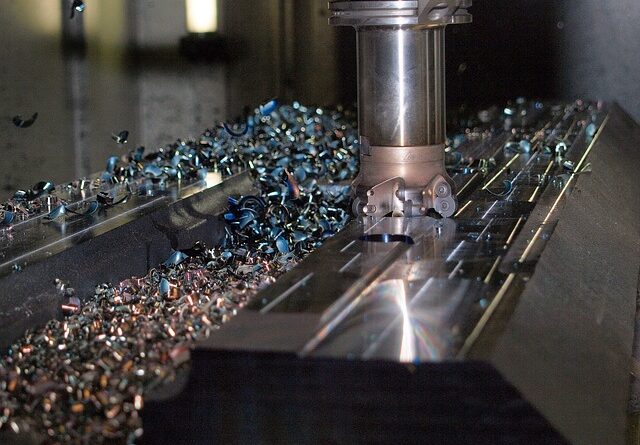
Is Dlyte Pro500 Transforming Design Validation in CNC Machining
DLyte PRO500 Automated Cell
The DLyte PRO500 represents a key shift in how design validation integrates with precision CNC machining. By merging automated surface finishing with digital validation tools like SOLIDWORKS, manufacturers can confirm that each component meets its intended geometry, tolerance, and surface integrity before mass production. This system reduces manual intervention, improves traceability, and strengthens the connection between digital models and physical results. For industries such as aerospace or medical tooling, it enables faster iteration cycles while maintaining strict quality standards.
The Role of Design Validation in CNC Machining?
Design validation sits at the core of precision manufacturing because it translates digital intent into manufacturable reality. Before cutting a single piece of metal, engineers must verify that CAD models meet both functional and mechanical performance expectations.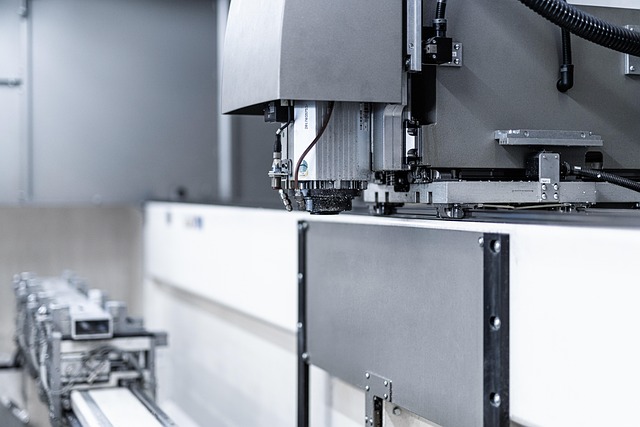
The Importance of Design Validation in Precision Manufacturing
In precision manufacturing, design validation ensures that digital designs meet functional and mechanical requirements before machining. It is not only about confirming geometry but also about predicting how materials behave under stress or load. This step reduces production errors and material waste while minimizing rework costs that can erode margins. When validation is properly applied, it strengthens the link between CAD modeling and real-world manufacturability—bridging what engineers design and what machines can physically produce.
Integration of Simulation and Design Validation Tools
Modern simulation tools such as SOLIDWORKS Simulation allow engineers to test stress points, tolerances, and surface integrity virtually. These tools create a closed feedback loop between design intent and machining capability. Virtual prototyping shortens iteration cycles by allowing multiple scenarios to be tested without wasting material. Early detection of design flaws through these simulations prevents costly downstream issues in CNC machining performance.
Overview of the Dlyte Pro500 System
The Dlyte Pro500 system complements this digital validation process by refining the final stage of part production—surface finishing. It brings automation into a traditionally manual task while maintaining tight control over electrochemical processes.
Key Features and Capabilities of Dlyte Pro500
The DLyte PRO500 employs DryLyte Technology for automated metal surface finishing. This method delivers consistent polishing results across complex geometries that are difficult to handle manually. It supports a wide range of conductive materials used in CNC-machined components such as stainless steel, titanium, and cobalt-chrome alloys. Through its controlled environment, it achieves repeatable micro-finishing outcomes aligned with CAD-defined parameters.
How Dlyte Pro500 Differs from Conventional Finishing Systems
Unlike traditional polishing systems that rely on operator skill, the DLyte PRO500 eliminates manual variability through an automated electrochemical process. This approach reduces micro-scratches and enhances dimensional accuracy after machining operations. Because it integrates seamlessly into digital manufacturing workflows, each finished part can be traced back to its original CAD model for verification—a key requirement in regulated sectors like aerospace or medical device production.
The Intersection of Dlyte Pro500 and Design Validation Processes
Integrating the DLyte PRO500 into the design validation workflow builds a more complete feedback loop from virtual model to physical part. The data generated during finishing becomes another layer of verification within the product lifecycle.
Enhancing Surface Quality Verification with Dlyte Pro500
The system provides measurable surface roughness data aligned with CAD specifications. Engineers can validate whether final component surfaces match design intent down to micrometer-level Ra values. For parts requiring mirror finishes or low-friction interfaces—such as turbine blades or surgical implants—this precision makes a measurable difference in performance predictability.
Closing the Gap Between Digital Models and Physical Outputs
By linking finishing data back into SOLIDWORKS design validation modules, manufacturers can confirm that modeled tolerances translate accurately into machined results. This feedback loop allows continuous improvement: every finished part informs future designs through data-driven metrics rather than subjective inspection notes.
Impact on CNC Machining Workflow Efficiency
Integrating automated finishing like DLyte PRO500 changes how post-machining operations are managed within CNC workflows. Automation here directly affects throughput time, cost structure, and consistency across batches.
Streamlining Post-Machining Operations
Automating labor-intensive polishing tasks significantly reduces lead times while freeing skilled technicians for higher-value work such as programming or inspection. The DLyte PRO500 allows simultaneous processing of multiple parts without compromising precision standards. For facilities running small-batch high-value components, this consistency translates directly into higher yield rates.
Integration with Smart Manufacturing Environments
The DLyte PRO500 connects easily with Industry 4.0 systems for process monitoring and traceability. When combined with CAD/CAM data, it can adapt tool paths based on surface finishing feedback—essentially closing the loop between machining strategy and final quality verification. Reduced downtime and rework improve overall equipment effectiveness (OEE), making production lines more predictable.
Evaluating the Technical Advantages for High-End Applications
For industries where reliability defines value—like aerospace turbines or orthopedic implants—the technical advantages of controlled electrochemical finishing are significant.
Application in Aerospace, Medical, and Tooling Industries
Aerospace components demand extreme surface integrity to resist fatigue under cyclic stress; medical implants require contamination-free finishes to prevent biological rejection; precision molds depend on uniform surfaces for dimensional fidelity. The DLyte PRO500 meets these requirements by eliminating abrasive residues common in traditional polishing methods while supporting intricate geometries typical in these sectors.
Advancing Material Performance Through Controlled Finishing Parameters
Because DryLyte Technology avoids mechanical friction or heat buildup during finishing, material integrity remains intact throughout processing. Uniform micro-finishing profiles improve fatigue resistance by removing stress concentrators at microscopic levels. Over time, this enhances corrosion resistance and extends component lifespan—a critical metric for high-performance applications where maintenance downtime carries heavy costs.
Future Directions in Design Validation for CNC Machining with Dlyte Pro500 Integration
As manufacturing moves toward fully connected ecosystems, combining AI-driven inspection tools with automated systems like DLyte will redefine how quality assurance is executed on the shop floor.
Toward Fully Automated Validation Ecosystems
Future iterations will likely feature AI-based inspection modules feeding real-time data into predictive maintenance dashboards. Closed-loop validation ecosystems could automatically adjust process parameters based on deviation patterns detected during finishing or machining—a practical application of machine learning within industrial environments.
Expanding Compatibility Across Manufacturing Platforms
Broader integration across multi-axis CNC systems and advanced CAD environments like SOLIDWORKS CAM Professional will expand usability beyond current setups. Modular interfaces could make DLyte technology adaptable across different production scales—from prototype labs to full-scale industrial cells—without losing traceability or accuracy standards demanded by ISO-certified workflows.
FAQ
Q1: What makes the DLyte PRO500 suitable for high-precision industries?
A: Its DryLyte electrochemical process produces uniform finishes without mechanical abrasion, ideal for aerospace or medical parts needing tight tolerances.
Q2: How does it connect with SOLIDWORKS design validation?
A: Surface finish data from the DLyte PRO500 can be fed back into SOLIDWORKS Simulation modules to verify actual outcomes against modeled tolerances.
Q3: Can it handle multiple materials at once?
A: Yes, it supports various conductive metals commonly used in CNC machining such as stainless steel, titanium alloys, and cobalt-chrome composites.
Q4: Does automation reduce operator control?
A: Not exactly—it shifts control from manual skill to parameter management through software-defined settings ensuring repeatable results every cycle.
Q5: How does this system contribute to sustainability?
A: By minimizing abrasive waste and reducing rework frequency, it cuts both material consumption and energy use compared with traditional polishing methods.