
Why Swiss Lathe Precision Matters in High-Tolerance Manufacturing
Our Systems Have Detected Unusual Activity Coming From Your System. Please Try Again Later.
Precision machining defines the backbone of modern manufacturing, and Swiss-type CNC turning sits at the center of this transformation. The secret lies in its ability to maintain micron-level accuracy while producing complex components continuously. For industries like aerospace and medical devices, where reliability is non‑negotiable, Swiss lathes deliver unmatched repeatability. The combination of guide bushing support, synchronized axes, and automated bar feeding makes them ideal for high‑tolerance production. In short, Swiss lathe precision isn’t just about tight tolerances—it’s about consistent control that keeps every part within specification across thousands of cycles.
The Role of Swiss Lathe Precision in Modern Manufacturing
Swiss lathes have reshaped how manufacturers approach small‑scale component production. Their unique mechanical setup and automation capacity distinguish them from conventional CNC turning services.
Understanding the Swiss Lathe Mechanism
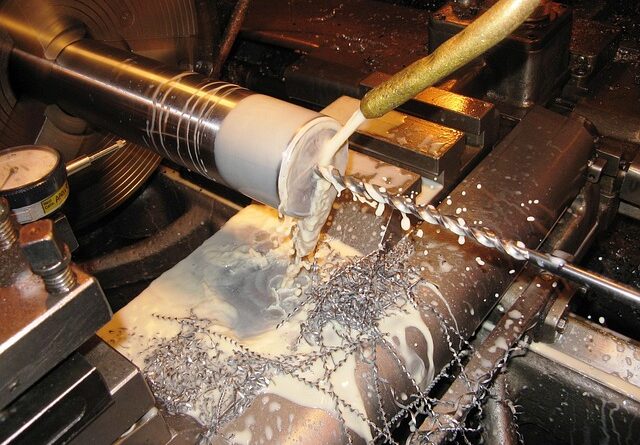
Swiss‑type lathes employ a sliding headstock paired with a guide bushing that supports the workpiece close to the cutting zone. This configuration minimizes deflection even when machining long or slender parts. Because the cutting tool always works near the point of support, surface finishes remain uniform and dimensional variation stays minimal. Continuous bar feeding allows uninterrupted production, letting machines run unattended for extended periods—an essential advantage for high‑volume industries demanding precision on every cycle.
Evolution of Swiss Turning Technology
Originally built for watchmaking in Switzerland during the late 19th century, these machines evolved into highly capable CNC systems used across advanced sectors today. Integration with live tooling enables milling, drilling, and cross‑hole operations in one setup, while sub‑spindles handle back‑working without repositioning parts. Modern control software synchronizes multiple axes simultaneously, achieving precision levels once thought impossible on traditional turning centers. This evolution has turned Swiss lathes into complete machining cells rather than simple turning tools.
The Significance of Precision in High‑Tolerance Manufacturing
High‑tolerance manufacturing demands not only accuracy but also consistency under varying loads and materials. Precision becomes both a design requirement and a production discipline that governs every stage from programming to inspection.
Defining High‑Tolerance Requirements
In most industrial contexts, high tolerance refers to maintaining dimensional accuracy within a few microns. Such precision is mandatory in aerospace fuel injectors, orthopedic screws, or microelectronic connectors where even minor deviations can compromise performance. Tight tolerances guarantee interchangeability between assemblies and consistent performance across batches—attributes critical to sectors governed by ISO 9001 or AS9100 standards.
How Precision Affects Product Functionality and Reliability
When dimensions drift beyond tolerance limits, assemblies may fail to fit or function as designed. A misaligned valve stem or uneven bearing seat can shorten service life dramatically. Surface integrity also plays a role; smoother finishes improve wear resistance by reducing frictional heat during operation. Maintaining precision throughout production minimizes downstream inspection time and rework costs—an often overlooked economic benefit of accurate machining.
Advantages of Swiss‑Type CNC Turning for Tight Tolerances
The structural design and operational philosophy behind Swiss lathes directly contribute to their superior accuracy compared with standard CNC turning services.
Superior Dimensional Control Through Guide Bushing Support
The guide bushing acts as a steady rest positioned mere millimeters from the cutting edge. It stabilizes slender bars that would otherwise flex under tool pressure. Reduced vibration enhances roundness and concentricity, particularly important in shafts or pins used in fluidic systems. Because each part is machined under identical conditions, batch consistency remains exceptionally high even during long runs.
Multi‑Axis Machining Efficiency
Swiss machines often feature multiple axes operating simultaneously on main and sub‑spindles. This arrangement allows front‑side and back‑side operations without removing the part from the machine—a major time saver compared with conventional setups requiring secondary fixtures. Integrated milling tools further expand capability beyond simple turning tasks, enabling complex geometries such as hex flats or cross holes within one program cycle.
Material Handling and Automation Integration
Continuous bar feeders keep material supply uninterrupted while robotic arms can unload finished components automatically. This reduces operator intervention and human error while increasing throughput per shift. Advanced monitoring systems track tool wear in real time so adjustments occur before defects appear—maintaining process stability over extended production runs typical in medical or defense manufacturing contracts.
Comparing Swiss Lathes to Conventional CNC Turning Centers
While both machine types perform rotational cutting tasks, their architecture fundamentally differs in how they manage workpiece support and thermal behavior during long cycles.
Structural Differences Affecting Accuracy
Conventional lathes hold material using a fixed headstock with limited support near the tool tip, which increases deflection risk when machining small diameters or long shafts. In contrast, Swiss machines move the stock through a stationary guide bushing located close to the tool zone, maintaining rigidity throughout cutting engagement. This design produces superior repeatability when dealing with parts measured in tenths of millimeters—a critical factor for micro‑machining applications like fiber optic ferrules.
Production Efficiency and Setup Considerations
Swiss lathes shine when producing small intricate components requiring multiple features per piece. Although setup times can be longer due to complex tooling arrangements, overall efficiency improves since fewer secondary operations are needed afterward. Once programmed correctly, they maintain consistent accuracy over thousands of cycles with minimal supervision—a key reason many manufacturers adopt them for continuous production environments.
Applications Where Swiss Lathe Precision Is Critical
Industries relying on miniature yet highly reliable components depend heavily on Swiss turning technology to meet both regulatory standards and functional expectations.
Medical Device Components Manufacturing
Swiss lathes produce surgical screws, bone plates, dental implants, and catheter fittings where biocompatible materials like titanium demand exceptional surface quality. Each thread profile must match strict dimensional criteria defined by FDA or ISO 13485 guidelines to ensure patient safety during implantation procedures.
Aerospace and Defense Components Production
In aerospace fuel systems or actuator assemblies, even microscopic deviations can alter flow dynamics or mechanical response under stress loads exceeding 20 000 psi. Lightweight alloys such as aluminum 7075 require precise chip control to avoid deformation; here Swiss turning provides stable cutting conditions that preserve structural integrity while meeting traceability requirements common under MIL‑SPEC documentation.
Electronics and Microengineering Industries
Manufacturers of connectors and sensor housings rely on micron accuracy for proper electrical contact alignment. Smooth surface finishes reduce resistance at mating points while preventing premature corrosion—a vital aspect in telecommunications hardware exposed to humidity variations. Automated bar feeding allows mass production without sacrificing dimensional fidelity across millions of identical parts.
Optimizing CNC Turning Services for High‑Tolerance Results
Achieving consistent micron accuracy involves more than just machine design; it depends equally on process planning, environmental control, and disciplined quality assurance routines applied throughout production cycles.
Process Planning for Precision Outcomes
Effective planning begins with selecting appropriate toolpath strategies that maintain constant chip load across each pass to prevent dimensional drift caused by uneven tool engagement. Coolant delivery must be directed precisely at the cutting interface to manage thermal growth during prolonged runs lasting several hours per bar stock changeover. Real‑time feedback loops integrated into modern controllers adjust feeds automatically when sensors detect vibration or temperature fluctuations—a practical safeguard against cumulative error buildup.
Quality Assurance Practices in Precision Turning Operations
In-process gauging systems measure dimensions directly inside the machine envelope so operators receive immediate alerts if deviation trends appear mid-cycle. Statistical process control (SPC) charts track data over time to verify consistency across batches rather than relying solely on end-of-line inspection reports. Regular calibration schedules for both measuring instruments and cutting tools maintain traceable accuracy levels aligned with ISO 17025 laboratory standards commonly audited by global clients seeking verified quality documentation.
FAQ
Q1: What makes Swiss-type CNC turning different from regular CNC turning?
A: The sliding headstock design combined with a guide bushing provides constant support near the cutting zone, reducing deflection on small-diameter parts compared with fixed-head machines.
Q2: Which industries benefit most from Swiss lathe precision?
A: Aerospace, medical device manufacturing, electronics microengineering, and defense sectors rely heavily on it due to strict tolerance requirements.
Q3: Are Swiss lathes suitable for large components?
A: They excel at small-to-medium diameter workpieces; larger parts are typically better suited for conventional multi-axis lathes designed for heavy stock removal.
Q4: How does automation improve performance in cnc turning services?
A: Bar feeders and robotic handling reduce downtime between cycles while maintaining consistent part quality through continuous operation monitoring.
Q5: What tolerance levels can modern Swiss-type machines achieve?
A: Depending on material properties and tooling condition, current high-end models routinely hold tolerances within ±2 µm across extended production runs without manual adjustment.