

How Can a Circular Saw Guide Improve Accuracy in Professional Woodworking
How to Build a Simple Circular Saw Guide for Straighter Cuts
A circular saw guide is one of those shop tools that quietly determines whether a project looks professional or not. The conclusion is simple: a well-built guide transforms an ordinary handheld saw into a precision cutting instrument. For professionals, it’s not just about cutting straight lines—it’s about repeatability, control, and accuracy under pressure. Building a simple yet accurate guide doesn’t require complex machinery, only careful planning and attention to geometry. The following sections explore how these guides function, what makes them reliable, and how to construct one that delivers consistently straight cuts.
The Role of a Circular Saw Guide in Professional Woodworking
In professional woodworking, consistency separates craftsmanship from approximation. A circular saw guide acts as the mechanical backbone for this consistency, helping operators maintain control across different materials and conditions.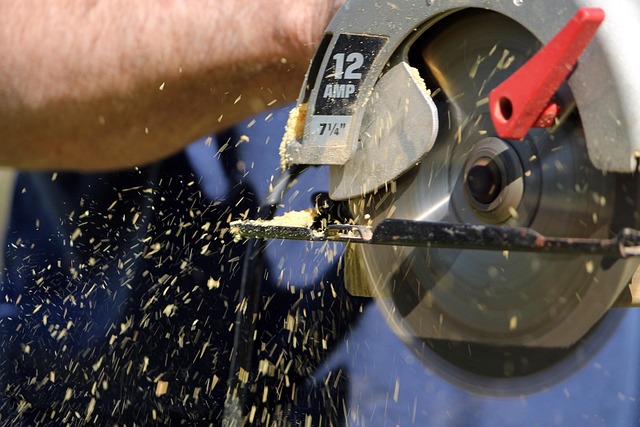
The Function of a Circular Saw Guide
A circular saw guide maintains a consistent cutting path across various materials. It minimizes lateral blade movement, ensuring precision and uniformity. For repetitive cuts that demand tight tolerances—such as cabinetry panels or flooring sections—the guide becomes indispensable. Without it, even small deviations can accumulate into visible misalignments that compromise both fit and appearance.
Why Accuracy Matters in Professional Woodworking
Accuracy is more than an aesthetic concern; it directly affects structural integrity. When joinery fails to align perfectly, stress concentrates at weak points, leading to premature failure or gaps. Precision also reduces waste because fewer pieces need rework or trimming. In production environments where time equals cost, maintaining high accuracy translates into measurable efficiency gains.
Design Principles Behind an Effective Circular Saw Guide
Before building any tool fixture, understanding its design logic matters. A good circular saw guide balances rigidity with maneuverability—it must hold steady under pressure yet remain easy to reposition for multiple cuts.
Key Components of a Reliable Guide System
The base track or rail provides linear stability for the saw’s movement. Clamps or locking mechanisms prevent unwanted motion during operation, while edge alignment systems guarantee parallelism between the saw blade and the cut line. In advanced setups used by furniture shops, micro-adjust knobs fine-tune the offset within fractions of a millimeter.
Material Considerations for Building a Durable Guide
Material choice defines performance longevity. Aluminum and steel offer rigidity with minimal flex under load—ideal for long rip cuts on heavy stock. High-density plywood or MDF can serve as cost-effective alternatives when weight or budget constraints apply. A smooth surface finish reduces friction between the saw shoe and the rail, allowing effortless glide without binding.
Building a Simple yet Accurate Circular Saw Guide
Constructing your own guide involves careful layout work rather than expensive parts. The objective is straightforward: create a straight reference edge that matches your specific saw’s geometry.
Planning and Measuring for Precision Construction
Begin by determining the maximum cutting width based on your saw blade’s offset from its shoe edge. Use calibrated measuring tools like steel rulers or digital calipers to mark parallel reference lines along the base panel. Before assembly, verify squareness between all edges using a machinist’s square—any angular error here will echo through every future cut.
Step-by-Step Assembly Process
Preparing the Base and Fence Components
Cut the base panel to match desired length and width specifications—typically slightly longer than your largest workpiece width. Attach a straight-edge fence at exactly 90 degrees to one edge of the base using wood glue and screws placed at equal intervals to prevent shifting during curing.
Securing and Aligning the Guide Track
Place your circular saw against the fence to check alignment between its shoe edge and fence face. Once satisfied, fasten all components with countersunk screws so no heads protrude above the surface; even minor bumps can disrupt tracking during use.
Fine-Tuning for Optimal Performance
Run test cuts on scrap material to confirm alignment accuracy along full stroke length. If you notice drift or tapering edges, adjust fence positioning incrementally until results stabilize. Adding non-slip pads beneath the base increases grip on smooth sheet goods like melamine or veneer plywood.
Techniques for Achieving Straighter Cuts Using a Circular Saw Guide
Even with a perfect jig, technique determines outcome quality. Proper handling minimizes errors caused by user input rather than tool design.
Controlling Feed Rate and Blade Pressure
Maintain steady forward motion through material without forcing progress; excessive pressure causes blade deflection that widens kerf width unevenly. Professionals often describe it as “letting the blade do the work”—a principle shared across most cutting disciplines including metalwork.
Aligning the Blade with Marked Cut Lines
Before powering up, position your guide precisely along marked cut lines so that blade teeth just graze them when spinning freely. Many modern saws include visual markers on their shoes; aligning these consistently eliminates guesswork over long runs.
Managing Workpiece Support and Vibration Reduction
Support both sides of large panels evenly using sawhorses or bench tables to prevent sagging mid-cut. Clamp materials firmly but avoid overtightening which may distort thin stock surfaces. Reducing vibration not only improves accuracy but also extends blade life by minimizing chatter-induced wear.
Integrating Advanced Tools for Enhanced Accuracy in Woodworking Operations
Today’s workshops combine analog craftsmanship with digital precision tools that raise repeatability levels once reserved for CNC systems.
Combining Circular Saw Guides with Digital Measurement Tools
Laser alignment systems help verify straightness before cutting begins by projecting reference beams along intended paths. Digital calipers allow exact spacing when setting up repetitive cuts—useful in production runs requiring identical panel dimensions within ±0.1 mm tolerance ranges common in architectural joinery.
The Relationship Between Cutting Torch Techniques and Precision Cutting Tools (Keyword Integration)
While a cutting torch primarily serves metal fabrication rather than carpentry, its underlying principle—controlled guidance—applies similarly here. In torch cutting, managing heat distortion ensures clean separations; likewise in woodworking, maintaining mechanical stability prevents drift from thermal expansion or operator fatigue during extended sessions.
Maintenance Practices to Preserve Guide Accuracy Over Time
A well-built guide can last decades if maintained correctly. Regular inspection prevents gradual misalignment that otherwise goes unnoticed until defects appear in finished assemblies.
Routine Inspection and Calibration Procedures
Check rails periodically for nicks or warping caused by accidental drops or humidity changes common in workshop environments. Recalibrate alignment after long storage periods since temperature fluctuations may shift wooden components microscopically out of plane.
Proper Storage and Handling Techniques
Store guides flat on horizontal racks rather than leaning vertically against walls where gravity may induce bending over months of inactivity. After each use, brush away dust buildup from contact surfaces; abrasive particles trapped underneath can scratch both rail coating and saw shoe finish over time.
FAQ
Q1: What is the ideal length for a homemade circular saw guide?
A: Most professionals build guides slightly longer than their standard sheet size—around 8 feet—to accommodate full plywood cuts without repositioning mid-pass.
Q2: Can MDF be used instead of aluminum for the base?
A: Yes, high-density MDF offers excellent dimensional stability if sealed properly against moisture exposure; however aluminum remains superior in durability under heavy workloads.
Q3: How often should calibration checks be performed?
A: For daily-use tools, monthly verification using straightedges or dial indicators helps maintain consistent output quality across projects.
Q4: Does adding wax improve sliding performance?
A: Applying paste wax lightly on contact surfaces reduces friction significantly while preventing resin buildup from treated lumber types like pine or cedar.
Q5: Are digital lasers necessary for hobby-level woodworking?
A: Not essential but beneficial—laser guidance shortens setup time when working on large panels where manual sighting becomes less precise due to parallax error at distance scales beyond 2 meters.