
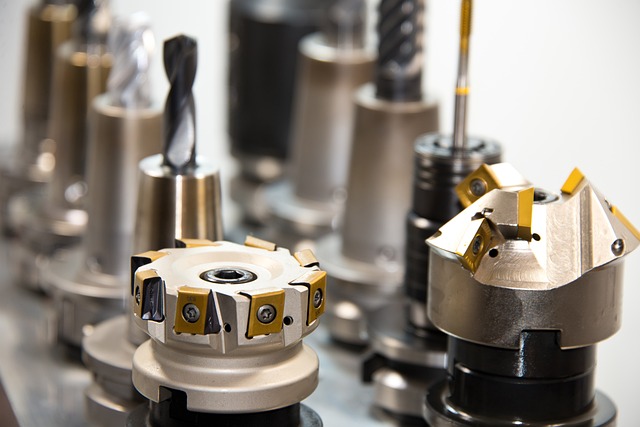
How CNC Machinist Training Shapes the Future of Advanced Manufacturing
The Strategic Role of CNC Machinist Training in Modern Manufacturing
The manufacturing world has changed dramatically over the past few decades. Precision, automation, and data-driven production have become the norm rather than the exception. In this environment, CNC machinist training plays a strategic role in ensuring that both people and technology perform at their best. Manufacturers across industries—from aerospace to automotive—are investing heavily in developing skilled machinists who can bridge traditional craftsmanship with digital manufacturing systems.
The Evolution of CNC Machining in Advanced Manufacturing
CNC machining’s journey from manual control to automated precision represents one of the most significant shifts in industrial history. Early machinists relied on manual lathes and mills where every cut depended on human skill. The introduction of Computer Numerical Control (CNC) transformed this by embedding digital instructions into machine operations, allowing for accuracy measured in microns.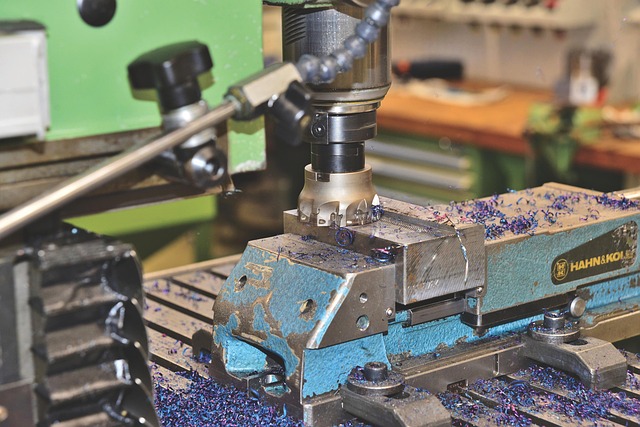
Overview of CNC Machining’s Transition from Manual to Automated Systems
In the 1950s, numerical control began as punched-tape programming, but by the 1980s it evolved into full computer integration. Today, machines are connected through networks that enable real-time monitoring and adaptive control. This shift not only reduced human error but also allowed for complex geometries impossible with manual methods.
Integration of Digital Technologies and Precision Engineering
Modern CNC systems integrate sensors, feedback loops, and advanced motion control algorithms that make them intelligent production units. Multi-axis machining centers now handle intricate aerospace components or medical implants with consistency that meets micron-level tolerances. Digital twins simulate machining processes before actual production, reducing waste and setup time.
How Industry Demands Have Elevated the Need for Skilled Machinists
As automation grows, so does the need for operators who can interpret data, troubleshoot software issues, and fine-tune mechanical systems. A CNC machinist today must blend mechanical intuition with digital literacy—a combination that defines competitiveness in modern manufacturing facilities worldwide.
Why Skilled CNC Machinists Are Critical to Industrial Competitiveness?
A well-trained machinist is more than an operator; they are a problem solver who keeps production flowing efficiently. The quality of their work directly affects product performance and customer satisfaction.
Skilled Machinists Ensure Precision, Efficiency, and Reduced Downtime
Every minute a machine sits idle costs money. Skilled machinists anticipate tool wear, adjust offsets quickly, and maintain tight tolerances even during long production runs. Their ability to diagnose issues reduces downtime dramatically compared to less experienced workers.
Their Expertise Supports Lean Manufacturing and Continuous Improvement
Lean manufacturing depends on eliminating waste at every step—time, material, or motion. Trained machinists contribute by refining setups, minimizing scrap rates, and suggesting process improvements based on hands-on experience with tooling and materials behavior under different cutting conditions.
Workforce Competency Directly Impacts Innovation and Production Quality
When your workforce understands both design intent and machining execution, innovation thrives naturally. Engineers can rely on machinists to translate complex CAD models into real parts without compromising design integrity or delivery schedules.
Key Components of Effective CNC Machinist Training Programs
Comprehensive training programs combine classroom theory with shop-floor practice to build confidence and capability in real-world scenarios.
Foundational Technical Skills Development
Blueprint reading remains fundamental because it connects design language to physical manufacturing steps. G-code programming teaches how machines interpret commands like feed rates or spindle speeds. Toolpath optimization minimizes travel distance while maintaining finish quality—critical for high-volume environments such as automotive part production.
Material science knowledge helps machinists select cutting parameters suited for aluminum versus titanium or composites used in aerospace components. Practical exposure to multi-axis machines builds spatial awareness crucial for simultaneous motion paths.
Integration of Digital Manufacturing Technologies in Training
Today’s CNC machinist training includes CAD/CAM instruction where trainees learn how digital designs transition into machine-ready code seamlessly. Exposure to automation systems such as robotic loaders or IoT-enabled machine monitoring prepares students for smart factories where devices communicate autonomously.
Data analytics is becoming part of daily operations; machinists trained to interpret sensor data can detect patterns leading to predictive maintenance instead of reactive repairs.
Safety, Quality Control, and Process Standardization Training
Safety is non-negotiable in any machining environment. OSHA compliance modules teach proper handling of sharp tools, coolant systems, and emergency procedures. Quality control sessions introduce metrology instruments like coordinate measuring machines (CMMs) for dimensional verification.
Standard operating procedures aligned with ISO 9001 or AS9100 ensure repeatability across shifts—vital when producing aerospace-grade components requiring certification traceability.
Industry Collaboration in CNC Machinist Education Initiatives
The most successful training programs often emerge from collaboration between manufacturers and educators who align curricula with current industrial needs.
Partnerships Between Manufacturers and Educational Institutions
Companies frequently partner with technical colleges to co-develop courses reflecting actual shop-floor challenges—such as fixture design or cycle-time reduction projects. Apprenticeship programs allow students to earn while they learn under experienced mentors using state-of-the-art equipment donated by industry sponsors.
Such partnerships also help schools keep pace with evolving technologies like additive-subtractive hybrid machines now entering mainstream use.
The Role of Government and Industry Associations in Workforce Development
Government grants often fund advanced manufacturing labs equipped with simulation software or multi-axis machining centers accessible to trainees nationwide. Industry associations create standardized certification frameworks validating skills globally—examples include NIMS (National Institute for Metalworking Skills) credentials widely recognized by employers.
Collaborative research initiatives also forecast future skill gaps ensuring educational pathways remain relevant as Industry 4.0 accelerates automation adoption.
The Impact of CNC Machinist Training on Productivity and Innovation
Training investments yield measurable returns through improved productivity metrics across facilities large and small.
Enhancing Production Efficiency Through Skilled Labor
Trained machinists shorten setup times by preparing fixtures efficiently before machine cycles begin. Consistent cycle times improve throughput predictability—a major advantage when balancing multiple customer orders simultaneously.
Process optimization led by skilled operators lowers material waste rates while conserving energy through smarter toolpath strategies that reduce unnecessary spindle movement.
Driving Innovation Through Advanced Skill Application
Cross-disciplinary exposure fosters creative problem-solving; machinists familiar with additive manufacturing concepts can suggest hybrid approaches combining 3D printing with precision milling for rapid prototyping cycles.
Continuous learning cultures encourage experimentation—whether testing new carbide coatings or exploring high-speed machining parameters—to push boundaries safely within controlled environments.
Future Trends Shaping CNC Machinist Training Programs
As manufacturing evolves toward interconnected ecosystems driven by data intelligence, training must evolve too.
Incorporating Smart Manufacturing Concepts into Curricula
Digital twins now allow trainees to simulate entire machining processes virtually before touching a physical machine—a cost-effective method reducing tool breakage during learning phases. AI-driven decision support tools guide optimal feed-speed combinations based on historical datasets improving first-part accuracy rates significantly.
Virtual reality (VR) headsets immerse learners inside virtual workshops replicating real-world hazards without risk while augmented reality (AR) overlays provide live guidance during setup tasks enhancing retention through visual reinforcement.
Preparing the Next Generation Workforce for Industry 4.0 Challenges
Tomorrow’s machinists will need hybrid skill sets blending mechanical craftmanship with coding fluency capable of interfacing directly with networked machinery via mobile dashboards or cloud-based controls.
Flexible modular certifications encourage lifelong learning allowing professionals already employed full-time to upskill incrementally as technologies evolve rather than retraining entirely from scratch each decade.
Adaptability becomes cultural currency—those able to pivot quickly between conventional cutting operations one day and robotic cell supervision the next will define competitive advantage across global supply chains increasingly dependent on agility rather than scale alone.
FAQ
Q1: What is the main goal of CNC machinist training?
A: Its goal is to prepare individuals capable of operating modern automated machinery efficiently while maintaining precision standards required across advanced industries such as aerospace or medical device manufacturing.
Q2: How long does it take to complete a typical training program?
A: Most programs range from six months for entry-level certificates up to two years for associate degrees depending on curriculum depth including CAD/CAM integration modules or apprenticeship hours required by regional standards.
Q3: Why are partnerships important between manufacturers and schools?
A: They align academic instruction with current industrial technology ensuring graduates enter workplaces ready without extensive post-hire retraining saving employers time and resources immediately upon onboarding.
Q4: What technologies are shaping future training methods?
A: Virtual reality simulations digital twins artificial intelligence-driven analytics plus IoT-connected equipment all contribute toward immersive safer faster learning environments replicating real factory conditions accurately yet affordably within classrooms.
Q5: How does skilled labor influence innovation?
A: Experienced machinists transform conceptual designs into manufacturable products quickly feeding back insights improving both engineering designs upstream plus process efficiencies downstream creating continuous innovation loops essential within competitive markets today.