

How Does a Circular Saw Cut at Angle Improve Compound Cuts Precision
Compound Cuts With a Circular Saw: A Step-by-Step Guide
Good cutting in woodworking sets the tone for your final project. When you need joints that fit together without issues, compound cuts come into play. These are key for handling tricky angles or building nice furniture. Learning to make a circular saw cut at angle is what makes a real woodworker stand out from someone just starting out. This piece looks at how it all works, how to set things up, and some better ways to do compound cuts with a circular saw.
Compound Cuts and Their Importance in Woodworking
Compound cuts mix bevel and miter angles. They create tricky joints for top-quality carpentry jobs. You use them for things like crown molding, fancy frames, or edges on nice tables. They help two slanted sides come together just right.
Defining Compound Cuts
Compound cuts mean you adjust two parts at the same time. One is the bevel, which tilts the blade. The other is the miter, which turns the base. In real work, you cut along two flat sides right away. Take crown molding between a wall and ceiling, for example. Both angles have to line up spot on. If not, spaces show up. This matters not just for looks. It also keeps things strong. Bad joints can make frames weak. They might even leave ugly lines that spoil a good job. I remember once fixing a friend’s shelf where the angles were off by a bit. It took extra time to sand and fill, but it taught me to double-check every time.
The Role of Circular Saws in Achieving Complex Angles
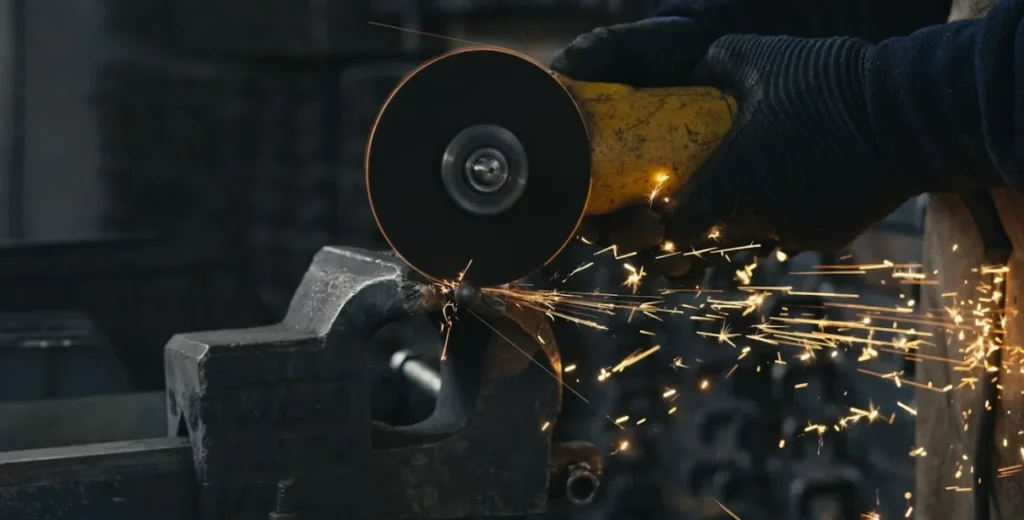
People often overlook circular saws for angle work. But if you set it up well, it handles compound cuts almost like a miter saw. You tilt the bevel on the saw’s base. Then you turn your guide line against the wood’s edge. That way, you get both angles by hand. Unlike fixed miter saws, circular saws let you take the tool to the wood. No need to drag big boards to a table. This freedom is great for job sites. Yet it brings its own problems. You must keep it steady and checked for straightness. Make sure the base plate lines up square with the blade before you set any bevel or miter. In my workshop, I’ve found that a quick check each morning saves headaches later.
Mechanics of Cutting at an Angle with a Circular Saw
To cut angles right, you need to know how each change shapes the cut. A tiny mistake in bevel or miter can lead to bigger problems. These show up more as you put pieces together over longer runs.
How Bevel Adjustments Affect the Cut Geometry
Tilting the blade from straight up adds a bevel angle. This makes one side of the blade go deeper into the wood than the other. If you join two beveled edges, like in a simple picture frame, the bevel decides if they touch well on the outside. Even a small shift, say half a degree, can leave gaps on longer boards. To fix that, grab a digital tool or try on scrap wood first. Think about framing a door. If the bevel is off, the whole thing won’t close smooth. That’s why testing is key.
Influence of Miter Angles on Compound Cuts
The miter angle points your cut across the wood’s top. It controls the turn in the flat plane. When you mix it with bevel, you get joints with many sides. Like in eight-sided frames or stair parts. Getting the measure exact is as important as the bevel. Small slips add up when you fit pieces around a corner. Using both lets you make special shapes. You can’t do that with plain straight cuts. For instance, in building a birdhouse with angled roofs, the miter helps the sides meet clean.
Techniques to Improve Precision When Cutting at an Angle
Clean compound cuts need more than quick measures. You have to prep with tools, guides, and steady hands. All these help you get the same result each time.
Calibrating the Circular Saw for Accurate Angles
Before any angle cut, see if the blade sits straight to the base at zero. Use a good square or a digital checker to confirm. If it’s off, which happens after lots of use, tweak the base until it’s true. Then make sure the knobs hold tight. Loose bits can move while you cut. Clean dust from the joints now and then. Add a bit of oil to parts that move. This keeps them in place even when the saw shakes. I’ve skipped this once and paid for it with a wavy cut on pine boards. Now I do it regular.
Using Guides and Jigs for Consistent Results
Guides like straight edges are a big help for long angle cuts. They keep your line steady. For jobs with many same pieces, like rafters or trim, make your own jigs. They hold the bevel and miter just so. Clamps are key too. The saw’s buzz can shift the path a little, mainly in hard woods. Clamp at several spots along long wood. This keeps it from moving. So each cut comes out the same. Picture cutting ten pieces for a fence. Without clamps, half might be off by a hair.
Factors Influencing Compound Cut Accuracy with a Circular Saw
Great setup won’t beat bad wood handling or old blades. Things outside the saw decide if your angles work in real life.
Material Properties and Workpiece Stability
Various woods act different when the blade pushes at an angle. Hard ones like oak fight back more than soft pine. The wood’s lines add trouble too. Cutting against them raises the chance of rough exits. Always hold the wood firm with clamps or stands. Any shift during the cut makes mistakes worse right away. Put a backup board behind to stop splits on steep paths. In one project with maple, I forgot the backup. The edges looked chewed up. Lesson learned for next time.
Blade Selection and Maintenance Practices
Pick slim blades with strong tips for smooth compound work. Not the rough ones for big frames. Slim cuts waste less wood. But you need even push since they bend if you rush. Wipe blades often. Sticky build-up from sap changes how teeth grab. It can shift the path without you seeing. Sharpen them on a schedule. This keeps cuts even over many jobs. Say you’re doing trim for a room. A clean blade makes the difference between pro and amateur finish.
Advanced Strategies for Expert-Level Precision in Compound Cuts
Skilled folks build better habits with tools and steady moves. They don’t just guess or look. They measure and control every step.
Integrating Measurement Tools into Workflow
Lights from lasers show your circular saw cut at angle path on the wood. This lets you see the line before you start. It’s super for tricky shapes like crown pieces set upside down on a bench. Tools that read tiny angle bits help fine-tune. You can’t spot those by eye. Match the numbers with a quick hand check. This works even if you’re at different sites or days later. I once used a laser on a big mantel. It saved me from guessing and got it right first try. Sometimes, though, the battery dies mid-job. Always have spares.
Optimizing Feed Rate and Cutting Technique
How fast you push affects the edge on tough angles. Go too quick on thick wood and it wobbles. Go too slow and it scorches the surface. Those marks are hard to fix later. Use steady push. Let the motor’s speed guide you. Don’t force it. Before the real cut on pricey wood, try on scraps from the same batch. This little test stops big fixes down the line. In a recent build, I cut slow on walnut. It came out smooth, no burns. But on cedar, a bit faster worked better to avoid tear-out.
FAQ
Q1: What distinguishes a compound cut from standard angled cuts?
A: A compound cut combines both bevel (vertical tilt) and miter (horizontal rotation) adjustments simultaneously while standard angled cuts involve only one axis change.
Q2: Can every circular saw perform compound cuts?
A: Most modern models allow at least limited bevel adjustment; paired with manual positioning relative to layout lines they can produce accurate compound results though specialized jigs help immensely.
Q3: Why do my beveled joints show tiny gaps even after careful setup?
A: Slight miscalibration between shoe plate and blade often causes cumulative error; recheck zero-bevel alignment using precision squares before resetting angles.
Q4: How often should I clean my circular saw blade?
A: After every few hours of continuous use especially when working resinous woods since buildup distorts balance affecting angular accuracy during fine passes.
Q5: What’s the safest way to stabilize long boards during angled cutting?
A: Use multiple clamps securing both ends plus intermediate points if possible; this prevents vibration-induced wandering which ruins precise joint geometry on compound assemblies.