
Road roller types, compaction methods, and selection factors
A road roller is a compaction machine used to densify soil, aggregate base, asphalt, and other pavement layers. Selecting one is not simply a question of machine weight. Drum type, tire contact, vibration mode, lift thickness, moisture, temperature, and access constraints all affect the result. Smooth drum rollers are commonly used on granular base and asphalt. Padfoot rollers are suited to cohesive soils. Pneumatic tire rollers knead and seal asphalt surfaces, while oscillation or static modes can reduce vibration transfer near structures and utilities. This guide explains how road rollers work, where each type fits, and which jobsite controls have the greatest effect on compaction quality. For more machinery explainers, see the Equipment & Machines section.
What a road roller does on a construction site
A road roller applies controlled pressure and, in many cases, dynamic energy to a placed layer so particles move closer together and air voids are reduced. In earthwork, better density improves bearing capacity and helps limit later settlement. In asphalt paving, density is closely tied to pavement life because excessive air voids can accelerate water intrusion, oxidation, rutting, and raveling. Federal Highway Administration pavement guidance identifies in-place asphalt density as a key acceptance measure on many projects, while also noting that density is influenced by materials, equipment, rolling pattern, temperature, lift thickness, and environmental conditions.
The machine is only one part of the compaction system. A suitable roller can still deliver poor results if the lift is too thick, soil moisture is outside the workable range, asphalt cools too quickly, or the operator uses the wrong speed and pass sequence. Over-rolling can also cause problems. Excessive vibration or compactive effort may crush aggregate, shove hot mix, leave roller marks, or create risk near nearby structures. Effective compaction is a controlled process, not a simple matter of adding more weight.
Main types of road roller and where they fit
Single drum smooth rollers
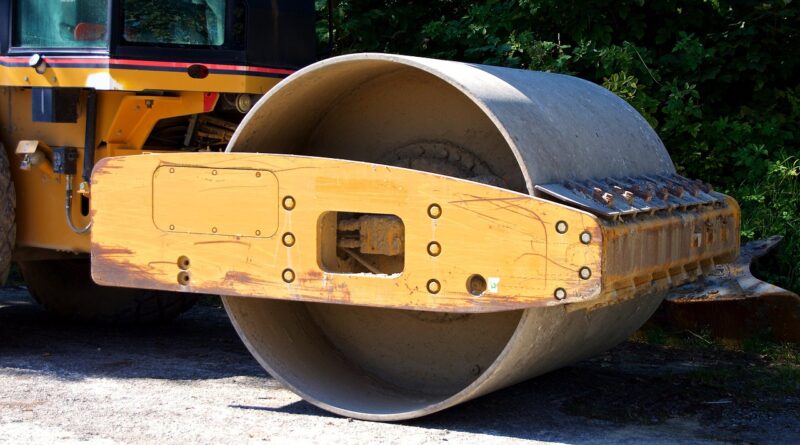
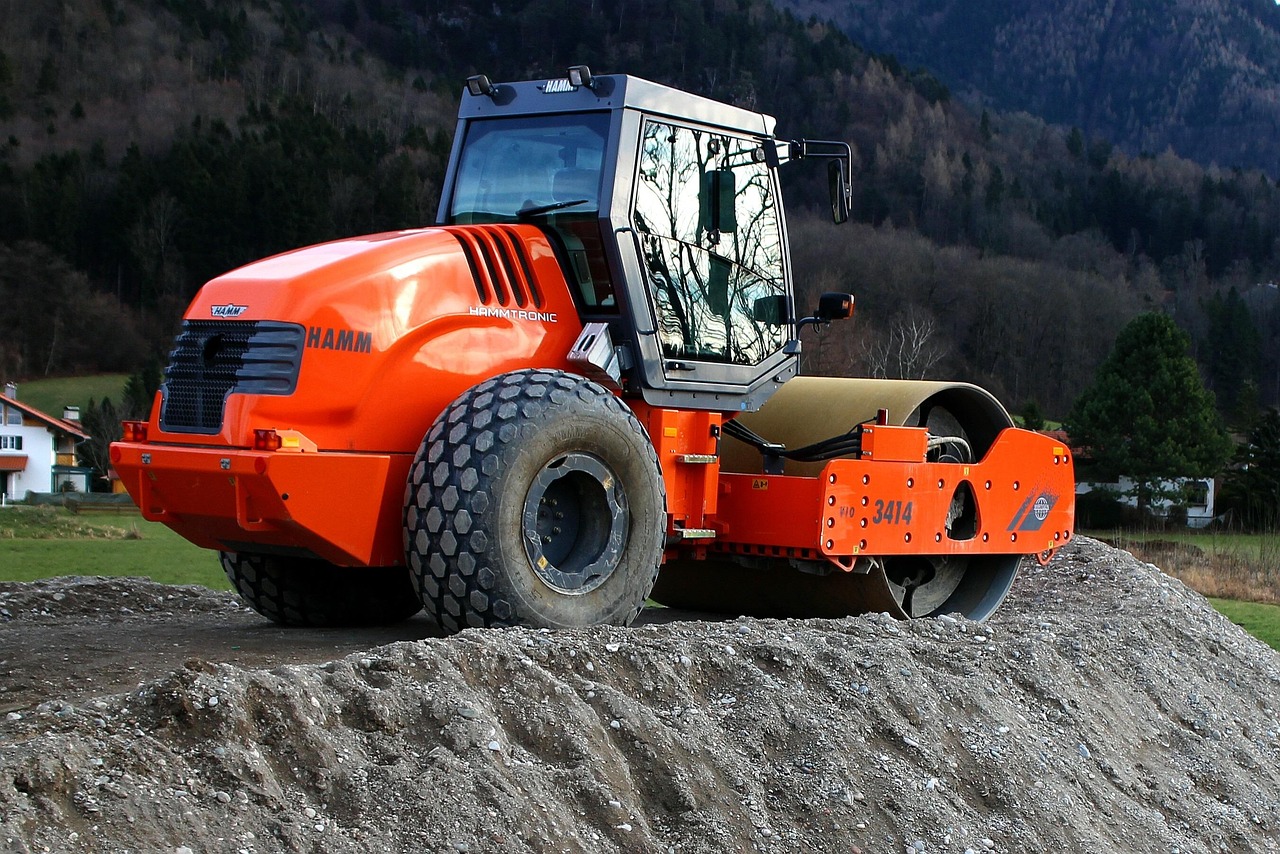
A single drum smooth roller has a large steel drum at the front and pneumatic drive tires at the rear. It is widely used for soil, subbase, and granular base compaction. With vibration engaged, it can apply high compactive effort to crushed stone, sand, gravel, and other granular materials. On asphalt, single drum machines are less common for finish rolling because the rear tire section and larger machine geometry are not optimized for producing a smooth mat surface.
Padfoot and sheepsfoot rollers
Padfoot rollers use projecting pads on the drum to knead cohesive soils such as clay and silty clay. The pads concentrate pressure and help work moisture through the layer. These machines are often selected for embankments, road subgrades, dams, and other earthwork where the material needs kneading rather than surface pressure alone. They are not suitable for finishing asphalt and are usually followed by grading or smooth-drum equipment when a flat surface is required.
Tandem vibratory rollers
A tandem roller has steel drums at both ends. In asphalt paving, tandem vibratory rollers are commonly used for breakdown and intermediate rolling because they provide uniform drum contact across the mat. Operators may use vibration early while the mix is still hot, then switch to static mode for finish rolling. Amplitude, frequency, travel speed, and timing all matter. Hot asphalt can be tender and prone to movement, while cooler asphalt may no longer compact efficiently.
Pneumatic tire rollers
Pneumatic tire rollers use multiple rubber tires instead of steel drums. Their main advantage is kneading action and flexible tire contact, which can help seal asphalt surfaces and compact mixes with a more variable aggregate structure. Some models use ballast to adjust operating weight and tire pressure. Manufacturer data sheets for machines such as Caterpillar’s CW34 show this concept in practice: an eight-wheel pneumatic roller can be configured across a broad operating weight range, allowing contact pressure to be matched to the job rather than determined only by the base machine.
Combination and walk-behind rollers
Combination rollers pair a steel drum with rubber tires, giving contractors some of the benefits of both drum compaction and kneading action. They are useful where a fleet needs flexibility on smaller paving jobs. Walk-behind and trench rollers serve a different purpose: confined areas, patch repairs, utility reinstatement, shoulders, and locations where a ride-on road roller cannot maneuver safely. These smaller machines do not replace full-size rollers on production paving, but they are important for edge work, repairs, and restricted-access compaction.
Static, vibratory, oscillation, and kneading compaction
Road rollers compact material through several mechanisms. Static compaction relies on the machine’s weight. It is predictable and relatively gentle, which makes it useful for finish rolling, bridge decks, thin lifts, and vibration-sensitive areas. Vibratory compaction adds rapid vertical movement through eccentric weights in the drum. It is powerful on granular materials and asphalt, but the amplitude must suit the layer thickness and support conditions.
Oscillation is a different dynamic method. Instead of primarily moving the drum up and down, oscillation systems create a rapid forward-and-back rotational movement at the drum surface. Hamm, part of the Wirtgen Group, describes oscillation as useful for asphalt and earthwork applications where lower transmitted vibration is desired, including work near structures or on sensitive surfaces. For contractors, the practical point is that dynamic compaction is not a single setting. Vibration, oscillation, and static rolling each affect the layer differently.
Pneumatic tire rolling adds kneading. The rubber tires flex and apply pressure through contact patches rather than through a continuous steel line. This can help close surface texture and improve density in some asphalt mixes, but it also requires control of tire temperature, tire pressure, ballast, and pickup prevention. A tire roller used too early on a tender mat can shove material. Used too late, it may add little meaningful density.
How to match a road roller to material and site conditions
The best roller choice starts with the material being compacted and the specification being measured. A highway base course, clay embankment, bridge deck overlay, and parking-lot repair do not call for the same equipment setup. The table below summarizes common matches while leaving room for project-specific requirements.
| Material or condition | Common roller choice | Reason and limitation |
|---|---|---|
| Cohesive subgrade soil | Padfoot or sheepsfoot roller | Pads knead clay and silty soil, but moisture control is critical. |
| Granular base or crushed aggregate | Smooth single drum vibratory roller | Vibration helps rearrange particles, but excessive amplitude can break aggregate or disturb thin layers. |
| Hot mix asphalt breakdown rolling | Tandem vibratory roller | Uniform steel drum contact works well while the mat is hot enough to compact. |
| Asphalt intermediate or sealing work | Pneumatic tire roller | Kneading action can improve surface seal and density, but tire temperature and pressure must be managed. |
| Bridge decks or vibration-sensitive areas | Static roller or oscillation-capable roller | Lower vibration transfer may reduce risk to structures and nearby utilities. |
| Trenches, patches, and tight access | Walk-behind roller or trench roller | Small footprint improves access, but production rate and compaction depth are limited. |
Soil classification is especially important. Granular soils usually respond well to vibration because particles can rearrange under repeated energy. Cohesive soils need moisture control and kneading to break down clods and reduce voids. Mixed soils can be more difficult because one part of the layer may respond to vibration while another part remains unstable. On asphalt, mix design, aggregate size, binder grade, reclaimed material content, lift thickness, and haul time all affect the available compaction window.
Operating factors that decide compaction quality
The first operating factor is the rolling pattern. A pattern defines the order of passes, overlap, direction, vibration setting, and lane coverage. On larger asphalt projects, density measurements from cores or non-destructive gauges are used to confirm whether the pattern is working. Pass counts should not be copied from another job without verification, because the same roller can behave differently on a different mix, temperature, or lift thickness.
Temperature is central to asphalt compaction. If the mat is too hot and tender, heavy vibration or sharp turning can push material and leave marks. If it is too cold, the binder stiffens and density gain becomes difficult. FHWA materials training emphasizes that mix temperature, rolling train, passes, and patterns are part of the paving plan rather than afterthoughts. Weather, wind, base temperature, and paving speed all influence how quickly the workable window closes.
For soil and aggregate, moisture and lift thickness are often the controlling variables. Dry cohesive soil may not knit together. An overly wet layer can pump and lose support. Thick lifts may look compacted at the surface while remaining loose below. The answer is not always a larger roller. In many cases, the layer must be processed, moisture conditioned, aerated, or placed in thinner lifts before rolling can succeed. See also: CNC Machining.
Speed also matters. Driving too fast reduces the time that compactive energy acts on each point of the surface. Sudden braking, tight turns, and stopping on fresh asphalt can scar the mat. Proper overlap prevents unrolled strips, while disciplined edge control reduces the risk of sloughing or rollover near shoulders. These basic operating habits often separate consistent compaction from a surface that only appears finished.
Safety, inspection, and maintenance considerations
Road rollers present rollover, struck-by, blind-spot, burn, noise, vibration, and traffic exposure hazards. OSHA safety materials and interpretation letters have identified rollover as a recognized hazard for compactors and have discussed the role of rollover protective structures and seat belts in reducing risk where feasible. On a live road project, the roller should be managed as part of the traffic control system, not as an isolated machine.
Practical controls include seat belt use where required, functioning backup alarms or cameras, clear communication between the paver and roller operator, spotters where visibility is restricted, and exclusion zones around moving equipment. Operators should avoid working too close to unsupported edges, steep shoulders, open trenches, or soft ground. On slopes, manufacturers’ operating limits and site-specific risk assessments matter more than a generic rule of thumb.
Pre-shift inspection should cover brakes, steering, lights, alarms, water spray systems, scrapers, drums, tires, hydraulic leaks, seat belts, mirrors, and emergency stops. Asphalt rollers need reliable water systems and clean scrapers to prevent pickup. Pneumatic tire rollers need tire condition, inflation, and ballast checks. Vibratory rollers require attention to drum mounts and vibration system condition. Maintenance failures are not only downtime issues; they can directly affect density, surface finish, and operator safety.
Equipment trends affecting road rollers
Road roller technology is moving toward better measurement and lower site impact. Intelligent compaction systems can record pass count, temperature, location, and compaction-related values, helping supervisors identify missed areas and inconsistent coverage. The FHWA has supported intelligent compaction research for asphalt density because conventional spot checks may not describe the entire mat. These systems are useful decision aids, but they do not remove the need for project specifications, calibration, experienced operators, and acceptance testing.
Another trend is vibration management. Oscillation systems, automatic amplitude selection, and improved compaction controls aim to deliver energy more precisely. This is particularly relevant in urban work, bridge approaches, utility corridors, and rehabilitation projects where aggressive vibration can create risk or public complaints. Manufacturers are also expanding telematics, machine control displays, and fuel-saving modes so fleet managers can track utilization and idle time.
Electrification is emerging most quickly in compact and light equipment, including some compact tandem rollers. Battery-electric machines can reduce local exhaust emissions and noise, which may help in indoor, night, municipal, or dense urban work. The limitations are charging logistics, duty cycle, purchase cost, and service support. For many contractors, the near-term fleet decision will be a mix of conventional machines, digitally assisted rollers, and selective low-emission equipment rather than a complete shift at once.
Frequently asked questions
Does every road roller need vibration?
No. Vibration is useful for many granular base and asphalt applications, but static rolling is often preferred for finish passes, thin layers, bridge decks, and sensitive areas. The correct mode depends on material, lift thickness, temperature, support conditions, and specification requirements.
How many roller passes are needed?
There is no universal number. A project should establish a rolling pattern based on the material, roller type, mat or lift thickness, temperature, and measured density. Copying a pass count from another project can lead to under-compaction or over-rolling.
What is the difference between a road roller and a compactor?
A road roller is a type of compactor designed for roadwork, paving, earthwork, and base preparation. The broader term compactor also includes plate compactors, rammers, landfill compactors, and other machines that densify materials.
Can a pneumatic tire roller replace a steel drum roller?
Usually it complements rather than replaces a steel drum roller. Pneumatic tire rollers provide kneading and sealing action, while tandem steel drum rollers provide uniform mat contact and are commonly used for asphalt breakdown and finish rolling.
What causes roller marks in asphalt?
Common causes include rolling when the mat is too hot or too cold, incorrect vibration settings, stopping on fresh asphalt, abrupt steering, insufficient water or release control, poor overlap, and an unstable mix. Correcting roller marks starts with the rolling pattern and temperature window, not only with operator technique.