
Can a Cheap 3D Printer Match a CNC Wood Cutter in Precision
Cheap 3D Printer Becomes CNC Wood Engraver
A low-cost 3D printer can be transformed into a capable CNC wood cutter through mechanical and firmware modifications. While it cannot rival industrial routers in torque or rigidity, such conversion offers an affordable entry point for experimental fabrication labs. With a reinforced frame, spindle attachment, and recalibrated motion control, the printer transitions from additive to subtractive manufacturing, enabling precise wood engraving tasks. This hybrid approach bridges affordability and versatility, reshaping how small workshops explore digital fabrication.
Understanding the Core Differences Between 3D Printing and CNC Wood Cutting
Both technologies share a foundation in computer-controlled motion but diverge sharply in material interaction. The shift from additive to subtractive methods defines their mechanical behavior, achievable tolerances, and application scope.
Principles of Additive vs. Subtractive Manufacturing
3D printing constructs parts layer by layer using thermoplastic or resin materials. Each layer fuses to the previous one under controlled temperature conditions, forming complex geometries with minimal waste. In contrast, a CNC wood cutter removes material from a solid block to achieve the desired shape. This subtractive process relies on cutting tools that carve away excess stock along programmed toolpaths. The difference affects not only precision but also surface quality—CNC cutting typically yields smoother finishes due to continuous tool contact rather than layered deposition.
Machine Architecture and Motion Control Systems
The internal mechanics of both systems reveal their design intent. A 3D printer’s lightweight gantry favors speed over rigidity, while a CNC router’s heavy frame resists deflection during cutting loads. Stepper motors drive both machines, yet torque requirements differ significantly; milling dense hardwood demands stronger motors and stiffer linear rails. Mechanical backlash—the tiny gap between moving components—directly influences accuracy in both systems. Control software such as Marlin or GRBL interprets G-code instructions to synchronize motor movements and determine motion smoothness.
Evaluating Precision Metrics in CNC Wood Cutters and 3D Printers
Precision defines the credibility of any digital fabrication system. Assessing dimensional accuracy and surface finish reveals how each technology translates digital models into tangible results.
Dimensional Accuracy and Tolerance Levels
CNC machines typically achieve sub-millimeter accuracy when cutting rigid materials like wood or metal due to stable mechanical structures and high-torque spindles. Low-cost 3D printers often face dimensional drift caused by thermal expansion or calibration errors during long prints. Measuring tools such as calipers or laser scanners quantify these deviations, allowing users to compare real-world outcomes with CAD dimensions.
Surface Finish and Resolution Capabilities
A CNC cutter’s surface finish depends on toolpath strategy, feed rate, and bit sharpness. Properly tuned parameters produce clean edges with minimal sanding required afterward. Layer-based printing introduces visible striations that require post-processing for refinement through sanding or chemical smoothing. Resolution in printing is limited by nozzle diameter—typically around 0.4 mm—while CNC resolution depends on bit size and stepper precision.
Modifying a Low-Cost 3D Printer for Wood Engraving Tasks
Converting a consumer-grade printer into a cnc wood cutter involves both hardware adaptation and firmware reconfiguration. The process demands careful attention to vibration control, cooling management, and safety protocols.
Mechanical Adaptations for Cutting Operations
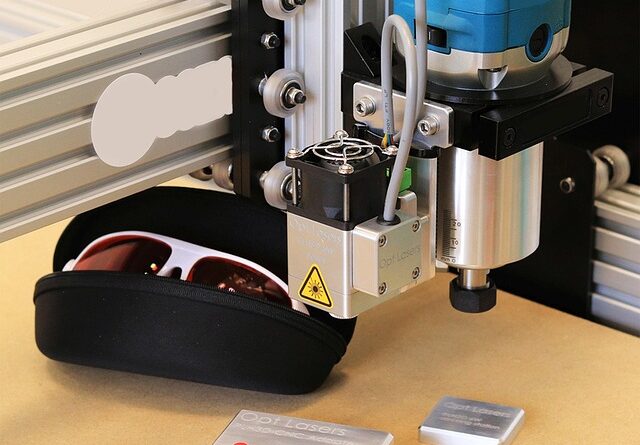
Replacing the extruder assembly with a spindle or engraving head allows the printer to perform subtractive operations instead of extrusion-based ones. Reinforcing the frame with metal brackets reduces flexing during high-speed passes across dense wood grains. Adjusting belt tension prevents backlash while adding linear bearings improves positional stability under lateral load.
Firmware and Software Adjustments for CNC Functionality
Open-source firmware like Marlin or GRBL can be reconfigured to interpret G-code suited for milling operations rather than extrusion commands. Integrating CAM software enables generation of toolpaths compatible with modified hardware setups. Feed rate, spindle speed, and stepper acceleration must be recalibrated specifically for wood density to prevent burning or chatter marks during engraving.
Material Considerations: Plastic Filament vs. Wood Stock Precision Behavior
Material behavior determines how each system maintains dimensional integrity during processing. The contrast between uniform thermoplastics and organic wood fibers highlights distinct engineering challenges.
Structural Response of Materials Under Machining Stress
Wood’s grain structure introduces variability in cut consistency since density changes along fibers affect chip removal rates. Improper feed rates can cause chatter or burn marks on the surface of hardwoods like oak or maple. Thermoplastics used in 3D printing behave predictably under controlled temperature conditions; their deformation follows repeatable patterns governed by melting point and cooling rate.
Impact on Dimensional Stability Over Time
Wood expands or contracts with humidity changes even after machining, which affects long-term dimensional fidelity of engraved parts stored in fluctuating environments. Printed polymers may warp during cooling but stabilize once fully cured or annealed properly—a process that locks molecular chains into position for consistent geometry retention.
Comparative Analysis of Performance Outcomes in Practical Applications
Evaluating performance requires examining trade-offs between cost efficiency, repeatability, and finish quality across real-world tasks like sign engraving or prototype modeling.
Accuracy Trade-offs Between Modified 3D Printers and Dedicated CNC Machines
Modified printers can achieve acceptable engraving quality on soft woods such as pine but struggle when performing deep cuts on denser species due to limited spindle power and frame stiffness. Dedicated CNC routers maintain consistent accuracy over multiple passes because of higher torque spindles supported by rigid gantries that absorb vibration effectively. Repeatability tests often reveal deviations caused by mechanical flexure inherent in lightweight printer frames.
Cost-to-Benefit Evaluation for Experimental Fabrication Labs
For educational makerspaces or research labs operating under tight budgets, converting an existing printer offers affordability while enabling experimentation with subtractive processes. However, this approach demands technical calibration skills to balance performance against wear risk on motion components. Professional-grade CNC systems justify their higher cost through reliability, throughput capacity, and superior surface finishes suitable for production environments.
Future Prospects of Hybrid Additive–Subtractive Fabrication Systems
The convergence of additive manufacturing with traditional machining is reshaping expectations within digital fabrication communities worldwide.
Integration Trends in Digital Fabrication Technology
Emerging hybrid platforms integrate printing, milling, and engraving within one modular framework capable of switching functions mid-process through automated tool changers. This integration minimizes setup time while allowing designers to combine complex geometries printed additively with precise machined surfaces—all within a single workflow environment increasingly favored by prototyping studios.
Potential Advancements in Low-Cost Machine Design
Future developments will likely focus on improving stepper motor precision through closed-loop feedback systems that correct positional drift dynamically during operation. Reinforced composite frames may replace aluminum extrusions to enhance stiffness without adding weight. Open-source ecosystems continue encouraging experimentation toward versatile desktop manufacturing solutions accessible even to small workshops aiming for hybrid capability at minimal investment.
FAQ
Q1: Can every cheap 3D printer be converted into a cnc wood cutter?
A: Not all printers are suitable; models with weak frames or low-torque motors may fail under cutting loads without reinforcement upgrades.
Q2: What type of spindle works best for light wood engraving?
A: Compact DC spindles rated between 100W–300W provide sufficient power for engraving soft woods while maintaining manageable vibration levels.
Q3: How does modified firmware handle spindle control?
A: Firmware like GRBL includes dedicated commands (M03/M05) that toggle spindle rotation via PWM signals compatible with most hobby-grade controllers.
Q4: Are there safety concerns when converting printers into cutters?
A: Yes, dust extraction is critical since fine sawdust can accumulate around electronics; proper shielding prevents fire hazards from overheating spindles.
Q5: Does hybrid operation reduce maintenance costs?
A: It lowers equipment redundancy but increases wear on shared components like rails and belts; periodic lubrication remains essential for precision retention.