
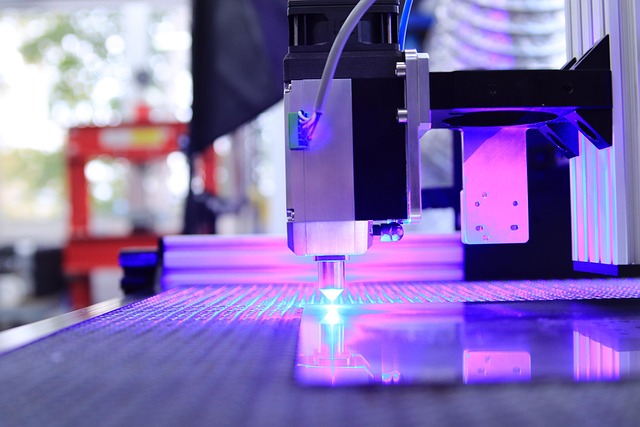
Will CNC Laser Cutting Machine Shape The Future Of Laser Manufacturing In 2026
The Future of Laser Cutting: Trends to Watch in 2026
CNC laser cutting machines are no longer niche tools but central pillars of modern manufacturing. By 2026, their role will expand further as automation, digital control, and sustainable production converge. Fiber laser systems and AI-driven monitoring are reshaping how factories cut, form, and finish materials. The next few years will see smarter integration with manufacturing networks, improved energy efficiency, and broader use across aerospace, automotive, electronics, and renewable energy sectors. These trends point toward a future where precision meets sustainability—an evolution both technological and economic.
Emerging Role of CNC Laser Cutting Machines in Modern Manufacturing
The growing adoption of CNC laser cutting machines reflects a shift from mechanical precision to digitally orchestrated production ecosystems. This transformation is not just about speed but about achieving repeatable accuracy at scale while minimizing waste.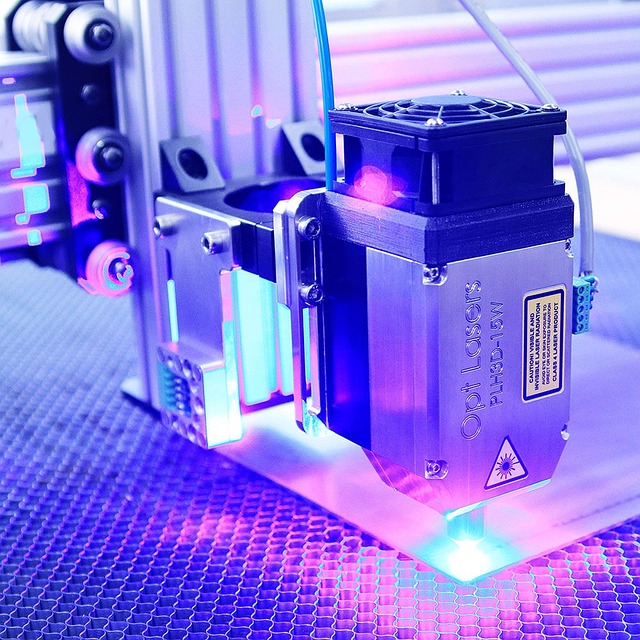
Evolution of CNC Laser Cutting Technology
From the early days of manual machining to today’s digital factories, CNC technology has evolved dramatically. Traditional CNC systems relied on pre-programmed motion paths using mechanical tools. The introduction of laser cutting added a new dimension—non-contact processing capable of micrometer-level precision. Over time, fiber lasers replaced CO₂ models for their higher efficiency and lower maintenance needs. Automation now drives entire production lines where robotic arms load sheets while sensors track performance in real time. Integration with digital control systems has made process consistency measurable rather than assumed.
Advances in Precision Engineering and Automation Driving Adoption Across Industries
Precision engineering has matured alongside automation technologies such as servo control and machine vision. In industries like aerospace or medical device manufacturing, tolerances below 10 microns are common requirements. CNC laser cutting machines meet these demands by combining stable beam quality with adaptive motion control. Automated part handling further reduces human error and cycle times, improving both quality and throughput.
Integration of Digital Control Systems Improving Consistency and Production Efficiency
Modern laser cutters rely on multi-axis CNC controllers that synchronize beam movement with material feed rates. Embedded sensors monitor temperature, vibration, and focus alignment continuously. This feedback loop enables real-time compensation for thermal drift or mechanical wear. As a result, manufacturers achieve consistent edge quality even during extended production runs—a key factor in maintaining competitiveness in high-volume markets.
Core Principles Behind CNC Laser Cutting Machines
At the heart of every cnc laser cutting machine lies a precise interaction between light energy and material properties. Understanding this interplay reveals why these systems outperform conventional methods in both accuracy and flexibility.
Explanation of Laser Generation, Focusing, and Beam Delivery Mechanisms
A laser beam originates from stimulated emission within an active medium—gas in CO₂ lasers or optical fibers doped with rare-earth elements in fiber lasers. Mirrors or fiber optics guide the beam toward focusing lenses that concentrate energy into a small spot on the workpiece surface. The intense heat vaporizes or melts the material instantly, producing clean cuts without physical contact.
Role of Computer Numerical Control (CNC) in Optimizing Path Accuracy and Cutting Speed
CNC software translates design files into motion commands that dictate beam trajectory and speed. High-resolution encoders ensure sub-millimeter accuracy along each axis. Adaptive feed rate algorithms adjust movement based on corner sharpness or material density variations to prevent overheating or burr formation.
Impact of Software Algorithms on Cut Quality, Energy Efficiency, and Material Utilization
Advanced nesting algorithms arrange parts efficiently on raw sheets to minimize scrap rates—often reducing waste by up to 15%. Software also regulates pulse frequency and power modulation for different materials like aluminum or composites. These adjustments directly affect energy consumption per unit cut length while maintaining uniform kerf width.
Technological Innovations Shaping the Future of CNC Laser Cutting
The next wave of innovation lies at the intersection of connectivity, optics improvement, and software intelligence—turning standalone cutters into nodes within smart manufacturing ecosystems.
Integration with Smart Manufacturing Systems
Factories adopting Industry 4.0 principles now connect cnc laser cutting machines to cloud-based analytics platforms through IoT sensors. These sensors track parameters like gas flow rate or lens temperature for predictive maintenance alerts before failures occur. Machine learning models analyze data trends to fine-tune operational settings automatically. Connectivity with MES platforms allows scheduling synchronization between cutting operations and downstream assembly lines for seamless workflow automation.
Advancements in Laser Sources and Optics
Fiber lasers have overtaken CO₂ sources due to their higher wall-plug efficiency—often exceeding 40% compared to under 15% for older systems—and reduced alignment needs since no mirrors are exposed to contamination. Recent developments include adaptive optics capable of reshaping beams dynamically depending on material thickness or reflectivity changes during operation. Enhanced liquid cooling designs now support continuous high-power output above 20 kW without thermal distortion risks.
Software and Simulation Developments
CAD/CAM integration has shortened setup cycles significantly by allowing direct import of design geometries into machine code generation modules. Virtual simulation tools enable users to test cut paths virtually before committing materials—saving both time and cost during prototyping phases. Adaptive programming now extends multi-material capability where one job may involve steel frames followed by polymer components using optimized settings per layer automatically applied by the system.
Industrial Applications Driving CNC Laser Cutting Adoption by 2026
As industries demand lighter structures, tighter tolerances, and faster turnaround times, cnc laser cutting machines are becoming indispensable across multiple sectors.
Aerospace and Automotive Manufacturing Trends
In aerospace fabrication, titanium alloys require precise yet heat-controlled cutting; fiber lasers deliver this balance efficiently. Automotive plants increasingly use these machines for structural panels made from advanced high-strength steels or aluminum composites where traditional stamping would cause deformation. Optimized nesting reduces sheet waste while maintaining minimal kerf width—critical when producing thousands of identical parts daily.
Electronics, Medical, and Energy Sectors Expansion
Miniaturization trends drive demand for micromachining capabilities used in semiconductor wafers or stent fabrication for medical applications. In renewable energy manufacturing, precision-cut battery foils enhance conductivity uniformity across cells while reducing scrap metal loss during electrode preparation stages. Scalability remains a major advantage since one machine can switch between prototypes and full-scale runs without hardware reconfiguration.
Economic and Environmental Considerations Influencing Market Growth
Beyond technical performance lies a broader question: how do these systems reshape cost structures and environmental impact? The answers reveal why investment continues rising despite high entry costs.
Cost Efficiency Through Automation and Material Savings
Automated loading modules reduce operator involvement per shift dramatically; some facilities report labor savings above 30%. Lower rework rates improve overall equipment effectiveness (OEE), translating into faster ROI cycles even under competitive pricing pressure. Material optimization via intelligent nesting means less scrap disposal—a direct contributor to leaner production economics.
Sustainability and Green Manufacturing Impacts
Fiber-based cnc laser cutting machines consume less power per watt delivered than comparable CO₂ units—a crucial advantage amid rising energy costs globally reported by IEA studies on industrial electrification trends (IEA Industrial Efficiency Report 2023). Clean-cut edges minimize post-processing contamination enabling easier recycling streams aligned with ISO 14001 sustainability frameworks adopted across manufacturing hubs worldwide.
Anticipated Challenges and Future Outlook Toward 2026
Despite progress, several barriers remain before widespread deployment reaches smaller workshops or emerging markets fully.
Technical Barriers to Widespread Implementation
High upfront investment continues deterring small-scale adopters who face capital constraints despite long-term payback potential. Skilled operators remain essential due to complex interface calibration requirements especially when integrating multiple sensor feedback loops simultaneously within hybrid machining centers.
Strategic Directions for Industry Advancement
Future growth depends on collaboration among machine builders developing modular architectures allowing incremental upgrades as technology evolves; software developers enhancing interoperability standards; material scientists improving reflective coatings resisting burn-through at higher intensities—all contributing toward unified performance benchmarks under IEC safety compliance frameworks (IEC TR 60825 series).
FAQ
Q1: What is driving the rapid adoption of cnc laser cutting machines?
A: Precision demands across aerospace, automotive, electronics, and renewable energy sectors combined with automation benefits make these systems essential for modern factories.
Q2: Why are fiber lasers preferred over CO₂ lasers today?
A: Fiber lasers offer higher electrical efficiency, lower maintenance costs, compact design advantages, and better compatibility with reflective metals like copper or aluminum alloys.
Q3: How does AI improve cnc laser cutting performance?
A: AI analyzes sensor data patterns to predict wear conditions early while adjusting beam parameters dynamically ensuring consistent cut quality throughout extended production cycles.
Q4: Are cnc laser cutting machines environmentally friendly?
A: Yes; they consume less power per unit output compared to conventional methods while generating minimal waste through optimized nesting strategies supporting green manufacturing goals.
Q5: What challenges might limit their expansion by 2026?
A: High initial costs remain significant along with skill shortages among technicians capable of managing advanced digital interfaces required for fully automated operation environments.